









Informational

Mobile Credentials, Bluetooth, QR, and Phone Entry
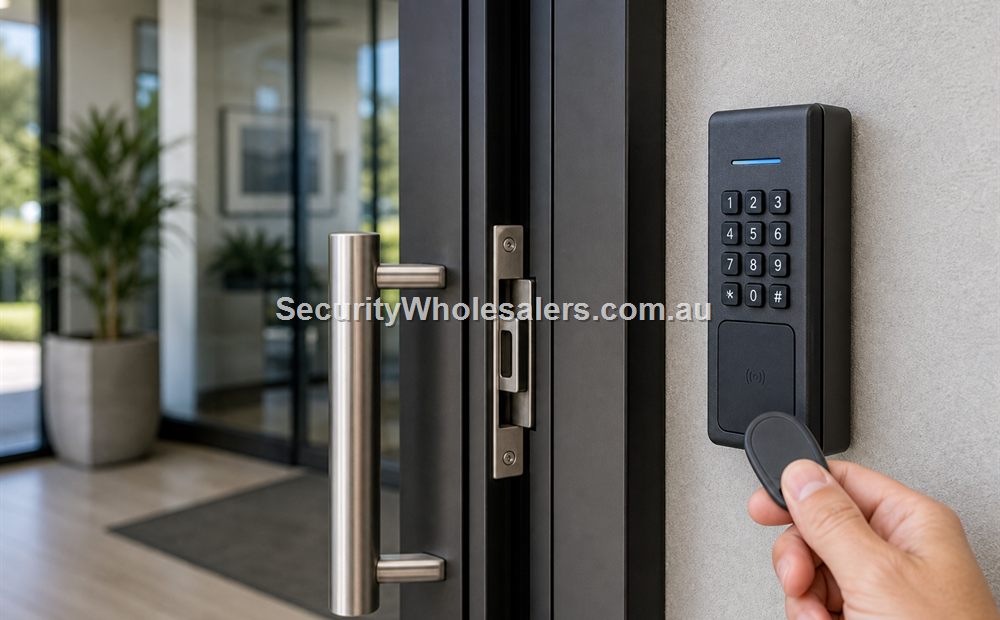
Many buyers say they want "phone access," but that can mean very different things. It might mean a resident using Bluetooth at the main door, a staff member unlocking from an app, or a temporary QR path for a visitor or contractor. The right design starts by separating those use cases.
Access control door hardware and controller scene
Access control door hardware image for this buying guide.

Explainer Guide

What It Means

Phone-based entry methods let the mobile device become part of the access workflow. Sometimes the phone acts like a credential near the reader. Sometimes it is the remote release tool for staff inside. Sometimes it carries a temporary visitor token. These all sit under the same broad conversation, but they are not interchangeable.

Text Diagram: Different Phone-Entry Paths

[Bluetooth phone credential] --> User is at the door --> Reader / terminal checks rule --> Door unlocks

[QR or temporary token] -----> Visitor arrives -------> Terminal checks validity -----> Door unlocks

[App / intercom release] ----> Staff answers remotely -> Staff approves -------------> Door unlocks

How the Options Usually Break Down

Method Usually Best For Main Watch-Out
Bluetooth or app-based proximity entry Residents, staff, or regular users who do not want to carry extra tags. The site still needs a fallback for staff without phones, flat batteries, or visitors.
QR or temporary phone-based entry Visitors, contractors, short-term users, or controlled appointment workflows. The admin process has to be as clear as the reader feature itself.
Remote release from an app or intercom workflow Front desks, clinics, apartment entries, and other visitor-facing doors. The site has to decide who is allowed to release the door and how those events are reviewed later.

How It Fits in Real Projects

Phone entry makes the most sense where card handling is annoying, visitor turnover is real, or the site wants a cleaner digital workflow. A medical centre front door may suit a combined intercom and app-release path. A gym may want member entry that reduces tag distribution. A small office may want Bluetooth convenience for staff but still keep a keypad or card fallback. An apartment entry may want residents on a phone path while visitors still use intercom.

What the Installer Should Confirm Before Quoting It

  • Is the site asking for phone convenience for regular users, phone-based visitor handling, or both?
  • What is the fallback path if a phone is unavailable, uncharged, replaced, or not permitted?
  • Does the opening also need intercom, video verification, or only credential entry?
  • Who issues, revokes, and audits the phone-based rights?
  • Is the client comfortable with the admin and software layer behind the feature, not just the unlock animation at the door?

What People Usually Get Wrong

The common mistake is thinking the phone feature replaces the rest of the access design. It does not. You still need the right lock, egress path, controller or terminal logic, and a clean management workflow. Another mistake is failing to decide whether the phone is for staff, visitors, residents, or all three. Those are different operational models.

Good Positioning Rule

If a site keeps saying "we want people to use their phones," keep asking who those people are. Staff, residents, visitors, contractors, and cleaners usually need different paths even when the same device is mounted on the wall.

Relevant SecurityWholesalers Product Areas

  • Intercoms - Useful where phone-led release is part of a visitor workflow rather than just a staff credential workflow.
  • Hikvision DS-KV6124-WBE1 - A strong choice where intercom, keypad, card, Bluetooth, and app unlock need to live together at a front door.
  • Hikvision DS-K1T502DBWX - Useful when the site wants a tougher commercial entry device with intercom and credential crossover in one terminal.
  • Hikvision Access Control Base License Package - Relevant where the phone feature is part of a bigger management layer rather than a one-off convenience device.

Related Guides in This Series

Source References

Frequently Asked Questions

  • What do mobile credentials mean in plain English?

    They let the phone become part of the entry workflow instead of relying only on a card, tag, or fixed keypad code.

  • Are Bluetooth, QR, and app unlock all the same thing?

    No. They are related phone-based entry methods, but they solve different problems such as proximity entry, temporary visitor entry, or remote release.

  • Where do these methods fit best?

    They fit well at front doors, gyms, small offices, medical centres, apartment entries, and other sites that want less card handling or easier temporary access.

  • What is the main installer risk with phone entry jobs?

    The main risk is quoting the phone feature without confirming the admin workflow, visitor workflow, fallback credential path, and network expectations behind it.

  • Should the site still keep cards, tags, or PINs as a backup?

    Often yes, because cleaners, contractors, reception staff, and lockout scenarios may still need a fallback path.

  • Which related guide should I read next?

    Read the access control versus intercom guide next, then the front-doors guide if the phone workflow is visitor-facing.

How to plan Mobile Credentials, Bluetooth, QR, and Phone Entry properly

The practical value of Mobile Credentials, Bluetooth, QR, and Phone Entry comes from how well it solves credential choice on a real Australian site. Before comparing model numbers, work through cards, fobs, PINs, face recognition, OSDP/Wiegand, user management and lost credential handling. Those details decide whether the system is useful in six months or merely impressive on the day it is installed.

Credential decisions should consider how users will be added and removed, not just how they enter on day one. A strong quote should explain which parts of the job are essential, which parts are optional, and where spending extra will actually improve evidence, safety, access control or response.

Small site

For Mobile Credentials, Bluetooth, QR, and Phone Entry, keep the design focused. Cover the highest-risk entry points or workflows first, choose equipment that is easy to use, and avoid adding features that nobody will maintain after handover.

Medium site

Separate critical views or doors from general coverage. Plan users, permissions, storage, power and network paths before filling every channel or controller output.

Complex site

For Mobile Credentials, Bluetooth, QR, and Phone Entry, document zones, responsibilities and expansion. Larger sites need a staged design so the system can grow without replacing the recorder, controller, cabling or user workflow too early.

What a 96/100 recommendation should include

  • A plain-English description of the incident, access event or workflow the system must solve.
  • Enough headroom for likely expansion, extra users, additional cameras, extra doors or future monitoring.
  • Installation notes covering cabling, power, mounting, weather, lighting, service access and handover.
  • A clear explanation of what the buyer should not overbuy and what would be a false economy.

Quote checklist for Mobile Credentials, Bluetooth, QR, and Phone Entry

Before ordering, ask for a short answer to these questions. They make the quote easier to compare and reduce the chance of buying hardware that does not match the site.

  • What exact problem is being solved: credential choice, deterrence, evidence, access control, safety, compliance or convenience?
  • What happens during poor light, bad weather, busy periods, after-hours events or staff changes?
  • Who will administer users, review events, export evidence and test the system?
  • Which part of the design is allowed to be basic, and which part must be strong because it proves the incident?

If those answers are vague, the buyer should pause before purchasing. Good security equipment becomes much more useful when the operating plan is written down before installation.

Final field note for Mobile Credentials, Bluetooth, QR, and Phone Entry

For Mobile Credentials, Bluetooth, QR, and Phone Entry, the final buying decision should be easy to explain to the person who will live with the system. The quote should identify the must-have outcome, the acceptable compromises, and the support path if users, doors, cameras, sensors or site conditions change later.

This is the difference between a list of products and a security design. The products matter, but the design is what makes them useful.

Final field note for Mobile Credentials, Bluetooth, QR, and Phone Entry

For Mobile Credentials, Bluetooth, QR, and Phone Entry, the final buying decision should be easy to explain to the person who will live with the system. The quote should identify the must-have outcome, the acceptable compromises, and the support path if users, doors, cameras, sensors or site conditions change later.

This is the difference between a list of products and a security design. The products matter, but the design is what makes them useful.

Final field note for Mobile Credentials, Bluetooth, QR, and Phone Entry

For Mobile Credentials, Bluetooth, QR, and Phone Entry, the final buying decision should be easy to explain to the person who will live with the system. The quote should identify the must-have outcome, the acceptable compromises, and the support path if users, doors, cameras, sensors or site conditions change later.

This is the difference between a list of products and a security design. The products matter, but the design is what makes them useful.

Final field note for Mobile Credentials, Bluetooth, QR, and Phone Entry

For Mobile Credentials, Bluetooth, QR, and Phone Entry, the final buying decision should be easy to explain to the person who will live with the system. The quote should identify the must-have outcome, the acceptable compromises, and the support path if users, doors, cameras, sensors or site conditions change later.

This is the difference between a list of products and a security design. The products matter, but the design is what makes them useful.

Real quote scenario for Mobile Credentials, Bluetooth, QR, and Phone Entry

When quoting Mobile Credentials, Bluetooth, QR, and Phone Entry, the useful starting point is credential management. The buyer should be able to confirm how users are added, removed, audited and replaced when cards, PINs or phones are lost. Without those details, two quotes can look similar while solving very different problems.

For example, a small office may tolerate simple fobs, while a school, medical centre or multi-tenant building usually needs stronger administration and cleaner audit trails. This is why a strong SecurityWholesalers guide should talk about the site, the workflow and the equipment together rather than treating the product category as a simple shopping list.

Budget-conscious path

Use the simplest reliable hardware that solves the main risk. Keep administration simple and avoid specialist features unless they change the outcome.

Balanced path

Add better management, verification or expansion headroom where the site is likely to grow. This is usually the best path for small businesses and shared buildings.

Higher-risk path

Document response, audit trail, permissions and fallback procedures. Higher-risk sites need clearer operating rules, not just stronger hardware.

The final Mobile Credentials, Bluetooth, QR, and Phone Entry quote should make the weak points visible. If cabling, power, monitoring, mobile app access, fire release, user management or future expansion are assumed rather than written down, the buyer is carrying risk that should have been solved during design.

Questions to ask before approving Mobile Credentials, Bluetooth, QR, and Phone Entry

  • What does the system need to prove or control on an ordinary day?
  • What is different after hours, on weekends, during staff changes or during an emergency?
  • Who will administer users, review events, export evidence or test the system?
  • What happens if the internet is unavailable, a user loses a credential, a sensor triggers falsely or a door does not release?
  • Which part of the system is easy to expand later, and which part would be expensive to change?

These questions are deliberately practical. They help separate a polished product list from a design that will remain useful after installation.

Wrap up EOFY with extra bonus savings :) Use Coupon code: EOFY26 on orders over 800.
Trade Customers: Log In or Register to Unlock Even Better Prices.

Save & Share Cart
Your Shopping Cart will be saved and you'll be given a link. You, or anyone with the link, can use it to retrieve your Cart at any time.
Back Save & Share Cart
Your Shopping Cart will be saved with Product pictures and information, and Cart Totals. Then send it to yourself, or a friend, with a link to retrieve it at any time.
Your cart email sent successfully :)