














Commercial
Best Access Control System for Staff Entry
Buying Guide
Many businesses start with "we just need staff access on this door." That can mean a simple standalone solution, but it can also mean a logged system if the staff door is shared by many users, subject to shift schedules, or part of a site with other controlled doors.
What Usually Fits Best
For isolated low-risk staff doors, a simple standalone card or keypad path can still work. For staff doors tied to shift schedules, after-hours use, or other controlled openings, a logged small system is usually the better answer.
| Situation | Usually The Better Path | Why |
|---|---|---|
| Single low-risk staff door | Simple standalone path | Fine where there is little admin complexity. |
| Shift-based staff entry | Logged small system | Schedules and after-hours review matter. |
| Staff entry tied to several restricted areas | Controller plus software | Permissions need to stay coordinated. |
Implementation Direction
A staff-entry installation still needs the right door hardware, egress, and user model. The installer should ask whether the door is shift-based, whether old staff credentials must be removed cleanly, and whether the site expects to add a second staff or restricted door later. Those answers determine whether a standalone terminal or a logged controller path is the better fit.
What the Installer Needs to Confirm on Site
Staff-entry jobs look simple until shifts, after-hours use, and staff turnover are discussed properly. The installer should treat the user workflow as seriously as the lock hardware, because that is where most future rework comes from.
- Confirm whether the door is genuinely a simple staff convenience door or whether it is tied to shifts, after-hours use, or audit expectations.
- Check the opening for strike or maglock suitability and whether the existing closer and latch can support clean relocking every day.
- Ask who adds new staff, removes leavers, and whether management wants individual users or one shared code.
- Find out whether the staff door will stay standalone or is likely to be joined by another restricted or internal door later.
- Locate the secure side for power and any future controller so the install is serviceable if the site grows.
What This Job Normally Requires
A genuine one-door staff entry can stay simple, but the moment schedules, shifts, or several staff groups matter, the installer should price the job as a logged path rather than hope the site never asks more of it.
- Simple staff-door path: standalone terminal, strike or maglock, egress device, and local power.
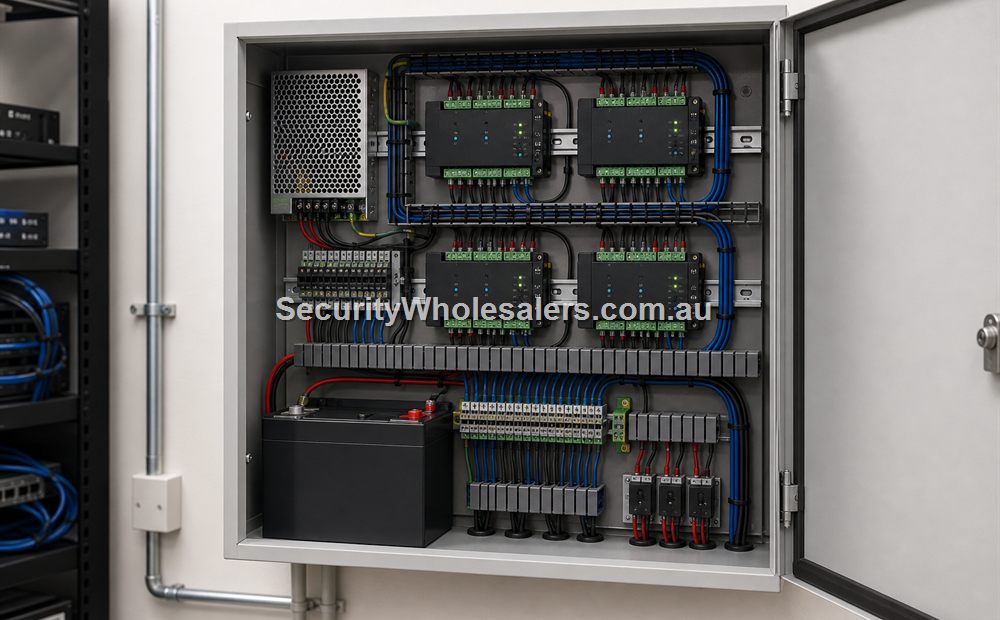
- Logged staff-door path: DS-K2702X-P or similar controller, reader or keypad-reader, lock hardware, door contact, and network for event review.
- Card or tag credentials where the site wants cleaner issue and revoke workflow than shared codes provide.
- UPS if the staff entry must stay logged and predictable during short outages.
- Space for a second reader or second door if the site already suspects the system will expand soon.
Programming, Testing, and Handover
A staff-entry install is ready when management can handle the next new starter and the next departing staff member without calling the installer to rewrite the whole system.
- Program named users or clearly controlled shared credentials before handover rather than leaving factory defaults in place.
- Test normal entry, denied entry, after-hours rules, and egress on the real staff workflow the site will use.
- Show the client how to remove a departed staff member immediately and how to issue a replacement credential.
- Confirm whether attendance-style reporting is needed now or later so expectations are set honestly.
- Leave records of admin access, door timing, and the upgrade path if a second staff or restricted door is added later.
Software, Credentials, and Growth
Staff-entry jobs start simple, but many businesses quickly discover that named users, schedules, and central review are useful. If that is likely, the site should skip straight to a logged controller path instead of retrofitting management discipline later.
Common Mistakes to Avoid
- Check whether the door is truly simple or tied to shifts.
- Use logs if managers want after-hours accountability.
- Plan how staff credentials are removed when people leave.
- Quote the lock and egress path properly.
- Leave room to add another staff or restricted door later.
Recommended Direction
For one simple staff door, keep it proportionate. For shift-based or higher-accountability staff entry, choose a logged system.
Relevant SecurityWholesalers Product Areas
- Hikvision HA-AC-S1 - A practical standalone card and PIN terminal for simple single-door jobs.
- Hikvision DS-K2702X-P - A strong fit when one or two doors need proper logs, schedules, and a real controller architecture.
- Door Strikes - Often the cleanest answer for hinged commercial doors when the latch and frame suit the hardware.
- Access Cards - Useful when the site wants a familiar credential path that can be issued, revoked, and replaced cleanly.
- Hik-Connect Team Mode 1 Door - Relevant where a smaller site wants cloud-style management for access control and time attendance.
Related Guides in This Series
Source References
Frequently Asked Questions
-
What usually works best for staff-entry access control?
Simple staff doors can use a lighter system, but shift-based or high-accountability staff doors usually need logs.
-
Is a simple standalone system enough for staff-entry access control?
Yes, if the staff door is genuinely simple and the site does not need meaningful reporting. No, if the site wants named users, schedules, or after-hours accountability.
-
When do logs really matter on staff-entry access control?
Logs matter when the staff door is used across shifts, when managers need to review after-hours use, or when staff turnover is real.
-
When does intercom or visitor verification matter here?
Intercom usually matters less on internal staff doors, but it can matter on a main staff entry that also handles lockouts or after-hours support.
-
What software usually makes sense?
Software becomes useful once the site wants named staff users, shift schedules, or several staff doors managed together.
-
What is the most common buying mistake?
A common issue is assuming a staff-entry door never needs logs.
Review information
Content owner: SecurityWholesalers access control guide team. Revision: 17 July 2026. Use these examples as a starting point, then confirm the details against current product manuals, approved drawings and relevant authority requirements.
NCC access and egress | ACMA cabling requirements | OAIC biometric guidance | Access control definitions