

















Commercial
Electric Strike Buying Guide
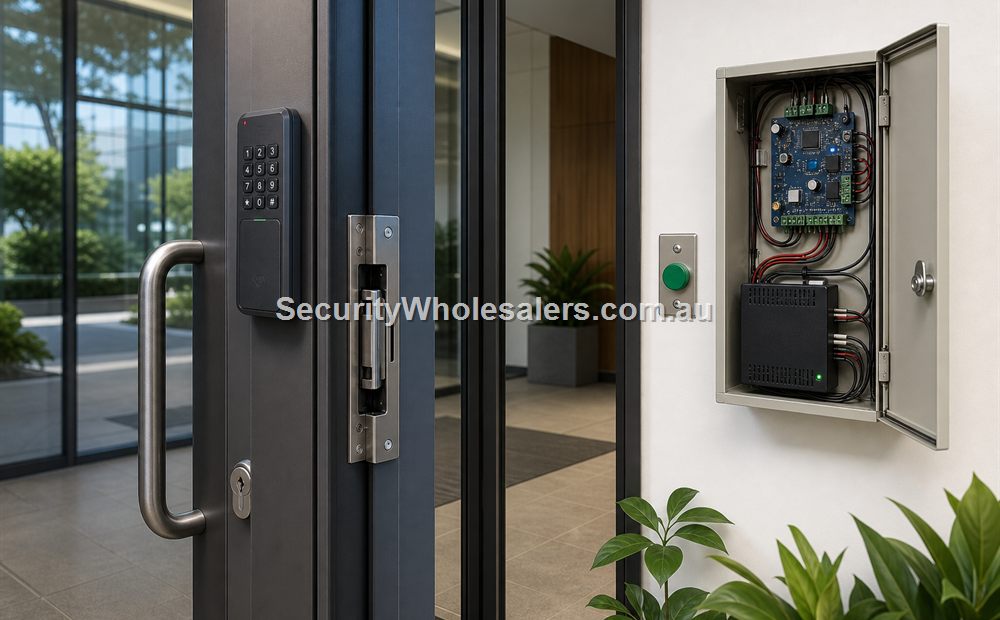
Buying Guide
Short answer
A good electric strike is chosen by the latch and frame it has to work with. The main checks are door type, frame profile, latch preload, fail mode, voltage, and whether the opening is public-facing or part of an exit path.
An electric strike often looks simple in a product photo and becomes more technical once it meets a real frame and latch. The right strike is as much about the door geometry as it is about the electrical rating.
For a glass shopfront or aluminium entry, the strike path can be very good, but only if the latch and frame actually suit it.
On this page:
What this means in practice
Strikes release a latch, which means they depend on the latch design and how the door closes into the frame. That makes door pressure, frame depth, and fail mode especially important.
| What to compare | Why it matters | Typical effect on the system |
|---|---|---|
| Latch and keeper geometry | Decides whether the strike can release cleanly | Wrong geometry creates chronic release problems. |
| Fail-safe versus fail-secure | Changes how the strike behaves on power loss | This must match the opening purpose. |
| Voltage and current requirements | Needs to match the power and controller path | Wrong voltage causes unreliable behaviour. |
| Frame material and cut-out space | Decides install fit and labour | Shopfronts and narrow frames need closer checking. |
| Door pressure and closer force | Affects whether the latch can release cleanly | Heavy preload can make a good strike look faulty. |
Real-world examples
Standard office rear staff door
A basic staff door with a normal latch often makes a clean strike job if the frame is suitable and the site wants tidy relocking.
Aluminium pharmacy side entry
A pharmacy side entry can suit a strike very well, but only if the latch and stile detail are confirmed before ordering.
What usually works
- Match the strike to the latch and frame, not only the brand.
- Check fail mode and voltage early.
- Use strikes where the door behaviour genuinely suits a latch-release path.
What to check
- Do not force a strike path onto a door that does not really suit it.
- Do not ignore latch preload and closer force.
- If the opening is part of an exit path or public entry, the full door behaviour needs to be considered.
Things to check
- Buying by appearance or price instead of latch compatibility.
- Mixing up fail-safe and fail-secure.
- Ignoring the frame depth and cut-out space.
Buying considerations
- Door and latch type.
- Frame detail.
- Fail mode.
- Voltage.
- Entry and egress purpose.
When to ask for help
A close-up of the latch edge and frame strike area often determines whether a strike is even the right path.
- Send the latch edge, frame cut-out, full door, and inside handle side.
- If it is aluminium, show the stile and latch closely.
- Describe whether the door is public-facing, staff-only, or exit-related.
Door photo help
For Electric Strike Buying Guide, if you are not sure which parts suit the door, send a photo of the door, lock area, frame and preferred reader position. We can help point you toward the right controller, reader, lock, exit button, and power supply.
Kit sizing
For a simple starting point, compare our single-door, 2-door, and 4-door access control kit guides before choosing parts individually.
Related guides
Relevant products and categories
- Electric Strikes - Strike options for aluminium shopfronts, latch-based doors, and many standard commercial frames.
- Access Control Products - Main category for controllers, readers, kits, locks, and related hardware.
Frequently Asked Questions
- What is the best electric strike for a business door?
The best strike depends on the latch, frame, fail mode, and the way the door is used.
- Can an electric strike work on an aluminium shopfront?
Often yes, if the latch and frame detail support it.
- Why do strikes fail even when the reader works?
Door pressure, wrong voltage, wrong fail mode, or poor frame fit can all stop clean release.
- Do I need fail-safe or fail-secure?
That depends on how the opening should behave on power loss and how the wider door workflow is meant to work.
- What photos should I send?
Latch edge, frame strike area, full door, and inside handle-side photos are the most useful.
SecurityWholesalers product paths for Electric Strike Buying Guide
Use these product paths as a practical starting point after the buying logic is clear. The right product list should follow the site design, not replace it.
Check compatibility before ordering
Email sales@securitywholesalers.com.au with the controller, reader and lock model numbers, door photos, required user method and installation context. For trade pricing, also include your trade account details.
Review information
Content owner: SecurityWholesalers access control guide team. Revision: 17 July 2026. Use these examples as a starting point, then confirm the details against current product manuals, approved drawings and relevant authority requirements.
NCC access and egress | ACMA cabling requirements | OAIC biometric guidance | Access control definitions