

















Troubleshooting
Electric Strike Not Releasing
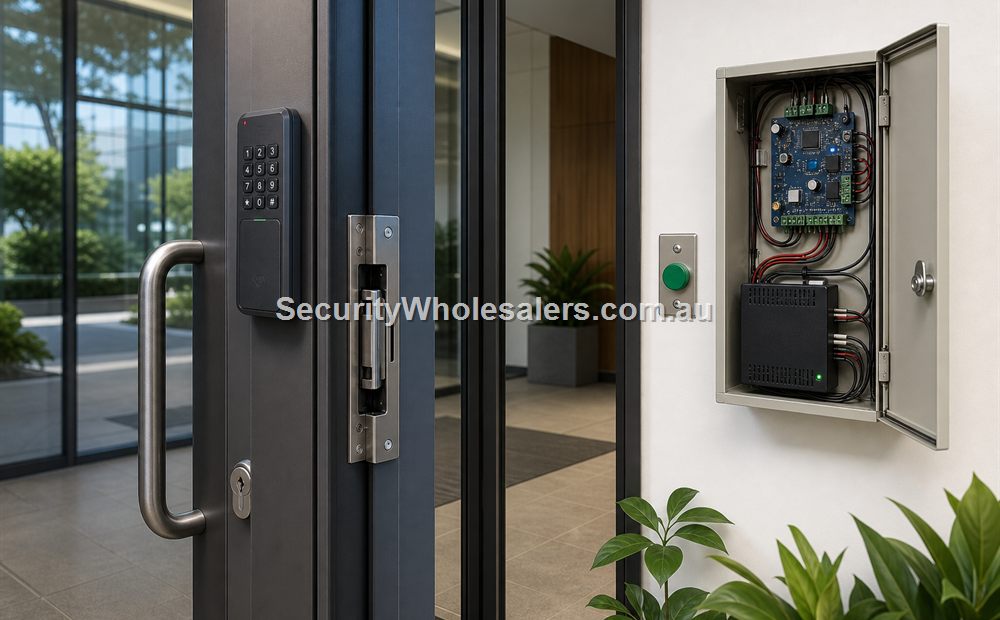
Troubleshooting
Short answer
An electric strike that is not releasing is often suffering from a voltage, fail-mode, latch preload, or controller issue. Start with the strike type, the door pressure on the latch, and whether the strike is actually getting the right release signal.
Strikes often fail in a more mechanical-looking way than readers do. The site may think the strike is dead when the real issue is door pressure, wrong voltage, or a fail-safe versus fail-secure mismatch.
That is why a strike fault should be treated as both an electrical and a door-alignment question.
On this page:
What this means in practice
A strike can look completely dead when it is actually receiving the wrong voltage, being held under latch pressure, or programmed with the wrong fail behaviour. The physical latch and frame relationship matter as much as the release signal.
| What to check | Why it matters | What the fault can look like |
|---|---|---|
| Correct voltage and strike type | Wrong voltage or wrong strike type creates false faults | Strike hums, chatters, or does nothing. |
| Fail-safe versus fail-secure setting | The wrong mode causes confusing behaviour | Strike behaves opposite to what the site expects. |
| Latch pressure on the keeper | Heavy preload can stop clean release | Door pushes hard into the strike and will not let go. |
| Frame and keeper alignment | Misalignment can mimic an electrical fault | Strike releases but the latch still drags. |
| Controller relay or timer | The release command may be too short or missing | Valid credential is presented but the strike does not open. |
Real-world examples
Aluminium office entry with tight latch preload
An aluminium entry can show a perfect reader response and still fail to open because the door is loading hard into the strike. That is often a door-pressure issue before it is a strike-body issue.
Warehouse side door with wrong strike mode
A warehouse side door may have the wrong fail mode selected, making the site think the strike is faulty when it is actually behaving as programmed.
What usually works
- Confirm the strike model, voltage, and fail mode before replacing it.
- Check whether the latch is pressing heavily into the keeper.
- Test whether the release pulse is long enough and actually reaching the strike.
What to check
- Do not force a strike into a frame that does not really suit it.
- If the opening is part of an exit path, consider the full release and egress behaviour.
- Do not assume a beeping reader means the strike is getting the correct release signal.
Things to check
- Replacing the strike when the controller timer is the issue.
- Ignoring latch preload and alignment.
- Mixing up fail-safe and fail-secure behaviour.
Buying considerations
- Correct strike type for the door and latch.
- Voltage and current path.
- Fail mode.
- Whether the door and frame physically suit a strike path.
When to ask for help
Strike faults are much easier to diagnose when the installer or supplier can see the latch, keeper, and frame detail. A photo of the strike cut-out and door edge helps a lot.
- Send the strike area, the latch edge, the frame profile, and the controller or power supply if visible.
- Describe whether the door is tight against the latch when closed.
- Note whether the problem is constant or only under wind, pressure, or closer force.
Troubleshooting
If a door is not unlocking, staying unlocked, or not releasing properly, take photos of the reader, lock, controller, power supply, and door frame before replacing parts. The fault may be wiring, power, programming, lock hardware, or the controller.
Door photo help
For Electric Strike Not Releasing, if you are not sure which parts suit the door, send a photo of the door, lock area, frame and preferred reader position. We can help point you toward the right controller, reader, lock, exit button, and power supply.
Related guides
Relevant products and categories
- Electric Strikes - Strike options for aluminium shopfronts, latch-based doors, and many standard commercial frames.
- Access Control Products - Main category for controllers, readers, kits, locks, and related hardware.
Frequently Asked Questions
- Why is my electric strike not releasing?
The common causes are wrong voltage, wrong fail mode, latch preload, frame misalignment, or a missing release signal.
- Can door pressure stop a strike from opening?
Yes. Heavy latch preload can stop a strike releasing cleanly even when the electrical side is working.
- How do I know if the fail mode is wrong?
If the strike behaves opposite to what the site expects on power or release, the fail mode should be checked.
- Should I replace the strike first?
Not until the voltage, controller output, and door alignment have been checked.
- What photos help?
The strike cut-out, latch edge, frame profile, and controller or power-supply photos are the most useful.
SecurityWholesalers product paths for Electric Strike Not Releasing
Use these product paths as a practical starting point after the buying logic is clear. The right product list should follow the site design, not replace it.
Need help narrowing down this fault?
If the equipment was purchased from SecurityWholesalers, email support@securitywholesalers.com.au with the model numbers, a clear fault description, controller event or error details, measured voltages where safe and appropriate, and photos of the reader, lock, power supply and terminations. For replacement-part selection, email sales@securitywholesalers.com.au.
Review information
Content owner: SecurityWholesalers access control guide team. Revision: 17 July 2026. Use these examples as a starting point, then confirm the details against current product manuals, approved drawings and relevant authority requirements.
NCC access and egress | ACMA cabling requirements | OAIC biometric guidance | Access control definitions