














Informational
Maglock vs Electric Strike
Decision Guide
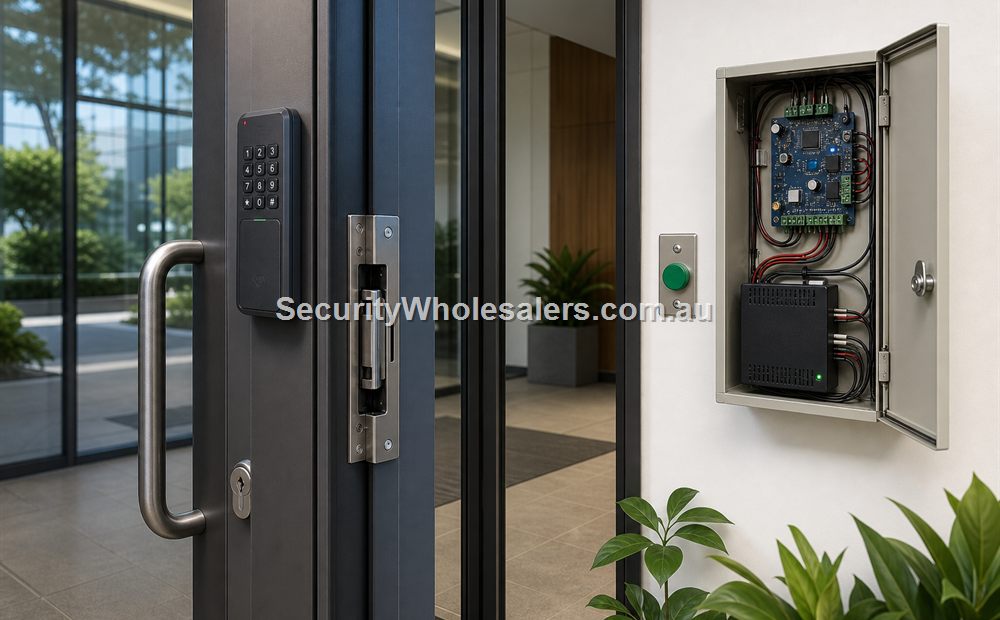
Maglock versus electric strike is usually the first real hardware fork in an access control job. Both can work well. The important part is that they do not suit the same openings equally and they do not behave the same way once people start using the door every day.
Main technical difference
| Question | Electric strike | Maglock |
|---|---|---|
| How it holds the door | Works with the latch and frame | Uses magnetic holding force at the opening |
| Typical fit | Many standard hinged commercial doors | Openings where strike fit is awkward or the magnetic path is cleaner |
| What the installer must get right | Latch and frame compatibility, preload, closer, strike alignment | Mounting, release logic, safe egress, and stable holding alignment |
Where electric strikes usually fit better
Strikes often feel cleaner on hinged commercial doors where the site wants the opening to behave like a normal latching door during daily use. If the frame, closer, and latch all suit the hardware, a strike can produce a very natural staff-door or office-door result.
Where maglocks often fit better
Maglocks can be the better choice where the opening, frame, or latch arrangement makes strike work harder, or where the installer needs a different hardware strategy to achieve reliable locking and release. The opening still needs a safe and deliberate egress design rather than a simplistic view of the magnet alone.
Standard office rear door
A rear office door with a healthy closer, standard latch, and suitable frame often suits a strike well. The door already behaves like a normal latching opening, so the strike simply gives that opening controlled release without changing the feel too radically.
Awkward glazed entry or frame condition
An awkward glazed or hard-to-modify entry can push the design toward a maglock if the strike path becomes messy or unreliable. The better result is the one that matches the real opening, not the one that looked simpler on paper.
What buyers and installers should compare
- Door and frame material, latch condition, closer strength, and alignment before any hardware is chosen.
- Egress behaviour and whether the safe-side release path is simple, obvious, and compliant for the opening.
- Whether the site wants a more natural latching feel or is comfortable with the door behaving more like a magnetic-hold opening.
- How exposed the hardware is to misuse, abuse, or poor alignment over time.
- What happens on power loss and whether the lock path still matches the site purpose.
Complete solution examples
Electric-strike solution
Typical parts
- Strike selected for latch, frame, fire-door status, voltage and fail mode
- Reader and secure-side controller
- Door contact and REX/exit input if required
- Regulated PSU/charger and battery where specified
- Door loop or protected cable-transfer method if hardware is in the leaf
Typical cable functions
- Reader power/data to controller
- Calculated lock-power pair to strike
- Door-contact pair and REX pair
- Network cable to controller for networked systems
- Emergency/fire interface as required by the approved design
Site checks: latch type and depth, frame material, preload, door handing, closer action, seals, frame cutting approval and whether the door is a tested fire or smoke assembly.
Maglock solution
Typical parts
- Maglock sized and listed for the opening with the correct L/Z/U brackets or glass hardware
- Reader and controller mounted on the secure side of the cable path
- Door contact, REX device and approved independent emergency release where required
- Continuously rated PSU/charger and calculated batteries
- Fire-interface relay/interface equipment where the approved cause-and-effect requires release
Typical cable functions
- Continuous lock power sized for current and voltage drop
- Reader communication/power
- Separate door contact, REX and emergency-release circuits
- Fire-interface cable with the supervision/isolation required by the design
- Network and cabinet tamper monitoring
Site checks: top rail and frame strength, glass type, door swing, closer, holding alignment, cable concealment, public egress and what happens on power, fire input and emergency release.
Do not compare purchase price alone
| Cost/maintenance issue | Strike | Maglock |
|---|---|---|
| Door preparation | Frame cutting and latch compatibility can dominate labour. | Brackets, reinforcement and concealed cable routes can dominate labour. |
| Power | Some strikes draw mainly during release; verify inrush and duty. | Usually continuously energised while secure; include continuous load and battery impact. |
| Alignment | Preload and latch/keeper alignment matter. | Armature contact and door sag affect holding force. |
| Egress | Mechanical safe-side egress may be straightforward on a suitable lockset. | Release path normally needs more deliberate electrical and compliance coordination. |
Relevant SecurityWholesalers product paths
- Door strikes for hinged commercial openings where latch-and-frame fit is strong.
- Maglocks where the opening or mounting path makes a magnetic-hold solution more practical.
- Access control hardware for readers, controllers, locks, and exit devices that complete the opening.
Related guides
Frequently Asked Questions
- When is an electric strike usually the cleaner choice?
It is often the cleaner choice on hinged commercial doors where the frame and latch suit it and the site wants a more natural everyday door feel.
- When does a maglock usually make more sense?
A maglock often makes more sense where the opening or frame makes a strike awkward, or where the install path favours a magnetic hold arrangement.
- Is maglock versus strike mainly a security question?
It is also a door-behaviour, egress, installation, and maintenance question. The lock path changes how the opening feels and how cleanly it can be built.
- Can the wrong lock path make a good reader look bad?
Yes. Many access-control complaints that sound like reader problems are really lock, closer, or door-alignment problems.
- What is the biggest lock-selection mistake?
Choosing before the actual door, frame, latch, closer, and egress path have been inspected properly.
- Which page should someone read next?
The fire and egress basics page is the next useful step if the opening has compliance, release, or emergency-exit implications.
Review information
Content owner: SecurityWholesalers access control guide team. Revision: 17 July 2026. Use these examples as a starting point, then confirm the details against current product manuals, approved drawings and relevant authority requirements.
NCC access and egress | ACMA cabling requirements | OAIC biometric guidance | Access control definitions