

















Commercial
Hikvision ANPR Cameras Buying Guide
ANPR Guide
Quick answer
For new Hikvision ANPR projects, focus on the current 4MP and specialist vehicle-recognition range. Exclude the older 2MP DS-2CD7A26 bullet variants, which have been discontinued. The right choice depends on lane distance, vehicle speed, mounting geometry, lighting, whether you need overview context, and whether the camera is only recording plates or also opening a gate.
When Hikvision ANPR makes sense
Gates and boom gates
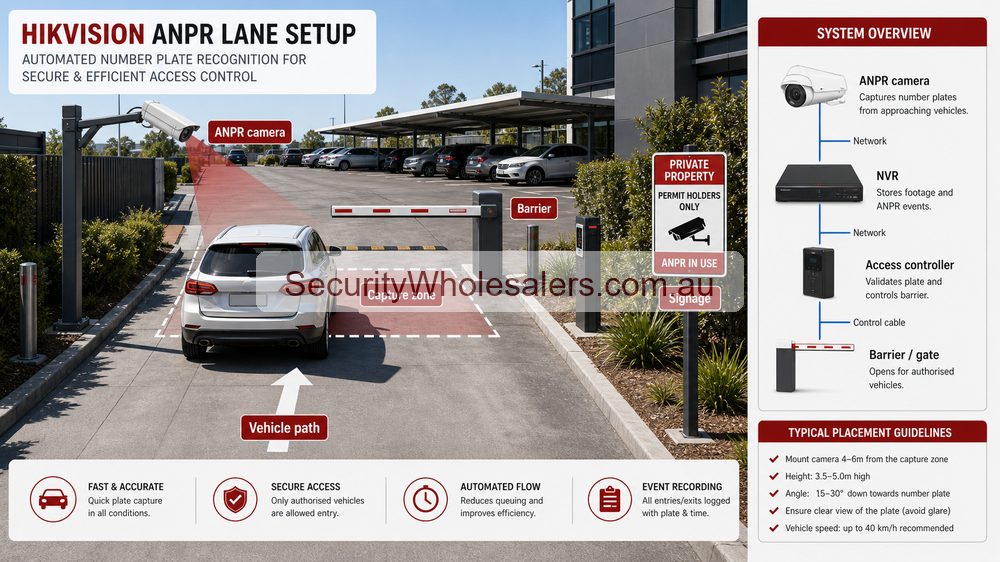
Use ANPR when the site wants recognised vehicles to trigger a gate, create a vehicle log, or alert staff when a listed plate arrives. The lane should be narrow enough that vehicles pass through a predictable capture zone.
Car parks and strata driveways
ANPR can help apartments, offices, schools, and paid car parks keep clearer vehicle records. It is strongest where entry and exit lanes are controlled rather than wide shared driveways with vehicles cutting across at odd angles.
Warehouses and logistics yards
ANPR helps record truck arrivals, contractor vehicles, delivery traffic, and after-hours movements. Pair it with wider overview cameras so staff can see the vehicle, driver movement, gate state, and loading area context.
Higher-security sites
Use ANPR where plate records are part of a broader security workflow: restricted yards, critical assets, school car parks, government-style sites, depots, or premises that need vehicle search after an incident.
When ANPR is the wrong answer
A normal CCTV camera can sometimes show a plate, especially in daylight and low-speed scenes. ANPR is different. It is worth paying for when the system needs automatic plate recognition or structured vehicle events. If the only requirement is "can we see who drove in?", a well-placed fixed or motorised varifocal camera may be enough.
ANPR is also a poor fit when the lane cannot be controlled. Very wide driveways, steep ramps, hard side angles, vehicles approaching from several directions, heavy headlight flare, reflective street signs, unstable poles, and sites with no way to mount at the right distance can all hurt recognition. In those cases, solve the scene before choosing the model.
Installer reality check
If the customer cannot nominate the capture point, the mounting position, the direction vehicles travel, and what should happen after a plate is recognised, the project is not ready for product selection yet. Pause and design the lane first.
Hikvision ANPR models and setups
| Best fit | Best fit | What to watch |
|---|---|---|
| 4MP DeepinView ANPR bullet, 2.8-12 mm | Shorter controlled lanes, gates, car park entries, and flexible general vehicle monitoring. | Do not leave the lens too wide if plate recognition is the real goal. Confirm plate pixel size during commissioning. |
| 4MP DeepinView ANPR bullet, 8-32 mm | Longer approaches, tighter plate views, gate setbacks, and lanes where the camera cannot sit close to the capture point. | Longer zoom helps plate detail but narrows context. Add a separate overview camera if operators need the whole driveway. |
| 4MP TandemVu ANPR / dual-channel bullet | Sites that want a tighter ANPR channel plus a wider contextual channel from the same position. | Useful for understanding the scene, but still design the ANPR channel around the plate, not the prettiest overview. |
| 4MP fixed turret ANPR | Compact entries, pedestrian-adjacent car park lanes, and lower-profile mounting where a large bullet is awkward. | Fixed lens means less forgiveness. It suits predictable lanes more than variable-distance plate capture. |
| 5MP entrance ANPR camera | Dedicated entrance and exit projects where triggering, plate capture, and access workflow are central to the job. | Plan lead time, mounting hardware, lighting, and integration early. This is a system component, not just a normal CCTV camera. |
| Solar or 4G ANPR | Remote gates, farms, temporary entrances, and sites where network cabling or mains power is difficult. | Budget for signal, battery, panel placement, weather exposure, and realistic event volume. |
| ITS checkpoint or portable ANPR | Structured traffic, temporary operations, enforcement-style checkpoints, and specialist vehicle monitoring. | Usually overkill for a normal business driveway. Treat these as specialist projects with proper design support. |
Recommended shortlist by project type
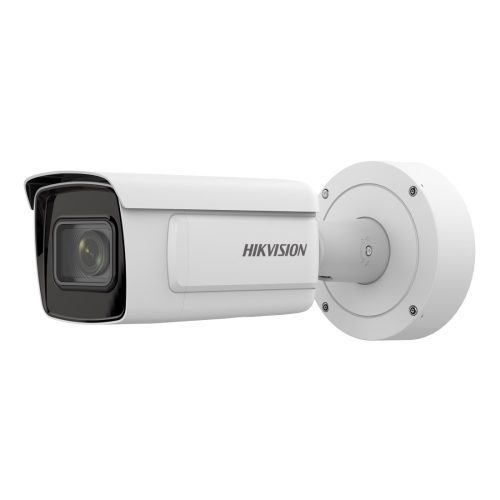
4MP DeepinView 2.8-12 mm ANPR bullet
The sensible starting point for many controlled gates and compact car park entries. Choose this path when the camera can be mounted reasonably close to the capture point and the installer still wants lens tuning freedom on site.
4MP DeepinView 8-32 mm ANPR bullet
The stronger fit when the camera sits farther from the lane or needs a tighter plate view. This is often the cleaner choice for longer driveways, larger gates, and warehouse or depot approaches.
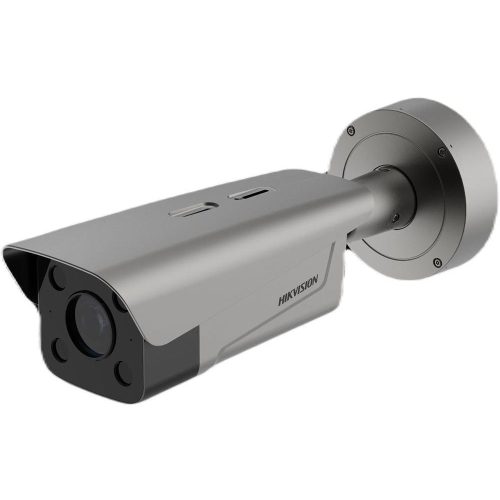
DS-TCG406-E 5MP entrance ANPR
A more access-control-focused entrance camera for car parks, estates, logistics entries and projects where triggering, barrier logic and offline lists matter.
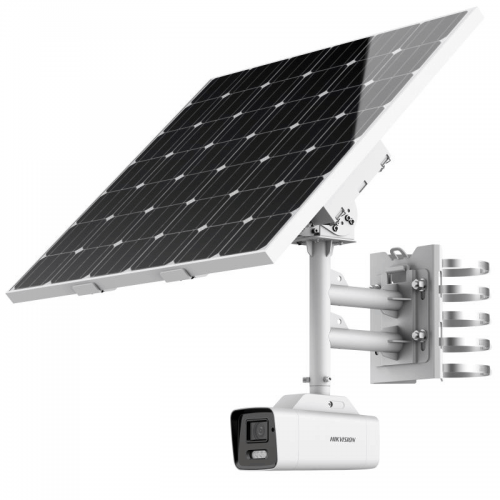
DS-2XS6A46G1/P-IZS/C36S80 solar ANPR kit
Use this style of path for remote gates, farms, temporary entrances and sites where power, 4G signal, battery budget and service access are part of the design.
Models to exclude from a new buying guide
The older 2MP DS-2CD7A26G0/P-IZS bullet variants still appear in some product-category history and search results, but they should not be the recommended buying option for a new ANPR guide because those 2MP bullet variants have been discontinued. Keep the buying decision focused at the newer 4MP DeepinView, TandemVu, entrance, solar/4G, and specialist ITS options instead.
Installation conditions matter more than the spec sheet
The Hikvision H8 ANPR installation guidance is blunt in the right way: the camera must be installed for plate capture, not just for a general-looking CCTV scene. The guide calls for controlled angle, suitable pitch, and enough plate pixels for the recognition engine. For 4MP ANPR, use the plate-size target from the guide as a commissioning check: the plate should sit around 27 to 40 pixels high and 135 to 270 pixels wide in the image at the recognition point.
Mounting angle is just as important. Keep the camera as close to head-on as the site allows, avoid large side angles, and keep the vehicle travel direction close to the camera's vertical image direction. The Hikvision guidance indicates the pitch angle should sit between about 15 degrees and 30 degrees, and the vehicle-moving direction should be less than 30 degrees from the vertical direction in the image. If the plate is heavily slanted, too high, too low, or too small, the better camera will still struggle.
What a good capture frame should look like
- The plate is large enough to meet the pixel target at the recognition point, not just readable when zoomed in manually.
- The plate is close to level in the image, with limited sideways skew and no extreme vertical pitch.
- The vehicle passes through the same part of the frame each time, instead of appearing randomly across a wide scene.
- Headlights, tail lights, wet pavement, and reflective signs do not dominate the exposure.
- The camera remains stable when trucks pass, gates move, or wind hits the pole.
- The night image has been checked with real plates, real headlights, and the same traffic direction the site will use every day.
| Condition | Good ANPR design | Risky design |
|---|---|---|
| Lane shape | One vehicle passes through a predictable capture point. | Vehicles approach from several angles or overtake in the capture zone. |
| Camera angle | Camera is close to straight-on with a controlled pitch. | Camera is mounted high and far to the side because that was the easiest pole. |
| Plate size | Plate pixel height and width are checked during setup. | The scene looks sharp overall but the plate is a tiny part of the image. |
| Lighting | IR, white light, WDR, exposure, and headlight control are tuned for plates. | General night vision is left on default and headlights wash the plate out. |
| Mounting stability | Camera is fixed to a stable wall, gantry, or well-braced pole. | Long pole, wind vibration, loose brackets, or gate movement affects the image. |
| Workflow | Recorder, search, alerts, gate relay, and allow-list responsibilities are planned. | The camera is bought first and the access-control workflow is improvised later. |
Lens choice: 2.8-12 mm vs 8-32 mm
The lens decision is usually about distance and discipline. A 2.8-12 mm motorised lens gives more flexibility when the camera is close to the lane or needs to cover a compact driveway. An 8-32 mm lens is better when the camera sits farther back or must hold a tighter plate view from a longer approach. The trap is using a wide view because it feels more useful on the monitor, then discovering the plate is not large enough for reliable recognition.
If the customer wants both plate recognition and a broad view of the whole entry, do not force one camera to do both jobs unless a dual-channel or TandemVu model genuinely fits the scene. Often the cleaner design is one ANPR camera for the plate and one normal overview camera for people, vehicle body, gate, and driveway context.
Triggering, lighting, and speed
ANPR cameras can work from video analytics, detection lines, regions, loop-style triggers, relay input, or a combination depending on the model and project. The buying decision should include how the vehicle will be detected, not only how the plate will be read. A boom gate lane may suit a tighter trigger point because vehicles slow down and pass one at a time. A driveway without a gate may need a broader detection zone and more tolerance for vehicles stopping short, tailgating, or turning across the capture point.
Lighting is where many otherwise good ANPR installs become unreliable. A general-purpose night scene can look bright and still fail to show plates cleanly because reflective plates, headlights, brake lights, wet roads, and polished vehicle fronts behave differently from walls or fences. Use the camera's IR or white-light behaviour deliberately, tune exposure for the plate, and test at night with real vehicles. Do not hand over an ANPR job after only checking a daylight snapshot.
Vehicle speed also changes the buying decision. A slow gate or car park entry is much easier than a faster roadway or driveway with vehicles rolling through without stopping. For higher-speed or less controlled scenes, step away from entry-level thinking and consider longer focal lengths, better mounting positions, specialist capture cameras, or ITS-style options. If the site cannot slow vehicles down or control where the plate passes, the design needs more care before product selection.
Recorder, software, and access-control workflow
Before choosing the camera, decide what the plate event is meant to do. Some customers only need searchable plate records on the NVR. Others need allow-list or block-list alerts, gate release, time-based vehicle access, integration with HikCentral-style software, or reports for site managers. Those are different jobs, and they can change the recorder, licensing, network, and handover plan.
For simple evidence capture, the main concern is reliable recording, searchable events, snapshot quality, and storage retention. For gate control, the design also needs relay logic, fail-safe behaviour, manual override, visitor handling, and a clear process for adding or removing authorised plates. For larger sites, nominate who owns plate administration. If no one is responsible for keeping the plate list current, the automation slowly becomes a nuisance.
Do not forget privacy and governance. ANPR creates structured vehicle records, so signage, retention, user access, and audit expectations should be discussed before the system goes live. That is especially important for schools, strata buildings, workplaces, and shared commercial sites where staff, residents, visitors, and contractors may all be recorded.
Questions to ask before quoting
| Question | Why it changes the recommendation |
|---|---|
| Is the customer trying to recognise plates automatically or just see plates in footage? | Automatic recognition needs ANPR. Visual evidence may only need a well-placed motorised camera. |
| Will the camera open a gate or only record vehicle events? | Gate release adds relay logic, allow-list management, fail-safe planning, and support expectations. |
| How many lanes need coverage? | Most reliable ANPR designs treat each lane as its own capture problem rather than stretching one camera too wide. |
| Can vehicles be slowed or funnelled? | Speed humps, boom gates, lane markings, or bollards can improve recognition more than upgrading the camera. |
| Who will maintain the plate list and review false reads? | ANPR is an ongoing workflow. The best hardware still needs someone to own administration. |
Configuration and commissioning checklist
Before ordering
Measure lane width, camera-to-plate distance, mounting height, likely vehicle speed, lighting, cable path, and whether the site needs gate relay, NVR search, software licence, or integration with access control.
Before handover
Verify plate pixel size, camera pitch, side angle, night exposure, day/night switching, recognition area, detection line or trigger zone, snapshot quality, and recorded event search.
Before promising automation
Confirm how the customer will manage allow lists, block lists, visitor plates, staff vehicles, duplicate plates, trailers, motorcycles, privacy expectations, and false-read review.
Use-case recommendations
| Site | Recommended Hikvision setup | Extra design note |
|---|---|---|
| Small business gate | 4MP motorised ANPR bullet. | Keep the lane narrow and add a separate overview camera if staff need driver or parcel context. |
| Apartment driveway | 4MP ANPR bullet or fixed turret where the entry is compact. | Watch steep ramps, visitor vehicles, glare from basement exits, and body corporate privacy expectations. |
| Warehouse or depot | 8-32 mm ANPR bullet or TandemVu dual-channel model. | Pair ANPR with yard overview, loading dock cameras, and after-hours alert workflow. |
| School car park | 4MP ANPR at controlled entry or exit lanes. | Keep the design focused on vehicle access and incident review; avoid unnecessary capture beyond the vehicle lane. |
| Remote farm or construction gate | Solar/4G ANPR where mains and cabling are not realistic. | Confirm mobile coverage, battery budget, panel orientation, and serviceability before specifying the camera. |
Common mistakes to avoid
- Using one wide camera for two lanes and expecting reliable recognition across both.
- Mounting the camera at a convenient building corner instead of the correct plate angle.
- Choosing ANPR for a steep ramp without testing the plate angle at the top and bottom of the slope.
- Commissioning the camera during the day and never validating night performance.
- Forgetting that an ANPR view is usually not a good overview view.
- Promising gate automation before confirming relay behaviour, manual override, and who manages authorised plates.
Related Hikvision guides
Hikvision Motorised Varifocal Cameras Buying Guide
Use this when the site may only need plate visibility or a tuned vehicle view rather than automatic recognition.
Hikvision TandemVu Cameras Buying Guide
Compare this when the project needs plate capture plus a wider contextual view from the same general area.
How to Choose a Hikvision NVR
Check recorder fit, storage, event search, channel count, and system headroom before finalising the ANPR hardware.
Hikvision Access Control Buying Guide
Read this when the ANPR camera is expected to form part of a gate, door, or controlled-entry workflow.
Hikvision ANPR FAQs
-
Should every car park entry use ANPR?
No. Use ANPR when plate recognition creates a useful record or action. If the customer only needs general visibility, a normal fixed or motorised camera may be more practical.
-
Can one ANPR camera cover entry and exit?
Usually not reliably unless the lane geometry is very controlled. Entry and exit often need different angles, trigger zones, and recognition directions.
-
Do ANPR cameras replace overview cameras?
No. ANPR cameras should be framed for the plate. Use separate overview cameras for the wider driveway, driver movement, gate state, and incident context.
-
Why exclude the 2MP bullet variants?
The older 2MP DS-2CD7A26 bullet variants are discontinued, so a current buying guide should steer buyers toward the newer 4MP and specialist Hikvision ANPR models.
-
Can ANPR be spoofed?
Yes, ANPR can be affected by obscured, altered, stolen or deliberately manipulated plates. It should be treated as a strong automation tool, not a perfect identity guarantee.
Bottom line
Buy Hikvision ANPR when the job needs plate recognition as a workflow, not just plate visibility as a hope. Exclude the discontinued 2MP bullet variants from new recommendations, choose the current 4MP or specialist ANPR option that matches the lane, and treat installation geometry as the deciding factor. A correctly positioned mid-range ANPR camera will beat a premium model mounted in the wrong place.
ANPR quote scenarios
| Site | ANPR design note | Why |
|---|---|---|
| Strata driveway | Use only if the entry lane is controlled enough for reliable plate capture. | Wide shared driveways with odd angles can be poor ANPR candidates. |
| Business gate | Pair ANPR with barrier logic, signage and user permissions. | The site often wants vehicle records, not just a readable video frame. |
| Logistics yard | Plan entry and exit lanes separately. | Different vehicle directions and speeds affect capture reliability. |
| School or workplace | Discuss privacy, signage, retention and access to plate records. | ANPR creates structured vehicle data, so governance matters. |
Do not sell ANPR as a normal CCTV upgrade. Sell it where there is a controlled capture zone and a clear reason to record plate data.