












Commercial
How to Choose a Hikvision Camera
Buying Guide
Quick answer
Most Hikvision buyers should start with a fixed turret or bullet on the key evidence views, then step up only when the scene genuinely demands more. Move into a motorised varifocal when the depth or framing is hard to judge on paper, move into ColorVu when the key issue is night colour, and move into PTZ or deterrence only when the site clearly benefits from those specialised roles.
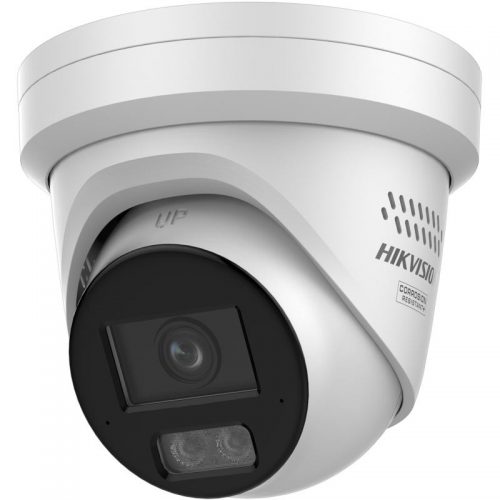
Diagram: the quickest way to narrow a Hikvision camera shortlist
Start with how stable the scene is, then decide whether the job really needs better night colour, tuning flexibility, or a visible response.
What most buyers should start with
Most homes and small businesses
A fixed turret or bullet is usually the cleanest starting point. The real decision is often lens position, low-light behaviour, and whether the scene wants AcuSense or ColorVu.
Awkward frontages and long approaches
A motorised varifocal is worth it when the installer needs tuning freedom on site instead of gambling on one fixed lens choice from the start.
After-hours problem points
If the site wants a stronger warning response, compare deterrence cameras carefully rather than assuming every scene needs speaker and strobe.
Larger sites with live overview needs
PTZ only starts making sense when the site truly benefits from a camera that an operator will actively use, not as a shortcut around fixed evidence views.
Start with the job each camera has to do
Most Hikvision jobs improve when the installer stops asking "which camera is best?" and starts asking "what question does this view have to answer later?" A front entry may need a stable face and threshold view. A long side path may need a tighter scene that can be tuned during commissioning. A broad car park may need one context camera and one clearer access-point view, not one compromise shot.
That mindset is what turns a product range into a real design. It also stops buyers from overusing one housing or lens style across the whole site just because it looks simpler on the quote.
Choose by scene first
| Scene | Usually the best starting camera style | What often decides the step-up |
|---|---|---|
| Front door or main entry | Fixed turret or bullet | Whether the site wants better night colour or cleaner analytics. |
| Driveway or gate | Fixed bullet or turret, sometimes motorised varifocal | Depth, plate capture expectations, and after-hours behaviour. |
| Rear lane or side path | Fixed camera with AcuSense or ColorVu | Whether the site only wants evidence or also wants deterrence. |
| Loading apron or awkward frontage | Motorised varifocal | How hard it is to judge the final framing before installation. |
| Broader yard or external grounds | Fixed evidence cameras first | Whether there is a real case for PTZ or TandemVu support. |
The main Hikvision camera choices buyers actually make
| Camera path | Usually strongest for | Installation note |
|---|---|---|
| Fixed turret or bullet | Entrances, counters, corridors, simple perimeter points | Needs the right lens and mounting height from the start. The next useful check is usually whether the site belongs in the 6MP or 8MP / 4K camera path. |
| Motorised varifocal | Long approaches, awkward frontages, loading areas, mixed-depth scenes | Gives tuning flexibility at commissioning and during later refinements. Most buyers should pair this with the Hikvision NVR guide early, because higher-detail or mixed-depth scenes usually affect recorder and storage planning too. |
| ColorVu or Smart Hybrid Light | Important low-light views where black-and-white IR is not enough | Needs realistic expectations around spill light, placement, and night behaviour. For buyers ready to shop the range, the next stop is usually Hikvision ColorVu cameras or Hikvision ColorVu packages. |
| PTZ | Larger sites, broad external grounds, selected live-overview roles | Should support fixed evidence cameras, not replace them. The strongest PTZ jobs still start with a fixed-camera plan and then add PTZ where live overview or responsive operator control really matters. |
| Deterrence model with speaker and strobe | After-hours perimeter, remote gates, side entries, some retail-front jobs | Useful only when warning audio and visible response make operational sense. Most buyers should compare this with the ColorVu / Smart Hybrid Light guide so the night strategy and the warning strategy are planned together. |
Low-light and analytics often decide the shortlist
On many Hikvision jobs, the final shortlist comes down to two questions: what does the site need to see after dark, and how noisy is the event stream likely to be? If the site wants stronger colour at night, ColorVu or Smart Hybrid Light becomes a serious consideration. If the site wants cleaner human and vehicle filtering, AcuSense starts to matter more.
Those are not brochure-only features. They change where cameras should be mounted, how much scene width one camera can carry confidently, and how usable the recorder becomes once the system goes live.
Real examples of when to keep it simple and when to step up
Small office entry
Keep it simple with a good fixed turret unless there is a genuine reason to tune depth or improve low-light performance. Most small entries do not need a specialist camera.
Retail shopfront with poor night detail
Step up to ColorVu when the footage needs to tell a clearer story after dark and the customer genuinely cares about scene colour.
Long warehouse apron
Step up to a motorised varifocal when the installer needs more freedom to get the final framing right on site.
Large yard where management wants live overview
Only then does a PTZ, TandemVu, or other specialist camera start to justify itself, and even then it should support fixed views rather than replace them.
Installation insight: confirm lens, height, and cable path before the order is locked
The installer should walk the site with three things in mind: the actual target point, the realistic cable or conduit route, and the lighting conditions when the site really cares. A camera that looks perfect at midday from a ladder can still be wrong once the area is lit by cars, shop signs, floodlights, or deep shadow after hours.
Use the Camera Planner early if the site is large or the owner is still changing their mind on coverage. It is much cheaper to redraw a view than to move a cable path after the install is underway.
Do not overlook the recorder path
A great Hikvision camera can still disappoint if it is paired with the wrong recorder branch, poor storage assumptions, or no UPS plan. That is why camera selection should normally be followed immediately by recorder sizing and retention planning, especially if audio, higher resolutions, or multiple specialised cameras are part of the design.
The next best page after this one is usually How to Choose a Hikvision NVR.
Useful next reads by camera type
Hikvision Camera Series Explained
Best if the buyer is still narrowing down AcuSense, ColorVu, Live Guard, TandemVu, or Thermal.
Hikvision ColorVu Cameras Buying Guide
Best if the site cares more about better night colour than about general camera shape.
Hikvision AcuSense Cameras Buying Guide
Best if analytics, people-and-vehicle filtering, and cleaner alerts are shaping the shortlist.
Hikvision Motorised Varifocal Cameras Buying Guide
Best if the scene is awkward enough that the installer may need tuning freedom on site.
Hikvision PTZ Buying Guide
Best if the site is large enough that someone may genuinely use a controllable overview camera.
How to Choose a Hikvision NVR
Best once the camera shortlist is becoming clear and the recorder path now matters.
Relevant SecurityWholesalers Categories and Products
These categories and models are useful because they represent the major Hikvision camera decisions people actually make on real jobs.
- Hikvision camera range - The broad view across fixed, bullet, turret, and more advanced IP camera options.
- Hikvision ColorVu - Useful where the site wants strong night-time colour on key views.
- Hikvision AcuSense - Worth reviewing when the buyer wants stronger human and vehicle filtering.
- DS-2CD2066G2H-IU bullet - A practical example of a straightforward fixed-lens outdoor IP camera.
- DS-2CD2387G3-LIS2UY/SL ColorVu 3.0 turret - A stronger current reference point for a high-end low-light fixed turret path with strobe and speaker.
- Hikvision ColorVu packages - Worth reviewing when the buyer is comfortable standardising on a ColorVu camera family across several key views.
- DS-2CD2367G2H-LISU/SL Smart Hybrid Light deterrence turret - Shows where strobe, speaker, and smarter night illumination can be useful.
- DS-2CD2387G2P-LSU/SL panoramic active deterrence camera - Relevant where one very wide overview plus warning audio and strobe is genuinely useful.
Sources and Further Reading
Frequently Asked Questions
-
Should the buyer start with a turret, bullet, PTZ, or deterrence camera?
Start with the scene and the review requirement. Fixed turrets and bullets handle most predictable evidence views. PTZs only make sense where one moving camera genuinely adds value, and deterrence models should be reserved for places where audio or strobe warning has a clear operational purpose.
-
When is a motorised lens worth paying for on Hikvision?
A motorised lens is worth it when the scene is hard to judge on paper, such as a long driveway, a loading apron, or a wide frontage where the installer needs tuning freedom on site instead of gambling on a fixed lens.
-
What is the difference between ColorVu and Smart Hybrid Light in practical terms?
ColorVu leans toward strong full-time colour performance. Smart Hybrid Light adds more flexibility by combining infrared and white-light behaviour depending on what the site needs after dark.
-
Does AcuSense matter when choosing a Hikvision camera?
Yes, if the buyer cares about cutting false alarms and making playback or event review easier. AcuSense becomes especially useful on perimeter, driveway, retail-front, and commercial-after-hours jobs.
-
What does the installer need to confirm before final camera selection?
They need to confirm mounting height, cable path, backlight, night-time lighting, scene width, desired identification points, weather exposure, and whether the client wants audio, deterrence, or analytics. Those details usually matter more than one more megapixel.
-
Can one Hikvision project mix several camera types?
Yes, and it often should. A good design may use fixed turrets on predictable views, motorised lenses on difficult approaches, and only one or two specialised cameras where wider overview or active deterrence is justified.
Related Pages
How to Choose a Hikvision NVR
Choose the right Hikvision NVR for channel count, PoE, AI, storage, and growth.
Hikvision ColorVu vs Smart Hybrid Light
Compare Hikvision ColorVu and Smart Hybrid Light in practical site terms.
Hikvision AcuSense Cameras Buying Guide
Use this when cleaner alerts, smarter event filtering, and easier playback are the real buying drivers.
Hikvision Live Guard Cameras Buying Guide
Use this when the camera needs to do more than record and the site wants speaker and strobe response after hours.
Hikvision IP vs Turbo HD
Choose between Hikvision IP and Turbo HD based on cabling, expansion, and analytics.