















Commercial
Best Access Control System for Rooming Houses
Buying Guide
Rooming houses often have higher user churn than many other sites. That means the value of access control is not only the lock. It is the ability to issue, remove, and replace credentials without rekeying the property and without losing visibility over who still has access.
What Usually Fits Best
For many rooming houses, a logged small controller system or controller-backed building entry path is the best fit because managers need cleaner user control and better visibility than a standalone code lock usually offers.
| Situation | Usually The Better Path | Why |
|---|---|---|
| One simple shared entry | Logged small system | Cleaner resident management than a shared-code lock. |
| Several shared entries | Controller-backed system | Resident turnover and logs need central discipline. |
| Visitor-heavy front door | Intercom plus access | Verification matters as much as resident credentials. |
Implementation Direction
Rooming-house installs should separate the main resident entry from manager-only or service areas. If the site has several shared doors, the case for a controller-backed system becomes much stronger. The installer should also clarify whether management wants cards, tags, keypad entry, or a mix, and whether temporary or short-stay occupants need different rules.
What the Installer Needs to Confirm on Site
Rooming-house projects should be surveyed around resident turnover and shared entries. The installer should treat user change as a daily operating issue, not a corner case, because that is usually the main reason access control is being installed at all.
- Confirm all shared resident entries, any manager-only or service rooms, and whether visitor verification is required at the main front door.
- Ask how often residents move in and out and whether management needs resident-specific credentials or has been relying on shared codes.
- Inspect the main shared opening for reliable lock and closer behaviour because poor relocking quickly becomes a management problem.
- Check where the controller, power supply, and network can be secured so residents do not have access to the control hardware.
- Confirm whether cleaners, support workers, or emergency contractors need temporary schedules separate from resident access.
What This Job Normally Requires
Most rooming houses are better served by a logged access path than a shared-code lock. The install should be quoted around management discipline, not just the cheapest door release.
- Logged controller or smaller controller-backed path for the main entry so management can issue and revoke named credentials cleanly.
- Reader or keypad-card hardware suited to resident use, plus strike or maglock, egress device, and door contact on the shared entry.
- Intercom or assisted-entry path if the site regularly handles visitors or wants remote verification at the front entry.
- Separate manager or service-room access where some doors should not follow the same rules as resident entry.
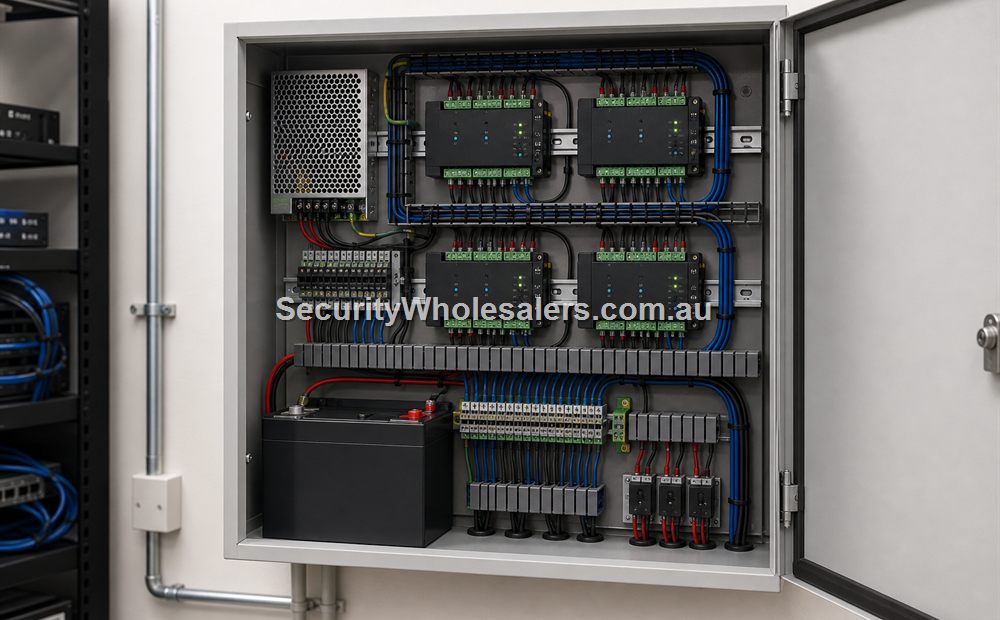
- UPS and secure cabinet if the operator expects event history and stable entry through short outages.
Programming, Testing, and Handover
The measure of a good rooming-house install is whether management can handle the next resident change without panic. That means move-in, move-out, and lost-credential workflow should all be tested before sign-off.
- Create a real process for resident onboarding, credential revocation, and replacement rather than relying on one long-term shared code.
- Test shared entry, manager-only entry, denied entry, and after-hours events with the people who will actually manage the property.
- Show management how to search logs if a question comes up about who used the main entry after hours.
- Confirm cleaner and contractor permissions are time-limited or schedule-based rather than permanently open.
- Leave a written resident-credential policy so the building does not drift back to informal shared access.
Software, Credentials, and Growth
If the rooming house is very small, simpler management may still work. Once the site has recurring resident changes, manager oversight, and several shared entries, software-backed access control becomes much easier to live with than local shared-code administration.
Common Mistakes to Avoid
- Avoid using shared codes as the main long-term model.
- Plan how resident move-in and move-out changes are handled.
- Use logs if the manager wants accountability on shared entries.
- Separate main resident entry from manager or service areas.
- Choose a system that can scale if more doors are added.
Recommended Direction
For rooming houses, favour logged or controller-backed access where resident turnover and shared entries are part of the normal operating model.
Relevant SecurityWholesalers Product Areas
- Hikvision DS-K2702X-P - A strong fit when one or two doors need proper logs, schedules, and a real controller architecture.
- Access Cards - Useful when the site wants a familiar credential path that can be issued, revoked, and replaced cleanly.
- Hikvision Access Control Base License Package - Useful when the site needs a proper software layer for users, schedules, event review, and central administration.
- Intercoms - Useful where visitor verification and door release need to sit in the same workflow.
- Access Control - The main category for controllers, readers, credentials, locks, and supporting hardware.
Related Guides in This Series
Source References
Frequently Asked Questions
-
What usually works best for rooming-house access control?
Rooming houses usually do better with logged or controller-backed access because resident turnover makes clean credential administration important.
-
Is a simple standalone system enough for rooming-house access control?
Standalone may fit a minor back gate or very small site, but it is often too weak if the manager wants resident-by-resident control or cleaner event review.
-
When do logs really matter on rooming-house access control?
Logs matter because rooming-house managers often need to know whether old credentials are still active or whether shared entries were used when they should not have been.
-
When does intercom or visitor verification matter here?
Intercom matters if the front door needs visitor verification or if management wants a clearer assisted-entry workflow.
-
What software usually makes sense?
Software becomes more valuable as resident turnover rises because adding, removing, and reviewing users becomes an everyday task rather than an occasional one.
-
What is the most common buying mistake?
A common issue is relying on shared codes when resident turnover is already a known issue.
Plan this site door by door
Download the editable workbook, list every controlled opening, then email it with matching door photos to sales@securitywholesalers.com.au. Include the site suburb, installation requirement and target timing.
Review information
Content owner: SecurityWholesalers access control guide team. Revision: 17 July 2026. Use these examples as a starting point, then confirm the details against current product manuals, approved drawings and relevant authority requirements.
NCC access and egress | ACMA cabling requirements | OAIC biometric guidance | Access control definitions