














Dahua Thermal Cameras Buying Guide
Thermal
Quick answer
If the site mainly wants better everyday identification, do not jump to thermal. If it needs early heat awareness, perimeter detection in harsh scenes, or a hybrid thermal-plus-visible path, then thermal becomes worth discussing.
1. What are Dahua thermal cameras?
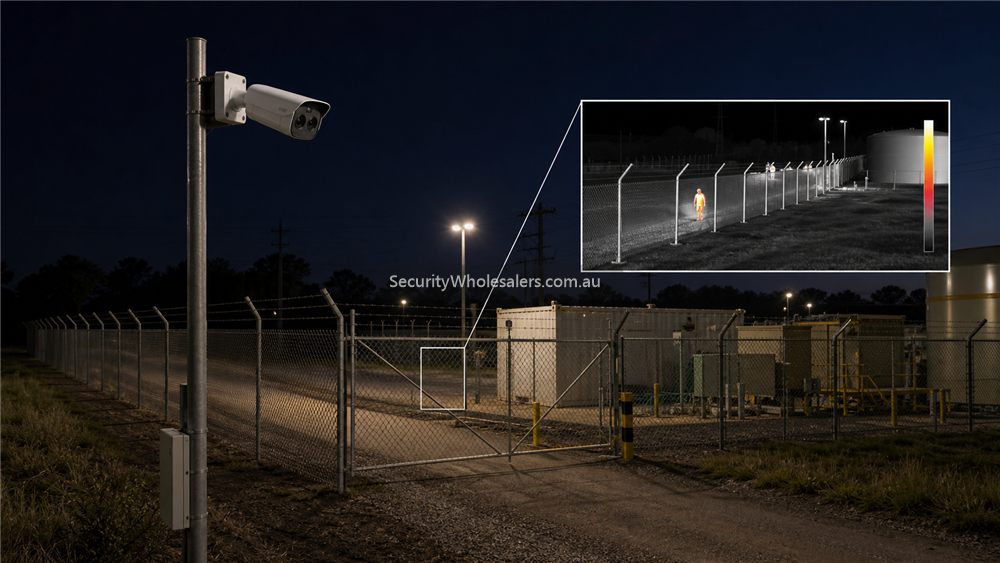
Dahua thermal cameras are specialist cameras that detect heat differences rather than relying only on normal visible-light imaging. In security work, they are often used as a complementary layer alongside visible-light cameras, not as a full replacement for ordinary CCTV review.
2. Key benefits of Dahua thermal
- Detection in difficult conditions: useful where darkness, glare, haze, smoke, dust, or other environmental issues weaken visible-light performance.
- Heat-risk monitoring: relevant where abnormal heat or early fire risk matters, such as plant or selected industrial scenes.
- Perimeter use: useful where the real job is detecting presence over distance rather than reading facial detail.
3. Recommended thermal use cases
Perimeter security
Use thermal where the site needs more reliable target detection than ordinary visible-light CCTV can provide in a difficult perimeter scene.
Heat and fire risk
Use thermal where the site is not only watching for movement but also wants abnormal heat awareness.
Harsh industrial scenes
Use thermal when the environment itself is part of the problem and the visible-light camera alone is not enough.
4. Types of Dahua thermal cameras
| Type | Usually best for | Common caution |
|---|---|---|
| Hybrid thermal eyeball | Smaller thermal security jobs that still want a visible-light companion view | Do not treat the visible-light side as the whole answer if the thermal side is the real reason for the quote |
| Compact thermal camera | Plant, heat, and specialist industrial monitoring jobs | Confirm the actual heat or range requirement before quoting |
| Bispectral path | Larger or more demanding security and heat-monitoring scenes | Needs much clearer application design than normal CCTV |
5. Choose thermal by application
- Perimeter detection: confirm target size, scene width, range, and what the site wants to do after detection.
- Heat monitoring: confirm whether the site wants alarm linkage, operator response, or just investigation support.
- Hybrid security: confirm how the thermal and visible-light views will be reviewed together later.
6. Installation tips
- Thermal should start with the application, not the camera box.
- Mounting angle, range, target size, and environment matter more here than on ordinary fixed CCTV.
- Thermal alarms are only useful if they feed into a response workflow the operator will actually use.
7. Compatible recorders and integration
Thermal jobs often become recorder-and-response jobs. Check recorder compatibility, storage expectations, event handling, and whether the operator is using thermal for security, plant monitoring, or both. A thermal branch that cannot be reviewed properly later is usually poorly scoped.
8. Current Dahua thermal reference paths on SecurityWholesalers
These are useful current Dahua reference paths on SecurityWholesalers as checked during this guide refresh on 29 May 2026.
- Dahua Thermal Cameras - Main SecurityWholesalers thermal category.
- DHI-TPC-DF1241 - Hybrid thermal reference path.
- TPC-KF2241-T - Compact specialist thermal path for heat or plant-oriented jobs.
When thermal is the wrong recommendation
Thermal cameras are powerful, but they are not normal camera upgrades. They do not replace a visible-light camera when the buyer needs faces, colours, number plates or familiar visual detail. Thermal is strongest when the job is detection across darkness, harsh lighting, smoke/dust-like conditions or perimeter activity where heat contrast matters more than visual identity.
- Do not use thermal as the only camera at an entry where face evidence matters.
- Do not sell it as a general low-light colour solution.
- Do consider it for perimeter, large yards and specialist heat-risk or intrusion applications.
- Pair it with visible cameras where identification is required after detection.
What to read next
Dahua CCTV Buying Guide
Return to the Dahua hub if you need to step back and check whether thermal really belongs in the shortlist.
How to Choose a Dahua Camera
Use the general camera page if the project may still be better solved with ordinary IP CCTV.
Dahua for Warehouses
Useful when the thermal conversation is tied to an industrial or warehouse site rather than a generic perimeter idea.
Dahua Pro Series Cameras Buying Guide
Use this if the site is also drifting into a heavier recorder or project-led Dahua branch.
Authority upgrade: how to apply this Dahua choice
The strongest Dahua buying advice is not just naming the product family. It is matching the family to the scene: WizSense for filtering, WizColor for useful colour at night, TiOC for active deterrence, Pro or higher tiers for stronger commercial work, and thermal only where heat, darkness or detection distance are the real problem.
| Buyer says | Usually compare first | Do not overbuy |
|---|---|---|
| We need fewer false alerts. | WizSense camera and NVR path. | Do not expect analytics to fix poor mounting or busy backgrounds. |
| Night colour matters. | WizColor or full-colour branch. | Do not use it where the scene is already evenly lit and simple. |
| We want to warn people away. | TiOC or alarm plus CCTV. | Do not place warning audio where it will bother neighbours or customers. |
| We have heat, fire or perimeter detection issues. | Dahua thermal or specialist branch. | Do not use thermal as a replacement for normal identification cameras. |
Product comparison path
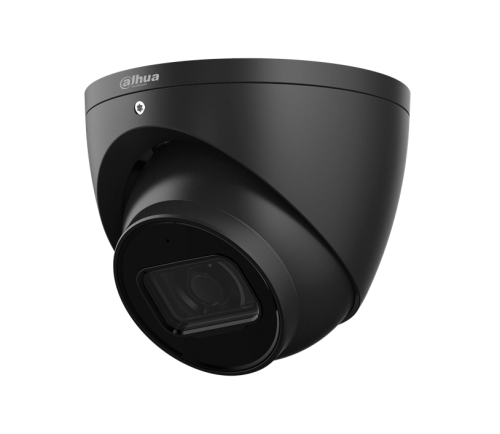
Dahua camera range
Use the live range to compare fixed turrets, bullets, TiOC, low-light and commercial camera branches.
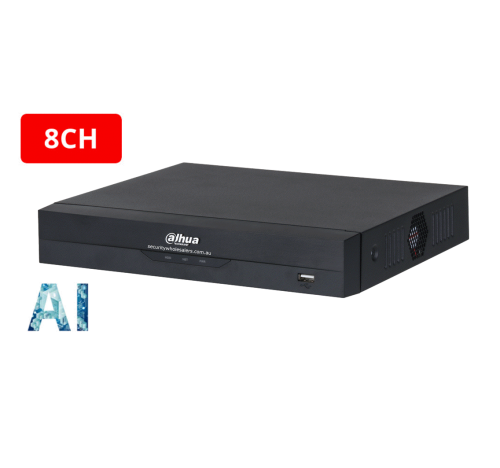
Dahua NVRs
Choose the recorder around channel count, AI support, storage, PoE budget and review workflow.
Thermal plus visible-light design
The strongest thermal designs often use thermal for detection and visible-light cameras for identification. For example, thermal may detect movement along a dark perimeter, while a standard or low-light camera covers the gate, driveway or doorway where the person or vehicle must pass. This gives the buyer the strength of thermal without pretending it can do every job alone.
| Thermal role | Visible camera role |
|---|---|
| Detect movement across a dark perimeter. | Capture usable detail at gate or entry choke point. |
| Reduce dependence on normal lighting. | Show clothing, colour, faces or vehicle detail where needed. |
| Support specialist detection use cases. | Provide familiar footage for operators and incident reports. |
Frequently asked questions
Is Dahua better for every site?
No. Dahua is a strong commercial option, but the right choice depends on ecosystem, installer preference, product availability and the exact scene.
What is the most common Dahua mistake?
Choosing by feature name instead of matching the camera branch to the scene and testing it at night.