












How to Choose a Dahua Camera
Camera Selection
Start with scene type before model number
Most Dahua camera decisions should start by asking whether the site is a predictable fixed-view job or a mixed-depth job that needs lens tuning. If the view is a corridor, clear entry, reception threshold, or predictable perimeter edge, a fixed-lens turret or bullet often makes sense. If the view is a long approach, vehicle frontage, dock lane, or awkward facade, motorised varifocal often saves rework later.
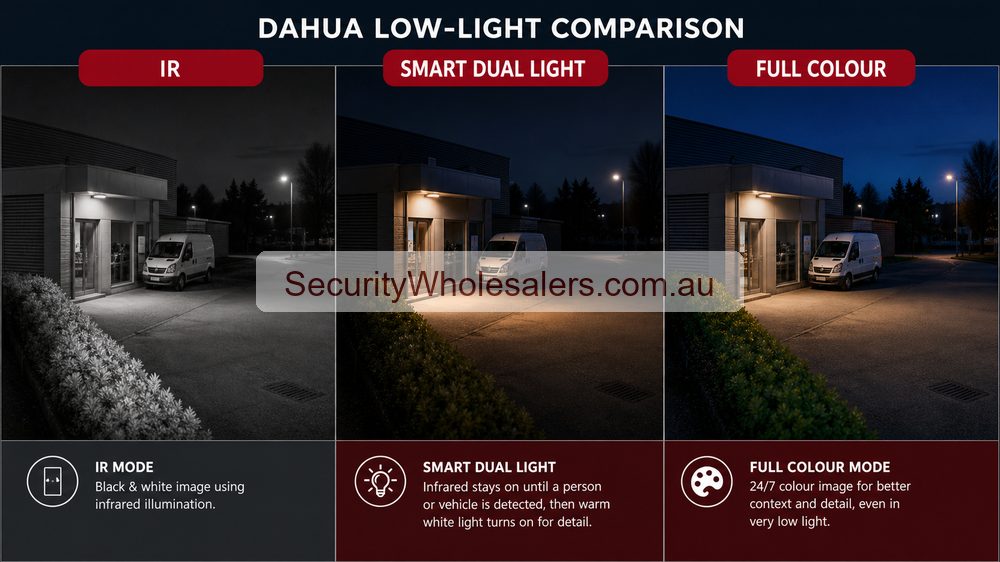
After that, the buyer should choose whether 6MP is enough, whether 8MP genuinely adds value, whether low-light behaviour needs to step into Full-color or Smart Dual Light, and whether the scene is one of the few places where TiOC-style active deterrence is actually useful.
Typical Dahua camera decision flow
[What is the scene?]
    |
    +--> Predictable threshold / corridor / reception --> [Fixed-lens turret or bullet]
    |
    +--> Long frontage / loading lane / car park edge --> [Motorised varifocal]
    |
    +--> Night scene where colour matters ---------> [Full-color or Smart Dual Light]
    |
    +--> Gate / side entry / frontage where deterrence matters -> [Consider TiOC 2.0]
    |
    +--> Large overview / live patrol need -------> [Consider PTZ, supported by fixed cameras]
6MP vs 8MP in practical Dahua terms
Dahua 6MP is often a very practical working resolution because it gives noticeably more detail than 4MP without forcing 4K into every recorder decision. It is a good commercial middle path for many fixed-lens cameras, especially around entries, walkways, counters, and general outdoor coverage.
Dahua 8MP makes more sense where the site wants more crop margin on wider scenes, stronger detail expectations, or is deliberately standardising on 4K. But 8MP should be justified by the view, because it pushes more demand onto storage, bandwidth, and honest NVR sizing.
Where TiOC fits in the Dahua camera discussion
TiOC is not just another low-light label. It is the more active deterrence branch in the Dahua conversation, usually suited to after-hours gates, side entries, remote frontages, and similar views where a warning light and speaker can be genuinely useful.
That also means TiOC should be applied selectively. If the site simply needs quieter general night coverage, a standard Full-color or Smart Dual Light path may be more appropriate. The better question is not whether TiOC is popular, but whether that exact scene benefits from active warning behaviour.
Installation insight
Installers normally confirm mounting height, bracket choice, external weather exposure, required lens angle, and whether the scene needs fine tuning during commissioning. A fixed lens is fine when the geometry is predictable. A motorised lens is often better when the operator would otherwise be guessing scene depth before the cable is even run.
If the shortlist includes TiOC, the installer should also think about where the strobe will be visible, whether the speaker will be audible and appropriate, and how to avoid obvious nuisance behaviour on high-traffic views. TiOC works best where the deterrence function is deliberate, not accidental.
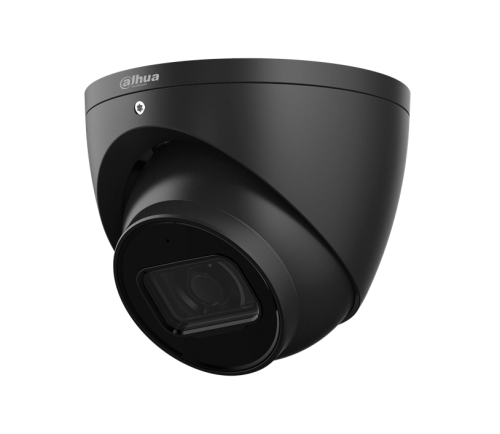
Where the site is choosing between turret and bullet, the decision should be based on scene shape, mounting style, vandal exposure, and how the housing suits the environment rather than on appearance alone.
Relevant SecurityWholesalers Categories and Products
These cameras and categories are good Dahua reference points because they represent the main selection paths buyers actually take.
- Dahua 6MP IP cameras - The best category to compare Dahua's main 6MP business and commercial camera paths.
- Dahua 8MP IP cameras - The right category when wider scenes or 4K detail matter.
- Dahua TiOC 2.0 cameras - A strong category to review when the site wants active deterrence at gates, side entries, or vulnerable external approaches.
- Dahua TiOC 2.0 8MP kits - A practical path when the buyer is already comfortable with TiOC-style cameras and wants to review bundled 8MP system options.
- DH-IPC-HDW3666EMP-S-AUS - A practical 6MP fixed turret reference point.
- DH-IPC-HDW3667EM-S-IL-ANZ - A useful Smart Dual Light 6MP reference point for low-light jobs.
- DH-IPC-HDW3666TP-ZS-AUS - A good motorised 6MP path to review when tuning flexibility matters.
Sources and Further Reading
Frequently Asked Questions
-
What is the safest Dahua camera starting point for many business jobs?
Usually a fixed-lens 6MP turret or bullet from the right Dahua IP tier, provided the scene is predictable and the low-light expectations are honest.
-
When is motorised varifocal worth paying for on Dahua?
When the scene depth is uncertain, the frontage is awkward, or the operator wants the installer to tune the camera precisely during commissioning rather than guess the lens in advance.
-
Should buyers default to turret or bullet on Dahua?
No. Either can be right. The decision should be based on the scene, mounting method, exposure, and vandal risk rather than a blanket preference.
-
Does 8MP always mean the picture will be more useful?
Not always. Higher resolution only helps when the lens choice, mounting height, lighting, and recorder path are still sensible. Poorly planned 8MP is not automatically more useful than well-planned 6MP.
-
When is Dahua TiOC worth considering instead of a standard low-light camera?
Usually where the site wants the camera to add active deterrence after hours, such as gates, side entries, remote frontages, or other external views where visible and audible warning can genuinely help.
-
When does low-light strategy become more important than raw resolution?
Often on gates, yards, walkways, and external entries. If the scene has to stay useful after dark, low-light behaviour can matter more than the raw megapixel count.
-
Which related guide helps with the next decision?
Usually the Dahua Full-color vs Smart Dual Light page or the NVR guide, depending on whether the next decision is night performance or recorder design.
Related Pages
Dahua Full-color vs Smart Dual Light
Compare Dahua's low-light approaches based on what the site actually needs after dark.
How to Choose a Dahua NVR
Choose the Dahua recorder path properly before locking in the camera mix.
Dahua PTZ Buying Guide
Understand where Dahua PTZ helps, where it does not, and how to choose the right zoom and power path.
Best Dahua CCTV System for Small Business
Use Dahua in a small-business context, with practical camera, recorder, and installation logic.