













Commercial
Best Hikvision Thermal Cameras for Fire Detection
Use Case Guide
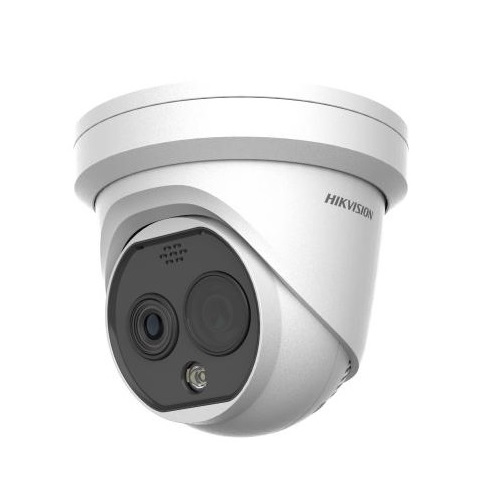
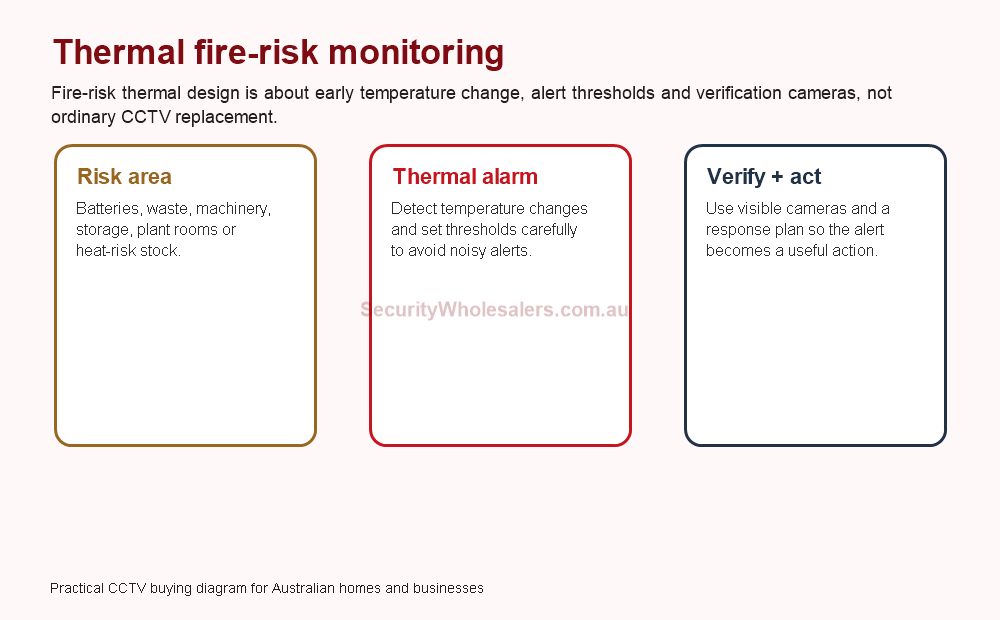
Thermal fire detection is about earlier warning, not prettier footage
The value of thermal in fire-related work is that it can flag abnormal heat or fire-related conditions before the problem becomes obvious on a normal camera or to a person standing elsewhere on site. That is why waste sites, stockpiles, switchboard zones, and some industrial spaces look at thermal in the first place.
A practical fire-detection ladder
| Model option | Best fit | Why it fits |
|---|---|---|
| DS-2TD1217-2/QA | Small indoor rooms or tighter short-range heat-risk scenes | Entry-level thermal path where the scene is compact and the budget is controlled |
| DS-2TD1228T-2/QA | Shorter-range bi-spectrum fire and smoke jobs | Gives the thermal alarm layer plus visible context in one turret form factor |
| DS-2TD2628T-7/QA | Outdoor stockpiles, waste areas, or larger fire-risk zones | Stronger 256 x 192 bullet option with fire and smoke relevance |
| DS-2TD2637T-10/QY | Higher-end thermographic jobs and more demanding outdoor scenes | 384 x 288 gives the site a more serious thermal platform |
| DS-2TD4228T-10/S2 | Large outdoor sites needing patrol plus fire-related awareness | Useful where the risk area is broader and static coverage is not enough |
Example: timber yard or waste yard
Situation: A yard stores material that can smoulder or build heat after hours, and the owner wants earlier warning before flames are visible on an ordinary CCTV image.
Solution used: A bi-spectrum thermal bullet was aimed across the risk zone so the thermal channel could monitor abnormal heat while the optical channel provided context.
Why this was chosen: The camera had to do more than just watch movement. It had to help the site recognise a heat-related event sooner.
Installation notes: This only works if the camera is aimed at the actual risk area and the alert process is meaningful. A good camera with a poor response plan does not solve the operational problem.
Example: plant room or electrical area
Situation: A site wants more visibility over a plant or electrical area that could develop abnormal heat outside normal staffing hours.
Solution used: A smaller thermal or bi-spectrum unit may be enough if the room is compact and the target area is known clearly.
Why this was chosen: In a compact scene, the job is not wide perimeter detection. It is targeted thermal observation of a known risk area.
Installation notes: The installer still needs to confirm reflections, vents, machinery heat, and the specific zone being watched so the scene is not cluttered with misleading thermal activity.
Be careful with compliance assumptions
Thermal cameras can be very useful for earlier warning, but they should not be described as a blanket replacement for every other fire-protection measure. If the site is dealing with formal fire compliance or regulated fire-protection requirements, that broader design still needs to be assessed by the appropriate qualified professionals.
Relevant SecurityWholesalers Categories and Products
These Hikvision thermal products are the most relevant current examples for fire and heat-related jobs on SecurityWholesalers.
- DS-2TD1217-2/QA HeatPro turret - A short-range thermal entry point for smaller heat-anomaly jobs.
- HeatPro DS-2TD1228T-2/QA - A practical bi-spectrum turret option for shorter-range fire and smoke risk applications.
- HeatPro DS-2TD2628T-7/QA - A stronger fixed bullet option for outdoor fire-risk or stockpile monitoring.
- DS-2TD2637T-10/QY - A higher-end thermographic bi-spectrum bullet for more demanding fire-detection and industrial use.
- DS-2TD4228T-10/S2 thermal PTZ - For larger outdoor sites where patrol and fire-related detection overlap.
Sources and Further Reading
Frequently Asked Questions
-
Can Hikvision thermal cameras detect fires from a distance?
They can help detect abnormal heat or fire-related conditions earlier across distance than ordinary cameras, but the result still depends on camera selection, scene design, and alarm workflow.
-
Which Hikvision thermal resolution is better for fire detection?
That depends on the scene size and mounting distance. 160 x 120 can work on smaller or shorter-range jobs, while 256 x 192 and 384 x 288 are usually stronger once the scene gets larger or the job becomes more demanding.
-
Do I need bi-spectrum for fire detection?
Often yes, because the visible optical channel gives the operator normal scene context once the thermal channel raises the alert.
-
Can a thermal camera replace a fire system?
It should not be treated that casually. Thermal may be part of a larger fire-risk strategy, but the broader compliance and fire-protection requirements still need to be assessed properly.
-
What sites usually justify thermal fire detection?
Waste sites, timber or stockpile areas, plant or switchboard environments, manufacturing spaces, depots, and other sites where abnormal heat needs earlier visibility.
-
What should be checked before buying?
The camera must be matched to the actual risk area, target distance, temperature range, and response workflow. If the site has not defined what happens after an alarm, the design is incomplete.
Related Pages
Hikvision Thermal Cameras Buying Guide
The main Hikvision thermal guide for perimeter, fire, and bi-spectrum buying decisions.
When to Use Bi-Spectrum Hikvision Thermal Cameras
A practical guide to choosing Hikvision bi-spectrum thermal cameras.
Hikvision Thermal Resolution Explained: 160 x 120 vs 256 x 192 vs 384 x 288
A practical explanation of Hikvision thermal resolution tiers.
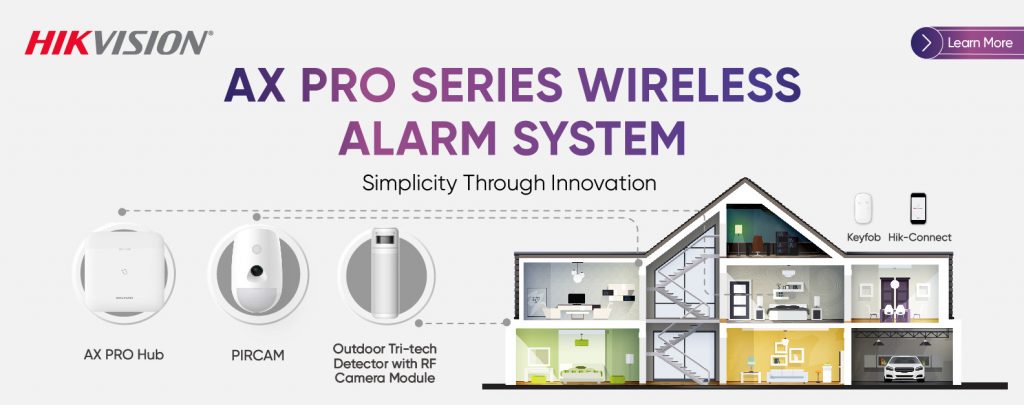
Hikvision AX PRO vs AX Hybrid PRO
Compare Hikvision AX PRO and AX Hybrid Pro in practical deployment terms.