













Commercial
Best Mining CCTV System in Australia
Return to Mining CCTV and Camera Solutions
Commercial
Most mining projects break down into four camera branches. First, fixed evidence cameras for the controlled points. Second, thermal for dust, darkness, smoke, or heat-risk problems. Third, PTZ or bispectral PTZ where a genuinely broad overview layer is justified. Fourth, explosion-protected cameras only where the site standard or hazardous-area requirement actually demands them. The recorder, storage, fibre or wireless backhaul, and UPS plan then has to support those layers instead of being treated as an afterthought.
Quick answer
A smaller support compound may start with 6 to 10 cameras on a 16-channel recorder. A more typical operating mining site often lands around 12 to 24 cameras once the gate, weighbridge, workshop, fuel, process plant and after-hours access points are all treated properly. Larger multi-zone or remote industrial sites can move into 24 to 64 or more cameras, with thermal layers, PTZ support, multiple cabinets, fibre or wireless links, and sometimes separate hazardous-area camera branches.
Important: plate capture, face capture, stockpile heat monitoring, perimeter detection, and hazardous-area coverage are different jobs. Do not assume one wide camera can solve all of them.
What this buying guide covers
- Typical system size by mining use case
- Recommended camera families by mining use case
- Scenario-based camera and recorder combinations
- Hikvision versus AXIS buying paths
- Thermal, PTZ, fixed, and explosion-protected roles
- NVR, storage, UPS, and network planning
- Installation choices like gel-filled cable, fibre, bridges, cabinets, and poles
At-a-glance recommendation table
| Site type | Typical camera count | Recommended system path | Notes |
|---|---|---|---|
| Small mining office, workshop, and gate compound | 6 to 10 cameras | 16-channel Hikvision NVR or compact AXIS appliance, fixed cameras first | Usually entry-heavy, with one workshop view and one after-hours perimeter layer. |
| Operating mining site with weighbridge and processing area | 10 to 16 cameras | 16 or 32 channel recorder, fixed plus selected varifocal and one thermal branch if justified | Weighbridge, workshop, crusher, transfer points, and fuel areas add up quickly. |
| Mine support facility with remote access roads | 12 to 24 cameras | 32 channel Hikvision or AXIS recorder path, fibre or wireless backhaul, thermal at remote edges | Longer distances and remote access points usually matter more than indoor volume. |
| Multi-zone site with stockpiles, plant, yards, and several compounds | 24 to 40 cameras | Larger recorder or multi-recorder path, thermal plus selected PTZ support | This is where system architecture matters as much as the camera models. |
| Large industrial mine with hazardous areas and several buildings | 40 to 64+ cameras | Enterprise recorder or VMS-style design, multiple cabinets, thermal and explosion-protected branches | Hazardous-area camera selection and network resilience become major design decisions. |
Diagram: mining surveillance layers should be separated by job
Recommended mining system paths
Entry / small site
6 to 10 cameras on a 16-channel recorder.
- Hikvision fixed cameras or AXIS fixed cameras at gate, bridge, office entry, workshop entry
- 1 or 2 varifocal views if the lane depth changes
- No thermal unless the site has a real detection or fire-risk problem
Standard / recommended site
12 to 24 cameras with a 32-channel path.
- Fixed cameras first, selected thermal on remote or difficult zones
- Hikvision standard NVR or AXIS recorder/appliance path
- UPS and protected cabinet should be planned from day one
Larger / higher-risk site
24 to 40 cameras across several zones.
- Thermal on boundaries, stockpiles, or dusty remote edges
- PTZ or bispectral PTZ only where one high point really adds value
- Fibre or wireless backhaul between remote cabinets may be necessary
Premium / enterprise path
40 to 64 or more cameras with specialist branches.
- AXIS Camera Station or multi-recorder architecture may make more sense
- Explosion-protected cameras for genuine hazardous-area requirements
- More disciplined user permissions and storage retention policy
Installation quality affects whether the system actually works well
On mining jobs, the camera shortlist is only half the answer. Remote gates, weighbridges, stockpile poles, and thermal boundaries usually depend on the install branch being right as well. That often means deciding early between external Cat6, gel-filled or direct-burial cable, fibre, or point-to-point antennas instead of leaving the network path vague until the end.
For the technician-level version of that discussion, use Mining CCTV Installation Guide: Cabling, Fibre, Wireless Bridges, Poles, and Cabinets.
For even more field-specific detail, use Mining Gate and Weighbridge CCTV Reference Layouts for entry scenes, Remote Solar, 4G, and Isolated Mining Camera Branches for isolated locations, Mining Thermal False Alarms and Tuning Guide for heat-scene reliability, Mining CCTV Commissioning and Handover Checklist for final sign-off, and Hazardous-Area CCTV Installation Boundaries for Mines and Fuel Areas where the install boundary itself is the real issue.
Use cases and recommended camera paths
| Mining use case | Recommended Hikvision path | Recommended AXIS path | Why |
|---|---|---|---|
| Gate and contractor check-in | DS-2CD2387G3-LIS2UY/SL or other fixed Hikvision entry cameras | Q3556-LVE or Q1656-LE | The site wants stable evidence framing, not a camera that keeps moving. |
| Weighbridge lane | Hikvision fixed or motorised lane view plus wider context | AXIS fixed dome or box camera with a tuned lane view | Bridge events need repeatable framing on the actual transaction line. |
| Remote road or perimeter edge | DS-2TD2637T-10/QY thermal bullet | Q1971-E thermal camera | Thermal usually outperforms normal visible-light CCTV once dust, distance, darkness, or fog become the real problem. |
| Large open-yard or stockpile overview | DS-2TD4228T-10/S2 thermal PTZ | Q8752-E Mk II bispectral PTZ | These are support layers for broad overview and verification, not replacements for fixed evidence cameras. |
| Hazardous zone or classified process edge | DS-2XE6885G0-IZHS | P1468-XLE | Explosion-protected cameras are for sites where ordinary housings are not acceptable. |
Representative product picks
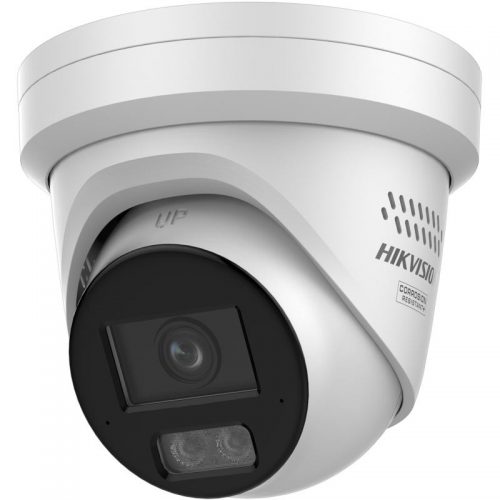
Hikvision fixed mining path
DS-2CD2387G3-LIS2UY/SL is a good reference point when the site wants a current Hikvision visible-light camera for entries, doors, workshops, and controlled points.
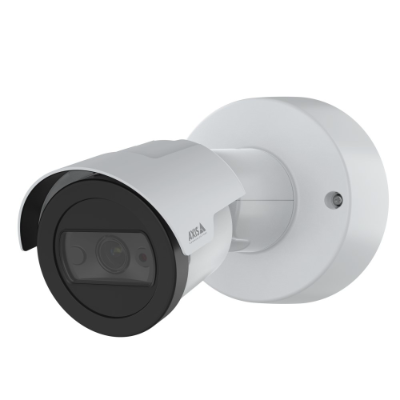
AXIS fixed mining path
Q3556-LVE and Q1656-LE show where AXIS becomes more relevant on premium hardened fixed-camera jobs.
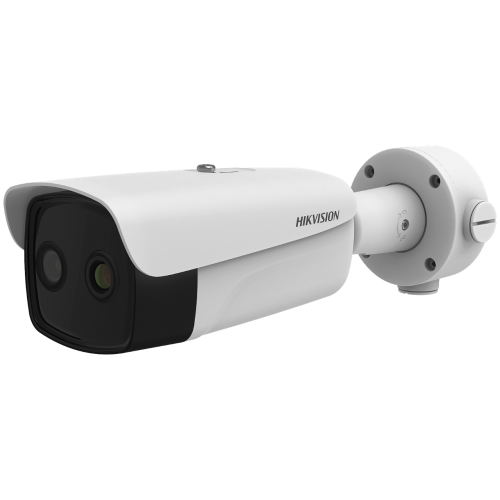
Hikvision thermal bullet
DS-2TD2637T-10/QY is a stronger thermal perimeter and heat-risk path once the site has genuinely difficult visibility or detection conditions.
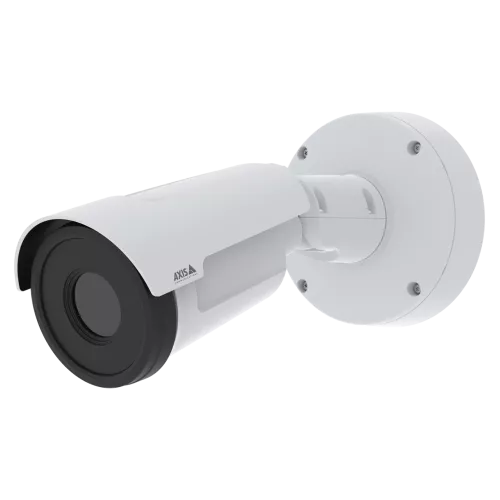
AXIS thermal camera
Q1971-E is a strong AXIS thermal reference point when the site is more detection-led than ordinary video-led.
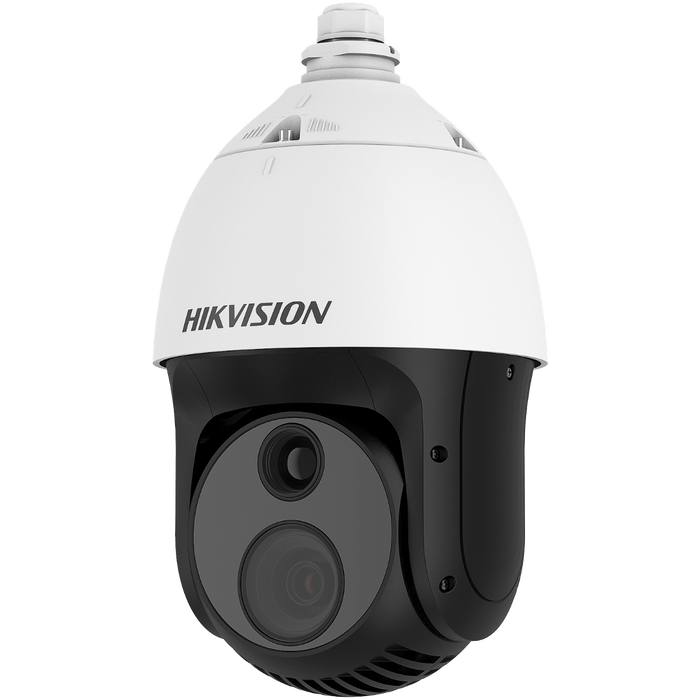
Hikvision thermal PTZ
DS-2TD4228T-10/S2 is a stronger overview branch for large yards, stockpiles, and remote scenes where one thermal fixed camera is not enough.
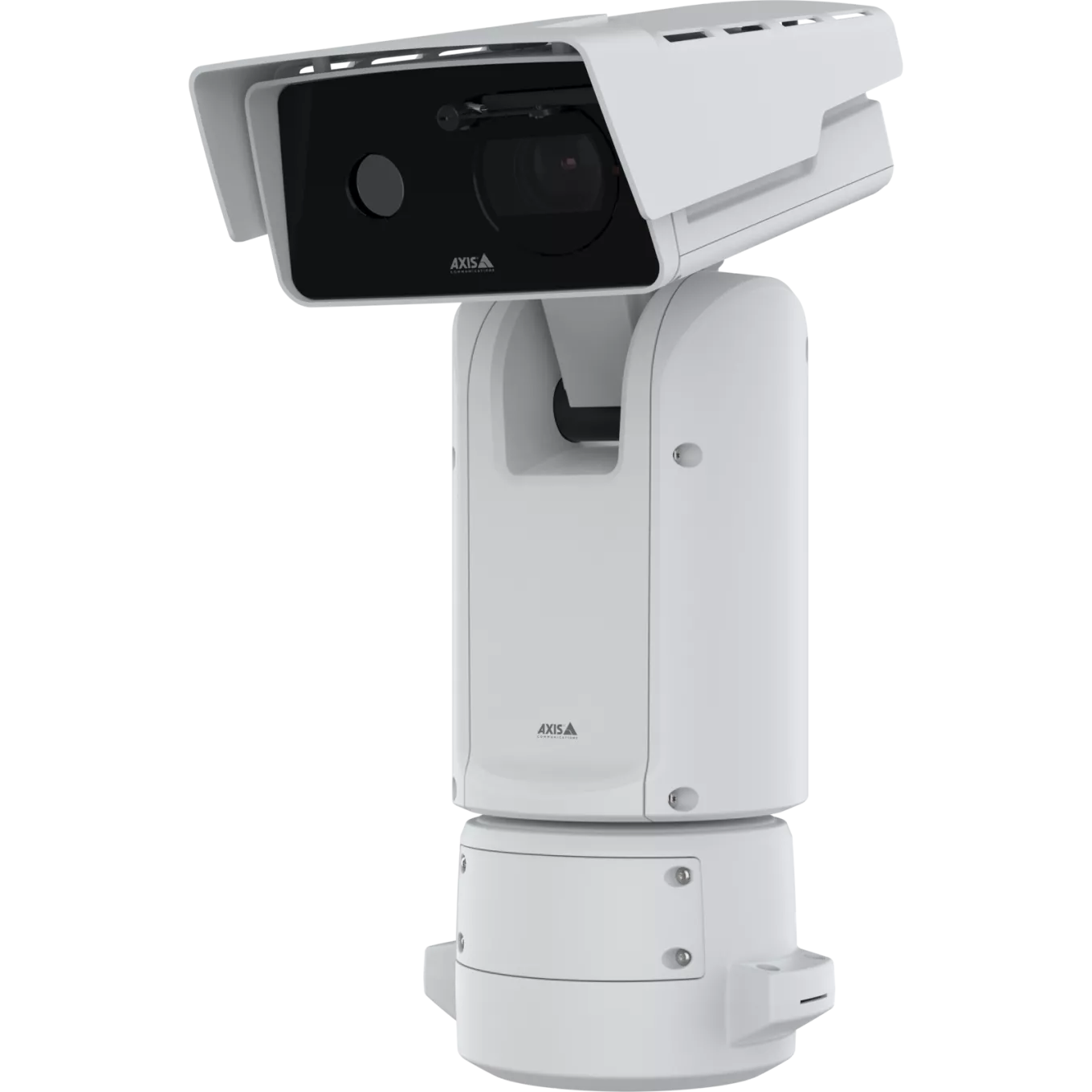
AXIS bispectral PTZ
Q8752-E Mk II is the AXIS higher-end overview answer when the site wants thermal plus optical context in one specialist PTZ branch.
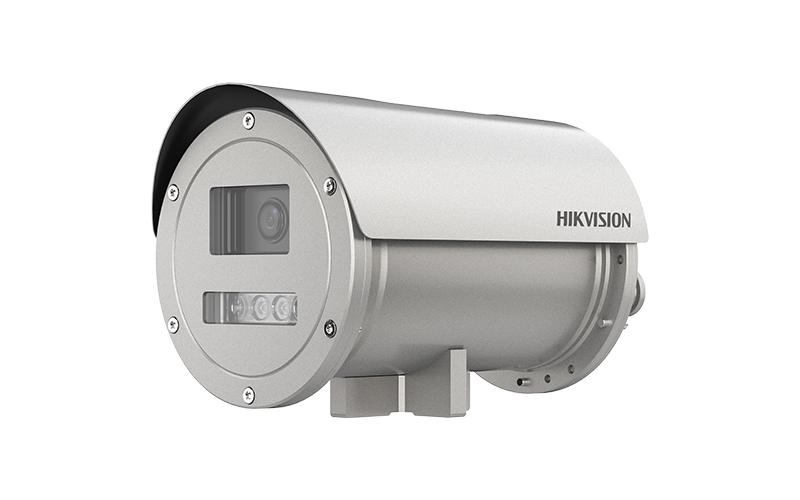
Hikvision explosion-proof path
DS-2XE6885G0-IZHS is the Hikvision mining branch for hazardous areas where normal housings are not acceptable.
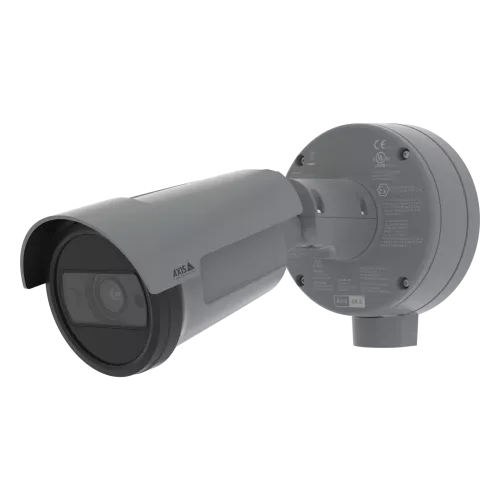
AXIS explosion-protected path
P1468-XLE is the AXIS answer for Zone or Division 2 type projects that want an explosion-protected path within an AXIS enterprise ecosystem.
Example mining combinations by scenario
Mine gate, crib room, workshop, and yard edge
This is the most common mining starting point: one controlled gate, one staff threshold, one workshop or crib-room door, and one after-hours yard edge.
Hikvision DS-2CD2387G3-LIS2UY/SL
Practical mining fixed-camera path for entry, workshop, and controlled access views.
AXIS Q3556-LVE or Q1656-LE
Premium hardened fixed-camera path where the site prefers AXIS enterprise continuity.
- Typical camera count: 4 to 8 cameras before any thermal or PTZ layer is discussed.
- Recorder path: a 16-channel Hikvision NVR is the practical branch, while AXIS projects may lean to Camera Station appliance workflow.
- Add next: UPS, cabinet security, and one spare branch for a later yard or workshop expansion.
Truck lane, weighbridge line, and plant threshold
This suits a mine that needs proper review of the bridge lane plus one or two process-side thresholds without overcomplicating the first build.
Hikvision fixed and tuned lane view
Use fixed evidence views first at the bridge, office window, and plant-side threshold.
AXIS tuned fixed alternative
Good where the project wants stronger permissions, review structure, and hardened optics.
- Typical camera count: 8 to 16 cameras once the lane, office, contractor lane, and process crossings are treated properly.
- Recorder path: 16 to 32 channels with spare inputs for one later thermal or overview branch.
- Add next: a separate stockpile or dusty-edge thermal branch only if that is a real problem, not by default.
Remote road approach, stockpile edge, or isolated checkpoint
This is the branch for sites where darkness, dust, low visibility, or early after-hours detection matter more than ordinary visible-light review.
Hikvision DS-2TD2637T-10/QY
Thermal detection branch that fits well inside wider Hikvision mining systems.
AXIS Q1971-E
Premium AXIS thermal path where the site is more detection-led than video-led.
- Typical camera count: 1 to 4 cameras plus one properly designed backhaul branch.
- Backhaul path: fibre, bridge, or isolated solar or 4G depending power, replay expectations, and long-term growth.
- Add next: one fixed visible-light verification view if the branch also needs identifiable human or vehicle context.
Fuel farm edge, classified process zone, or hazardous enclosure
This should be treated as a special branch off the wider mining system, with the safe-area cabinet and the classified edge designed and documented separately.
Hikvision DS-2XE6885G0-IZHS
Hikvision path for genuine hazardous-area deployment inside a wider Hikvision mining build.
AXIS P1468-XLE
AXIS path for Zone or Division style projects wanting enterprise AXIS continuity.
- Typical camera count: often only 1 to 2 specialist cameras, but with much higher branch complexity.
- Recorder path: keep the safe-area cabinet, recorder, and backhaul design separate, documented, and easy to audit.
- Add next: a normal hardened workshop or perimeter branch beside it instead of trying to force every nearby scene into explosion-protected hardware.
NVR, storage, and network planning
The camera shortlist is only half the buying answer. Mining sites often spread across several buildings, gates, workshops, or compounds, which means recorder placement, cabinet protection, uplinks, and UPS become part of the surveillance decision. A small Hikvision-heavy site may be well served by a practical PoE NVR branch. Larger sites often need several switches, uplinks, or separate recorder paths. AXIS projects may lean toward appliance or Camera Station architecture once the site wants tighter user permissions, more structured review workflows, or a cleaner enterprise path.
Retention should be set around the real review window for entry incidents, contractor disputes, weighbridge questions, workshop incidents, stockpile alerts, or after-hours intrusion. Do not guess. The more thermal and high-resolution views the site adds, the more disciplined the storage plan needs to be.
Related mining guides in this hub
- Mining CCTV Coverage Zones and Camera Placement
- Mining CCTV for Gates, Weighbridges, and Remote Access Roads
- Mining Cameras for Process Plants, Conveyors, Crushers, and Stockpiles
- Thermal Cameras for Mines: Fire Detection, Dust, and Low-Visibility Monitoring
- Mining Cameras for Workshops, Fuel Farms, Plant Parking, and Hazardous Areas
- Mining CCTV Recording, Fibre, Wireless Backhaul, UPS, and NVR Planning
- Mining CCTV Installation Guide: Cabling, Fibre, Wireless Bridges, Poles, and Cabinets
- Mining Thermal False Alarms and Tuning Guide
- Mining CCTV Commissioning and Handover Checklist
- Remote Mining CCTV Troubleshooting
- Mining CCTV Signage, Worker Notice, and Governance Considerations
Frequently asked questions
What is the best mining CCTV system?
The best answer is usually a layered IP system built around fixed evidence cameras first, then thermal, PTZ, or explosion-protected branches only where those specialist tools solve a real site problem.
How many cameras does a mine need?
That depends on the site layout, but many working sites move beyond 12 cameras quickly once gates, weighbridges, workshops, stockpiles, and after-hours access points are all treated properly.
Should a mining site use Hikvision or AXIS?
Hikvision often gives a broader commercial one-brand path across fixed, thermal, PTZ, explosion-proof, and recorder branches. AXIS becomes stronger when the site wants premium enterprise architecture, specialist thermal, or a higher-end industrial branch.
Do mines need thermal cameras everywhere?
No. Thermal belongs where the real problem is heat, smoke, dust, glare, darkness, or longer-range detection rather than ordinary visible-light evidence.
Are explosion-protected cameras needed in all fuel or workshop areas?
No. They should only be selected where the hazardous-area classification or engineering requirement genuinely demands them.