














Informational
Mining Thermal False Alarms and Tuning Guide
Return to Mining CCTV and Camera Solutions
Thermal Tuning
Quick answer
Start by asking whether the thermal camera is watching the actual risk zone or just a dramatic-looking scene. Then remove irrelevant hot objects, tighten the target area, check time-of-day behaviour, and confirm the branch still has fixed visible-light context where later review matters.
Where mining thermal false alarms usually come from
| Thermal problem | Common cause | Better approach |
|---|---|---|
| Constant stockpile alerts | Detection zone too broad or including irrelevant hot edges | Redraw the zone to the actual pile face or hotspot concern |
| Remote boundary false triggers | Camera watching sun-heated structures, machinery, or a poor geometry line | Reframe the scene and remove hot non-target objects where possible |
| Bispectral PTZ alerts not matching the useful scene | PTZ role confused with fixed detection role | Keep the PTZ as a support layer and let fixed thermal hold the critical alert zone |
| Thermal alerts changed after site modifications | New plant, changed stockpile shape, or different traffic pattern | Retune after any physical site change instead of assuming the old scene still fits |
Practical tuning sequence
- Confirm the scene is aimed at the real risk zone, not the most convenient mount direction.
- Check the same view across different times of day, especially when structures heat up.
- Remove hot machinery, fixed exhaust points, or reflective thermal clutter from the target area if possible.
- Redraw the target zone to suit the operational problem, not the whole scene.
- Confirm fixed visible-light context still exists where the site later needs reviewable evidence.
- Retest after any stockpile, plant, or traffic-flow change.
Important reminder
Thermal alert reliability is often won or lost in the scene itself, not the product brochure. A good Hikvision or AXIS thermal camera will still perform badly if the branch is watching the wrong area or being asked to solve the wrong problem.
Best-in-country commissioning standard
Mining and quarry CCTV should be commissioned like an operational system, not like a normal small-business install. The handover should prove that the camera answers the site question under dust, glare, vibration, shift change, vehicle movement and after-hours conditions.
| Acceptance test | Pass condition | Evidence to keep |
|---|---|---|
| Day/night review | Critical views remain usable in the actual lighting cycle. | Sample clips from day, dusk and night. |
| Vehicle and plant movement | Trucks, loaders, light vehicles or contractors can be reviewed at the intended point. | Test vehicle pass and playback export. |
| Dust and vibration | Mounts and image quality remain stable around normal site activity. | Installer notes and any cleaning interval. |
| Network resilience | Remote links, PoE, fibre, wireless or 4G paths recover cleanly after interruption. | Network diagram and restart test notes. |
Product and system paths to compare
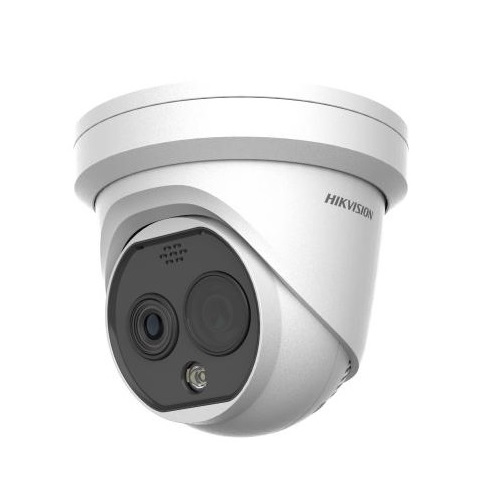
Thermal and bi-spectrum
Use where fire risk, dust, darkness or perimeter detection makes visible-light CCTV insufficient.
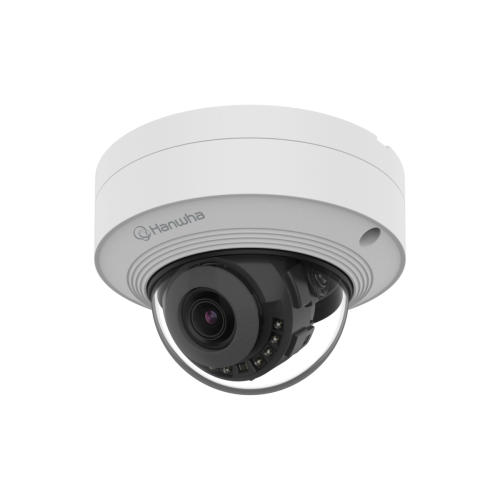
Premium commercial CCTV
Compare for higher-governance or enterprise-style sites where platform fit and durability matter.
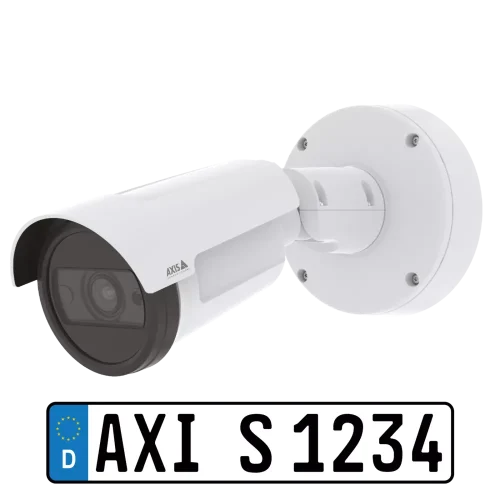
AXIS and LPR paths
Compare where open-platform design, weighbridge vehicle records or premium integration are important.
Operational handover checklist
- Camera names match site language such as weighbridge, fuel farm, crusher feed or workshop entry.
- Cleaning, inspection and lens-wipe intervals are assigned to a role, not left vague.
- Playback and export are tested with the person responsible for incident review.
- Known blind spots, exclusion zones and hazardous-area boundaries are documented.
Field notes that make the design stronger
On quarry and mine sites, the most useful camera is often not the most expensive one. It is the one that survives the mount, the dust, the wash-down routine, the sun angle and the review workflow. Before sign-off, ask the installer to show a real export clip from the exact view that will matter after an incident. A still image is not enough for moving plant, shift change or vehicle movement.
For higher-risk areas, keep a simple commissioning record: camera name, pole or mount location, lens setting, network path, cleaning expectation, test date and known limitation. That record becomes valuable when the site expands, a camera is replaced, or an incident is reviewed months later.
Frequently asked questions
Why do mining CCTV projects fail?
Usually because dust, vibration, distance, lighting, network path or review workflow was not tested under real site conditions.
Does thermal replace normal CCTV?
No. Thermal is a detection or heat-risk layer. Visible-light cameras are still needed for colour, identity and operational context.