














Commercial
Mining CCTV and Camera Solutions
Commercial Hub
That is why this hub focuses on the actual mining applications where CCTV earns its place. Gates, weighbridges, office or contractor entry, workshops, fuel farms, stockpiles, conveyors, crushers, remote access roads, perimeter lines, hazardous areas, and after-hours plant or laydown zones all behave differently. The best answer is usually a layered design rather than a single camera family repeated everywhere.
This guide series also narrows the product conversation to two brands only: Hikvision and AXIS. That makes it easier to give clearer recommendations around fixed cameras, thermals, PTZs, recorders, and explosion-protected paths without turning the hub into a generic category dump.
Best place to start
If the real question is what CCTV system should we buy for this mine, processing site, or remote industrial operation?, start with Best Mining CCTV System in Australia. That page gives the main commercial buying path, then sends you deeper into thermal, process areas, gates, workshops, and recorder planning.
What this mining hub covers
- Commercial buying guidance for mining CCTV
- Fixed-camera and varifocal planning for gates, weighbridges, conveyors, and workshops
- PTZ and bispectral strategies for broad overview and remote industrial scenes
- Thermal camera use cases for fire risk, stockpiles, dust, smoke, and perimeter detection
- Explosion-protected camera paths where hazardous-area requirements genuinely apply
- Recorder, fibre, wireless backhaul, UPS, and cabinet planning
- Installation detail for gel-filled cable, fibre, point-to-point antennas, cabinets, and poles
- Worker notice, privacy, and footage-access governance
Diagram: the main CCTV layers on a mining site
Major mining CCTV use cases and what usually fits them
| Mining application | What the site usually needs | Recommended camera path | Why that path makes sense |
|---|---|---|---|
| Main gate, contractor entry, guardhouse | Faces, vehicle approach, lane events, barrier context | Hikvision or AXIS fixed cameras, often varifocal if the lane depth varies | Entry control points need repeatable evidence rather than a roaming PTZ. |
| Weighbridge and check-in lane | Truck position, transaction context, driver-side visibility | Fixed cameras plus one tighter view on the actual transaction line | Bridges need stable views with predictable framing. |
| Conveyors, crushers, transfer points | Operational review, fault review, plant-side context | Hardened fixed cameras and selected thermal if heat anomaly or fire risk matters | Process zones often need clear fixed reference points and selected thermal overlays. |
| Stockpiles, bins, spontaneous-combustion risk | Early heat awareness and optical context | Thermal or bi-spectrum cameras from Hikvision or AXIS | Visible-light CCTV alone is not the right first tool for heat-based problems. |
| Workshops, fuel farms, hazardous process edges | Access review, safety context, after-hours protection | Fixed cameras in normal areas, explosion-protected cameras only where the classification genuinely requires them | Hazardous areas are an engineering and compliance discussion, not just a camera-style discussion. |
| Remote access roads and perimeter lines | Detection, overview, after-hours response | Thermal and selected PTZ, backed by fixed verification views where possible | Long outdoor scenes usually need more than a normal wide-angle bullet. |
Need the install side, not just the buying side?
One of the most useful additions for this hub is Mining CCTV Installation Guide: Cabling, Fibre, Wireless Bridges, Poles, and Cabinets. It goes deeper on gel-filled cable, direct-burial runs, point-to-point antennas, cabinet layout, pole stability, and commissioning order.
If the project is more specialised again, there are now dedicated pages for hazardous-area installation boundaries, gate and weighbridge reference layouts, and remote solar or 4G branches.
Representative Hikvision and AXIS mining products
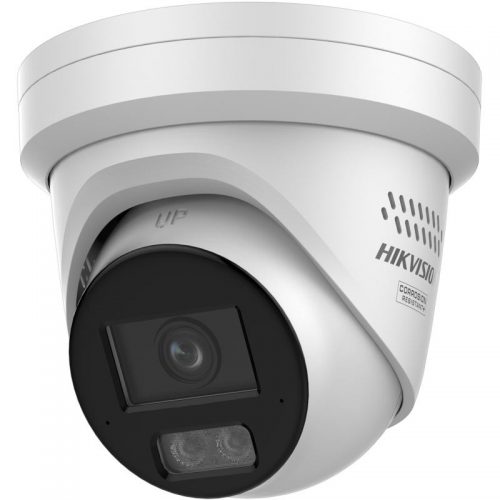
Hikvision DS-2CD2387G3-LIS2UY/SL
A strong fixed-lens visible-light path for mine entry, crib-room approach, workshop entry, and controlled plant-side views where the site wants reliable low-light performance and clear deterrence options.
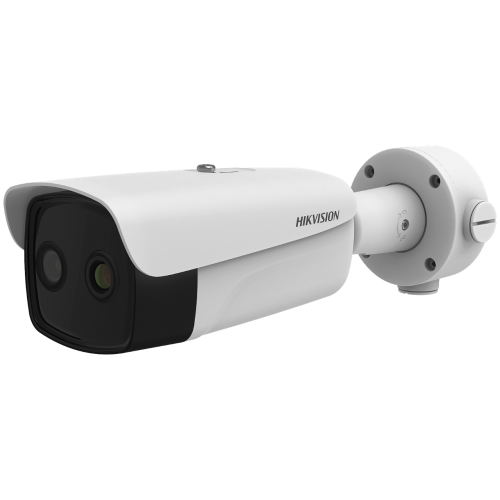
Hikvision DS-2TD2637T-10/QY
A more serious thermographic bullet path for boundary detection, stockpile heat risk, and dusty or low-visibility scenes where ordinary visible-light cameras struggle to answer the real question.
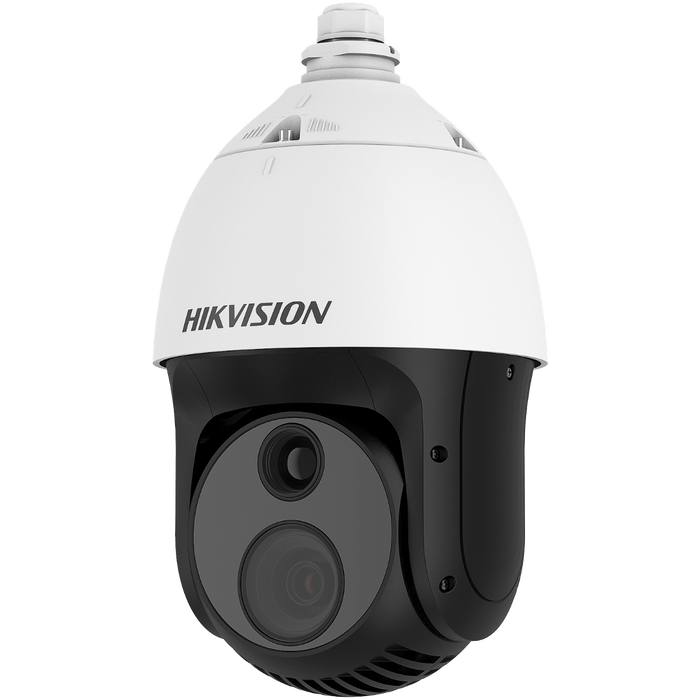
Hikvision DS-2TD4228T-10/S2
A thermal PTZ support layer for broader mining scenes where one fixed camera is not enough and the site genuinely needs patrol, tracking, and dual-spectrum review.
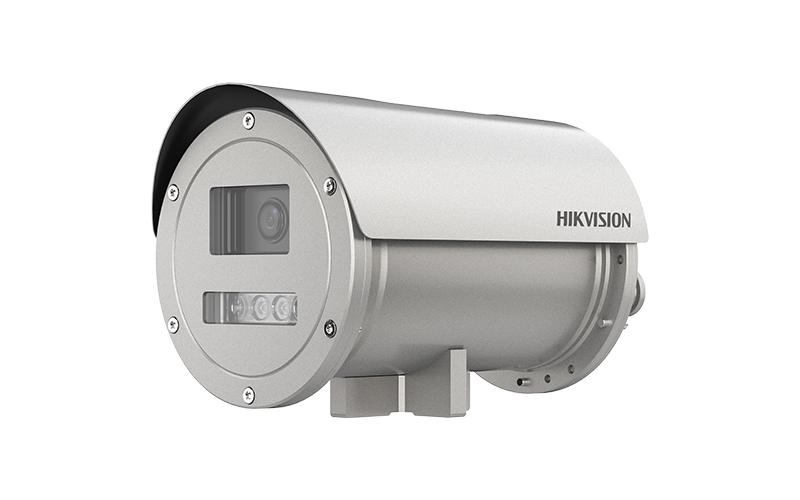
Hikvision DS-2XE6885G0-IZHS
The Hikvision explosion-proof path for hazardous areas where the site cannot treat an ordinary bullet camera as good enough. Use only where the zone and engineering requirement support it.
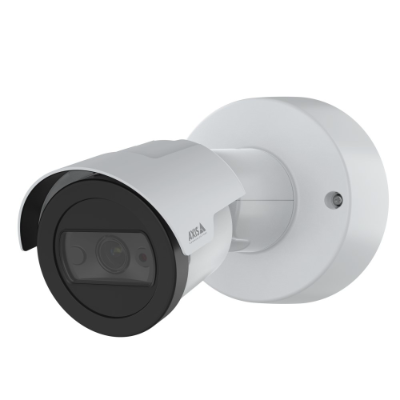
AXIS Q3556-LVE
A premium hardened fixed-camera path when the mine wants a stronger AXIS visible-light layer for entries, process buildings, and controlled industrial scenes.
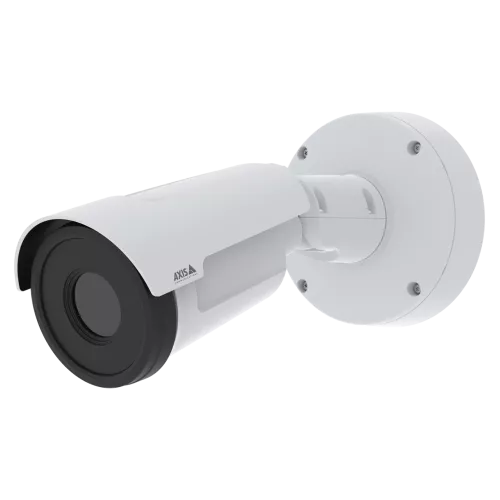
AXIS Q1971-E
A strong AXIS thermal path for 24/7 detection and verification where darkness, distance, fog, smoke, or dust make normal fixed cameras less dependable.
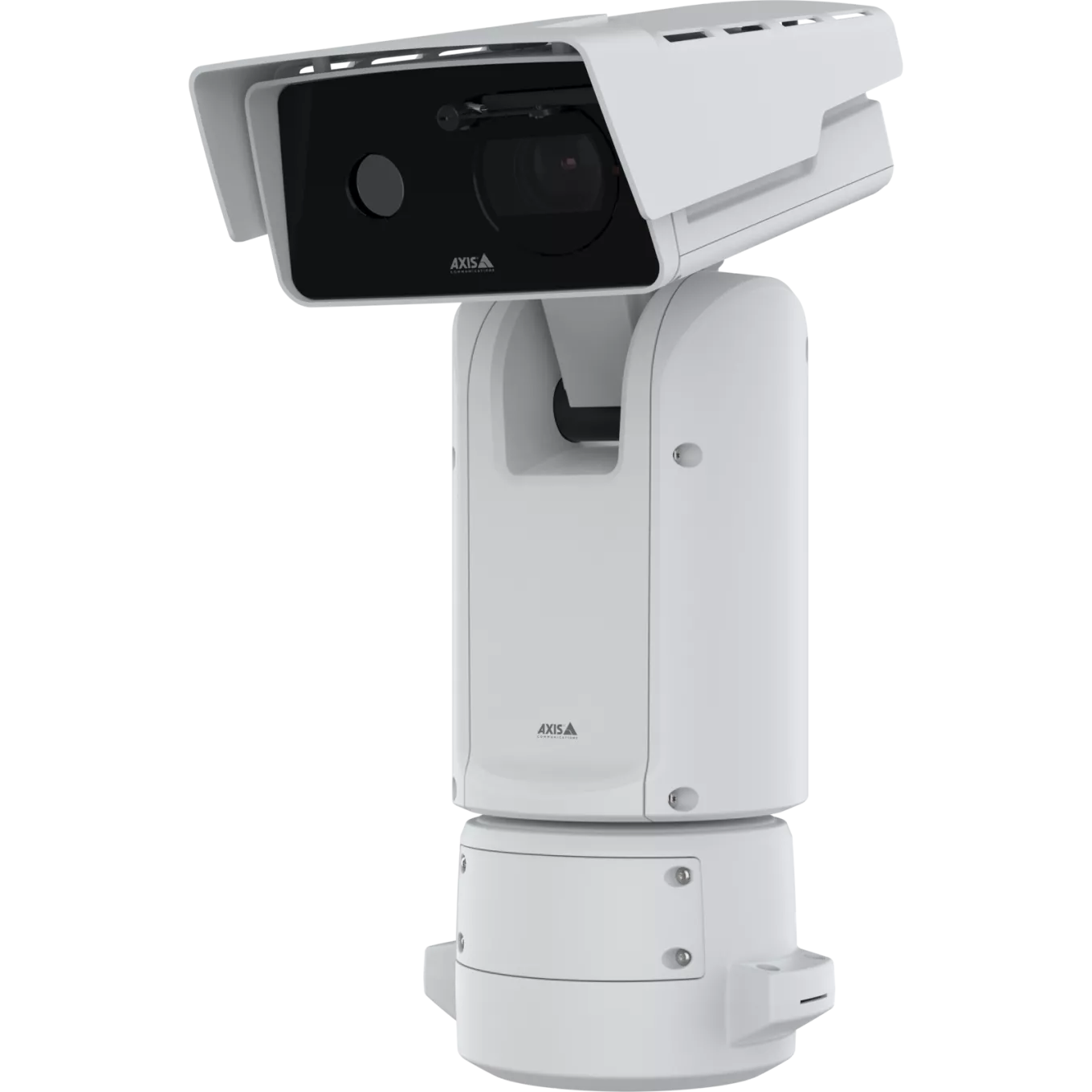
AXIS Q8752-E Mk II
A bispectral AXIS PTZ for larger mines or remote industrial sites that want both thermal detection and optical context from one specialist high-value vantage point.
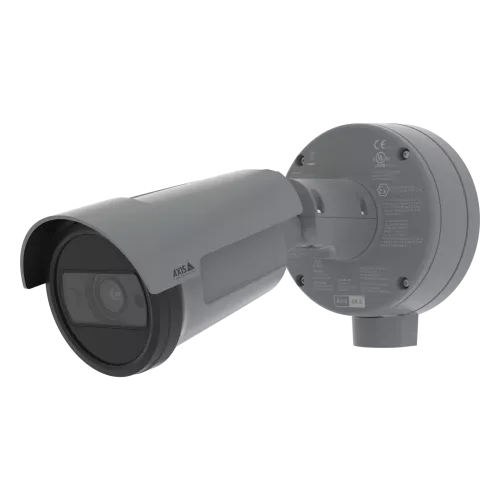
AXIS P1468-XLE
The AXIS explosion-protected path for hazardous industrial environments and Zone or Division 2 applications where the site standard leans toward an AXIS enterprise branch.
Recommended next reads in this hub
Best Mining CCTV System in Australia
The main buying page for camera count, recorder path, thermal strategy, PTZ, and explosion-protected shortlists.
Mining CCTV for Gates, Weighbridges, and Remote Access Roads
Use this for contractor entry, truck lanes, bridge transactions, and remote road logic.
Mining Cameras for Process Plants, Conveyors, Crushers, and Stockpiles
Process-area coverage, transfer points, plant-side camera roles, and stockpile visibility.
Thermal Cameras for Mines: Fire Detection, Dust, and Low-Visibility Monitoring
Use this when the conversation is really about heat, smoke, dust, glare, or early detection.
Mining Cameras for Workshops, Fuel Farms, Plant Parking, and Hazardous Areas
Separate normal hardened CCTV from genuine hazardous-area camera decisions.
AXIS vs Hikvision for Mining CCTV
Use this when the shortlist is down to Hikvision versus AXIS and the site needs a clearer branch decision.
Remote Mining CCTV Troubleshooting
Practical fault-finding for remote poles, bridges, solar branches, thermal false alarms, and unstable mining edge cameras.
Mining Thermal False Alarms and Tuning Guide
Use this when the thermal hardware is installed but the alert logic, target zones, or heat scene still need tuning.
Mining CCTV Commissioning and Handover Checklist
A field-ready checklist for live view, playback, branch health, labels, and the evidence needed for a proper handover.
Relevant SecurityWholesalers categories
- Hikvision CCTV
- Hikvision Thermal Cameras
- Hikvision PTZ Cameras
- Hikvision Explosion-Proof Cameras
- Hikvision NVRs
- AXIS Communications CCTV
- AXIS Thermal Cameras
- AXIS PTZ Cameras
- AXIS Network Video Recorders
- PoE Switches
- Surveillance Hard Drives
- UPS Backup
Frequently asked questions
What is the best mining CCTV system?
Usually a layered IP system with fixed evidence cameras first, thermal where the site has a real detection or fire-risk problem, PTZ only where a genuine overview role exists, and explosion-protected hardware only where the hazardous-area requirement actually calls for it.
Do mines need thermal cameras everywhere?
No. Thermal is a specialist layer. It belongs on stockpile heat-risk jobs, long boundaries, smoke or dust-heavy scenes, and selected low-visibility outdoor zones, not automatically on every doorway or plant room.
Are PTZ cameras enough for a mine?
No. PTZ helps with overview and response, but fixed cameras still need to hold the key evidence positions such as the gate, weighbridge, workshop entry, fuel area, or conveyor transfer point.
When should a site use explosion-protected cameras?
Only where the zone classification, safety standard, or engineering requirement demands it. They are not a general industrial upgrade for ordinary outdoor scenes.
Is Hikvision or AXIS better for mining?
Neither is automatically best. Hikvision is often a strong all-round commercial path for fixed cameras, thermal, PTZ, and explosion-proof branches in one ecosystem. AXIS is stronger when the site wants a higher-end enterprise or specialist industrial path, especially around Camera Station architecture, thermal, and certain hardened or explosion-protected applications.