

















Informational
Mining CCTV Coverage Zones and Camera Placement
Return to Mining CCTV and Camera Solutions
Planning Guide
This page is about coverage logic first. It helps you separate the main mining scenes into controlled thresholds, process areas, heat-risk zones, remote after-hours edges, and cabinet or infrastructure areas. That makes it easier to choose between Hikvision and AXIS fixed cameras, thermal branches, and selected PTZ layers without treating the whole site as one giant open yard.
Quick placement rule
Start with the views that answer the questions the site will actually ask later: who entered, what vehicle crossed, what happened at the weighbridge, who accessed the workshop or fuel area, what changed at the process plant, and what approached after hours. Those questions usually matter more than simply seeing the largest possible area.
On this page
- How to prioritise mining coverage zones
- Recommended camera types by zone
- Where fixed, thermal, and PTZ layers each belong
- Common mounting mistakes on mining jobs
- Representative Hikvision and AXIS product paths
Diagram: start with the operational thresholds, then expand outward
Coverage zones that usually matter first
| Area | Recommended camera type | What to capture | Notes |
|---|---|---|---|
| Main gate and guardhouse | Fixed turret, dome, or box camera with tuned lane framing | Faces, vehicle approach, barrier event, trailer context | Use stable evidence framing first. Add a wider context view separately if the lane is busy. |
| Weighbridge lane | Fixed or motorised lane view plus one wider overview camera | Truck position, scale interaction, transaction line | The bridge wants repeatable framing, not a camera that keeps moving or zooming. |
| Workshop, store, and fuel entry | Fixed visible-light camera, sometimes varifocal | Door threshold, roller door, vehicle or person access | These scenes become important after incidents, tool loss, or after-hours entry reviews. |
| Conveyors, crushers, and transfer points | Fixed hardened camera, with thermal where heat-risk or poor visibility matters | Operational context, blockage points, maintenance review | Plant scenes often need context rather than pure identity views. |
| Stockpiles and bins | Thermal or bi-spectrum path | Heat anomalies, smoke, night movement | Normal CCTV is not the first answer for spontaneous-combustion style questions. |
| Remote access roads and fence lines | Thermal, selected PTZ support, or long-range fixed verification view | After-hours approach, early movement detection | Distance and dust often matter more than raw resolution. |
| Cabinets, comms rooms, and recorder areas | Compact fixed internal camera | Who opened the cabinet or entered the comms room | Do not ignore the infrastructure layer itself on a remote industrial site. |
How placement changes by mining use case
Controlled thresholds
Gate lanes, bridge lanes, workshop doors, and crib-room or office entries want predictable framing. Hikvision or AXIS fixed cameras usually do most of this work better than PTZ.
Operational review zones
Conveyors, crushers, transfer points, and plant yards often want wider context and better mounting discipline rather than the tightest face-capture style view.
Heat-risk or low-visibility scenes
Stockpiles, smoke-prone outdoor areas, and dusty remote edges often justify thermal because visible-light cameras struggle once the conditions change.
Remote after-hours approaches
These scenes usually need the clearest objective defined first: overview, early detection, verification at a choke point, or all three using separate layers.
Common mining camera-placement mistakes
- Mounting every camera high and wide, then discovering the site cannot identify the actual event later.
- Using one overview camera where the job really needed one evidence view and one wider context view.
- Ignoring the weighbridge transaction line and only recording the broader truck scene.
- Treating stockpile heat risk like an ordinary visible-light CCTV job instead of a thermal job.
- Placing PTZ too early in the design and reducing the budget for the fixed-camera backbone.
- Leaving the cabinet, switch, or remote wireless-bridge area unmonitored.
Representative Hikvision and AXIS product paths
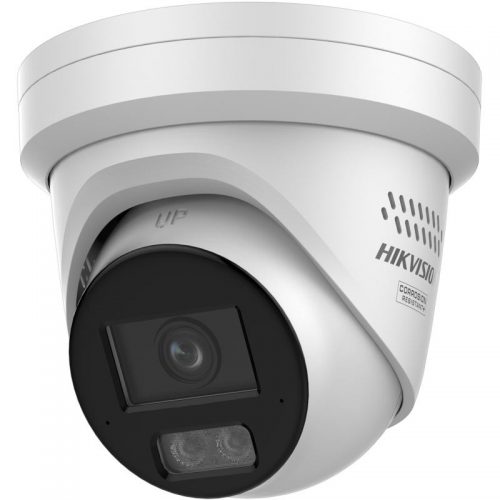
Hikvision DS-2CD2387G3-LIS2UY/SL
A useful fixed-camera path for gate approaches, workshop doors, contractor entries, and controlled outdoor thresholds where low-light evidence still matters.
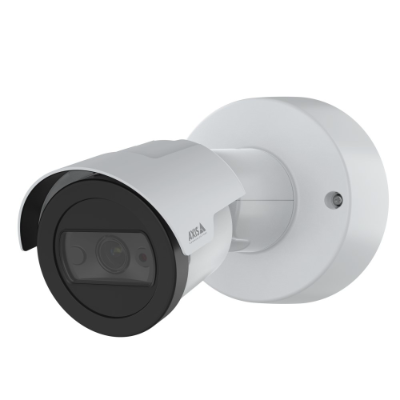
AXIS M2036-LE
A compact AXIS path for rugged outdoor verification points where the site wants a lighter physical footprint but still needs strong industrial-grade visibility.
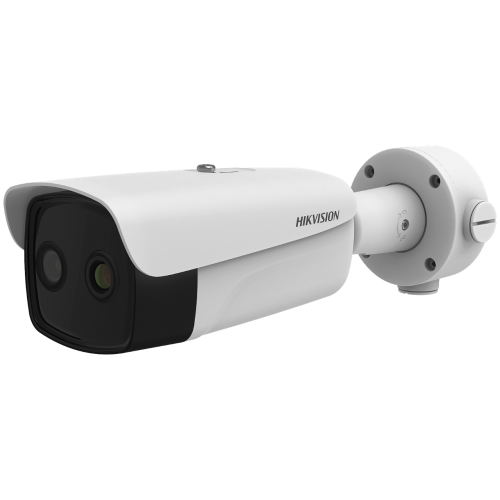
Hikvision DS-2TD2637T-10/QY
A stronger choice once the scene is about smoke, dust, stockpile heat, long-range night visibility, or perimeter awareness rather than ordinary visible-light detail.
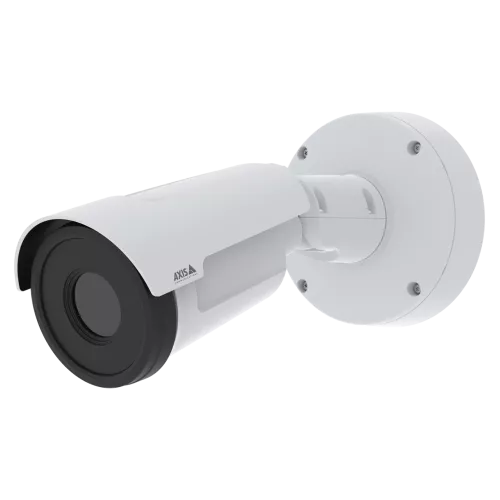
AXIS Q1971-E
A premium AXIS thermal path for remote industrial edges, boundaries, and harsh outdoor scenes where early detection matters more than colour imagery.
Suggested next reads
Gates, weighbridges, and remote access roads
Go deeper on lane design, contractor entry, remote-road detection, and access-road camera strategy.
Process plants, conveyors, and crushers
See where plant-side operational review needs different framing from gate or workshop cameras.
Best mining CCTV system
Return to the main buying page if you are still deciding the overall recorder, camera count, or thermal branch.
Frequently asked questions
What areas should a mining CCTV system cover first?
Most sites should start with the entry sequence first: gate, guardhouse or office check-in, weighbridge or contractor lane, workshop entry, fuel or plant access, and the after-hours remote approaches that create the highest review value.
Should mines mount cameras as high as possible?
Not automatically. Higher mounting can improve overview, but it can also reduce face, plate, or event detail. The height should match the job of the camera rather than chasing coverage alone.
Do stockpiles and conveyors need the same camera placement as a gate?
No. Gates want stable evidence framing, while process areas and stockpiles often need wider context, operational review, and sometimes thermal support for heat-risk or low-visibility conditions.
Are remote roads usually a fixed-camera job or a thermal job?
That depends on the distance, dust, and after-hours objective. Some remote roads need fixed verification at the actual access point, while others become stronger with a thermal branch that detects people or vehicles before they reach the gate.
Should a PTZ replace the fixed cameras on a mining site?
Usually no. A PTZ can add operational overview, but the fixed views on gates, weighbridges, workshops, and other controlled thresholds still provide the recorded evidence backbone.