












Commercial
Mining CCTV Fixed Cameras, PTZ, Thermal, and Deterrence Layers
Return to Mining CCTV and Camera Solutions
Camera Strategy
This page is about separating those jobs properly. Hikvision and AXIS both have strong mining paths, but the strongest result usually comes from giving each camera family a clear role instead of expecting one product to do every part of the site.
Quick answer
Fixed cameras should do most of the evidence work. Motorised or varifocal cameras help when the lane depth or final framing is uncertain. Thermal solves visibility, smoke, dust, perimeter, or heat-risk problems. PTZ is a support layer, not a replacement for fixed coverage. Visible deterrence can help on isolated after-hours zones, but it should not become the entire strategy.
Diagram: build the mining camera stack in the right order
When each camera family actually fits
| Camera path | Best use cases | When it is not enough | Typical mining notes |
|---|---|---|---|
| Fixed lens | Gate lanes, weighbridges, workshop doors, contractor entries, cabinet rooms | When the scene depth changes too much or the final framing cannot be judged remotely | This is usually the main evidence layer. |
| Motorised or varifocal | Long approaches, wider bridge scenes, plant entries, remote access roads | When the site wants automatic scanning or long-range thermal-style detection | Useful for commissioning flexibility rather than as a separate strategy. |
| Thermal | Stockpiles, remote boundaries, dusty outdoor zones, smoke, darkness, heat-risk areas | When the site mainly needs colour identification close up | Thermal answers a different question from ordinary CCTV. |
| PTZ or bi-spectrum PTZ | Large yards, high points, remote support views, live operational overview | When the only evidence view is going to depend on it | Keep the fixed cameras even when PTZ is added. |
| Visible deterrence | Remote gates, compounds, isolated entries after hours | Busy operational interiors or complex plant areas where audio or strobe would be intrusive | Usually an overlay, not the primary logic. |
What usually works on mining projects
Gate and bridge path
Use fixed or varifocal visible-light cameras first. Add thermal only if the site also needs detection before the vehicle reaches the actual lane.
Process and stockpile path
Use fixed cameras for operational review and thermal where the site is truly dealing with dust, smoke, heat, or early anomaly detection.
Remote access path
Use fixed verification at the access point, then add thermal or PTZ support if the road or perimeter scene is too long for ordinary CCTV alone.
Hazardous-area path
Do not substitute a normal deterrence or bullet camera where the hazardous-area classification actually requires an explosion-protected branch.
Representative Hikvision and AXIS camera families
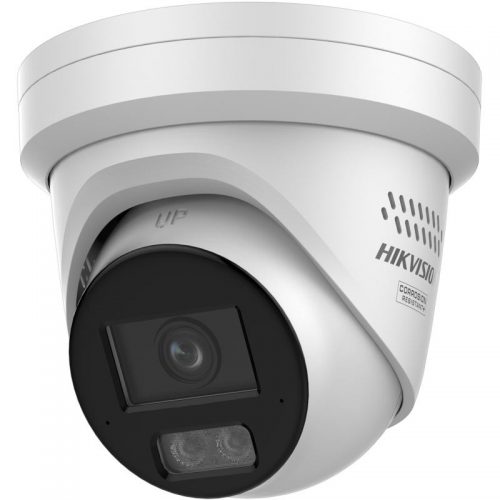
Hikvision DS-2CD2387G3-LIS2UY/SL
A practical fixed-camera path for entries, workshop thresholds, and site-side deterrence where the mine wants a visible-light evidence layer with stronger low-light performance.
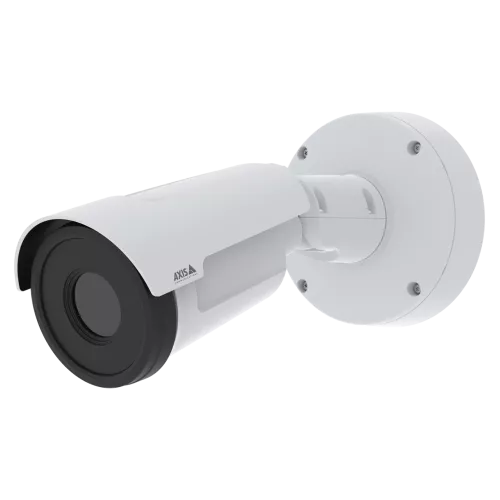
AXIS Q1971-E
A stronger AXIS thermal path when the problem is perimeter awareness, harsh visibility, or outdoor industrial detection rather than standard colour imaging.
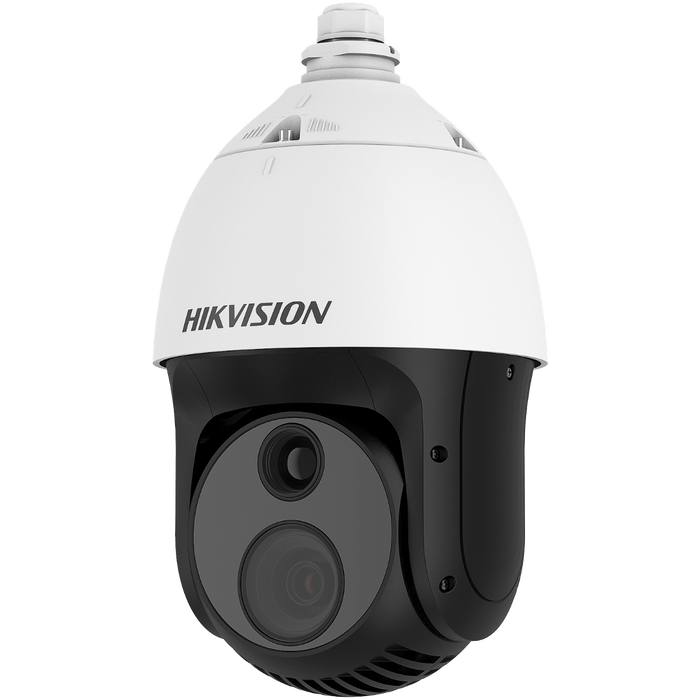
Hikvision DS-2TD4228T-10/S2
A dual-spectrum PTZ support layer for broader remote scenes where the site genuinely benefits from patrol, live follow-up, and thermal verification.
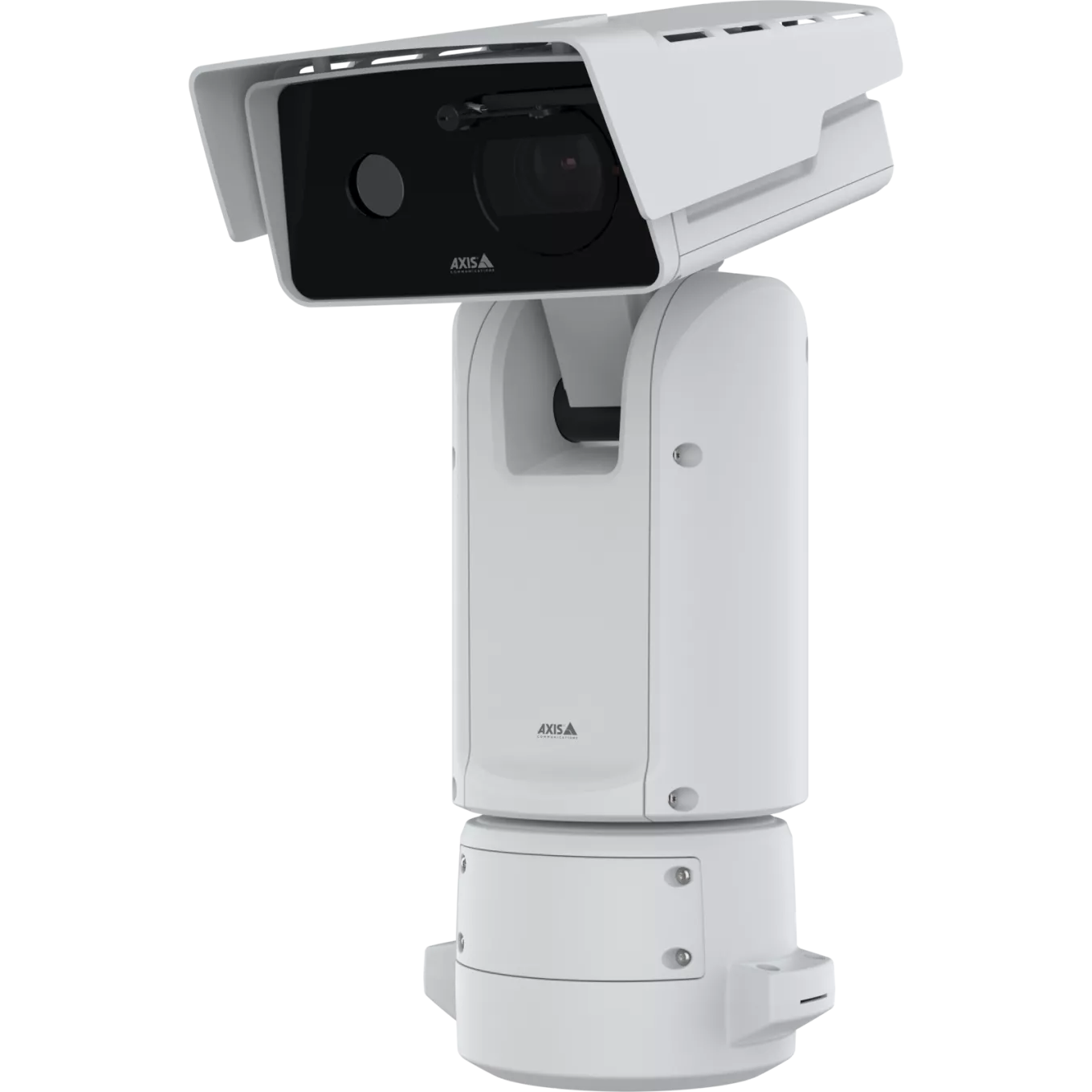
AXIS Q8752-E
A premium AXIS bispectral PTZ path for large, exposed outdoor mining scenes where the project wants long-range thermal plus optical confirmation in one platform.
Suggested next reads
Thermal, fire, and dust monitoring
Go deeper on when thermal genuinely earns its place on a mining project.
Gates, weighbridges, and remote roads
See how these camera families translate into actual access-road and entry-lane design.
AXIS vs Hikvision for mining CCTV
Compare which brand path makes more sense for your site standard and camera mix.
Frequently asked questions
When does a fixed camera usually make the most sense on a mining site?
Fixed cameras usually belong at gates, weighbridges, workshop doors, fuel entries, contractor check-in points, and other controlled thresholds where the scene repeats and recorded evidence needs to stay stable.
When is a motorised lens worth the extra cost?
A motorised lens becomes useful when the final distance or framing is harder to judge on paper, such as remote access roads, wide bridge scenes, or long industrial approaches that need tuning on site.
Should a mine use PTZ as the main camera type?
Usually no. PTZ is a support layer for overview, patrol, or remote verification. It should not replace the fixed evidence cameras that continuously watch the most important thresholds.
Where does thermal fit compared with visible-light CCTV?
Thermal becomes stronger where the problem is darkness, smoke, dust, stockpile heat, long-range detection, or poor contrast rather than colour evidence or facial identification.
Are deterrence cameras suitable for mines?
Sometimes, but mainly on after-hours external scenes such as remote gates, compounds, or isolated entries. They are usually less appropriate as the main strategy inside ordinary operational plant areas.