

















Commercial
Mining Cameras for Workshops, Fuel Farms, Plant Parking, and Hazardous Areas
Return to Mining CCTV and Camera Solutions
Hazardous Areas
Diagram: ordinary hardened cameras versus explosion-protected branches
Diagram: safe-area cabinet versus classified camera edge
Which path suits which area?
| Area | Usual camera path | Typical product direction | Notes |
|---|---|---|---|
| Workshop external door or roller door | Normal hardened fixed camera | Hikvision fixed camera or AXIS fixed camera | Usually an access and review job, not a hazardous-area job. |
| Plant parking and maintenance yard | Normal hardened fixed or varifocal camera | Hikvision visible-light branch or AXIS fixed branch | Choose around detail distance and night behaviour. |
| Fuel farm or process edge with genuine classification requirement | Explosion-protected branch | Hikvision DS-2XE6885G0-IZHS or AXIS P1468-XLE | The zone requirement leads the choice, not the marketing label. |
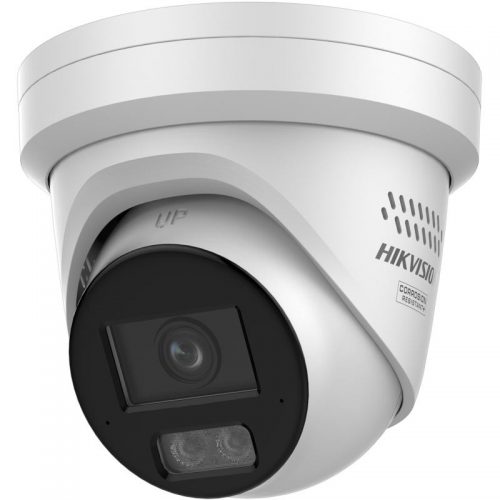
Hikvision hardened workshop path
DS-2CD2387G3-LIS2UY/SL is a practical fixed-camera reference for workshop doors, plant bays, and general mining yard access points that are harsh but not classified.
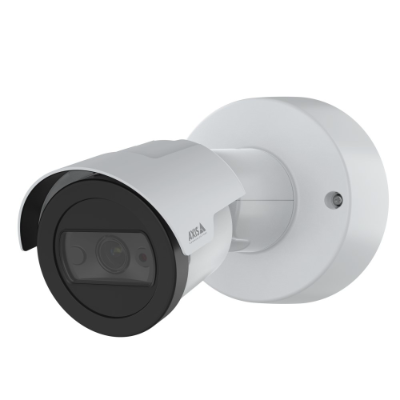
AXIS hardened workshop path
Q3556-LVE is the cleaner AXIS reference point where the site wants stronger fixed-camera hardware before any hazardous-area escalation is discussed.
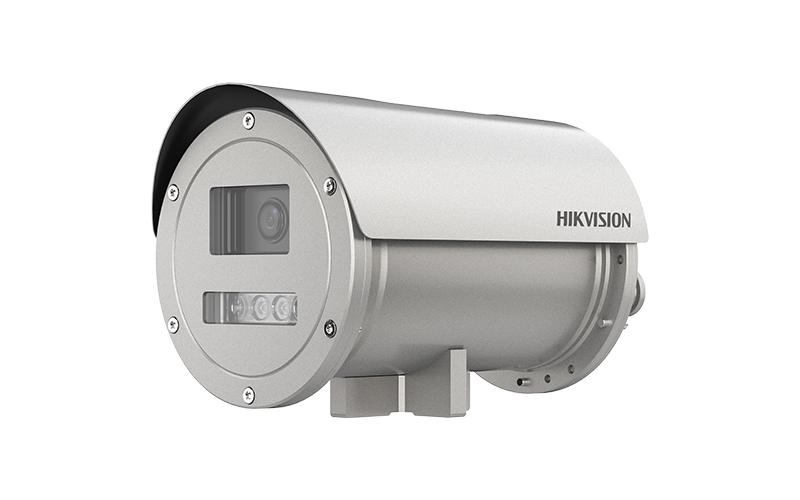
Hikvision DS-2XE6885G0-IZHS
This Hikvision explosion-proof bullet is the clearer Hikvision mining branch where the site genuinely needs the hazardous-area path.
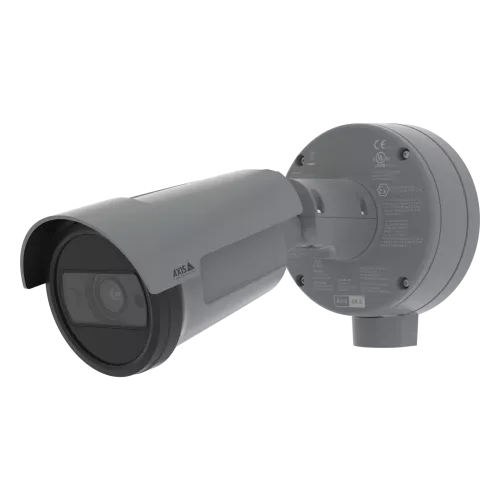
AXIS P1468-XLE
This AXIS explosion-protected bullet suits sites that want the hazardous-area branch inside a more enterprise AXIS architecture.
Recommended workshop and hazardous-area buying paths
Hikvision hardened workshop path
Best for: workshop doors, wash-bay approaches, and general maintenance-yard access points that are harsh but not actually classified.
- Use hardened fixed or varifocal Hikvision cameras for the actual access paths
- Keep the hazardous-area conversation separate unless the classification clearly forces it
- Better when the wider mine already leans Hikvision for gates, process areas, and NVRs
AXIS hardened workshop path
Best for: higher-end workshop, yard, or fuel-adjacent scenes where the site wants premium fixed-camera hardware.
- Use AXIS fixed cameras where the branch is still a normal hardened industrial job
- Stronger when the project wants premium build quality and AXIS-led enterprise continuity
- Do not jump to explosion-protected hardware just because the environment is rough
Hikvision explosion-protected path
Best for: classified edges that already sit inside a Hikvision-led mining ecosystem.
- Main reference: DS-2XE6885G0-IZHS
- Use once the safe-area boundary and engineering requirement are already defined
- Stronger where one-brand mining continuity matters
AXIS explosion-protected path
Best for: premium classified mining projects wanting AXIS enterprise continuity.
- Main reference: P1468-XLE
- Use where the wider recorder, permissions, and workflow path is already AXIS-led
- Still treat the install boundary as the first decision, not the camera brand
Example workshop and hazardous-area combinations
Workshop roller door, wash-bay approach, and maintenance yard
This is the right first step where the environment is rough and dusty, but the branch is still a normal hardened CCTV job rather than a classified one.
Hikvision fixed branch
Practical one-brand mining path for workshops, plant bays, and yard thresholds.
AXIS fixed branch
Premium hardened alternative where the site wants AXIS-led enterprise continuity.
- Typical camera count: 3 to 6 fixed cameras before any hazardous-area gear is considered.
- Recorder path: 16-channel Hikvision NVR or AXIS Camera Station style branch for workshop and yard review.
- Step up when: the engineering classification genuinely changes at the fuel or process edge.
Normal workshop views plus one hazardous fuel-edge camera
This is the cleaner Hikvision approach where most of the workshop is still ordinary hardened CCTV, but one fuel or process edge requires a genuine hazardous-area branch.
Normal hardened workshop view
Keep the ordinary access and workflow views on standard fixed cameras.
Hazardous-area edge
Use DS-2XE6885G0-IZHS only where the classification actually demands it.
- Best for: mines that already lean Hikvision across gates, workshops, and process areas.
- Install priority: keep the safe-area cabinet and transition point documented and easy to inspect.
- Mistake to avoid: forcing the whole workshop into explosion-protected hardware because one edge is classified.
Premium hardened workshop views plus one classified branch
This is the better AXIS path when the project wants premium fixed-camera hardware in the workshop and AXIS enterprise continuity at the hazardous edge.
AXIS hardened workshop view
Use premium fixed cameras for ordinary workshop, yard, and threshold scenes.
AXIS classified edge
Use P1468-XLE only where the hazardous-area branch is already justified by site standard.
- Best for: higher-end mining projects wanting AXIS workflow, permissions, and long-term enterprise continuity.
- Install priority: boundary definition, protected transition path, and supportable cabinet design still matter more than brand preference.
- Mistake to avoid: treating the hazardous camera as a substitute for ordinary fixed workshop coverage.
Important caution
Hazardous-area surveillance decisions should be treated as part of the site's wider engineering, compliance, and safety framework. This page is practical buying guidance only. It is not a substitute for hazardous-area design, classification review, or engineering sign-off.
If the team needs more install-specific guidance on where the safe-area infrastructure should stop and the classified branch should begin, use Hazardous-Area CCTV Installation Boundaries for Mines and Fuel Areas.
Hazardous-area and workshop install checklist
| Area | Install priority | What to verify before handover |
|---|---|---|
| Workshop and wash bay approaches | Use hardened fixed cameras, keep mounts serviceable, and keep cable protection realistic for the environment | Access events are clear, night performance is usable, and maintenance access is practical |
| Fuel farm edge with real classification boundary | Document the safe-area boundary, protect the transition path, and only use explosion-protected hardware where the classification demands it | There is no ambiguity about where ordinary infrastructure ends and the hazardous branch begins |
| Plant parking or maintenance yard | Select mounts and lenses around real stand-off distances, not just the easiest wall position | Plant movements, bay access, and after-hours entry points are reviewable without excessive digital zoom |
What usually fails first in workshop and hazardous-area CCTV
- Explosion-protected cameras specified too early, before the site has actually defined the classified boundary properly.
- Ordinary hardened cameras placed too close to the wrong process edge because the physical install boundary was never documented.
- Workshop cameras mounted for convenience rather than for the access path or incident scene that actually matters later.
- Poor coordination between the CCTV branch and the site's wider hazardous-area documentation.
Need the sign-off and handover side?
Use Mining CCTV Commissioning and Handover Checklist if the branch is installed and the next issue is proving boundaries, live views, playback, labels, and handover evidence properly.