















Commercial
Hazardous-Area CCTV Installation Boundaries for Mines and Fuel Areas
Return to Mining CCTV and Camera Solutions
Hazardous Install
The right answer depends on the actual site classification, engineering standard, and boundary definition. This page is not hazardous-area design advice, but it is a practical buying and installation guide to help you ask the right questions before cameras, cabinets, and cable routes are fixed.
Core rule
Explosion-protected cameras are not a tougher version of a normal outdoor camera. Use them only where the site classification, engineering requirement, or approved design says that branch is necessary. Keep normal cameras, PoE switches, UPS units, and cabinets in the safe area whenever the design allows that.
Diagram: keep the ordinary infrastructure in the safe area where possible
Practical installation boundaries
| Install question | Safer practical answer | Why |
|---|---|---|
| Where should the PoE switch or recorder cabinet sit? | In the safe area wherever the design allows it | It is usually cleaner, simpler, and easier to maintain if the ordinary infrastructure stays outside the classified zone. |
| Does every camera near a fuel area need to be explosion-protected? | No, not automatically | The actual classified boundary matters more than the label people casually use for the area. |
| Can a normal hardened camera be used just inside a classified area? | Do not assume that | That decision belongs to the approved site design and engineering framework. |
| What should be checked before ordering the camera? | Zone or division requirement, mounting point, cable path, and the exact boundary location | That stops the project from buying the wrong branch too early. |
Typical mining mistakes around hazardous-area cameras
- Treating a whole workshop or whole fuel precinct as one undifferentiated hazardous zone.
- Buying explosion-protected cameras before the boundary is properly defined.
- Placing ordinary cabinets, switches, or UPS equipment where the site later decides they should not be.
- Assuming a normal camera can be "made acceptable" later by changing the bracket or conduit detail.
- Forgetting that maintenance access and replacement logistics matter as much as the initial camera choice.
Representative product paths
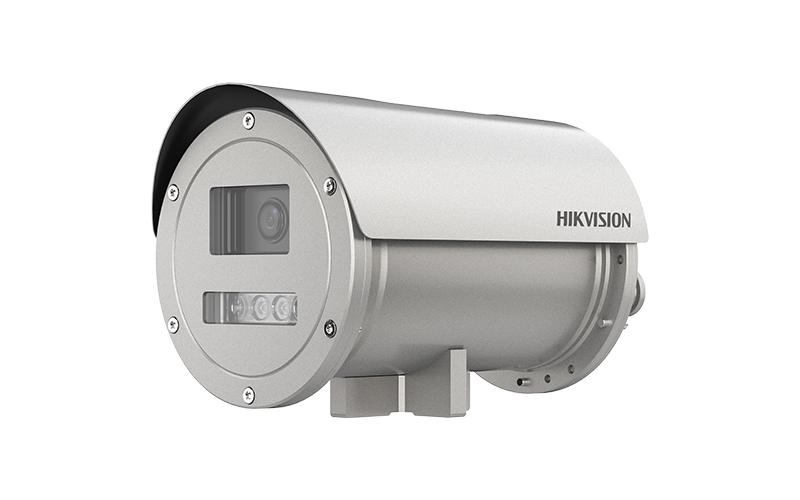
Hikvision DS-2XE6885G0-IZHS
A stronger Hikvision explosion-protected branch when the approved design genuinely requires that path in a classified mining or fuel-related area.
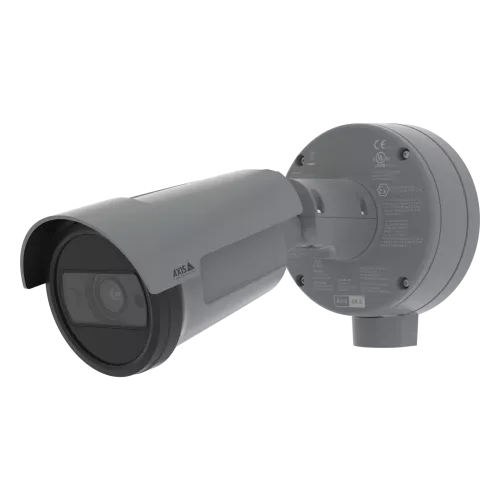
AXIS P1468-XLE
A premium AXIS hazardous-area path where the project wants the explosion-protected branch inside a broader AXIS-led architecture.
Important caution
This page is practical guidance only. Hazardous-area classification, installation method, and approval should stay with the site's relevant engineering, compliance, and safety framework.
Best-in-country commissioning standard
Mining and quarry CCTV should be commissioned like an operational system, not like a normal small-business install. The handover should prove that the camera answers the site question under dust, glare, vibration, shift change, vehicle movement and after-hours conditions.
| Acceptance test | Pass condition | Evidence to keep |
|---|---|---|
| Day/night review | Critical views remain usable in the actual lighting cycle. | Sample clips from day, dusk and night. |
| Vehicle and plant movement | Trucks, loaders, light vehicles or contractors can be reviewed at the intended point. | Test vehicle pass and playback export. |
| Dust and vibration | Mounts and image quality remain stable around normal site activity. | Installer notes and any cleaning interval. |
| Network resilience | Remote links, PoE, fibre, wireless or 4G paths recover cleanly after interruption. | Network diagram and restart test notes. |
Product and system paths to compare
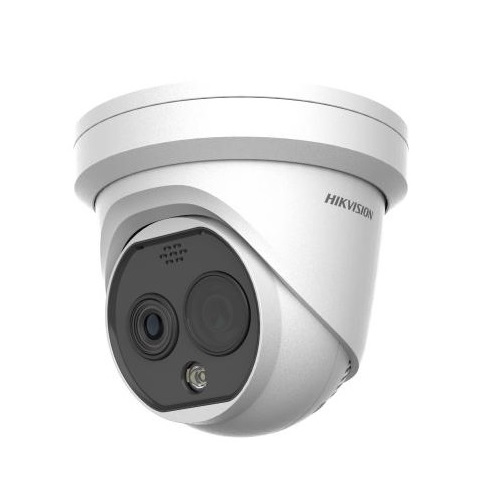
Thermal and bi-spectrum
Use where fire risk, dust, darkness or perimeter detection makes visible-light CCTV insufficient.
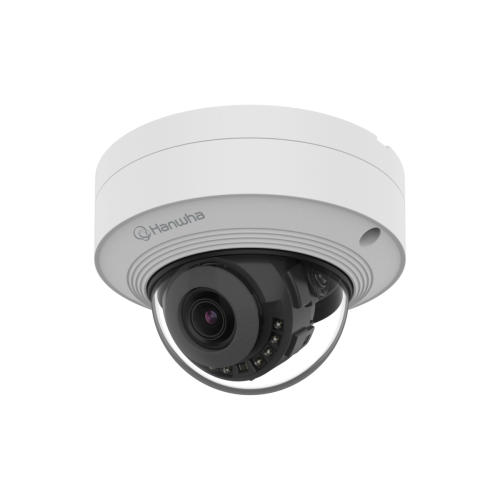
Premium commercial CCTV
Compare for higher-governance or enterprise-style sites where platform fit and durability matter.
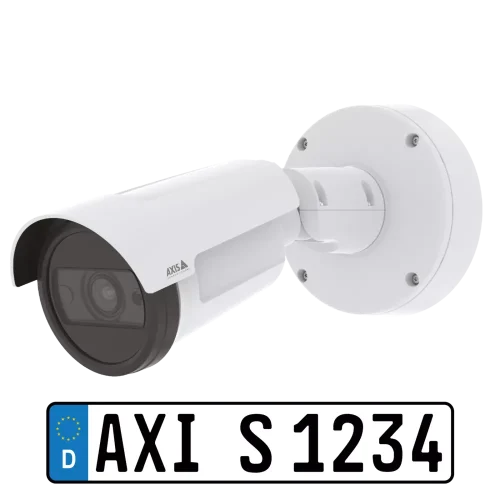
AXIS and LPR paths
Compare where open-platform design, weighbridge vehicle records or premium integration are important.
Operational handover checklist
- Camera names match site language such as weighbridge, fuel farm, crusher feed or workshop entry.
- Cleaning, inspection and lens-wipe intervals are assigned to a role, not left vague.
- Playback and export are tested with the person responsible for incident review.
- Known blind spots, exclusion zones and hazardous-area boundaries are documented.
Frequently asked questions
Why do mining CCTV projects fail?
Usually because dust, vibration, distance, lighting, network path or review workflow was not tested under real site conditions.
Does thermal replace normal CCTV?
No. Thermal is a detection or heat-risk layer. Visible-light cameras are still needed for colour, identity and operational context.