














Commercial
Remote Solar, 4G, and Isolated Mining Camera Branches
Return to Mining CCTV and Camera Solutions
Remote Branches
This does not mean solar and 4G are automatically better. It means the site should be honest about the problem. If the branch is isolated, low traffic, and event-led, solar or 4G may be sensible. If the branch needs several cameras, constant high-bitrate recording, or tight remote playback expectations, fibre or point-to-point bridge may still be the cleaner long-term answer.
Quick answer
Use solar and 4G branches for low-power, isolated, event-led camera jobs where trenching is unrealistic. Use fibre or wireless bridge where the site needs stronger always-on bandwidth, several cameras, or tighter integration with the main recorder path. Do not design a high-load multi-camera mine branch as if it were a simple farm gate.
Diagram: isolated branch versus integrated branch
Diagram: three common remote mining architectures
Representative remote-camera product paths
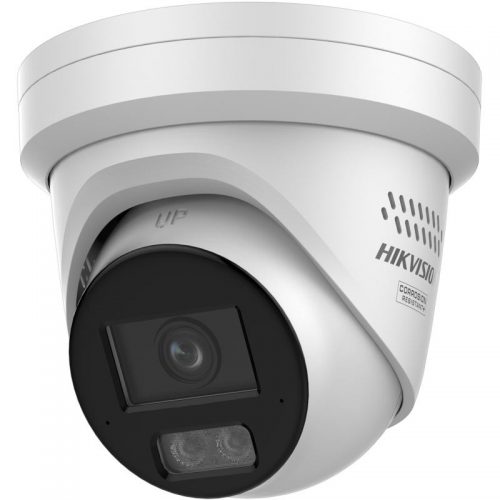
Hikvision fixed remote branch
DS-2CD2387G3-LIS2UY/SL is a practical fixed camera reference point when a remote mining branch still needs ordinary identifiable entry or gate evidence.
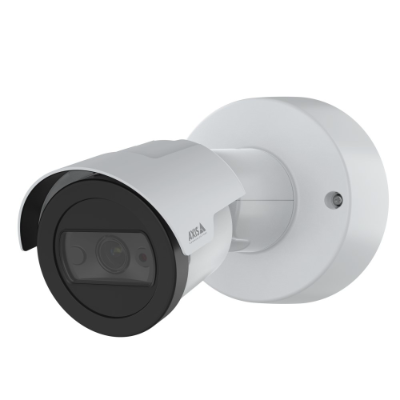
AXIS fixed remote branch
AXIS M2036-LE is a clean compact AXIS path for remote poles, small gate branches, and isolated roadside scenes.
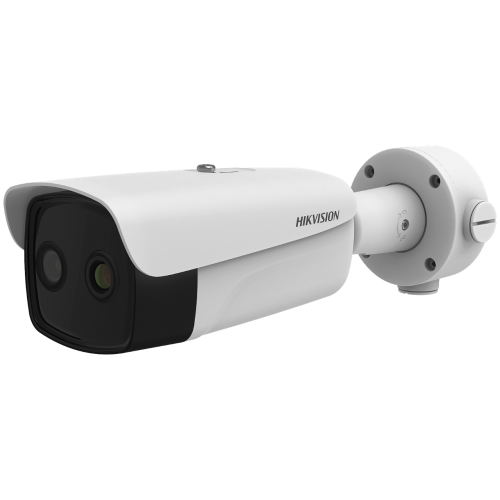
Hikvision remote thermal branch
DS-2TD2637T-10/QY is the stronger Hikvision path when the remote branch is more about early after-hours detection than ordinary video.
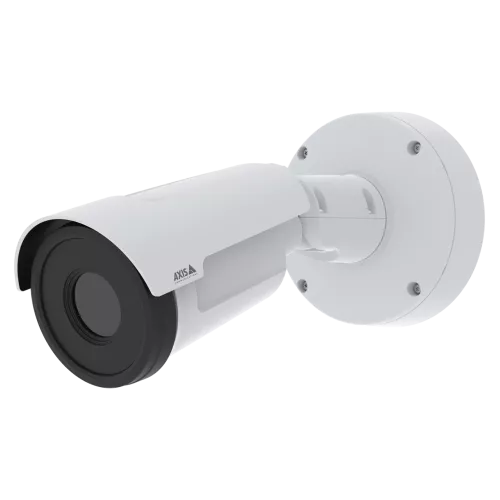
AXIS remote thermal branch
Q1971-E is the premium AXIS remote branch when the site needs a cleaner thermal path for distant checkpoints or roads.
Recommended remote branch combinations
One fixed evidence view plus event-led connectivity
This is the cleaner answer for a remote gate that needs to show who came in, but does not need a whole multi-camera compound design.
Hikvision fixed gate view
Strong value path when the wider mine is already Hikvision-led.
AXIS M2036-LE
Compact AXIS alternative for small remote poles and isolated approaches.
- Best backhaul: solar or 4G if the branch truly stays low-power and event-led.
- Typical camera count: 1 to 2 cameras only.
- Step up when: the site wants lane context, replay depth, or stronger always-on review.
Fixed gate view plus lane or road context
Once a remote branch needs both verification and context, the network decision usually becomes more important than the camera choice alone.
Hikvision fixed + lane context
Use one tighter verification view and one wider context view rather than one compromised wide angle.
Optional thermal add-on
Add thermal only if the real problem is earlier remote-road detection after hours.
- Best backhaul: bridge or fibre usually becomes cleaner than 4G.
- Typical camera count: 2 to 4 cameras plus one protected cabinet.
- Important: UPS, surge protection, and cabinet sealing matter more than shaving a little cost off the pole gear.
Thermal-first road, stockpile, or isolated checkpoint branch
Where the site wants early awareness in darkness, smoke, glare, or low visibility, thermal becomes the real branch driver.
Hikvision DS-2TD2637T-10/QY
Practical mining thermal path for remote road or pile-edge awareness.
AXIS Q1971-E
Premium AXIS thermal path for sites wanting stronger thermal-led enterprise continuity.
- Best backhaul: fibre or one stable point-to-point link if the branch is permanent; solar or 4G only if expectations stay low-power.
- Typical camera count: 1 thermal scene plus 1 fixed evidence view if identification matters.
- Step up when: the site needs broader overview, in which case a PTZ support layer may be justified.
When isolated branches make sense
| Remote camera scenario | Likely better branch | Why |
|---|---|---|
| Single remote gate or service road | Solar or battery plus 4G, or low-power bridge | Often too isolated to justify a full trench immediately. |
| Temporary stockpile or laydown monitoring point | Isolated low-power branch | Useful when the monitoring need may move later. |
| Several cameras at one isolated compound | Bridge or fibre preferred if practical | Several cameras and higher review expectations usually strain simple 4G logic. |
| Permanent remote checkpoint with growth planned | Fibre or stable point-to-point bridge | Usually the cleaner long-term branch if the site expects expansion. |
Practical things people forget on remote solar or 4G jobs
- Winter and cloud periods matter more than the best sunny day.
- Upload expectations should match the actual mobile signal and bitrate reality.
- Event-led recording is often more realistic than constant high-bitrate upstream streaming.
- Pole stability and theft or tamper protection still matter even if the branch is temporary.
- Remote maintenance access should be thought through before the branch is approved.
Useful decision shortcut
If the site expects one or two low-power event-led cameras, isolated solar or 4G may be practical. If the site expects several cameras, tight remote playback, or long-term growth, fibre or a point-to-point antenna path is usually the safer design conversation.
Remote branch checklist by scenario
| Remote scenario | Install priority | What to prove before sign-off |
|---|---|---|
| Single remote gate or service road | Confirm real signal strength, theft-resistant mounting, and event-led expectations before committing to 4G | Alerts, playback, and remote access still work after several days of ordinary weather and traffic |
| Temporary stockpile or laydown pole | Keep the branch moveable, protect the solar and battery assembly, and keep the pole serviceable | Local storage and power recovery work predictably even when the branch is not visited daily |
| Permanent isolated checkpoint | Test whether fibre or a point-to-point bridge is actually cleaner than 4G before treating solar as the default answer | The chosen path supports the real review expectation, not just a token live image |
What usually fails first on remote mining camera branches
- Power budgets based on sunny-day assumptions instead of winter or cloudy-week reality.
- 4G branches expected to behave like full-bandwidth recorder links.
- Remote poles with poor tamper resistance or awkward maintenance access.
- Teams choosing solar because trenching sounds expensive without first checking whether one stable bridge would solve the problem better.
Already have a remote branch that is unreliable?
Use Remote Mining CCTV Troubleshooting if the real problem is dropout, battery recovery, bridge drift, thermal false alarms, or missing playback rather than the original design choice by itself.