












Commercial
Home Security for Elderly Australians
Independent living
This guide is written for Australian families searching for home security for elderly parents, elderly panic button alarms, home cameras for elderly fall concerns or a safer way for loved ones to help answer the door. It explains what security equipment can do, where it should stop, and what still belongs in a care plan.
Quick answer
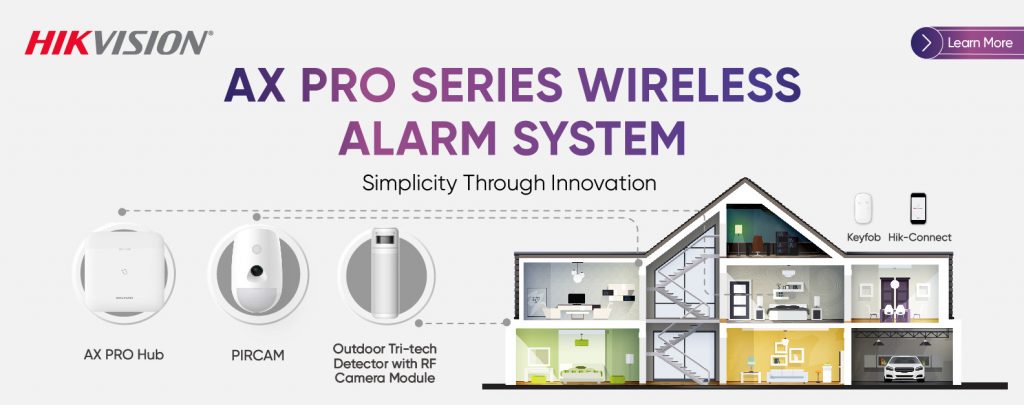
For many elderly people living at home, the best starting point is a Hikvision AX PRO duress alarm kit with a wearable or accessible panic button, then selected AX PRO image verification sensors where the family needs alarm context. Add a HiLook camera system for entry, driveway, backyard and carefully agreed shared indoor views. Add a Hikvision intercom where loved ones need to help answer the door if the resident cannot get there in time.
Who this guide is for
Older person living alone
The priority is usually an easy panic button, reliable family notification, basic intrusion protection and a way for family to check agreed areas after a concern.
Family supporting a parent
The priority is usually knowing when to act, not watching constantly. Use alerts, door events and agreed camera views to support care while preserving dignity.
Mobility, falls or slower door response
The priority is usually accessible buttons, door-answering help, hallway/living-area context and a plan for what happens if the person does not respond.
Start with the family conversation, not the equipment
The most successful elderly home security projects begin with a calm conversation. The resident should understand what is being installed, who can see alerts or footage, and what the family will do if something looks wrong. If the resident feels watched instead of supported, the system has already missed the point.
A useful way to frame it
"We are not trying to watch you all day. We want you to have an easy way to call for help, a safer way to answer the door, and a way for us to check agreed areas if you press the button or we cannot reach you."
Choose the care pathway first
A leading elderly security plan starts by deciding what should lead: security equipment, medical alert support, care-provider input or a combined response. If the family skips this step, they can end up buying cameras when the real issue is medical response, or buying a panic button when the resident may not be able to press it.
| Main concern | Best leading pathway | Read next |
|---|---|---|
| Break-ins, strangers, door answering or feeling unsafe. | Security-led. | Care pathway decision guide |
| Falls, medical episodes or no reliable family responder. | Medical-alert-led or combined. | Medical alert vs security |
| Dementia, wandering, confusion or repeated exit activity. | Care-provider-led with security support. | Door safety, scams and wandering |
| System must work even though the resident does not use technology. | Prerequisites and handover-led. | Prerequisites and handover checklist |
The recommended SecurityWholesalers solution stack
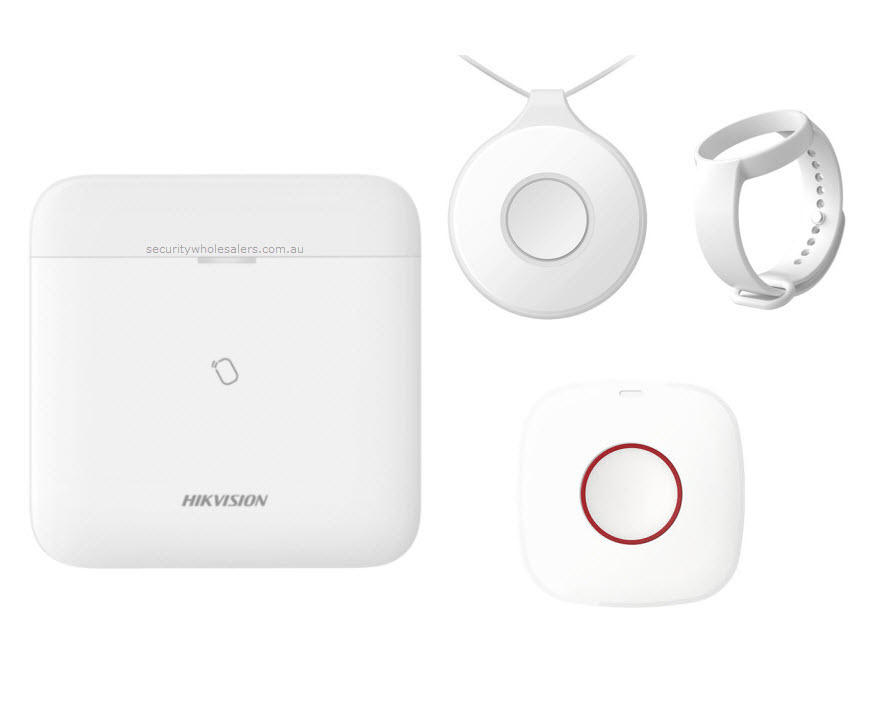
Hikvision AX PRO Duress Kit
The core elderly-safety layer. The AX PRO duress kit is listed as suitable for elderly living alone and can send calls or push notifications through the configured system path.
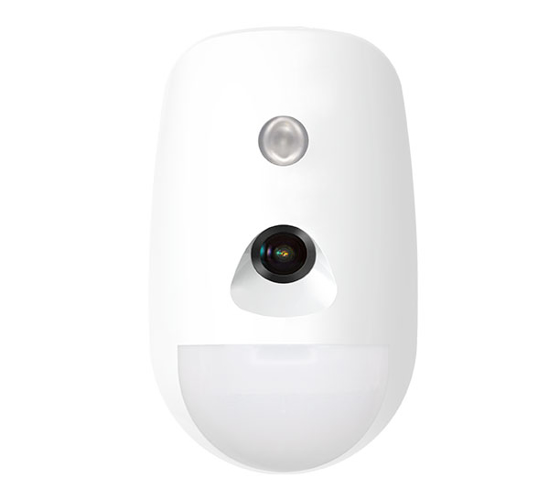
AX PRO PIRCAM Image Verification
Useful where the family needs alarm context without installing always-on cameras everywhere. Best in agreed shared zones, not private spaces.
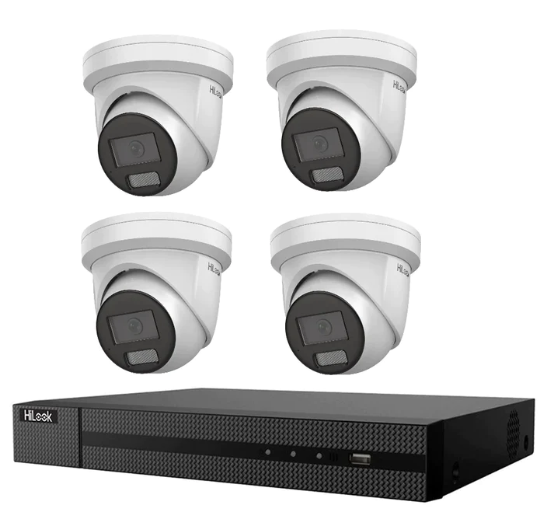
HiLook 6MP 4-Camera Kit
A practical camera layer for front entry, driveway, rear door, garage and carefully agreed indoor shared areas. Use it for review and reassurance, not intrusive surveillance.
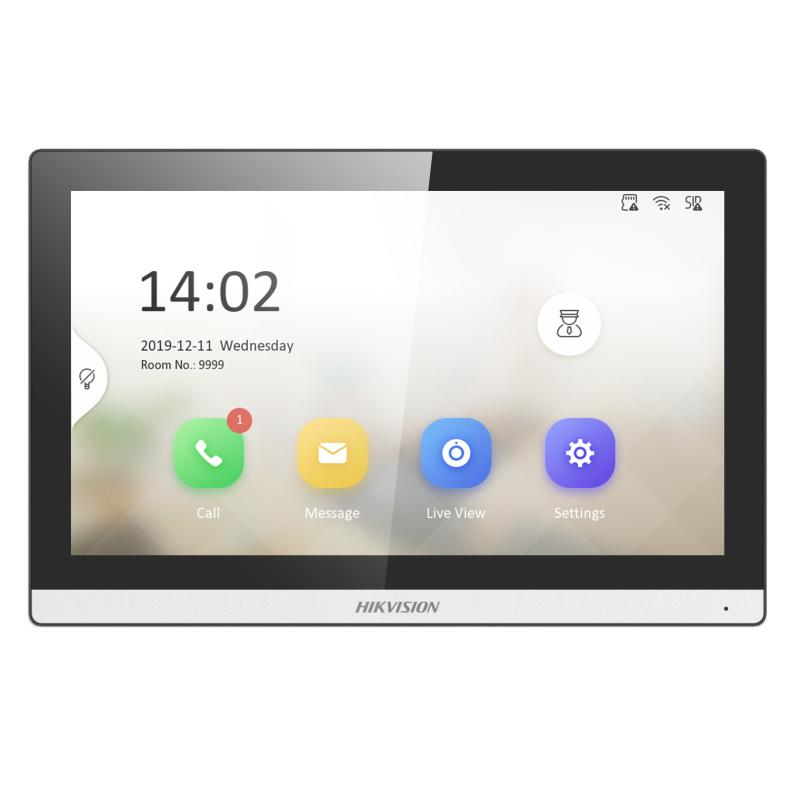
Hikvision IP Intercom Indoor Station
Useful where the resident cannot reach the door quickly. Loved ones can help answer calls remotely if the system and app handover are configured properly.
Recommended package levels
| Package level | Best for | Typical equipment | What to document |
|---|---|---|---|
| Essential safety | Resident is mostly independent but family wants a clear emergency signal. | AX PRO duress kit, wearable panic button, wall panic button at a key location. | Who receives alerts, who has keys, what happens if there is no answer. |
| Family awareness | Family wants context after a panic press, missed call or unusual door event. | AX PRO duress kit, one or two PIRCAM/image verification sensors, 2 to 4 HiLook cameras at agreed locations. | Camera locations, viewing rules, private zones and response ladder. |
| Door safety and mobility support | Resident moves slowly, is worried about strangers, or cannot reach the door quickly. | Hikvision intercom, indoor monitor, app sharing for loved ones, optional electric release if appropriate. | Who can answer, whether anyone can unlock, and what to do with deliveries or unknown visitors. |
| Higher-risk independent living | Falls concern, poor mobility, isolated home, or family cannot attend quickly. | AX PRO, image verification, HiLook cameras, intercom, medical alert service, key access plan and home safety review. | Backup contacts, emergency escalation and non-product care supports. |
Product comparison for elderly homes
| Product path | Use it when | Be careful when | Best next step |
|---|---|---|---|
| AX PRO duress kit | The resident can press a panic button and family can respond. | The resident may be unconscious, confused or unable to press anything after an event. | Add a written response plan and consider medical alert if health risk is high. |
| AX PRO PIRCAM | Family need a quick image sequence after an alarm event in an agreed area. | The family really wants continuous care monitoring or guaranteed fall detection. | Use only in shared zones and explain exactly when images are captured. |
| HiLook camera kit | The home needs entry, driveway, rear door and selected shared-area visibility. | Indoor camera requests drift into private rooms or constant watching. | Start outside first, then add agreed indoor views only where there is a clear reason. |
| Hikvision intercom | The resident rushes to the door, is anxious about visitors, or family may need to answer remotely. | Remote unlock would let unknown visitors enter too easily. | Use video and audio first; add door release only with a safe access plan. |
Budget drivers to understand
Prices change over time, so this guide avoids fake fixed pricing. The useful buying question is what drives the quote up or down.
| Cost driver | Why it changes the quote | How to keep the system sensible |
|---|---|---|
| Number of cameras | More cameras mean more cable runs, more PoE load, more recording storage and more install time. | Cover entries and approaches first. Add indoor cameras only where the family has consent and a clear need. |
| Recorder storage | Higher resolution, more cameras and longer retention require larger drives. | Decide how many days of playback the family realistically needs. |
| Alarm communication path | SIM backup, Ethernet, Wi-Fi and app setup change reliability and complexity. | For higher-risk homes, avoid relying on one fragile path without backup planning. |
| Intercom door release | Unlocking doors remotely may require lock hardware, cabling and extra safety decisions. | Do not add remote unlock just because it is possible. Add it only when the workflow is safe. |
| Installer handover | Family app setup, testing, responder training and documentation take time. | Budget for handover. It is the difference between installed equipment and a usable safety system. |
What each layer solves
| Layer | What it helps with | What it does not solve by itself |
|---|---|---|
| Panic button | Immediate alert when the resident can press a button. | It does not help if the button is out of reach, not worn, or nobody responds. |
| Image verification sensor | Gives a snapshot sequence after an alarm event in selected zones. | It is not a full-time care camera or guaranteed fall detector. |
| HiLook CCTV | Lets family review agreed entry and shared-area views when something seems wrong. | It should not be installed in bathrooms, bedrooms or private spaces without a serious consent and care discussion. |
| Hikvision intercom | Lets the resident or family see and answer the door without rushing to the entry. | Door release still needs to be designed safely so strangers are not let in casually. |
| Care plan | Turns alerts into action: who checks, who calls, who has a key, when emergency services are contacted. | It is not a product, but it is the part that makes the system work. |
Best system designs by household
| Scenario | Suggested design | Why it works |
|---|---|---|
| Independent older person in a unit | AX PRO duress kit, portable panic button, one or two image sensors, intercom at front door. | Focuses on urgent help and door answering without overcomplicating a small home. |
| Single-storey home with family support | AX PRO duress kit, hallway/living image verification, 4-camera HiLook kit outside and at entries, Hikvision intercom. | Gives family context around entries, movement and door calls while keeping private rooms private. |
| Mobility-limited resident | Wearable panic button, wall panic button near bed or chair, intercom with app sharing, agreed shared-area camera views. | Reduces the need to rush to the door, phone or keypad. |
| Higher concern about falls | Security system plus care plan, medical alert service, phone routine and agreed camera/image-verification zones. | Ordinary security products can support family awareness, but fall risk needs a broader care response. |
Real quote scenarios
| Family brief | Likely quote shape | Why this is the right shape |
|---|---|---|
| Mum lives alone in a small unit and sometimes cannot reach the phone quickly. | AX PRO duress kit, wearable panic button, one wall button near the bed or favourite chair, app alerts to two family members. | This keeps the system simple and focuses on the most important need: calling for help quickly. |
| Dad is independent but has had one fall and family want reassurance without watching constantly. | AX PRO duress kit, PIRCAM in hallway or living transition, 2 to 4 HiLook cameras on entry and outside approaches, written viewing rules. | Gives family context after a concern while avoiding cameras in private spaces. |
| Grandparent is slow to answer the door and has opened to unknown visitors before. | Hikvision intercom, app access for family, front entry camera, panic button near living area, no casual remote unlock unless agreed. | Improves door safety and reduces rushing, which is often as important as intrusion protection. |
| Higher-risk home where family are not always available. | Security system plus medical alert service, key access plan, backup contacts, home safety review and agreed camera/image-verification zones. | Security equipment supports the home, but a monitored or formal response path may need to lead. |
Which page should you read next?
Panic button alarm
Use this when the main search is emergency help, duress, pendant-style buttons or AX PRO family alerts.
Cameras and falls
Use this when the family wants to understand what CCTV can and cannot do around fall concerns.
Door intercom
Use this when door answering, rushing, strangers or remote family help is the main problem.
Medical alert vs security
Use this when the family is unsure whether to buy security equipment, a monitored personal alarm or both.
Door safety, scams and wandering
Use this for visitor screening, scam-resistant routines and careful support for confusion or wandering concerns.
Care pathway
Use this to decide whether security, medical alert, care-provider support or a combined plan should lead.
Responder playbooks
Use this to document what family should do after a panic press, camera concern, door event or outage.
Prerequisites and handover
Use this to check internet, electricity, direct debit, app ownership, passwords and installer handover.
Privacy and compliance
Use this to plan consent, footage access, indoor cameras, audio, strata and rental considerations.
Checklist
Use this before requesting a quote so the family can define the response plan, privacy limits and room-by-room needs.
Where to place cameras and sensors
- Good camera locations: front entry, driveway, garage entry, side gate, rear door, living-room overview if agreed, hallway transition if agreed.
- Good panic button locations: worn on wrist or pendant, beside bed, beside favourite chair, near bathroom door rather than inside a wet zone unless the product is suitable.
- Good image sensor locations: hallway, entry transition, living area or room approach where an alarm event needs context.
- Avoid by default: bathrooms, bedrooms, change areas and any location that creates dignity or consent problems.
Installation details that matter
| Install decision | Best practice | Common mistake |
|---|---|---|
| Panic button reach | Test from bed, favourite chair, kitchen, hallway and outdoor sitting area if used. | Leaving the button on a bench where it is not reachable after a fall. |
| App users | Give access to the people who will actually respond, with at least one backup. | Sending alerts to a family member who is often at work, asleep or interstate. |
| Indoor camera consent | Agree exact camera locations and viewing rules before installation. | Installing cameras first and trying to solve privacy tension later. |
| Door release | Use remote unlocking only if the family has a safe visitor and key-access plan. | Letting remote unlock become a casual answer for unknown visitors. |
| Connectivity | Confirm Wi-Fi, Ethernet, SIM backup and power backup expectations. | Assuming a safety system will work during an internet, router or power failure. |
Testing and maintenance plan
The best elderly home security system is the one the family still understands six months later. Add a simple testing routine to the quote, because a panic button, app login or intercom call that nobody has tested is not a safety plan.
| When | What to test | What to record |
|---|---|---|
| On installation day | Press each panic button, trigger agreed image verification, answer the intercom remotely, check camera playback and confirm every family phone receives the right alert. | Responder list, app users, passwords handover, key-holder details and the installer's basic walkthrough notes. |
| Monthly | Test wearable panic button reach, wall-button reach, app notifications and intercom call flow. | Who received the alert, how long it took, and whether anyone missed it. |
| Quarterly | Review camera views, clean lenses, confirm time/date accuracy, check recording playback and update family phone access if someone changed phones. | Any blind spots, blocked views, app access changes or privacy concerns. |
| After router, NBN or power changes | Confirm alarm communication, intercom app calling, camera remote view and NVR recording. | Whether the system still works after the home network changed. |
| After a health or mobility change | Retest panic button locations, intercom use, camera placement and whether a medical alert service should now lead. | New risks, new responders and whether the family response plan is still realistic. |
Prerequisites families often miss
Even if the elderly resident never uses the internet, the security system might. App alerts, camera viewing, intercom calls and cloud services can depend on internet, router power, mobile coverage and active accounts.
- Put electricity on direct debit or a monitored billing email so power is not lost through a missed bill.
- Keep the internet service active even if the resident does not browse the web.
- Use a family-controlled email for internet, electricity and app recovery where appropriate.
- Label the router, NVR and alarm power points so they are not switched off accidentally.
- Record who owns the app admin account, passwords and recovery phone number.
- Confirm what still works during a power outage, internet outage or router replacement.
What to ask before requesting a quote
- Who will receive alerts at 2am, and who is the backup if they do not answer?
- Does the resident want family to view cameras live, only after an alert, or only when there is concern?
- Which rooms are completely off limits for cameras or image sensors?
- Who has keys, and how would help enter if the resident cannot get to the door?
- Is the main risk medical, security, door safety, falls, wandering, or a mixture?
- What happens if the internet, Wi-Fi router or resident's phone is unavailable?
What this system should not promise
- It should not be sold as guaranteed fall detection unless a dedicated fall-detection product or service is included.
- It should not replace medical advice, GP review, occupational therapy or home modifications.
- It should not create constant surveillance of an older person who has not agreed to it.
- It should not rely on one family member with no backup.
- It should not ignore simple safety improvements like lighting, trip hazards, rails and key access.
When not to buy each product
| Product | Do not make it the main answer when | Better direction |
|---|---|---|
| Panic button | The resident often forgets devices, may not be able to press a button, or family cannot respond. | Consider a monitored medical alert service, care review and backup responders. |
| Indoor CCTV | The resident is uncomfortable with it, the location is private, or the family wants to watch constantly. | Use exterior cameras, event-based image verification or non-camera routines first. |
| Intercom with remote unlock | The family has not agreed who can unlock, or the resident may be pressured by unknown visitors. | Use video answering without unlock, plus a key access plan for trusted people. |
| Image verification | The family expects live care monitoring or fall detection. | Use it as alarm context only, then add medical alert or human check-in routines if needed. |
Privacy, consent and local rules
Australian privacy, surveillance, audio-recording and tenancy rules can vary by state, territory and household situation. This guide is not legal advice. For elderly homes, the practical rule is simple: get informed consent where possible, avoid private rooms, document who can view footage, and check local requirements before using audio recording, shared-property cameras, rental properties or remote door release.
Quote-ready brief for SecurityWholesalers
For the fastest useful recommendation, send a short brief rather than only asking for "a system for Mum". A good brief includes:
- Home type: unit, villa, single-storey house, two-storey house, rural property or granny flat.
- Main concern: panic help, falls concern, door answering, strangers, break-ins, wandering, or mixed risk.
- Preferred response: family app alerts, phone calls, medical alert service, neighbour check or installer/monitoring advice.
- Camera comfort level: outside only, entries and hallways, shared living areas, or no indoor cameras.
- Door plan: video only, family answering, possible unlock, key safe, trusted neighbour or emergency access.
- Connectivity: NBN/router location, Wi-Fi quality, mobile coverage and whether backup path is needed.
Resources beyond products
A strong elderly home security page should be honest about what SecurityWholesalers does not provide. Security equipment can help, but it should sit beside practical care and home-safety planning.
Medical alert and monitoring services
Consider a dedicated personal alarm or monitored medical alert service if the resident needs 24/7 escalation beyond family app notifications.
Falls prevention review
Ask an occupational therapist, GP, My Aged Care assessor or local falls clinic about trip hazards, lighting, bathroom rails and mobility aids.
Key access plan
Agree who has keys, whether a compliant key safe is appropriate, and how emergency access works if the resident cannot open the door.
Daily contact routine
Technology works better when there is a routine: morning message, missed-call rule, neighbour contact, and backup person if the first responder is unavailable.
Related SecurityWholesalers guides
Elderly home security often overlaps with broader alarm, CCTV and intercom buying decisions. These related guide areas are useful when the project grows beyond one resident's immediate home-safety need.
Alarm guides
Useful for comparing home alarms, panic buttons, AX PRO, Hybrid Pro and CCTV alarm integration.
HiLook guides
Useful when the family wants a practical residential CCTV kit with simple NVR recording.
Hikvision guides
Useful for deeper Hikvision product selection across alarms, cameras and intercoms.
Intercom guides
Useful when the main risk is door answering, visitor screening or remote family help.
Aged care security guides
Useful when the discussion moves from a private home to a facility or supported-living environment.
Useful Australian resources
- My Aged Care: home adjustments - useful for families considering rails, ramps, bathroom changes and safer access around the home.
- My Aged Care: assistive technology and home modifications - useful when the resident may need an aged-care assessment before funded supports.
- Healthdirect: falls in older people - useful for understanding falls risk, prevention and when to seek health advice.
- Australian Commission on Safety and Quality in Health Care: falls - useful for families and care professionals looking at broader falls prevention strategies.
- Scamwatch - useful for visitor, phone, email and online scam awareness.
- eSafety Commissioner: seniors - useful for older Australians using phones, apps, internet accounts and online services.
- Dementia Australia: wandering - useful when door activity, confusion or leaving home unsafely is a concern.
- Carer Gateway - Australian Government support for carers who are helping an older family member or friend.
Privacy and consent
The system should be designed with the older person, not merely for them. If cameras are used inside, write down where they are, who can view them, when viewing is appropriate and which rooms are out of bounds. The aim is confidence and safety, not constant observation.
Frequently asked questions
What is the best home security system for elderly people?
Usually a layered system: AX PRO panic button and alarm hub, selected image verification, sensible HiLook cameras, a Hikvision intercom and a written family response plan.
Can AX PRO call family when the panic button is pressed?
The AX PRO duress kit can be configured to notify others through the system path, including calls or push notifications, depending on setup and connectivity.
Are image verification sensors better than indoor cameras?
They solve different problems. Image verification is event-based context after an alarm trigger. Indoor CCTV is live or recorded video and needs a much stronger privacy discussion.
Can loved ones monitor for falls?
They can check agreed camera views after a concern, but ordinary CCTV should not be described as guaranteed fall detection. Use a broader care plan for falls risk.
Can family answer the door remotely?
Yes, with a suitable Hikvision intercom and app setup, family can help answer door calls remotely. Door unlocking should be handled carefully.
Should elderly people have cameras inside the home?
Sometimes, but only with consent and restraint. Entries, hallways and living areas are more defensible than private rooms.
What if the internet goes down?
Plan for backup contacts and confirm whether the alarm system uses SIM, Wi-Fi, Ethernet or more than one path. Do not rely on one fragile connection for a high-risk resident.
Is this the same as aged care CCTV?
No. A private elderly home is different from a facility. The design is more personal, consent-led and family-response focused.
Can this help with dementia or wandering?
It can help at doors, gates and entry points, but dementia and wandering need a care plan, clinical advice and often specialist supports. Do not rely on CCTV alone.
Should we choose a monitored medical alarm instead?
If family cannot reliably respond at all hours, a monitored personal alarm or medical alert service may be more appropriate as the primary safety layer, with security equipment supporting the home around it.
What should we test after installation?
Test panic button reach, app alerts, image verification, camera playback, intercom calls, backup contacts and what happens when the resident does not answer the phone.
Quote-ready design standard
A complete specification for Home Security for Elderly Australians
Home Security for Elderly Australians should produce a verifiable operating result, not merely a list of devices. For elderly home security, the project team is the older resident, family, carers and the installer. They should agree what must happen during a normal event, who acts when an alert or recording is available, and what the fallback is when power, internet, a mobile phone or the first responder is unavailable.
For Home Security for Elderly Australians, the central design priority is whole-system selection. In practical terms, start with outcomes and failure consequences, then match devices, communications, recording and response ownership instead of choosing a kit from camera count alone. This avoids the common purchasing error of selecting equipment first and discovering after installation that the important face, plate, doorway, button position, responder or recording period was never properly covered.
For Home Security for Elderly Australians, document constraints involving simple operation, hearing or vision limits, falls concern, scams, wandering, privacy and reliable family response. The installer can then check product compatibility, cable or radio performance, power and network capacity, mounting, accounts and commissioning. Product pages describe capabilities; the site design and witnessed tests prove whether those capabilities solve this particular requirement.
Zone-by-zone outcome schedule
| Priority zone or position | Required outcome | Acceptance evidence |
|---|---|---|
| Bedside And Favourite Chair | recognise the person, event or request | whole-system selection |
| Front Door And Visitor Approach | receive an actionable alert with the correct zone | day/night or real-user performance |
| Hall And Normal Circulation Route | retain usable context before and after the event | privacy and authorised access |
| Driveway Or Side Access | operate without an unsafe reach or blind spot | communications and power resilience |
| Agreed Shared Living Area | recover predictably after power or communications failure | documented response ownership |
For Home Security for Elderly Australians, mark these zones on a floor plan or photographs and number them consistently. The same names should appear in the quotation, device or camera labels, app, recorder or alarm zones, test sheet and incident procedure. Clear naming turns later references such as "check camera 4" or "button 2" into instructions an end user can actually follow.
Reference connection and response flow
For Home Security for Elderly Australians, this is a functional reference, not a universal terminal diagram. Confirm exact ports, cable type, PoE budget, alarm input behaviour, radio range, battery type, firmware and compatible accessories against the selected model documentation. Fixed data cabling should be specified and installed for the building conditions; mains, fire, egress and regulated work belong with appropriately licensed trades.
Cable, connector and resistor schedule
| Connection | What to specify or buy | Critical limit or check |
|---|---|---|
| Wireless panic, alarm or sensor device | No signal cable is run to the device; it uses the compatible supervised radio system and specified battery. | Still complete a final-location range test, record battery type and interval, and confirm what low-battery and lost-device supervision looks like. |
| Wired dry-contact panic button | Commonly 4-core or 6-core stranded alarm/security cable: a zone pair, a tamper pair where used, and spare conductors or indicator power where the design needs them. | This is not a universal pinout. Confirm conductor size, loop resistance, terminal allocation and cable fire/environment rating with the panel and button manuals. |
| End-of-line resistors | The alarm panel input programming decides whether EOL or dual-EOL resistors are required and their exact values. Fit them at the end device when the manufacturer topology requires it. | Never choose a resistor by colour guess, reuse a value from another alarm brand, or bridge it at the panel merely to clear a fault. Wireless AX PRO buttons do not need a field-wired zone resistor. |
| IP intercom or CCTV device | Cat6 solid-copper U/UTP for Ethernet and PoE, with a maximum 100 m complete copper channel and enough switch PoE budget. | A door lock should not automatically be powered through spare data pairs. Use the controller and lock manufacturer's nominated supply, protection and cable. |
| Panel, power supply and communications | Use the nominated plug pack or compliant power supply, supervised backup battery where supported, and Ethernet or SIM service required by the design. | Fixed 230 V work must be performed by an appropriately licensed electrician. Record who owns the internet, SIM and app accounts. |
The Home Security for Elderly Australians quotation should replace vague labels such as "data cable" or "security cable" with the exact cable construction, conductor count and size, environment rating, route, termination, maximum distance and endpoints. Label both ends to match the connection flow and as-installed plan.
What to put in the equipment and works schedule
| Schedule item | Information the buyer needs | Do not accept |
|---|---|---|
| Devices and accessories | Exact model, quantity, location, mounting accessory, environmental rating and compatible controller or recorder. | "Camera", "button" or "security cable" without a model, purpose and connection path. |
| Cabling and power | Cable standard and conductor count, route, maximum distance, PoE class or power supply, battery backup and who provides the outlet. | An unlabelled allowance that does not distinguish data, low-voltage power, alarm input and licensed mains work. |
| Network and accounts | Switch ports and PoE budget, internet requirement, local recording during outage, account owner, users, multifactor security and offboarding. | Installer-owned credentials or remote access that nobody in the household or organisation administers. |
| Recording or notification | Retention target or responder path, event labels, primary and backup contact, escalation timing and evidence export method. | Unmeasured claims such as "plenty of storage" or "alerts go to the app". |
| Commissioning and handover | Named acceptance tests, as-installed plan, settings backup, manuals, warranty details, maintenance interval and a user demonstration. | A live image or single button press treated as complete commissioning. |
Commissioning test an end user can witness
- Stand, sit or position the real user at each nominated zone and reproduce the normal action, arrival or incident question.
- Confirm the correct device name, alert, image or recording appears without relying on the installer to interpret an unclear label.
- Repeat the test in the most difficult expected condition: night lighting, closed doors, normal machinery, busy trade, limited reach or a responder phone on mobile data.
- Disconnect internet and then simulate the agreed power-failure test. Record what continues locally, what stops, who is notified and the available backup runtime.
- Have the primary responder unavailable and prove that the backup path works. Export one sample incident or complete one response drill.
- Record pass or fail, corrective work and retest date. Keep this sheet with the as-installed plan rather than relying on memory.
Incident walkthrough and failure fallback
For Home Security for Elderly Australians, use a plain-language rehearsal. An event begins at bedside and favourite chair. The user or system creates an alert or recording, the controller or recorder identifies the correct zone, and the named responder checks the agreed information. If the first path is unavailable, the backup responder or local recording path takes over. The responder then follows the documented action - attend, call, deny entry, preserve footage or escalate - without asking a vulnerable person or staff member to improvise under pressure.
A failure affecting Home Security for Elderly Australians must also have an owner. Low battery, lost camera, storage warning, changed router, expired account, obstructed view or unanswered notification should create a maintenance action with a due date. A system that silently degrades cannot be considered complete simply because it worked on installation day.
SecurityWholesalers product paths to compare
- AX PRO duress kit - compare the current range against the written requirements on this page; confirm compatibility and availability before purchase.
- AX PRO image sensor - compare the current range against the written requirements on this page; confirm compatibility and availability before purchase.
- HiLook CCTV kits - compare the current range against the written requirements on this page; confirm compatibility and availability before purchase.
- Hikvision intercoms - compare the current range against the written requirements on this page; confirm compatibility and availability before purchase.
For Home Security for Elderly Australians, these links are comparison starting points, not a claim that every current model suits every site. Provide the schedule above when asking SecurityWholesalers to confirm the compatible panel, recorder, devices, storage, mounting and accessories. For model-specific terminals or integrations, use the current manufacturer manual and an experienced installer.
Australian safety, privacy and accessibility boundary
For Home Security for Elderly Australians, A security alarm cannot promise fall detection or medical response unless a dedicated, supported service is included. Preserve the resident's choice, dignity and privacy.
When applying Home Security for Elderly Australians, do not point cameras into neighbouring private areas or use audio, biometric identification, covert recording or staff monitoring merely because a device supports it. Check the current rules and obtain site-specific advice where the use is sensitive. Never obstruct required egress or treat security equipment as a substitute for safety engineering.
Frequently asked buying questions
What should be decided before buying equipment for Home Security for Elderly Australians?
For Home Security for Elderly Australians, agree the required outcome, priority zones, users, privacy boundary, response owner and failure fallback. The decisive focus is whole-system selection; equipment should follow that written brief.
How should Home Security for Elderly Australians be tested?
Test Home Security for Elderly Australians with a witnessed acceptance process: full end-to-end test across each priority zone, user handover and a documented maintenance date. Record the result, device or camera name, date and person responsible for correcting any failure.
What information should be sent with a quote request?
For Home Security for Elderly Australians, send a marked plan or photos, distances, construction type, internet and power details, the five priority zones, required retention or response time, and the people who need access. State any constraints involving simple operation, hearing or vision limits, falls concern, scams, wandering, privacy and reliable family response.
Can the system keep working during an outage?
For Home Security for Elderly Australians, only if the design includes the required backup. Confirm UPS runtime for controllers, recorder, switches and router; supervised batteries for alarm devices; local recording behaviour; and the action taken when communications fail.
Who should administer the system after handover?
For Home Security for Elderly Australians, name one accountable owner and at least one backup. The older resident, family, carers and the installer should know who approves users, receives health alerts, tests the system, reviews incidents and removes access when circumstances change.