














Alarm System Buying Guide
Overview
Need the buying answer first?
Start with Best Alarm System for Small Business, Best Alarm System for Farms, or Best Alarm System for Construction Sites if you want a faster commercial answer instead of the broader hub overview.
How alarm decisions usually start
In simple terms, alarm system planning usually starts with six questions. Is the site a home, a small business, a warehouse, or a remote shed? Does the building suit a wireless-first design or is it already wired or being cabled? Is the main concern perimeter entry, internal movement, staff safety, or after-hours intrusion? Does the site want app-backed alerts only or a more structured monitored or escalated workflow? Does the owner want one brand across alarm and CCTV, or is the alarm being treated as its own platform? And how much future growth is already visible?
Those questions matter because a three-bedroom home, a pharmacy with panic buttons, a warehouse with roller doors, and a farm shed with poor site attendance are all alarm jobs, but they should not be quoted the same way.
Main alarm paths on SecurityWholesalers
| Alarm path | Usually strongest for | Typical starting point |
|---|---|---|
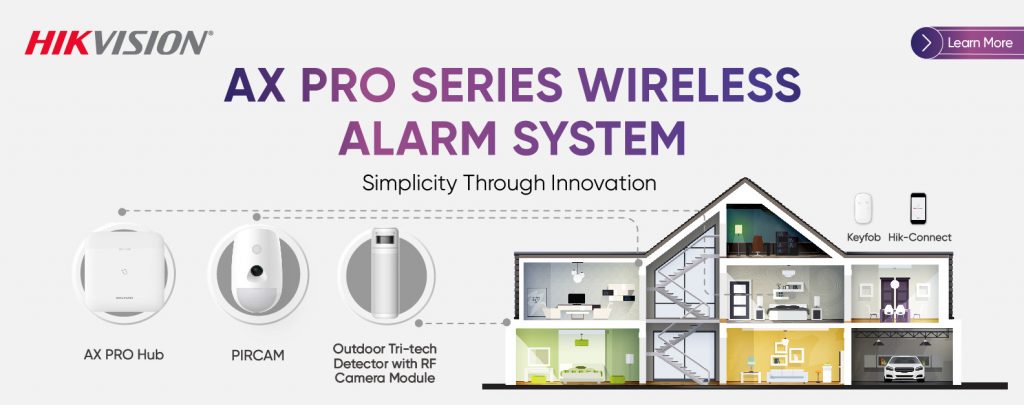
| Wireless-first alarm | Homes, light-commercial retrofits, smaller offices, remote outbuildings | Hikvision AX PRO or Dahua AirShield |
| Wired or hybrid alarm | Sites with more structure, existing cable, or clear growth expectations | Hikvision Hybrid Pro or Bosch alarms |
| Alarm with CCTV overlap | Businesses and rural sites where events need both detection and visual review | CCTV systems plus alarm |
| Alarm with duress workflow | Medical, retail, office, or staff-safety sites needing panic or silent alert | AX PRO duress kit |
Current brand branches
| Brand branch | What it is usually known for | Useful starting point |
|---|---|---|
| Hikvision AX PRO | Wireless-first modern alarm path with strong detector and app branch | Hikvision AX PRO alarms |
| Hikvision Hybrid Pro | More structured wired and hybrid path where zone growth matters | Hikvision Hybrid Pro |
| Bosch alarms | Traditional structured intruder alarm path with strong installer familiarity | Bosch alarms |
| Dahua AirShield | Wireless Dahua alarm branch for value-conscious wireless jobs | Dahua AirShield |
How alarm installation usually works
| Install stage | What is normally checked | Why it matters |
|---|---|---|
| 1. Site walk | Real entry points, internal travel paths, staff-safety points, communications path | This decides the detector layout before the panel is chosen |
| 2. System direction | Wireless, wired, or hybrid | The building type and cable opportunity usually drive this decision |
| 3. Detector placement | Contacts, PIRs, outside detectors, sirens, duress devices | Good alarm performance depends heavily on where devices actually go |
| 4. User and alert setup | Who arms, who gets notifications, who responds after hours | A working alarm is more than a mounted detector |
| 5. Testing and handover | Walk testing, alert testing, siren testing, user training | The site needs a usable workflow, not just a powered panel |
Worked examples
A pharmacy with one front door and one rear staff door
Situation: A suburban pharmacy has a glazed customer entry, a rear staff door, a dispensary behind the counter, and one pharmacist who often closes alone. The owner wants after-hours intrusion protection, but also wants a silent duress path for staff during trading hours.
Solution used: A wireless-first alarm with contacts on the front and rear doors, PIR coverage on the internal route toward the dispensary and stock area, a counter duress button, app alerts to the owner and manager, and CCTV views covering the front and rear entries.
Why this was chosen: The site is not large, so a big structured panel would be hard to justify, but it has two distinct risks. One is after-hours entry. The other is staff safety. The detector mix has to support both rather than pretending they are the same problem.
Installation notes: The lock-up routine, duress response contacts, and CCTV verification path all need to be tested with the people who actually close the shop.
A farm machinery shed 200 metres from the main house
Situation: A detached machinery shed sits well away from the main house and stores tools, batteries, and service equipment. It has one personnel door, one roller door, and the owner does not want to drive out there on every uncertain alert.
Solution used: A wireless alarm path with a contact on the personnel door, an appropriate trigger path for the roller-door side if justified, one internal PIR covering the access route, phone alerts to the owner and backup contact, and CCTV covering the shed approach and entry area so the owner can verify the event before responding.
Why this was chosen: Distance and response time matter more here than brand preference alone. A simple alarm-only approach still leaves the owner guessing whether the event is genuine. Alarm plus CCTV gives the owner enough information to decide whether to respond, call a neighbour, or escalate.
Installation notes: This type of job usually depends on communications reliability, careful PIR placement away from nuisance movement, and a clear response routine for late-night alerts.
What people usually get wrong
- Buying a panel before deciding which doors, rooms, or building edges actually matter.
- Assuming a home alarm and a warehouse alarm are just different sizes of the same project.
- Ignoring how the site will respond to duress or after-hours alerts once the alarm is triggered.
- Expecting CCTV to replace an alarm, or an alarm to replace CCTV, without thinking through the workflow.
- Forgetting maintenance, battery policy, and routine detector testing.
Relevant SecurityWholesalers Categories and Products
These are the main SecurityWholesalers alarm categories and reference products that make the current range easier to understand.
- Alarm Systems - Main alarm category across Hikvision, Bosch, Dahua, and supporting hardware.
- Hikvision AX PRO alarms - Main wireless-first Hikvision alarm branch.
- Hikvision Hybrid Pro - Main wired and hybrid Hikvision alarm branch.
- Bosch alarms - Main Bosch intruder alarm category.
- Dahua AirShield - Main Dahua wireless alarm category.
- Hikvision AX PRO duress kit - Useful reference where panic workflow matters.
Sources and Further Reading
Frequently Asked Questions
-
What is the best alarm system for a normal home?
That depends on the building, but many homes start with a wireless-first or smaller structured system rather than a heavy commercial panel.
-
When should a business choose a hybrid or wired alarm over a wireless kit?
Usually when the site has more openings, more structure, more user complexity, or clearer long-term growth.
-
Can an alarm work with CCTV?
Yes. In many better systems the two layers complement each other rather than trying to replace one another.
-
What is the biggest alarm buying mistake?
The biggest mistake is buying hardware before working out which building events actually matter and who will respond to them.
-
Do alarm systems still need maintenance if they are small?
Yes. Even small systems need battery policy, detector testing, and a clear fault-response routine.
Related Pages
Wireless vs Wired Alarm Systems
Choose between wireless and wired alarm design based on the building, not just the brochure.
Alarm with CCTV Integration
Use this page when the site needs both alarm detection and visual verification.
Alarm with Panic Button or Duress Button
Use this page when the alarm also needs a staff-safety or silent-alert workflow.
Quote checklist for Alarm System Buying Guide
Before ordering, ask for a short answer to these questions. They make the quote easier to compare and reduce the chance of buying hardware that does not match the site.
- What exact problem is being solved: alarm planning, deterrence, evidence, access control, safety, compliance or convenience?
- What happens during poor light, bad weather, busy periods, after-hours events or staff changes?
- Who will administer users, review events, export evidence and test the system?
- Which part of the design is allowed to be basic, and which part must be strong because it proves the incident?
If those answers are vague, the buyer should pause before purchasing. Good security equipment becomes much more useful when the operating plan is written down before installation.
Final field note for Alarm System Buying Guide
For Alarm System Buying Guide, the final buying decision should be easy to explain to the person who will live with the system. The quote should identify the must-have outcome, the acceptable compromises, and the support path if users, doors, cameras, sensors or site conditions change later.
This is the difference between a list of products and a security design. The products matter, but the design is what makes them useful.
Final field note for Alarm System Buying Guide
For Alarm System Buying Guide, the final buying decision should be easy to explain to the person who will live with the system. The quote should identify the must-have outcome, the acceptable compromises, and the support path if users, doors, cameras, sensors or site conditions change later.
This is the difference between a list of products and a security design. The products matter, but the design is what makes them useful.
Final field note for Alarm System Buying Guide
For Alarm System Buying Guide, the final buying decision should be easy to explain to the person who will live with the system. The quote should identify the must-have outcome, the acceptable compromises, and the support path if users, doors, cameras, sensors or site conditions change later.
This is the difference between a list of products and a security design. The products matter, but the design is what makes them useful.
Final field note for Alarm System Buying Guide
For Alarm System Buying Guide, the final buying decision should be easy to explain to the person who will live with the system. The quote should identify the must-have outcome, the acceptable compromises, and the support path if users, doors, cameras, sensors or site conditions change later.
This is the difference between a list of products and a security design. The products matter, but the design is what makes them useful.
Extra buying notes for Alarm System Buying Guide
The Alarm System Buying Guide buying decision should be tested against normal use, after-hours use and failure conditions. If the quote cannot explain those three moments, it needs more design work before the customer commits. This is the kind of detail that helps a buyer compare quotes properly, because it turns the conversation from ?which model is cheapest?? into ?which design will still be useful after installation??
For Alarm System Buying Guide, the best final check is to ask what would make the system fail in practice. Common answers include poor cabling, weak power planning, missed user permissions, unclear response duties, too little storage, unsuitable mounting positions, or a handover that nobody can follow. A strong quote names those risks and deals with them before hardware is ordered.
For Alarm System Buying Guide, SecurityWholesalers should help buyers feel more confident, not more overwhelmed. The ideal outcome is a quote that is technically sound, easy to explain, and honest about where a simpler option is enough.