

















Dahua TiOC Series Buying Guide
TiOC
Quick answer
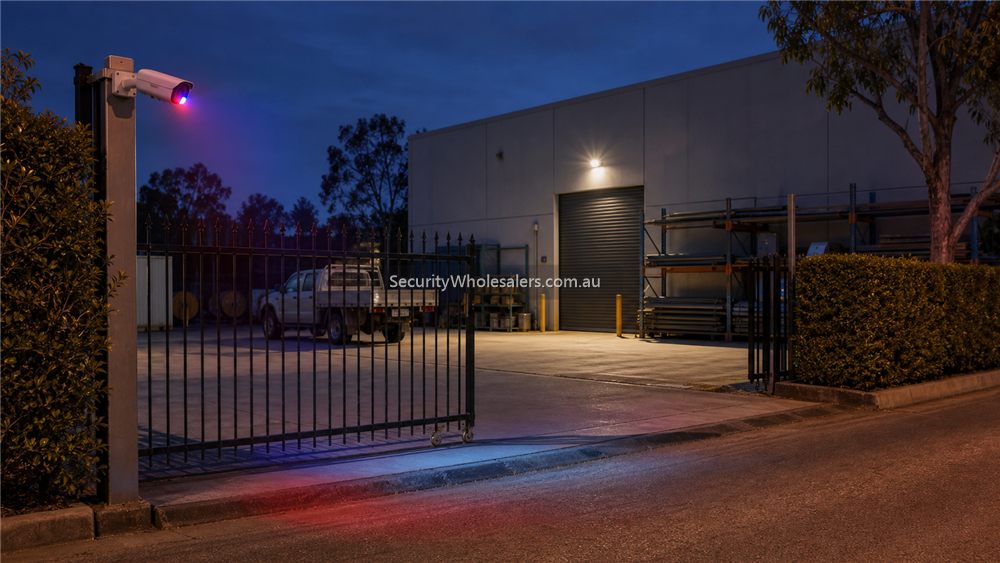
Choose Dahua TiOC for gates, rear doors, side lanes, loading aprons, car parks, and other after-hours scenes where visible warning could change behaviour. Do not default to TiOC on every indoor corridor, office camera, or quiet neighbour-sensitive boundary.
Current model examples and category paths below were checked against SecurityWholesalers on 29 May 2026.
1. What is Dahua TiOC?
Dahua TiOC stands for Three-in-One Camera. In practical buying terms, it is Dahua's active-deterrence branch that combines colour-first night imaging, built-in warning lights and audio, and AI detection such as human and vehicle filtering. That makes it stronger than a normal camera when the scene genuinely benefits from a visible response.
2. Key benefits of Dahua TiOC
- Full-colour imaging: useful where ordinary IR footage is not enough and the operator wants more natural night-time evidence.
- Active deterrence: built-in lights and siren can change behaviour at the scene instead of only recording the event afterwards.
- AI-powered analytics: human and vehicle filtering helps stop the deterrence side from being driven by every random movement.
- Integrated design: one camera can provide imaging, audio, warning, and AI in the same branch.
3. Recommended TiOC use cases
Residential driveways and side gates
Use TiOC where the owner wants both colour footage and a stronger after-hours response on an approach or lane.
Retail and commercial entries
Good on rear doors, loading bays, side access, and selected business frontages where loitering or break-in risk is real.
Warehouse and shared external zones
Strong on roller doors, dispatch aprons, and yard entries when the site wants the camera to do more than passively record.
4. Types of Dahua TiOC cameras
| Type | Usually strongest for | Common caution |
|---|---|---|
| Turret | Front doors, rear doors, side lanes, and compact external scenes | Do not expect one wide turret to solve a very long approach |
| Bullet | Driveways, perimeters, boundaries, and loading areas with more throw distance | Match the lens to the actual identification distance |
| PTZ | Larger open areas where the operator wants a live-monitoring or patrol role as well as deterrence | PTZ should support fixed evidence views, not replace them |
| 180 degree panoramic | Wide frontages, broad apron views, and scenes that benefit from one wider deterrence view | Panoramic coverage still needs careful mounting height and angle |
Product-led TiOC shortlist cards
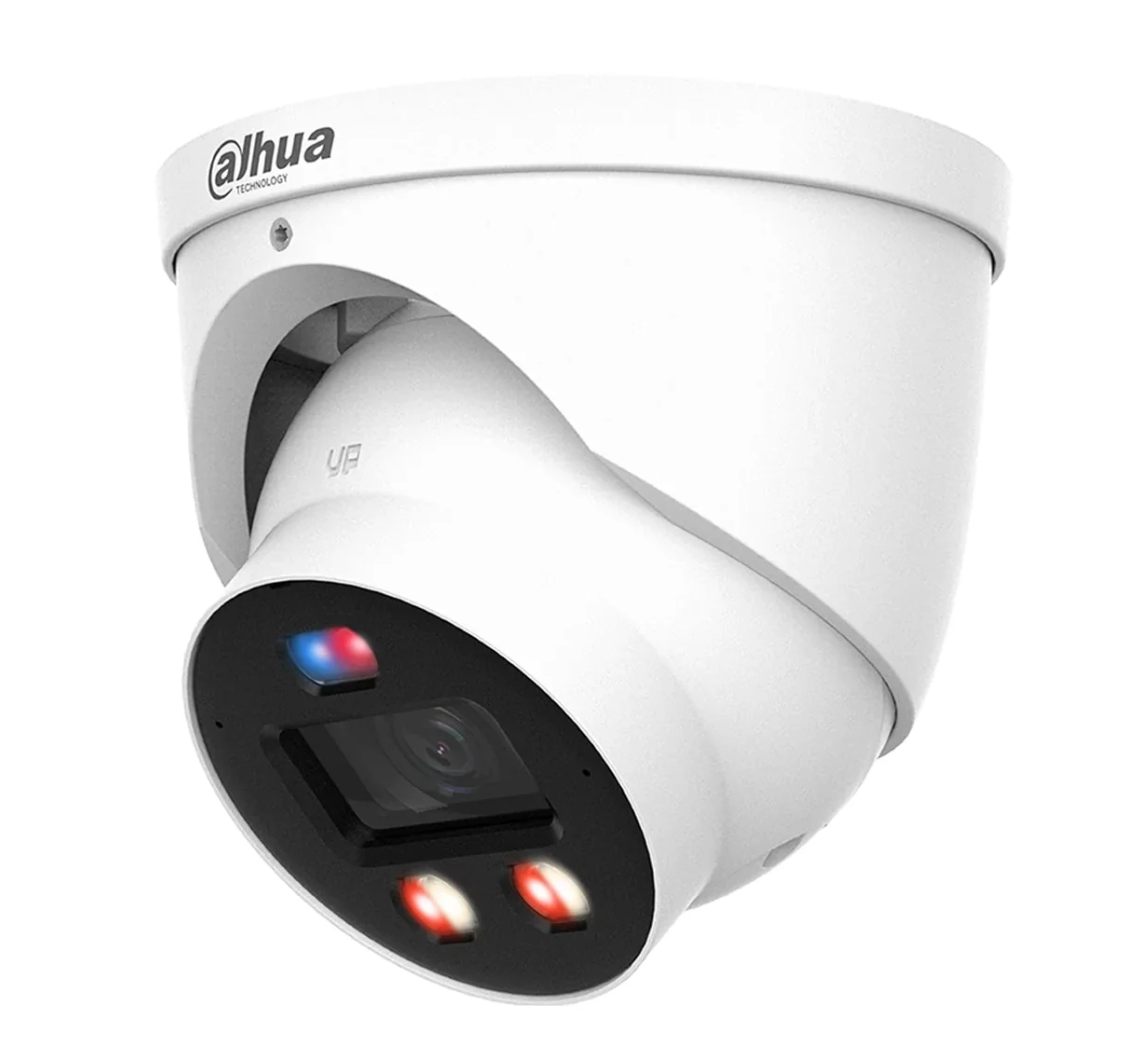
8MP turret TiOC path
A strong premium TiOC turret direction where the site wants a cleaner compact deterrence camera on a key scene.
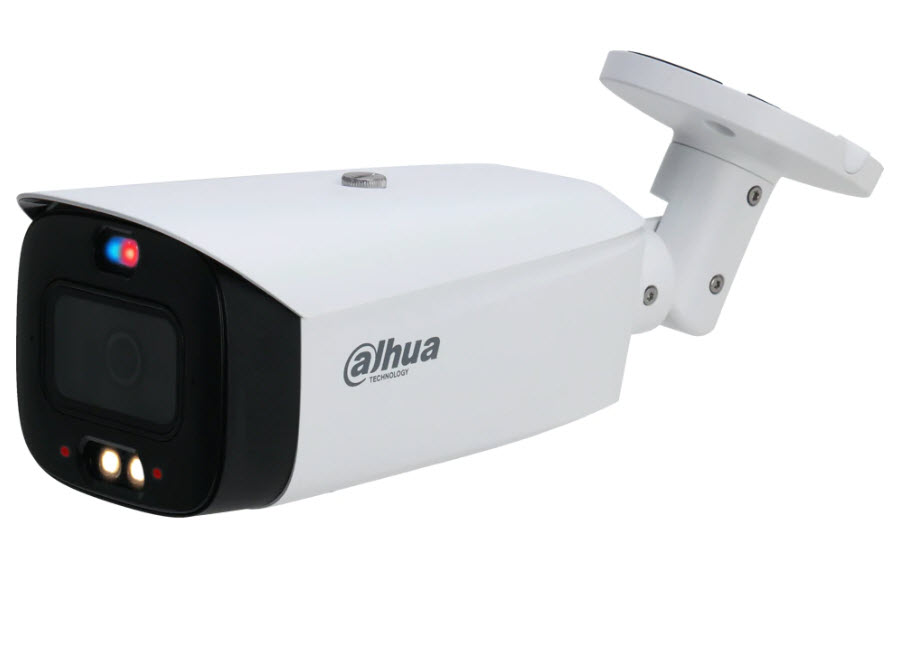
8MP bullet TiOC path
Usually the more natural shape for longer driveway, perimeter, and rear-lane deterrence scenes.
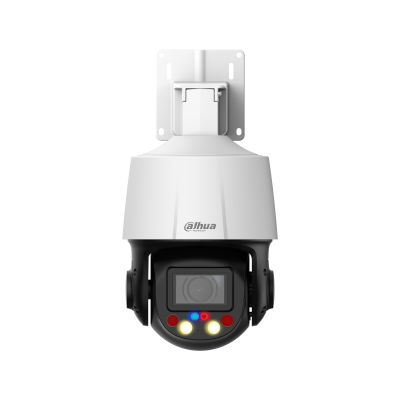
TiOC PTZ path
Useful when the site wants a broader monitored area and one deterrence-capable PTZ support view.
5. Choose TiOC by resolution
- 4MP: often enough on PTZ branches or general monitored areas where flexibility matters more than raw pixel count.
- 6MP: a practical middle path for many active-deterrence turret installs.
- 8MP: strong where wider scenes, tighter crop margin, or premium detail matter.
6. Choose TiOC by smart features
- Built-in microphone: adds context to entry and after-hours scenes.
- Built-in speaker: useful for audible warning and two-way voice on selected scenes.
- Strobe and siren: the defining deterrence layer, but only valuable where the scene and neighbours allow it.
- Human and vehicle classification: critical if you want smarter triggering and cleaner event review.
7. Choosing TiOC by environment
| Location | Recommended TiOC type | Reason |
|---|---|---|
| Front door or small entry | Turret with mic and speaker | Compact, flexible, and useful where warning plus audio adds value |
| Driveway or longer approach | Bullet in 4MP, 6MP, or 8MP | Better suited to longer approach views and visible deterrence |
| Retail or public-facing site | Turret or dome-style deterrence view used selectively | Keeps deterrence on the specific risk points instead of overdoing it indoors |
| Warehouse loading dock | Bullet or panoramic TiOC depending scene width | Lets the operator combine colour footage, warning, and AI on the external risk area |
| Large open area | PTZ plus supporting fixed cameras | Gives live monitoring reach without pretending PTZ is the only evidence view |
8. Installation tips
- Use PoE where possible to keep the installation cleaner and the handover simpler.
- Mount the camera where the warning light and speaker will actually mean something to the target.
- Avoid reflective walls, glazing, or awkward soffits that make the active light behave badly.
- Commission the human and vehicle rules on the live scene instead of trusting factory defaults.
- Be honest about neighbour sensitivity. TiOC is not ideal on every close residential boundary.
9. Compatible recorders
Dahua TiOC pairs naturally with Dahua NVRs that support H.265+ and a sensible AI workflow. The recorder should still be sized around real channel count, PoE layout, HDD bays, and whether the owner will later want stronger search or app review. Do not treat the NVR as an afterthought just because the camera branch is flashy.
10. Dahua TiOC model comparison table
The models below are representative current TiOC paths on SecurityWholesalers, refreshed 29 May 2026. They are a practical shortlist, not a promise that every TiOC model Dahua has ever released belongs in the same project.
| Model | Form factor | Resolution | Lens | Smart features | Audio | Best for |
|---|---|---|---|---|---|---|
| DH-IPC-HDW3849H-AS-PV-PRO-ANZ | Turret | 8MP | 2.8mm | WizColor, active deterrence, AI filtering, AcuPick-ready path | Mic and speaker | Premium home, retail, and commercial entry scenes |
| DH-IPC-HFW3849T1-AS-PV-PRO | Bullet | 8MP | 2.8mm | Smart dual-light active deterrence, AI human and vehicle filtering | Mic and speaker | Perimeter, driveway, rear lane, and longer approach views |
| DH-SD3E405DB-GNY-A-PV1 | PTZ | 4MP | 5x optical zoom | PTZ, AI, deterrence, flexible monitored-area coverage | Mic and speaker | Car parks, forecourts, shared grounds, and larger open areas |
| DH-IPC-HDW3649H-AS-PV-ANZ | Turret | 6MP | 2.8mm | TiOC 3.0, dual illumination, SMD 4.0, active deterrence | Mic and speaker | Mid-range business, side access, rear doors, and general deterrence scenes |
| DH-IPC-PDW3849-A180-AS-PV-ANZ | 180 degree panoramic | Dual 4MP | 2.8mm | 180 degree view, active deterrence, AI, wide-area coverage | Mic and speaker | Wide frontages, car parks, apron views, and broader external coverage |
What to read next
Dahua 3849 Active Deterrence Cameras Explained
Use this if the buyer has already narrowed down toward the 3849-class TiOC family and wants a more specific product-level explanation.
Dahua TiOC vs Hikvision LiveGuard
Read this when the site is weighing active-deterrence ecosystems directly.
Dahua WizColor Cameras Buying Guide
Use this when the real question is stronger night colour and low-light quality, not just deterrence.
How to Choose a Dahua Camera
Use the general camera guide when the scene still needs a simpler fixed, motorised, or PTZ answer.
How to Choose a Dahua NVR
Confirm recorder size, HDD path, and headroom before finalising the TiOC mix.
Where TiOC should and should not go

TiOC placement examples
Good fit: rear lane, warehouse yard, after-hours side gate, service driveway, remote shed approach or business entry where warning behaviour is part of the response plan.
Poor fit: customer-facing frontage, apartment boundary, shared laneway, neighbour-facing side path or any location where warning lights and speaker messages will create complaints.
TiOC should be scheduled and tuned. Many sites only want active deterrence after hours. During opening hours, the same camera may simply need to record and filter events normally.