How to Choose a Dahua Camera

A good Dahua camera choice is not just a resolution choice. It is a scene-design choice: where the camera sits, what it needs to identify, how it behaves at night, whether deterrence matters, and how much lens flexibility the installer needs on site.

Camera Selection

Dahua camera selection workbench with turret bullet dome PTZ and NVR
Choose the camera around the scene first: what must be identified, how wide the view is, what the lighting does at night, and where the camera can be mounted.
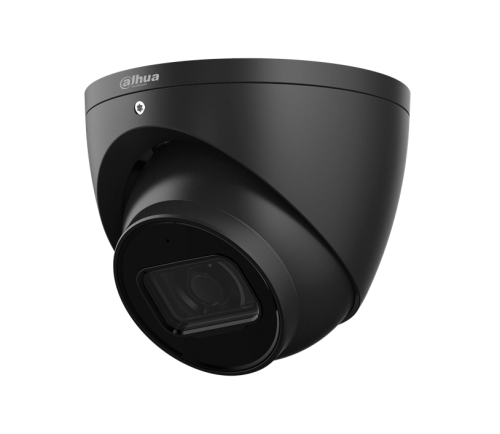
Dahua turret security camera
A practical Dahua turret camera reference point for the fixed-lens jobs that make up most home, office, and small-business installs.

Start with scene type before model number

Most Dahua camera decisions should start by asking whether the site is a predictable fixed-view job or a mixed-depth job that needs lens tuning. If the view is a corridor, clear entry, reception threshold, or predictable perimeter edge, a fixed-lens turret or bullet often makes sense. If the view is a long approach, vehicle frontage, dock lane, or awkward facade, motorised varifocal often saves rework later.

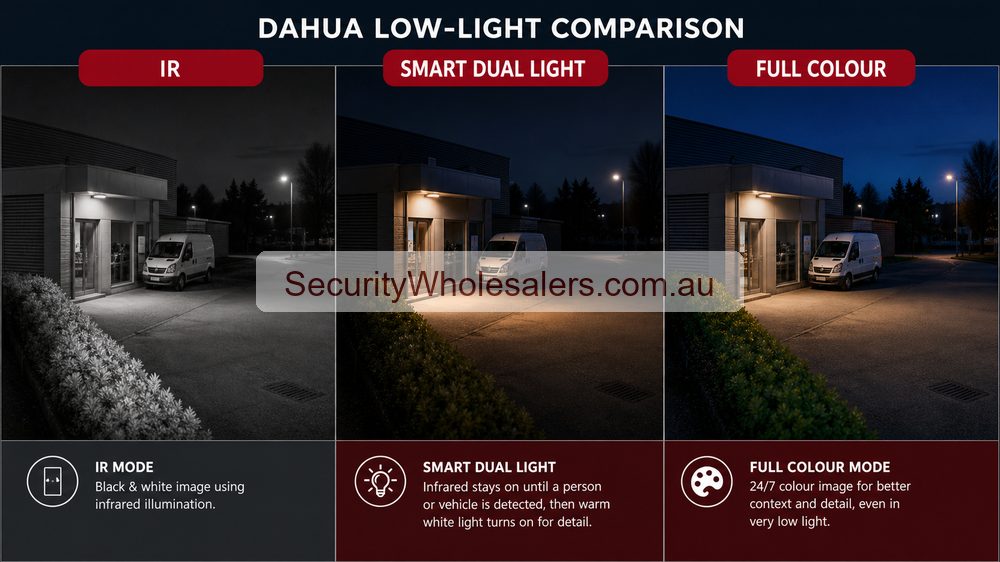
After that, the buyer should choose whether 6MP is enough, whether 8MP genuinely adds value, whether low-light behaviour needs to step into Full-color or Smart Dual Light, and whether the scene is one of the few places where TiOC-style active deterrence is actually useful.

Typical Dahua camera decision flow

[What is the scene?]
    |
    +--> Predictable threshold / corridor / reception --> [Fixed-lens turret or bullet]
    |
    +--> Long frontage / loading lane / car park edge --> [Motorised varifocal]
    |
    +--> Night scene where colour matters ---------> [Full-color or Smart Dual Light]
    |
    +--> Gate / side entry / frontage where deterrence matters -> [Consider TiOC 2.0]
    |
    +--> Large overview / live patrol need -------> [Consider PTZ, supported by fixed cameras]

6MP vs 8MP in practical Dahua terms

Dahua 6MP is often a very practical working resolution because it gives noticeably more detail than 4MP without forcing 4K into every recorder decision. It is a good commercial middle path for many fixed-lens cameras, especially around entries, walkways, counters, and general outdoor coverage.

Dahua 8MP makes more sense where the site wants more crop margin on wider scenes, stronger detail expectations, or is deliberately standardising on 4K. But 8MP should be justified by the view, because it pushes more demand onto storage, bandwidth, and honest NVR sizing.

Where TiOC fits in the Dahua camera discussion

TiOC is not just another low-light label. It is the more active deterrence branch in the Dahua conversation, usually suited to after-hours gates, side entries, remote frontages, and similar views where a warning light and speaker can be genuinely useful.

That also means TiOC should be applied selectively. If the site simply needs quieter general night coverage, a standard Full-color or Smart Dual Light path may be more appropriate. The better question is not whether TiOC is popular, but whether that exact scene benefits from active warning behaviour.

Installation insight

Installers normally confirm mounting height, bracket choice, external weather exposure, required lens angle, and whether the scene needs fine tuning during commissioning. A fixed lens is fine when the geometry is predictable. A motorised lens is often better when the operator would otherwise be guessing scene depth before the cable is even run.

If the shortlist includes TiOC, the installer should also think about where the strobe will be visible, whether the speaker will be audible and appropriate, and how to avoid obvious nuisance behaviour on high-traffic views. TiOC works best where the deterrence function is deliberate, not accidental.

Where the site is choosing between turret and bullet, the decision should be based on scene shape, mounting style, vandal exposure, and how the housing suits the environment rather than on appearance alone.

Relevant SecurityWholesalers Categories and Products

These cameras and categories are good Dahua reference points because they represent the main selection paths buyers actually take.

Sources and Further Reading

Quote worksheet for this Dahua decision

A useful quote for How to Choose a Dahua Camera should name the exact scene first, then the product family. The conversation changes depending on whether the view is a doorway, counter, rear lane, warehouse dock, driveway, stockroom, yard or perimeter, because each one needs a different balance of detail, lighting, recorder support and review workflow.

Question Why it changes the Dahua choice
Is this view for evidence or overview? Evidence points need stable fixed cameras; overview may justify wider lenses or PTZ support.
Will the site review footage often? Frequent review makes NVR search workflow more important.
Does the site need night colour? WizColor, Full-color or Smart Dual Light should be chosen by the scene, not by the brochure.
Is warning behaviour acceptable? TiOC is useful only where strobe/audio will not create nuisance or customer issues.
Will the site expand? NVR channels, HDD bays and PoE headroom should be chosen for the finished system.

Better buying habit

Do not buy How to Choose a Dahua Camera by model number alone. Match the model to mounting position, lighting, lens width, recorder path and review workflow. A simpler camera in the right place will often beat a premium device installed too high, too wide or without enough recorder support.

Dahua camera choice by scene

Front door or office entry: use a fixed turret or dome with the correct lens and mounting height. Identification matters more than maximum resolution.

Driveway or vehicle approach: consider motorised varifocal where framing is hard to judge. If plate capture is required, use a proper ANPR design rather than a general camera.

Warehouse or yard: start with fixed evidence cameras, then add PTZ, TiOC or thermal only where the workflow justifies it.

Low-light frontage: compare Smart Dual Light, Full-color and WizColor based on actual lighting and whether white light is acceptable.

Camera choice checklist

  • Define the scene goal before choosing a model.
  • Choose lens and mounting height before chasing megapixels.
  • Match the camera to the NVR and storage plan.
  • Use specialist cameras only where they solve a named problem.

A simple Dahua camera decision path

Choose a turret for most protected eaves and indoor commercial ceilings. Choose a bullet when the camera needs a more visible deterrent shape or longer physical body for a particular mount. Choose motorised varifocal when the installer needs flexibility over distance and framing. Choose TiOC only when the site has a clear reason for active deterrence.

For resolution, do not treat 8MP as automatically better than 6MP or 4MP. Lens width, mounting height, light, compression and target distance can matter more. A well-placed 6MP camera looking at the right doorway often beats a higher-resolution camera mounted too high or too wide.

Frequently Asked Questions

  • What is the safest Dahua camera starting point for many business jobs?

    Usually a fixed-lens 6MP turret or bullet from the right Dahua IP tier, provided the scene is predictable and the low-light expectations are honest.

  • When is motorised varifocal worth paying for on Dahua?

    When the scene depth is uncertain, the frontage is awkward, or the operator wants the installer to tune the camera precisely during commissioning rather than guess the lens in advance.

  • Should buyers default to turret or bullet on Dahua?

    No. Either can be right. The decision should be based on the scene, mounting method, exposure, and vandal risk rather than a blanket preference.

  • Does 8MP always mean the picture will be more useful?

    Not always. Higher resolution only helps when the lens choice, mounting height, lighting, and recorder path are still sensible. Poorly planned 8MP is not automatically more useful than well-planned 6MP.

  • When is Dahua TiOC worth considering instead of a standard low-light camera?

    Usually where the site wants the camera to add active deterrence after hours, such as gates, side entries, remote frontages, or other external views where visible and audible warning can genuinely help.

  • When does low-light strategy become more important than raw resolution?

    Often on gates, yards, walkways, and external entries. If the scene has to stay useful after dark, low-light behaviour can matter more than the raw megapixel count.

  • Which related guide helps with the next decision?

    Usually the Dahua Full-color vs Smart Dual Light page or the NVR guide, depending on whether the next decision is night performance or recorder design.

Related Pages

Dahua Full-color vs Smart Dual Light

Compare Dahua's low-light approaches based on what the site actually needs after dark.

How to Choose a Dahua NVR

Choose the Dahua recorder path properly before locking in the camera mix.

Dahua PTZ Buying Guide

Understand where Dahua PTZ helps, where it does not, and how to choose the right zoom and power path.

Best Dahua CCTV System for Small Business

Use Dahua in a small-business context, with practical camera, recorder, and installation logic.

Dahua site-specific buying worksheet

A good How to Choose a Dahua Camera recommendation should start with the real scene before selecting the Dahua branch. The buyer should be able to explain what the chosen camera or recorder proves, why it belongs in that position, and which feature would be unnecessary on this particular site.

Scenario Better design choice Buyer watch-out
Small site Protect the highest-risk doors and vehicle paths first Avoid filling the quote with features before evidence views are solved
Medium site Plan NVR channels, storage and user access for growth Do not fill every channel on day one
Complex site Document zones, permissions and support responsibilities Hardware without a workflow becomes hard to operate

Questions to ask before ordering

  • Which view must identify a person, vehicle or event, and which view is only for context?
  • What night behaviour is acceptable for this exact location?
  • Does the recorder support the final channel count, retention target and search workflow?
  • Who owns DMSS/app access and who can export footage after handover?
  • Which Dahua feature would be wasted on this site, and which one genuinely changes the outcome?

How to Choose a Dahua Camera: practical depth notes

How to Choose a Dahua Camera should help the buyer choose between Dahua branches without turning the page into a model-number maze. The practical order is scene first, then feature family, then recorder, then model.

For this page, the useful buying question is where the scene, lens, lighting, mounting height and recorder path decide the right model. That question is more important than choosing the most impressive specification. A cheaper camera in the right place can beat a premium model mounted too high, pointed too wide or paired with the wrong recorder.

Real-world camera selection examples

Site type Practical recommendation Why it helps
Simple site Protect the main evidence point first, then add only the views that answer a likely incident question. The buyer avoids paying for coverage that looks broad but proves little.
Typical Australian small business Plan the camera, NVR, storage and app users together before model selection. The system is easier to review after theft, damage, staff disputes or after-hours movement.
More complex site Document zones, permissions, alert rules, cable paths and expansion before ordering. The install remains supportable when the site changes or another technician takes over.

Good example scenes for this decision include entries, driveways, stock areas, offices and external approaches. In each case, the final choice should explain what the view must prove, what happens at night, how footage will be found, and what the buyer should not expect the system to do.

Quote wording that is actually useful

A useful quote for How to Choose a Dahua Camera should include a short reason for each camera or recorder choice. For example: this camera protects the rear door at face height, this recorder leaves four spare channels, this lens avoids wasting pixels on the sky, this alert is scheduled after hours only, or this user can view but not export footage. That sort of explanation gives the buyer confidence because it connects the hardware to the site.

The weak version of How to Choose a Dahua Camera is a quote that sounds impressive but does not name the job. The strong version explains the exact view, the evidence standard, the recorder assumption and the handover test. For Dahua buyers, that plain explanation is often more valuable than another feature label because it shows how the system will actually be used after an incident.

Browse product paths after the design is clear

We make product support and ordering easy! Reach out to our help team :)
Trade Customers: Log In or Register to Unlock Even Better Prices.

Save & Share Cart
Your Shopping Cart will be saved and you'll be given a link. You, or anyone with the link, can use it to retrieve your Cart at any time.
Back Save & Share Cart
Your Shopping Cart will be saved with Product pictures and information, and Cart Totals. Then send it to yourself, or a friend, with a link to retrieve it at any time.
Your cart email sent successfully :)