















Commercial
Medical Centre Panic Buttons, Silent Duress Alarms, and Emergency Response
Supporting Guide
Trigger Help Quietly
Silent duress is often better than a loud local alarm when the goal is to call for help without escalating the room.
Reach the Right People Fast
A useful duress setup proves that the right managers or staff mobiles actually receive the alert, not just that the button can be pressed.
Test It Before You Need It
Buttons, batteries, app recipients, and the recorder path should all be checked routinely instead of being trusted blindly.
Silent duress is often more suitable than a loud local alarm
In a clinic, an emergency may involve aggression at reception, a threatening visitor, a distressed patient, or a staff member who needs help without escalating the situation. That is why many centres prefer a silent duress workflow rather than an obvious local siren. The goal is to alert the right people quickly while keeping the room as stable as possible.
Place panic buttons where staff can trigger them naturally
Reception desks are the most obvious starting point, but they are not the only location. Clinics should think about consultation rooms with higher aggression risk, dispensary or controlled-medicine areas, treatment rooms, staff-only counters, and manager offices. The button should be reachable in a real event, not hidden in a place that only seems sensible on paper.
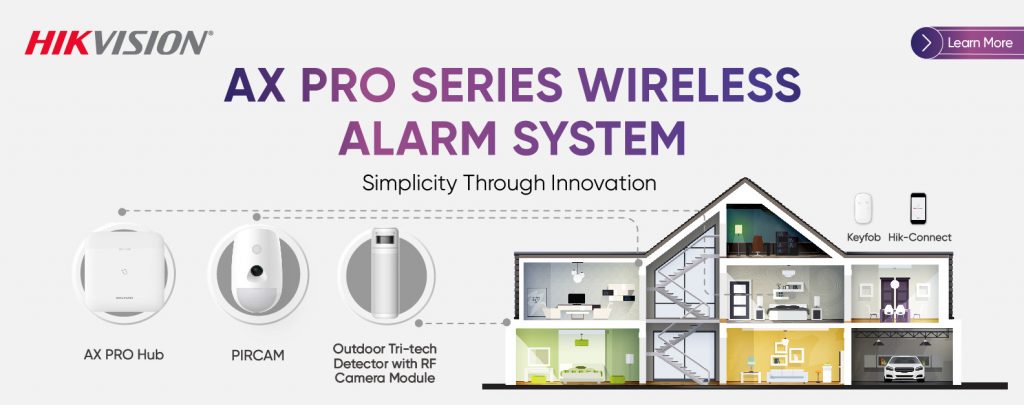
AX PRO is a practical option for mobile duress alerts
A practical option to review is Hikvision AX PRO alarms. Hikvision's own AX PRO material says the system supports emergency buttons and mobile-app management, and the AX PRO manual says panic alarms can generate push notifications. Security Wholesalers also states that its AX PRO duress kit can send a call or push notification when the button is pressed. That makes it a reasonable candidate where the centre wants a silent alert to nominated staff mobiles rather than relying on someone hearing a shout from the front desk.
Keep the response path simple and test it
The clinic should decide who gets notified, what they are expected to do, and what happens if the first person does not respond. A panic button is only as good as the response path behind it. The system should be tested with the same seriousness as the CCTV playback path, the intercom workflow, and any front-door release procedure.
Replace batteries every 12 months as a clinic policy
Even if a wireless panic button advertises a longer standby figure, a clinic should treat annual battery replacement as a practical maintenance rule. Changing wireless panic-button batteries every 12 months, then testing each button afterwards, is a simple way to reduce the chance of a weak battery during a real emergency. In a duress system, reliability matters more than squeezing every last month out of a battery.
Use a Repeatable Test Routine
The new Medical Centre Duress Alarm and Security Testing Checklist gives the practice a practical way to test panic buttons, mobile alerts, intercom release, and annual battery replacement discipline.
Decision points on this page
| Question | Usually stronger direction | Reason |
|---|---|---|
| Which zone needs the clearest treatment? | Prioritise the scenes most closely tied to after-hours visitor contact, restricted-room access review, dispensary threshold, and after-hours front door. | Those are usually the views that management is actually forced to rely on later. |
| Where does the site need stable evidence rather than general context? | Use repeatable control-point views before adding broader overview coverage. | Context is useful, but stable views are what usually settle a real dispute or review request. |
Sample scenarios
Dr Lewis's site decision
At Dr Lewis's general-practice clinic, one thing becomes clear: The important question is whether staff can trigger help quickly and whether the event can be reviewed properly later, not simply whether a device was installed somewhere on the wall. In practice that means paying closer attention to the reception entry, waiting room, and the path to dispensary threshold rather than assuming the broader site view will answer everything later.
Priya's review problem
Priya discovered that the original design did not properly explain after-hours visitor contact or activity near the after-hours front door. The lesson was that the site needed a clearer decision about scene purpose before the hardware was finalised. That is usually what separates a useful system from one that only looks complete on paper.
Relevant SecurityWholesalers Product Areas
Panic-button and duress planning usually sits alongside CCTV, intercom, and controlled entry rather than replacing them.
- Hikvision AX PRO alarms - A practical starting point where the centre wants wireless duress and mobile-alert capability.
- AX PRO control panel - Relevant where the site needs the central alarm path that can push notifications and support multiple wireless devices.
- Portable wireless emergency button - Useful where a staff member may need a duress button they can carry.
- Wall-mounted wireless emergency button - Useful under reception desks, inside staff-only rooms, or at fixed risk points.
- Intercom systems - Important where the centre also wants to control and verify front-door entry.
Australian and Manufacturer Source References
Frequently Asked Questions
-
Why use a silent duress alarm in a medical centre?
Because staff may need a way to call for help without escalating the situation in front of a patient or visitor. Silent duress is often more suitable than an obvious local siren in an aggression event.
-
Can Hikvision AX PRO panic buttons notify staff mobiles?
A configured AX PRO setup can push alarm notifications to staff mobiles through Hik-Connect, and Security Wholesalers also notes call or push-notification workflows depending on the setup.
-
Where should panic buttons be placed in a clinic?
Common locations include reception desks, consultation rooms with elevated aggression risk, dispensary or controlled-medicine areas, treatment rooms, and manager or staff offices where someone may need discreet help.
-
How often should wireless panic-button batteries be changed?
As a clinic maintenance policy, changing them every 12 months is a sensible way to reduce the chance of a weak battery during a real emergency, even if the published standby figure is longer.
-
Should panic buttons trigger only local alarms or also silent alerts?
That depends on the operating model, but many sites value a silent alert path to managers or nominated responders so the button can raise help without escalating the situation immediately.
-
How often should duress devices be tested and maintained?
They should be tested on a regular schedule and any wireless devices should have battery condition checked proactively so they are ready when an emergency happens.