















Informational
Medical Centre Duress Alarm and Security Testing Checklist
Printable Template
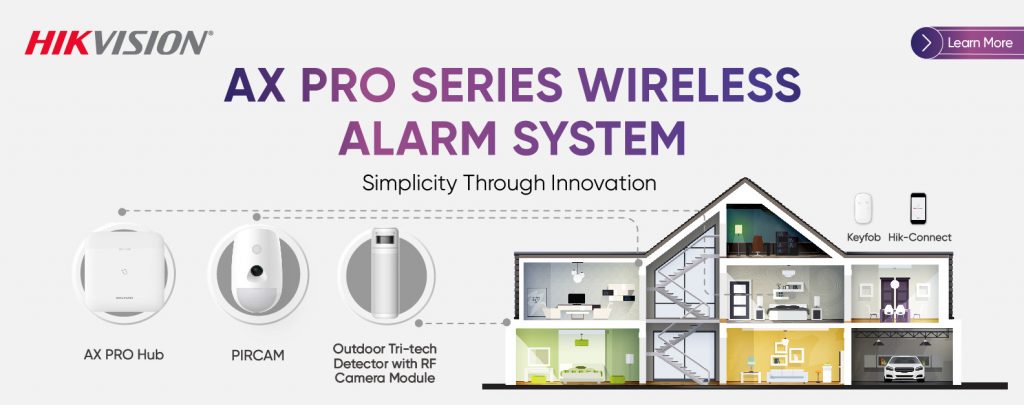
For many centres, a Hikvision AX PRO style path is a practical duress solution because wireless panic buttons can trigger a silent alarm and send notifications to nominated mobile phones. The value only holds if the centre keeps a routine around testing, recipient review, and battery replacement.
What This Checklist Is Really Protecting Against
The biggest duress-system risk is not usually that the button was never installed. It is that the site assumes it still works without checking the full path. A battery weakens, a mobile recipient changes role, the intercom release path is never retested, or the UPS assumption was never proven after installation.
This checklist helps the centre test the operating chain rather than just one device. In a real event, staff need the button, the alert recipients, the recorder path, and the front-door or staff-response workflow to all behave properly together.
| Test Item | Date / Result / Notes |
|---|---|
| Panic button triggered from reception | |
| Panic button triggered from secondary staff area | |
| Silent alert received on all nominated mobiles | |
| Staff contact list still current | |
| Front-door intercom call and release path tested | |
| Recorder and key camera path verified | |
| UPS runtime check or test completed | |
| Wireless panic-button batteries reviewed | |
| Annual battery replacement completed | |
| Staff briefed on escalation process |
How to Run the Test Properly
Trigger From Real Locations
Test from reception and at least one secondary risk location so the site knows the real operating areas still work.
Confirm the Right Recipients
Do not stop at "alarm sent". Confirm the actual people who are supposed to receive the alert still receive it on the right devices.
Check the Companion Paths
Where the centre relies on front-door release, recorder continuity, or UPS support during a stressful event, those paths should be checked too.
Record the Outcome
Use the notes field to record what changed, what failed, and what maintenance or battery replacement was completed afterward.
Battery Discipline
A sensible medical-centre policy is to replace wireless panic-button batteries every 12 months. That is often simpler and safer than trying to stretch them until a real event happens.
Power Continuity
If the site expects the recorder path or intercom path to stay live during short outages, the UPS Backup Time Calculator is useful for checking whether the runtime target still makes sense.
Operational and compliance decisions
| Issue | Stronger approach | Why it helps |
|---|---|---|
| Placement around shared or public-facing areas | Tie every camera to a clear security, safety, or access-related purpose. | That makes the system easier to explain to staff, visitors, and management. |
| Footage access | Limit access to a small authorised group before an incident occurs. | Casual access rules often cause confusion or conflict after after-hours visitor contact or similar events. |
| Signage and notice | Make notice visible where people approach the monitored zones. | It is easier to defend the system when the purpose and monitored areas are clear from the start. |
Sample operational scenarios
Dr Lewis's controlled deployment
Dr Lewis limits cameras to the reception entry, waiting room, dispensary threshold, and the approach to after-hours front door, then sets clear signage and a small authorised footage-access group. That structure is easier to justify because every camera serves a defined operational purpose.
Priya's overreach risk
Priya considers adding coverage to a lower-value shared space with no strong security link, simply because there is still budget left. That is usually the point to stop and ask whether the camera is solving a real problem or only making the system look more intrusive than it needs to be.
Frequently Asked Questions
-
Why should a medical centre test panic buttons instead of assuming they work?
Because a real emergency is the worst time to discover that a button battery is flat, a mobile recipient was removed, or a silent alert path no longer reaches the right people.
-
How often should wireless panic-button batteries be changed?
A practical medical-centre policy is to replace them every 12 months so the site is not guessing whether the battery still has enough life when it matters.
-
Should the test routine include mobile-phone recipients as well as the button itself?
Yes. A duress path is not really proven until the right people actually receive the silent alert on the phones or devices the centre expects them to use.
-
Why test the front-door release and intercom path on the same schedule?
Because the same staff often depend on both systems during stressful moments. A centre should know that the front door, intercom, and release workflow are still behaving normally.
-
Should UPS behavior be checked as part of security testing?
Yes. If the site expects short-outage recording continuity, then the UPS path should be checked too instead of being treated as a hidden assumption.
-
What is a practical alarm platform example for medical-centre duress?
A Hikvision AX PRO path is a practical example where wireless panic buttons can trigger a silent alarm and send notifications to nominated mobile phones, as long as the site keeps testing and battery discipline in place.