












Commercial
ANPR Camera Buying Guide Australia
Specialist Buying Guide
Quick answer
ANPR, also called LPR or licence plate recognition, is worth buying when a site needs automatic plate events, searchable vehicle records, gate or boom-gate logic, allow-list or block-list alerts, parking oversight, or better evidence around vehicle movement. It is usually not worth buying when a normal camera can already answer the question and nobody needs plate text, access automation, or structured reporting.
What is ANPR?
ANPR stands for automatic number plate recognition. In Australia, people also call it LPR, licence plate recognition, number plate recognition, or plate reader technology. The practical idea is simple: the camera captures a vehicle plate, the system recognises the characters, and the plate becomes a searchable event rather than only a picture inside a video file.
That distinction matters. A normal CCTV camera might show a plate clearly when conditions are easy. ANPR goes further. It can record the plate as text, attach the event to a time and camera, allow searching by plate number, trigger a notification, compare the plate against a list, open a gate, or support a later investigation where thousands of vehicle events would be too slow to review manually.
-> ANPR camera captures plate image
-> Recognition engine converts plate to text
-> Event is stored with time, camera, snapshot and direction
-> System can search, alert, compare, report or trigger access logic
ANPR, LPR, plate capture and vehicle analytics are not all the same
| Term | What it usually means | Buying note |
|---|---|---|
| Plate visibility | A camera view where a person can read the plate in footage. | May only need a fixed or motorised varifocal camera if there is no automatic recognition requirement. |
| Plate capture | A camera deliberately framed and exposed so plates are consistently visible. | Useful for evidence, but it may still not create searchable plate text. |
| ANPR / LPR | Automatic recognition of plate characters into a vehicle event. | The right choice for searchable records, alerts, access control and automation. |
| Vehicle analytics | Detection or classification of vehicles, sometimes with make, model or colour metadata. | Helpful for richer search and review, but it should not be confused with guaranteed identity. |
Where ANPR works best
Commercial gates
ANPR suits sites where staff, contractors, tenants, delivery vehicles or fleet vehicles pass through a defined entry lane and the site wants reliable vehicle records.
Car parks
Office, school, strata and paid parking environments can use ANPR for entry and exit logs, visitor review, overstay workflows and incident investigation.
Warehouses and logistics
Depots, loading yards and distribution sites often benefit from plate logs tied to truck arrivals, contractor movements and after-hours vehicle events.
Remote gates and rural entries
Solar or 4G ANPR can make sense where mains power or network cable is difficult, provided mobile coverage, battery budget and lane geometry are realistic.
Where ANPR is often a poor fit
ANPR becomes weaker when the site cannot control the vehicle path. A wide open driveway, a steep ramp, a street-facing camera with several approach angles, a shared road with vehicles crossing the frame, or a gate where drivers stop at inconsistent positions can all reduce recognition reliability. In these cases, the right move is often not a more expensive camera. It is a better lane design.
ANPR is also not a complete security system by itself. A plate event does not prove who was driving. It does not prove lawful authority to enter. It can be affected by obscured plates, dirty plates, cloned plates, stolen plates or unreadable plates. A good site pairs ANPR with overview cameras, access logs, intercom, gate state, staff procedures and human review.
Australian conditions that change ANPR design
Australia is not one clean ANPR environment. A coastal strata driveway in Queensland, a dusty logistics yard in Western Sydney, a farm gate outside Wagga, a basement ramp in Melbourne and a mining access road in Western Australia all behave differently. Heat shimmer, glare, rain, dust, headlights, reflective plates, steep ramps, mixed plate formats, trailers, motorcycles and high-contrast sun can all affect recognition.
This is why ANPR should be treated as a site-design decision. In a basement ramp, the hard part may be headlight flare and vertical angle. In a warehouse yard, it may be trucks passing too close to a vibrating pole. In a coastal site, corrosion resistance and bracket stability may matter. In a rural gate, the hardest part may be power, mobile signal and solar service access. The best ANPR resource is not the one that simply says "buy this camera"; it is the one that helps you identify which part of the scene will break recognition if nobody plans for it.
Brand shortlist: which ANPR path fits?
| Brand path | Strongest fit | Typical buyer |
|---|---|---|
| Hikvision ANPR | Broad commercial choice, gates, car parks, strata, warehouses, solar/4G options, specialist ITS options. | Buyers who want a wide range of price and deployment options inside a familiar CCTV ecosystem. |
| Dahua ANPR | Cost-effective access ANPR, 4MP entry cameras, barrier integration and vehicle metadata in controlled lanes. | Sites already leaning Dahua, or buyers who want strong value on entry and exit projects. |
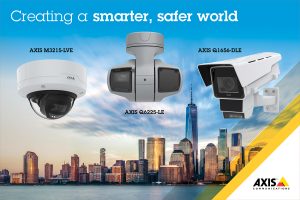
| AXIS LPR | Premium LPR kits, open platform, AXIS Camera Station workflows, access control and longer-range or higher-speed applications. | Commercial, government-style, enterprise, or integration-heavy customers who value open architecture and long support expectations. |
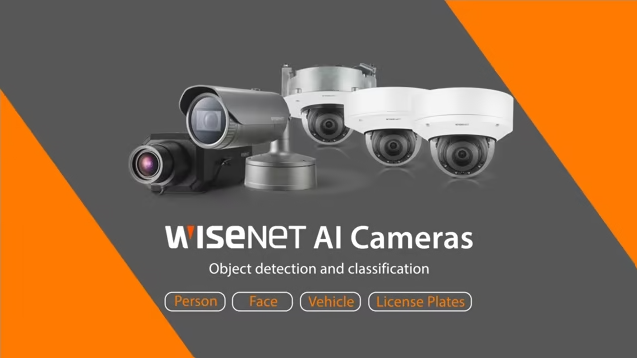
| Hanwha ANPR / Road AI | Premium 4K plate and vehicle attribute recognition, including make, model and colour metadata in suitable scenes. | Sites that want rich vehicle search and analytics rather than basic plate capture alone. |
Hikvision ANPR solutions
Hikvision has one of the broadest ANPR ranges on SecurityWholesalers. It includes 4MP DeepinView motorised bullet cameras, TandemVu and dual-channel ANPR paths, fixed turret-style options, dedicated entrance ANPR cameras, portable 4G speed dome style products, solar/4G ANPR, and higher-end ITS checkpoint capture options. That breadth is useful because ANPR jobs vary dramatically: a strata gate is not a highway checkpoint, and a remote farm gate is not an office car park.
For most normal commercial jobs, the sensible Hikvision starting point is the current 4MP DeepinView ANPR bullet path rather than older 2MP bullet variants. The 2.8-12 mm style path suits shorter or more compact lanes. The 8-32 mm path suits longer approaches or tighter plate views where the camera sits farther from the capture point. TandemVu or dual-channel options become useful when the customer wants one channel focused on the plate and another holding wider context.
Hikvision also has more specialist paths. The DS-TCG406-E style entrance camera is closer to a dedicated access ANPR component. The solar/4G ANPR path can suit remote entries where a normal network run is not realistic. ITS checkpoint cameras and portable speed dome products belong in specialist projects where traffic flow, temporary operation, or long-range vehicle monitoring is the real problem.
Hikvision ANPR products to consider on SecurityWholesalers
Dahua ANPR solutions
Dahua's ANPR range on SecurityWholesalers is more compact, but it is very relevant for practical entry and exit projects. Dahua describes camera-side ANPR as a more cost-effective path than relying on server-side analysis, which is exactly why Dahua often comes up in gate, parking and access-control discussions. The main Dahua conversation is usually around controlled lanes, motorised lens choice, built-in IR, deep-learning recognition, and whether the job needs barrier or external device integration.
The Dahua ITC413-PW4D style products are the obvious SecurityWholesalers examples. The 2.7-12 mm version suits shorter access points and parking entries where the camera can be mounted close enough to the capture zone. The 8-32 mm version suits longer approaches and tighter plate framing. Dahua also highlights vehicle metadata style features on some models, including unlicensed vehicle recognition and vehicle type, brand or colour information under suitable conditions.
Use Dahua ANPR where the site is already leaning Dahua, where value matters, or where the buyer wants a focused entry ANPR camera without turning the project into a premium enterprise LPR deployment. As with all ANPR, the lane design still decides the result. Do not stretch one camera across multiple uncontrolled lanes simply because the product page says ANPR.
Dahua ANPR products to consider on SecurityWholesalers
- Dahua ITC413-PW4D-IZ1 4MP ANPR Cameâ¦83 tokens truncatedâ¦ra, brake lights facing away and wet-road reflection if relevant.
- Test the most common vehicle types: cars, vans, utes, trucks, trailers and motorcycles if they matter.
- Check event search on the NVR, VMS or camera interface.
- Check plate snapshots, timestamps, direction, camera name and export workflow.
- Check allow-list, block-list, alert or gate logic if those features are part of the job.
- Record who is responsible for maintaining plate lists and reviewing false reads.
- Document camera position, lens setting, recognition zone and any known limitations for the customer.
Access control, gates and ANPR automation
ANPR becomes more sensitive when it is connected to a gate, boom gate or barrier. A search-only plate log is mainly an evidence tool. A gate-opening ANPR system is an access-control system, so the design needs a higher level of thought. What happens if the camera is offline? What happens if a plate is misread? What happens if a recognised vehicle tailgates through with another vehicle behind it? How does a visitor get in? Who removes a staff member's plate when they leave the business?
For lower-risk sites, ANPR can be a convenient access layer. For higher-security sites, it should often be combined with another credential or review step. That might mean intercom verification, cards, fobs, remotes, PINs, guard review, time schedules or manual override. The right answer depends on risk. A business car park and a critical infrastructure site should not have the same access logic.
Data quality: false reads, missed reads and review habits
No ANPR system is perfect. A false read is when the system recognises the wrong plate. A missed read is when a vehicle passes and no plate event is created. Both can happen. The goal is not to pretend they never occur; the goal is to design the system so they are rare, understandable and reviewable.
Good review habits help. Use consistent camera names such as "Main Gate ANPR Entry" rather than vague labels. Keep snapshots enabled where appropriate. Pair plate events with overview footage. Decide how long plate records and video footage should be retained. Train the site manager to search by time, camera and partial plate where the system supports it. A well-handovered ANPR system feels useful because the customer knows how to use it when something happens.
Common ANPR usage scenarios
Strata driveway
ANPR can log vehicles entering and exiting a shared driveway, but steep ramps, mixed visitor traffic and privacy expectations need careful planning.
School car park
ANPR can support incident review and controlled vehicle access, but the design should avoid unnecessary capture beyond the relevant vehicle lane.
Warehouse gate
ANPR can log trucks, contractors and after-hours arrivals. Pair it with overview cameras for driver, gate and loading-area context.
Remote farm gate
Remote ANPR can be useful, but solar, 4G, battery budget, mobile coverage and service access may matter more than the camera name.
Paid or managed car park
ANPR can support entry and exit records, overstay review and integration with parking workflows, provided the lane is controlled.
Council or roadway style monitoring
This is where premium, long-range or high-speed products are more likely to be justified, especially AXIS, Hanwha or specialist Hikvision ITS paths.
ANPR and normal CCTV should work together
An ANPR camera should normally be framed for plates, not for a beautiful overview of the whole entrance. That means it may not show the driver, the whole vehicle body, the gate, the pedestrian path, or the surrounding incident context well enough. For serious sites, use an ANPR camera for the plate and one or more normal overview cameras for the scene.
This is especially important for disputes. A plate record might show that a vehicle entered. The overview camera may show that the vehicle tailgated another vehicle, that a trailer clipped a gate, that a pedestrian was nearby, or that the driver stopped in the wrong place. ANPR gives structure. Overview cameras give context.
Storage and recorder planning for ANPR
ANPR does not remove the need for sensible recording. In many systems, the plate event is most useful when it links back to a video clip or snapshot. That means the recorder or VMS still needs enough storage, enough channel headroom and a practical event-search workflow. If the site only keeps a short amount of footage, the plate log may outlive the visual context or vice versa. That should be decided intentionally.
On smaller Hikvision and Dahua projects, the NVR may be enough if it supports the required event search and camera integration. On AXIS projects, AXIS Camera Station or compatible VMS design may matter more. On Hanwha projects, Wisenet Road AI and smart search expectations should be checked with the chosen recorder or VMS path. The key is to avoid buying the camera first and discovering later that the recording or software layer does not support the workflow the customer expected.
Spoofing, cloned plates and ANPR limits
ANPR systems can be spoofed or misled. That does not make them useless. It means the system should be designed honestly. A plate can be dirty, damaged, covered, stolen, cloned, obscured, missing, reflective, partly blocked by a towbar or bike rack, or inconsistent with the vehicle. A person can also tailgate through a gate behind an authorised vehicle. ANPR should therefore be treated as a strong vehicle-identification layer, not absolute proof of identity.
For sensitive sites, reduce the risk with layered evidence rather than relying on a single plate read. Use overview cameras to see the vehicle and lane behaviour. Keep access logs. Use intercom or access control where appropriate. Review suspicious or repeated events manually. Keep plate lists current. Design gate logic to handle tailgating risk. Make sure staff understand that a plate match is useful evidence, but it is not the same as positively identifying the driver.
Professional position on spoofing
Do not sell ANPR as impossible to fool. Sell it as a powerful event and evidence layer that becomes much stronger when combined with good lane design, overview cameras, access procedures and human review.
Privacy, signage and responsible use in Australia
ANPR creates structured vehicle records, so privacy and governance should be discussed before installation. This is particularly important for workplaces, schools, strata buildings, medical sites, shared commercial estates and any site where staff, residents, visitors or contractors may be recorded regularly. Decide who can access plate records, how long records are retained, who can export them, and how requests for footage or vehicle-event information will be handled.
SecurityWholesalers has tools and guides for CCTV signage and broader privacy planning, but ANPR deserves extra care because a searchable plate log is more structured than ordinary footage. Good signage, limited user access, sensible retention, and a clear incident-review process all help keep the system professional.
Governance checklist for Australian ANPR sites
- Put clear signage at vehicle entries where ANPR is used.
- Limit plate-search access to staff who genuinely need it.
- Use named user accounts instead of shared passwords where possible.
- Decide retention before handover, especially for strata, workplace and school sites.
- Keep allow lists and block lists current, with a named person responsible for changes.
- Document how police, insurer, resident, staff or customer footage requests will be handled.
- Review false reads and missed reads periodically so the system improves instead of quietly drifting.
Questions to ask before buying ANPR
| Question | Why it matters |
|---|---|
| Do you need automatic plate recognition or only readable footage? | This decides whether ANPR is needed at all. |
| Where is the exact capture point? | The camera, lens and mount should be chosen around this point. |
| How many lanes need recognition? | Reliable ANPR often means one capture design per lane. |
| Will the plate event open a gate or only create a record? | Gate logic adds access-control, relay, override and administration requirements. |
| Will vehicles stop, slow or keep moving? | Speed changes the camera, lens, exposure and product tier. |
| Who manages allow lists, block lists and false reads? | ANPR is an ongoing workflow, not a set-and-forget camera. |
Common mistakes to avoid
- Buying ANPR because a standard camera failed, without fixing the lane, angle or lighting problem.
- Trying to use one camera for plate recognition and whole-driveway overview at the same time.
- Choosing the cheaper short-lens version when the camera is too far from the capture point.
- Commissioning the system in daylight and never testing real night conditions.
- Forgetting that plates can be spoofed, cloned, obscured or simply unreadable.
- Promising gate automation before confirming relay logic, fail-safe behaviour and manual override.
- Failing to decide who owns the plate list, event review and privacy process after handover.
Worked examples
Example: small industrial gate
Situation: A small warehouse wants to know which vehicles enter after hours and wants cleaner records for contractor arrivals.
Likely path: Hikvision or Dahua 4MP ANPR bullet, selected by camera distance and lane width, plus a normal overview camera for the gate and driveway context.
Why: The site needs practical plate records, not a premium road-monitoring system.
Example: premium managed car park
Situation: A commercial site wants reliable entry and exit records, software review, access-control linkage and long-term support expectations.
Likely path: AXIS Licence Plate Verifier kit or a higher-end Hikvision, Hanwha or Dahua path depending on the platform and integration requirements.
Why: Platform fit, support, access workflow and event review matter as much as the camera price.
Example: logistics yard with vehicle attribute search
Situation: A transport site wants to search by plate, vehicle type, colour or make after incidents involving trucks, contractors and delivery vehicles.
Likely path: Hanwha Road AI or selected premium ANPR models with richer metadata, plus fixed overview cameras at the lane and loading area.
Why: The buyer values investigation speed and metadata, not just gate opening.
Related guides and product categories
Security Camera Placement Guide
Use this when the problem may be camera position, lens or scene design rather than a brand-specific ANPR issue.
NVR Buying Guide
Use this to plan storage, recorder headroom, PoE design and event-review workflow around an ANPR project.
Hikvision ANPR Cameras Buying Guide
Read this when the project is leaning specifically toward the Hikvision ANPR range.
AXIS Thermal, Radar, and LPR Buying Guide
Useful for premium AXIS projects where LPR overlaps with thermal, radar or broader perimeter design.
ANPR FAQs
-
What is ANPR?
ANPR is automatic number plate recognition. It captures a vehicle plate, recognises the characters, and stores the result as a searchable event.
-
Is ANPR the same as LPR?
In practical buying language, yes. ANPR, LPR, licence plate recognition and number plate recognition are usually used to describe the same type of vehicle plate recognition workflow.
-
Can a normal CCTV camera read number plates?
Sometimes, in easy conditions. But a normal camera does not automatically create searchable plate events unless it has ANPR/LPR analytics or is connected to software that performs recognition.
-
Do I need one ANPR camera per lane?
Often yes. One camera can sometimes handle a simple single lane very well, but stretching one camera across multiple uncontrolled lanes usually reduces reliability.
-
Which is better for ANPR: Hikvision or Dahua?
Both can work well in controlled lanes. Hikvision has a broader range on SecurityWholesalers, while Dahua is a strong value path for focused entry ANPR projects. The lane design matters more than the logo.
-
When should I choose AXIS LPR?
Choose AXIS when the project values open architecture, AXIS Camera Station, premium support, long-term platform fit, or higher-end access-control and commercial integration.
-
When should I choose Hanwha ANPR?
Choose Hanwha when premium 4K imaging, Road AI, make/model/colour recognition and richer vehicle metadata are important to the site.
-
Can ANPR open a gate?
Yes, many ANPR projects can be linked to gate or barrier workflows. The design must still confirm relay logic, fail-safe behaviour, manual override and who manages authorised plates.
-
Can ANPR be spoofed?
Yes. Cloned plates, stolen plates, covered plates, dirty plates, tailgating and unreadable plates can all affect ANPR. Use ANPR as one evidence layer, not as absolute proof of identity.
-
Does ANPR identify the driver?
No. ANPR identifies or records a plate event. It does not prove who was driving. Use overview cameras and site procedures when driver identity or incident context matters.
-
Does ANPR work at night?
Yes, when the camera, IR or white light, exposure, angle and plate size are set up correctly. Night testing with real vehicles is essential before handover.
-
Does ANPR work on motorcycles?
It depends on the camera, plate position, angle and local conditions. Motorcycle plates can be smaller, lower or differently positioned, so they should be tested if they matter to the site.
-
Can ANPR recognise interstate plates in Australia?
Many ANPR systems can handle different plate formats under suitable conditions, but this should be confirmed against the selected product and tested on the plate types the site actually sees.
-
What is the biggest ANPR buying mistake?
The biggest mistake is treating ANPR as a product-only decision. The successful projects are designed around lane control, angle, lens, lighting, speed and workflow.
-
Do I still need signage?
Yes, signage and privacy planning are strongly recommended because ANPR creates structured vehicle records, not just ordinary video footage.
-
Should ANPR replace access cards or remotes?
Sometimes, but not always. ANPR can be convenient for vehicles, but higher-security sites may still want cards, fobs, intercom, PINs, remotes, or manual verification as part of a layered access design.
-
How accurate is ANPR?
Accuracy depends on the camera, lens, lighting, plate size, angle, speed, plate condition and software. A well-designed single lane can be very reliable, while a badly angled wide driveway can perform poorly even with a good camera.
-
Can ANPR work on a steep driveway?
Sometimes, but steep driveways are harder because the plate angle changes. The capture point should be tested carefully at the top and bottom of the ramp before promising performance.
-
What lens do I need for ANPR?
The lens depends on the camera-to-plate distance and the size of the plate in the image. Shorter lanes may suit 2.8-12 mm style lenses. Longer approaches often need 8-32 mm or specialist long-range lenses.
-
Should I use a bullet, dome or turret for ANPR?
Bullets are common because they suit directed lane capture and longer lenses. Domes can suit some short access-control scenes. Turrets can work in compact entries, but lens and angle matter more than the housing name.
-
Does ANPR need internet?
Not always. Some ANPR works locally on the camera, recorder or local VMS. Internet or 4G may be needed for remote viewing, remote alerts, cloud features or remote sites.
-
What happens if the internet goes down?
It depends on the system. Local recording and local plate events may continue, while remote notifications or cloud access may stop. This should be checked before choosing the product path.
-
Can ANPR be used for staff attendance?
It can show vehicle arrivals, but it should not be treated as reliable staff attendance by itself. A vehicle arriving does not prove which person arrived or who was driving.
-
Can ANPR be used at construction sites?
Yes, especially for site gates, contractor vehicles and after-hours access. Remote power, dust, vibration, temporary poles and 4G signal should be planned carefully.