












Comparison
AXIS vs Hanwha Enterprise CCTV Australia
Buying Guide
Quick answer
AXIS and Hanwha are both strong enterprise CCTV choices. Choose by VMS and integration requirements, cybersecurity and lifecycle policy, camera formats, analytics, support capability and total system design-not megapixels alone.
Enterprise comparison framework
| Decision | What to compare |
|---|---|
| Video platform | Preferred VMS, ONVIF profiles, integrations and licensing |
| Cybersecurity | Firmware policy, certificates, hardening, user roles and vulnerability response |
| Camera formats | Fixed, PTZ, panoramic, multisensor, thermal and specialist models |
| Analytics | Where analytics run, accuracy in the scene and search workflow |
| Operations | Multi-site health, permissions, evidence export and auditability |
| Lifecycle | Support period, spares, firmware, warranties and replacement planning |
When AXIS belongs on the shortlist
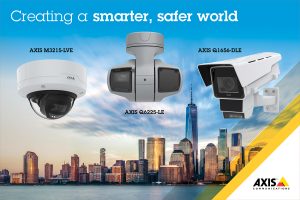
AXIS Communications is particularly relevant for integration-led projects, specialist camera requirements and sites that treat cybersecurity and platform design as formal requirements.
When Hanwha belongs on the shortlist
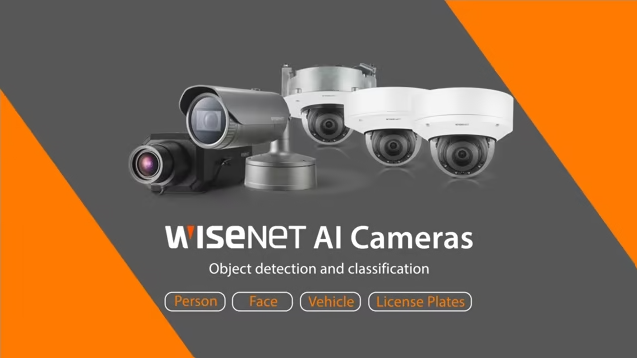
Hanwha Vision offers broad commercial and enterprise camera series, analytics and recorder/VMS paths suited to structured operational projects.
Do not select enterprise CCTV from a residential scorecard
A 4MP enterprise camera may be more appropriate than an 8MP kit camera because of lens, dynamic range, cybersecurity, integration, ruggedness, analytics or lifecycle requirements. Define acceptance tests for each scene.
Procurement checklist
- Approved VMS and integration architecture.
- Network segmentation and credential policy.
- Required analytics and scene acceptance tests.
- Retention, redundancy and evidence export.
- Firmware and vulnerability-management ownership.
- Support, spares and lifecycle budget.
Worked procurement example
A multi-site operator shortlists both brands, then tests representative cameras against the chosen VMS, low-light scene, identity provider, certificate process, event search and export workflow. The winner is the system that meets the acceptance criteria with sustainable support-not the camera with the longest feature list.
Proof-of-concept checklist
Test firmware deployment, failover, clock synchronization, user roles, analytics at the target scene, alarm integration, evidence export and health monitoring before approving a large rollout.
There is no responsible enterprise winner without a system brief
AXIS and Hanwha Vision both belong on an enterprise shortlist. The better choice depends on the required VMS, integrations, camera form factors, analytics, cyber controls, evidence workflow, support model and lifecycle cost. We position both above a residential-style kit decision: the procurement unit is the complete operating system, not a camera megapixel number.
| Decision area | AXIS pathway | Hanwha pathway |
|---|---|---|
| Video management | AXIS Camera Station for an Axis-led system or validated partner VMS such as Milestone/Genetec | Wisenet WAVE or validated partner VMS; confirm device/firmware support and required licences |
| Device platform | AXIS OS, device management and model-specific edge applications | Wisenet camera platform, edge AI families and Hanwha device/VMS tooling |
| Cyber evidence to inspect | Published OS support dates, hardening guidance, signed OS/secure boot and supported device capabilities | Product security documentation, hardening guidance, vulnerability notices, firmware support and exact model capabilities |
| Integration | Validate access control, intercom, audio, analytics and VMS drivers in a proof of concept | Validate WAVE/SUNAPI/ONVIF or third-party drivers and the required metadata/events |
| Best fit | Often compelling for lifecycle visibility, broad ecosystem design and tightly documented enterprise requirements | Often compelling for camera choice, edge AI and WAVE-led or value-sensitive enterprise designs |
Start with the VMS and operational workflow
Write the operator tasks before selecting cameras: live monitoring, alarm acknowledgement, forensic search, map use, evidence export, privacy masking, health monitoring, failover and multi-site administration. Then test the exact camera/VMS/firmware combination. "ONVIF compatible" is not enough to prove that analytics metadata, two-way audio, edge storage recovery, dewarping or advanced events work as required.
Hanwha's current support material describes WAVE user rights, audit trails, watermarking, custom certificates and secure remote connection options. AXIS publishes lifecycle and cybersecurity guidance covering AXIS OS, device management, support dates, secure boot/signed OS on supported devices and hardening practices. These are useful procurement inputs, but controls must be enabled, maintained and independently verified against the project requirements.
Enterprise camera selection is scene-specific
- Entrances: prioritise backlight handling, face density, low-light motion and a camera position that does not look steeply down on heads.
- Perimeters: define detection distance, target size, thermal/radar requirements, nuisance-alarm tolerance and response workflow.
- Car parks: separate overview coverage from number-plate capture; test headlights and vehicle speed.
- Large open areas: compare multi-sensor coverage with multiple fixed cameras, including blind spots and investigation workflow.
- Privacy-sensitive areas: validate masking, roles, audit logs, export controls and retention.
- Critical sites: specify redundancy, failover, clock synchronisation, certificate management, logs and disaster recovery.
Compare total cost of ownership, not camera price
Build a five-to-seven-year cost model that includes cameras, licences, servers, storage, network upgrades, installation, configuration, training, warranty, spares, firmware maintenance, cyber review, power, operator time and decommissioning. Axis's published total-cost-of-ownership guidance similarly recommends looking beyond initial investment to operating and lifecycle costs. Use the same cost categories for both vendors so one proposal is not artificially cheaper by omitting labour, licences or storage.
Cybersecurity and lifecycle questions for the RFP
- What is the published software support or end-of-support position for every proposed model?
- How are vulnerabilities disclosed, prioritised and patched?
- Which secure boot, signed firmware, hardware key storage, encrypted transport and certificate features exist on the exact models?
- Can administrators inventory firmware, accounts, certificates and unsupported devices centrally?
- What is the patch-testing and deployment process, including rollback?
- How are roles, audit logs, evidence authenticity and exports controlled?
- How are devices securely erased and decommissioned?
AXIS's official lifecycle cybersecurity material describes published support dates, secure onboarding and in-service/decommissioning practices. Hanwha's WAVE security guidance describes rights, audit logging, watermarks, SSL certificates and patching. Treat both as vendor statements to validate in the proof of concept and contract.
Proof-of-concept acceptance plan
| Test | Pass condition to define before testing |
|---|---|
| Image evidence | Usable moving-subject detail at nominated day/night distances, including backlight and wet/headlight scenes |
| Analytics | Agreed detection and nuisance-event performance over a representative test window |
| VMS workflow | Operators can acknowledge, search and export within agreed times using least-privilege roles |
| Failure recovery | Documented behaviour for camera, switch, recorder, server, storage and WAN failure |
| Cyber controls | Hardening baseline, certificates, accounts, logs, updates and vulnerability workflow demonstrated |
| Integration | Required events and metadata work end-to-end with the exact production versions |
Frequently asked questions
Is AXIS better than Hanwha?
Neither is universally better. The correct choice depends on VMS, integration, cybersecurity, analytics, camera formats and support requirements.
Are AXIS and Hanwha suitable for homes?
They can be, but enterprise capability is usually justified only on high-end integrated residences or sites with formal platform requirements.
Should enterprise CCTV be chosen by megapixels?
No. Resolution is one factor among lens, sensor, dynamic range, analytics, cybersecurity, integration and lifecycle support.
Need help selecting a system?
Provide the property type, camera positions, night conditions, required retention, network constraints and future camera count.