












Commercial
Construction Site Solar CCTV Reference Layouts
Return to CCTV Systems for Construction Sites hub
Solar Deployment Guide
Quick position
For many small sites, the TP-Link VIGI Solar Kit SP9030 should be the first thing you look at. It is quick to deploy and easy to explain to a builder.
If one elevated point needs to watch a much broader frontage, compound or laydown area, move to the Hikvision solar PTZ. If the project wants a richer deterrence-style PTZ path and can wait, consider the Dahua 120W solar PTZ kit, noting the live product page said 7 to 10 weeks lead time on 27 May 2026.
Which solar path usually fits which job?
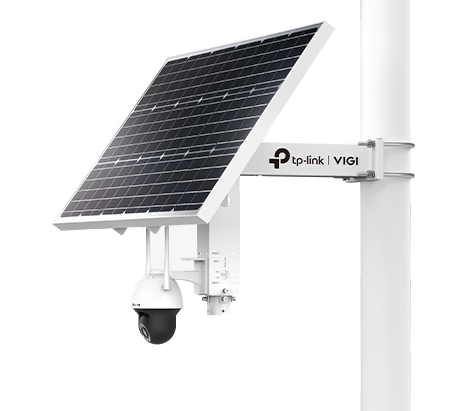
VIGI for quick, practical site protection
Best for: one gate, one tool container, one site shed, one fence gap or one temporary compound.
Why it works: the decision is easy. Put it where the real risk is and get the site online quickly without waiting for a full CCTV head-end.
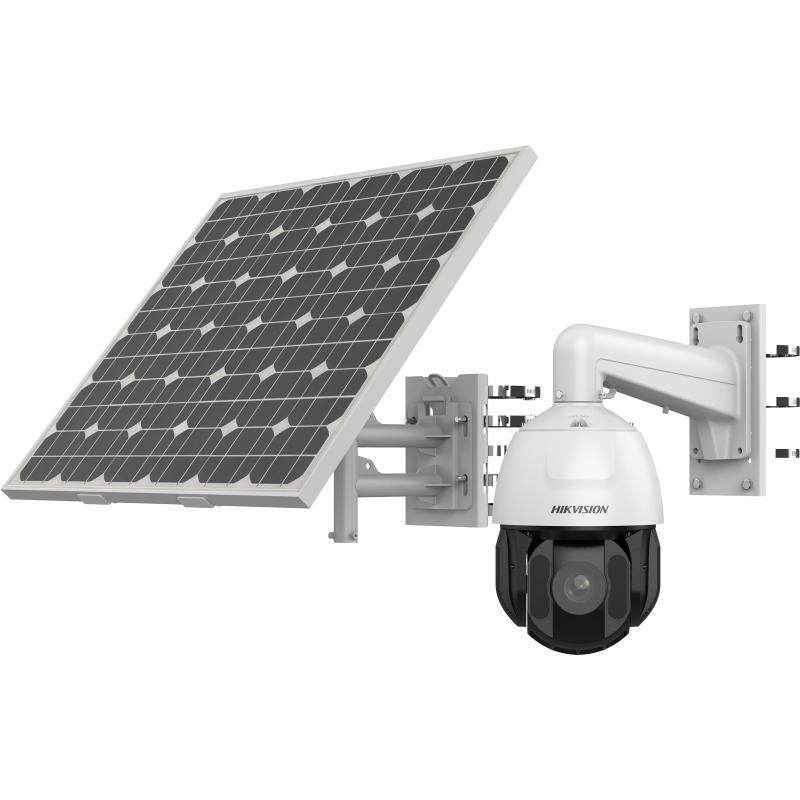
Hikvision for monitoring-first jobs
Best for: broad site frontage, long approach roads, plant-parking areas and bigger laydown zones where one elevated view really does need zoom.
Why it works: it is stronger when the operator needs real scene reach rather than just one obvious deterrence point.
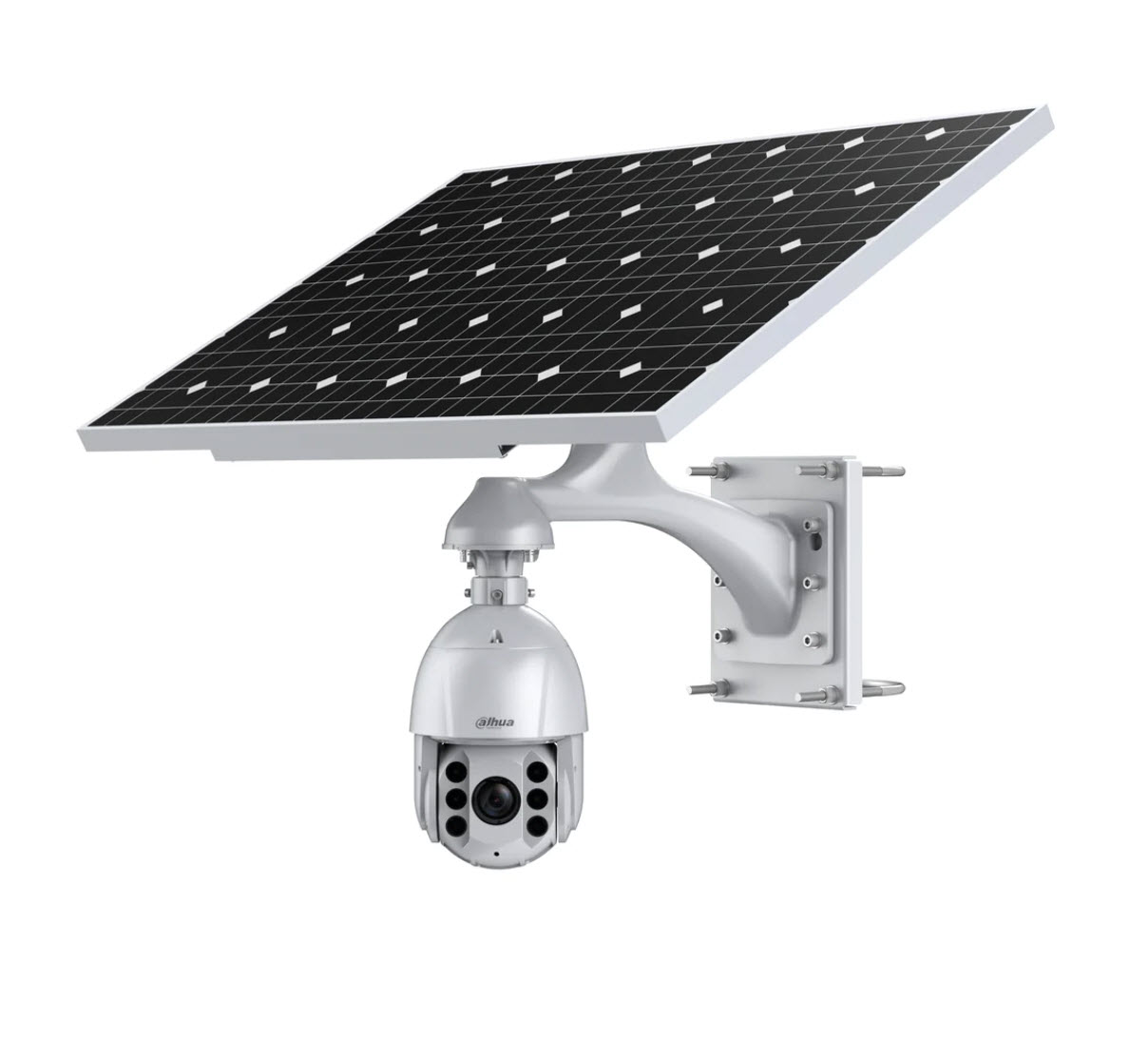
Dahua for planned deterrence-heavy PTZ jobs
Best for: projects that want a richer deterrence-style PTZ package and have enough lead time to plan the branch properly.
Important note: useful option, but not the first answer for urgent next-week site coverage because of the longer lead-time profile.
Reference Layout A: One gate, one site shed, one obvious theft risk
This is the most common small-site solar job. The builder wants something up quickly, there is no clean power path at the gate, and nobody wants to trench data just to watch one entrance and one temporary shed.
Reference Layout B: One frontage, one laydown area, need more monitoring reach
This is where the Hikvision solar PTZ starts to make more sense. The site is still temporary, but one simple fixed view would feel too narrow. The operator wants to zoom in on vehicles, check plant movement and review a broader frontage from one elevated point.
Reference Layout C: Gate plus remote tool container
This is a common reason solar wins. The gate might have some nearby services, but the tool container does not. Rather than trying to cable both ends of a changing site, many jobs are cleaner as mixed branches or a standalone VIGI branch at the container.
- Put the solar branch where the container door, approach path and nearby fence line are all useful in one view.
- Do not put it so close to the container that a person can tamper with it easily.
- Make sure the panel still sees sun once temporary stock, scaffolding or new framing goes up nearby.
- Test the 4G signal at the final mount height, not only on the ground.
Reference Layout D: Remote subdivision or civil branch
These are the jobs where the Hikvision solar PTZ or planned Dahua solar PTZ can be more useful. There is no realistic head-end nearby, the branch may need to be moved later, and the site wants broad remote oversight rather than a tiny fixed scene.
Solar is strongest when the cable path feels wrong
If you are only trying to force cabling because that is how you would normally build a warehouse CCTV system, stop and reset. Construction sites are not warehouses. If the branch is temporary, remote or likely to move, solar often makes more sense than pretending the site is already permanent.
How the pole usually gets planned
Most small-site solar installs do not start with the camera. They start with the pole or mount. The installer or contractor usually walks the risk point, confirms the viewing direction, checks the sun path, checks safe access for a ladder or lift, and then decides whether the branch belongs on a proper standalone pole, a fence-side post, a container corner or a building corner.
On a cleaner job, the best answer is often a proper galvanised pole or sturdy post in a concrete footing. On a lighter temporary job, a strong gate-side post or container-side mount can be enough if the sightline, sun exposure and stability are right. The real decision is not "can I physically bolt it somewhere?" It is "will this still be the right place once the site changes again?"
What usually goes wrong
- The pole goes where it is easy to install instead of where the theft question actually happens.
- The panel gets partial shade later from a site office, scaffold, skip bin or stacked materials.
- The camera is mounted too low and sits inside the easy tamper zone.
- The SIM works on the ground but the final pole position was never tested properly.
- The builder assumes the PTZ will replace a proper gate or container view.
Recommended next reads
Construction Site Solar CCTV Installer Checklist
Use this when you want the actual handover order for pole setup, panel direction, SIM, app testing, playback testing and final photos.
Temporary Power, Solar Cameras and Site Staging
Use this when the question is less about one branch and more about how the CCTV rollout should change as the site changes.
Best CCTV System for Construction Sites in Australia
Use this when you still want the top-level buying answer and product shortlist before worrying about the finer layout details.
Construction Site Solar Layout FAQs
When is a solar camera the best construction-site answer?
Usually when there is no practical power at the risk point, no fixed internet path, or the cost and delay of trenching cable there is hard to justify for a temporary stage of the job.
Where should a solar camera pole usually go on a construction site?
Usually near the risk point but not inside the easy tamper zone. The pole should have decent sun exposure, a clean view of the approach or asset, and safe access for the installer.
Is the VIGI solar kit better than forcing a wired camera early?
Often yes on small sites. If the cable path is messy and the site is likely to move, the VIGI branch is usually cleaner than building a rushed wired path you may undo later.
When should I step up to a solar PTZ instead of a simpler solar camera?
Step up when one elevated position genuinely needs to watch a broader scene and the operator actually wants zoom and presets. PTZ is for a real monitoring job, not just for show.
Can the same solar camera branch be moved later?
Usually yes. That is one of the strongest reasons to use solar on construction sites in the first place.