












Commercial
Construction Site CCTV Fixed, Motorised, PTZ, and Deterrence Cameras
Supporting Guide
If you are looking for the shortest version of the recommendation, it is this: for many small construction jobs, start with the TP-Link VIGI solar kit. If the job is more about broad monitoring than obvious deterrence, step into the Hikvision solar PTZ. If the project wants a more feature-packed deterrence-oriented solar PTZ path and can wait, add the Dahua 120W solar PTZ kit to the shortlist as well.
Fixed cameras still do most of the evidence work
Fixed cameras are strongest at gates, sign-in points, containers, compounds, and site-office access because those scenes repeat and need stable evidence.
Motorised lenses help when the scene is hard to judge on paper
A motorised lens is useful on wide frontages, longer site approaches, or changing laydown areas where the installer needs to tune the scene on site rather than guess the lens early.
PTZ and deterrence cameras should be used with discipline
Large projects can justify a PTZ for broad after-hours overview, but it should support rather than replace the fixed gate and compound views that actually explain who entered and what they targeted. Deterrence cameras make sense after hours on vulnerable fence lines, remote compounds, material stacks, and isolated side entries where visible warning may discourage trespass.
Camera type is only part of the after-hours answer
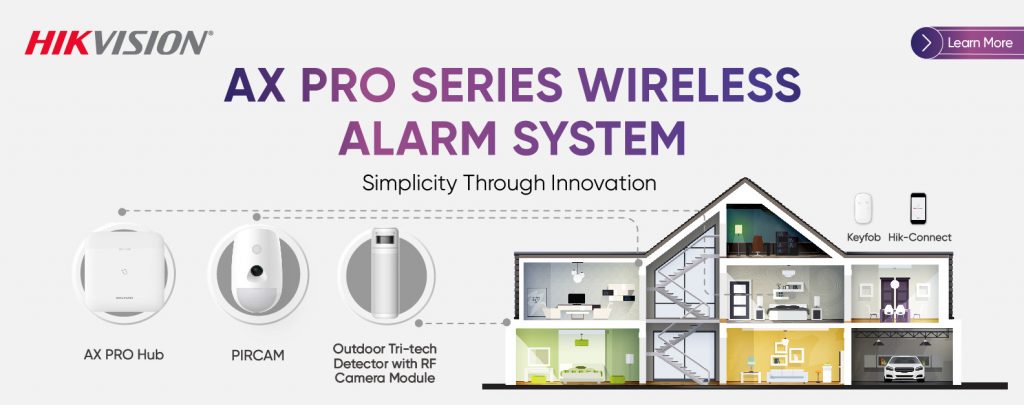
If the site actually needs a disturbance alert when someone tries a container, gate or office after hours, the better next step is often AX Pro alarm layering rather than just adding another camera type.
If you want to see how that becomes a cleaner construction site security decision, go next to Construction Site Security in Australia.
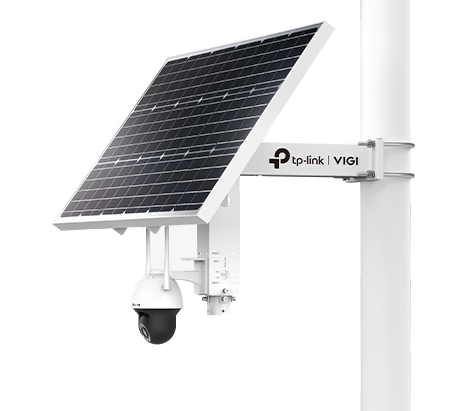
Small-site deterrence-led answer
TP-Link VIGI Solar Kit SP9030 is the cleaner go-to when the site wants a quick, visible, easy-to-move standalone watch point.
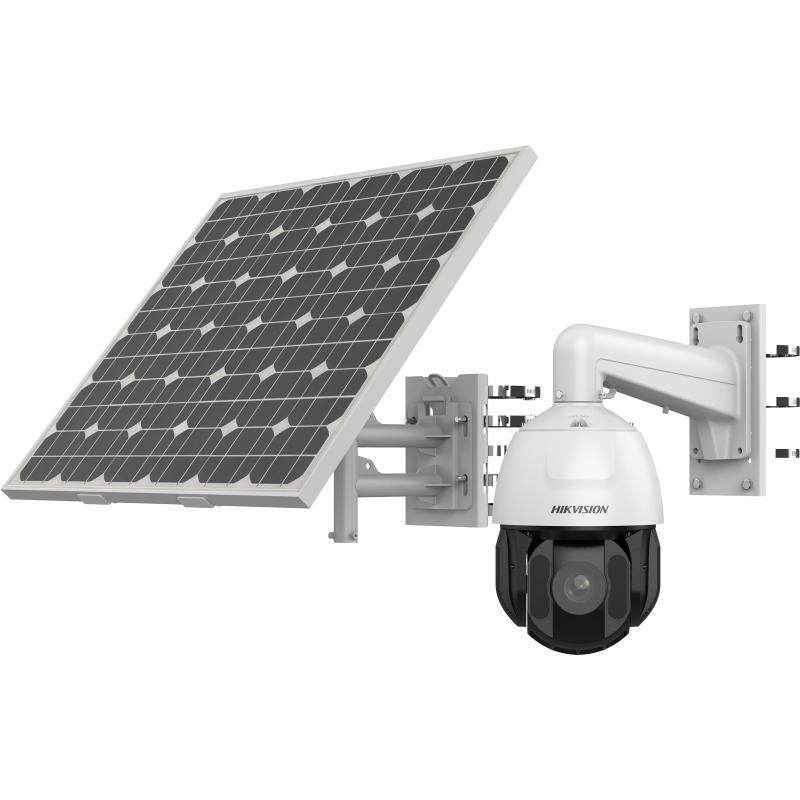
Monitoring-first PTZ answer
Hikvision solar PTZ is the stronger path where zoom, presets and longer-range scene reading matter more than obvious deterrence.
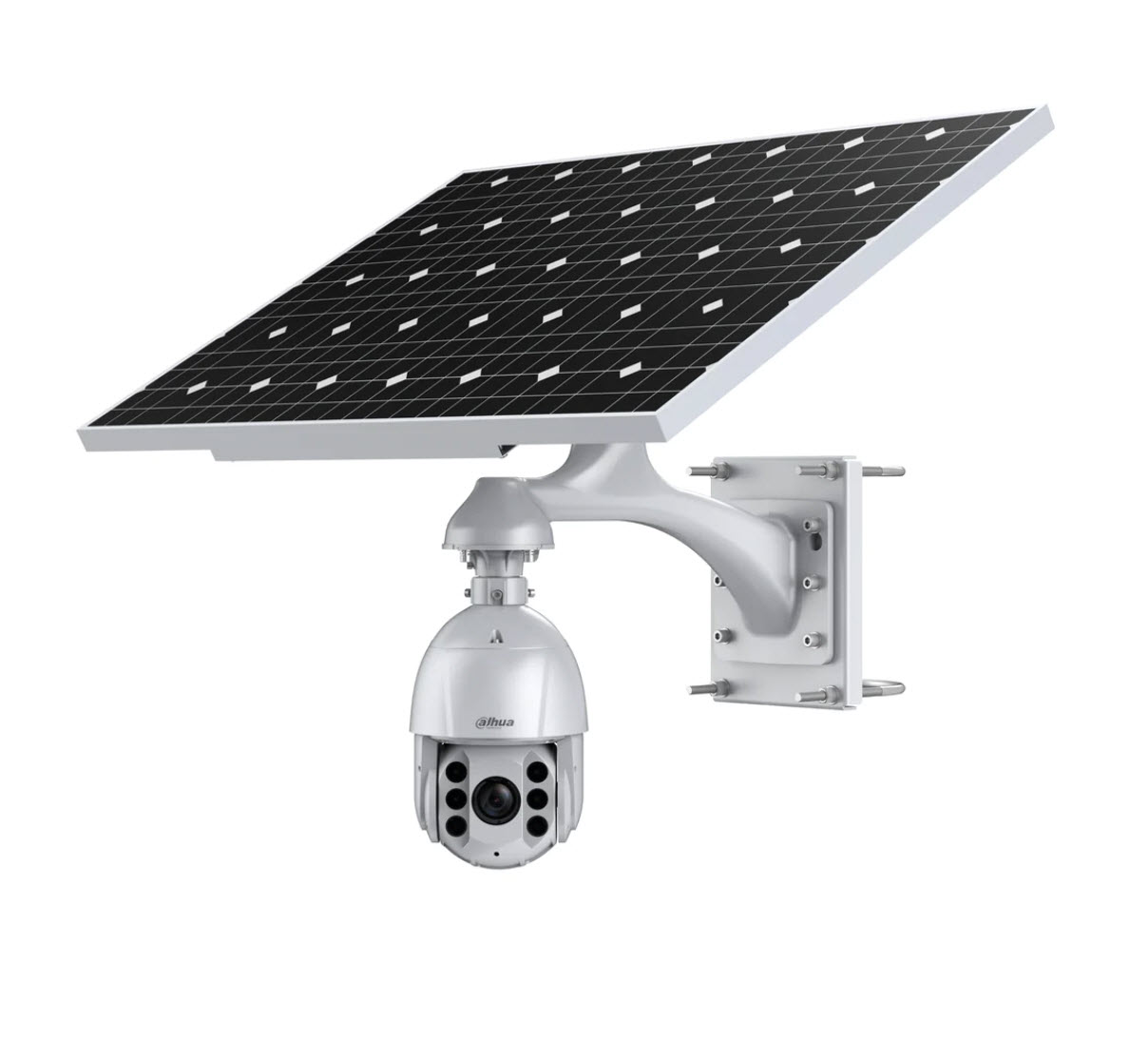
Feature-rich deterrence PTZ answer
Dahua 120W solar PTZ kit is the more feature-packed alternative when the site wants solar PTZ coverage with a stronger deterrence flavour.
Lead-time note: the live SecurityWholesalers listing says usually 7 to 10 weeks lead time as of 27 May 2026.
Camera-choice table
| Camera path | Usually strongest for | Common mistake |
|---|---|---|
| Fixed lens | site gate, site office, and controlled thresholds such as tool container | Trying to make one broad fixed view solve several different scene depths at once. |
| Motorised lens | Longer or wider scenes such as plant laydown or mixed-depth external approaches | Paying for adjustability where the scene is already simple and repeatable. |
| PTZ or deterrence | after-hours fence line or larger overview positions where live follow-up or visible warning has a clear purpose | Using PTZ or flashing deterrence as a substitute for stable fixed evidence views. |
Sample camera-choice scenarios
Ben's control-point layout
At Ben's site, the site gate, site office, and tool container are repeating scenes where stable evidence matters most. Fixed cameras are the better answer there because the operator needs dependable footage of the same approach and threshold every day rather than a scene that is re-tuned constantly.
Talia's wider external zone
Talia has a more awkward scene around the plant laydown and the after-hours fence line, where one camera position needs to handle changing depth and night-time activity. A motorised or selective deterrence path makes more sense there than using the same fixed-lens approach chosen for the simpler control points.
Relevant SecurityWholesalers Product Areas
Construction buyers usually review a mix of fixed commercial cameras, solar or temporary edge coverage, secure recorder storage, and network links that can adapt as the site changes.
- Hikvision CCTV cameras - A practical starting point for gates, compounds, and after-hours coverage.
- HiLook CCTV cameras - A cost-effective Hikvision-backed option for reliable fixed-lens coverage where the site does not need motorised zoom cameras on every view.
- Dahua CCTV cameras - A commercial alternative for mixed entry and perimeter coverage.
- Hikvision solar cameras - Useful where temporary power is awkward or a remote fence line needs coverage.
- PTZ cameras - Relevant where a larger project genuinely needs broad overview support.
- Hikvision AX Pro wireless alarms - Useful when the after-hours problem is disturbance at the office, container, gate or compound rather than just needing another view.
- Security rack cabinets - Useful where the recorder and switch path need stronger physical protection.
Australian Source References
Frequently Asked Questions
-
When does a fixed lens usually make sense for construction sites?
Fixed cameras are strongest at gates, sign-in points, containers, compounds, and site-office access because those scenes repeat and need stable evidence.
-
When is a motorised lens worth paying for?
A motorised lens is useful on wide frontages, longer site approaches, or changing laydown areas where the installer needs to tune the scene on site rather than guess the lens early.
-
Do construction sites sites really need PTZ cameras?
Large projects can justify a PTZ for broad after-hours overview, but it should support rather than replace the fixed gate and compound views that actually explain who entered and what they targeted.
-
Where do deterrence cameras fit?
Deterrence cameras make sense after hours on vulnerable fence lines, remote compounds, material stacks, and isolated side entries where visible warning may discourage trespass.
-
Can one PTZ replace several fixed cameras?
Usually no. A PTZ can add flexible overview or live follow-up, but fixed cameras are still the backbone when the site needs stable recorded evidence on key zones all the time.
-
When is a motorised lens worth paying extra for?
It is usually worth it where the final framing is uncertain, the view is long and narrow, or the operator needs to tune the scene carefully during commissioning.