














Commercial
CCTV Systems for Construction Sites
Pillar Page
Construction sites change constantly. Gates move, fencing changes, site sheds relocate, and the risk profile can shift from a slab stage to a lock-up stage or fit-out stage in just weeks. That means the CCTV design has to be staged and practical rather than overcommitted to one permanent layout.
Fixed cameras usually suit gate entries, storage containers, temporary offices, and other control points. Motorised lenses help on wider site frontages or longer entries where the final standoff distance is hard to judge on paper. PTZs can add value on larger projects or wider compounds, but they should not replace the fixed evidence cameras that capture entry and exit movement. Solar cameras are often useful where temporary power is awkward. Deterrence cameras fit after-hours compounds, material laydown areas, and exposed side entries.
Start here if the site is still small
If you are still deciding what type of site system to buy, start with Best CCTV System for Construction Sites in Australia. That page now makes the recommendation much clearer: for many small construction sites, the best first answer is the TP-Link VIGI solar kit. If the job is more about broad monitoring than deterrence, the next path is the Hikvision solar PTZ. It also now includes the Dahua solar PTZ option for more feature-packed deterrence-led projects with a longer lead time.
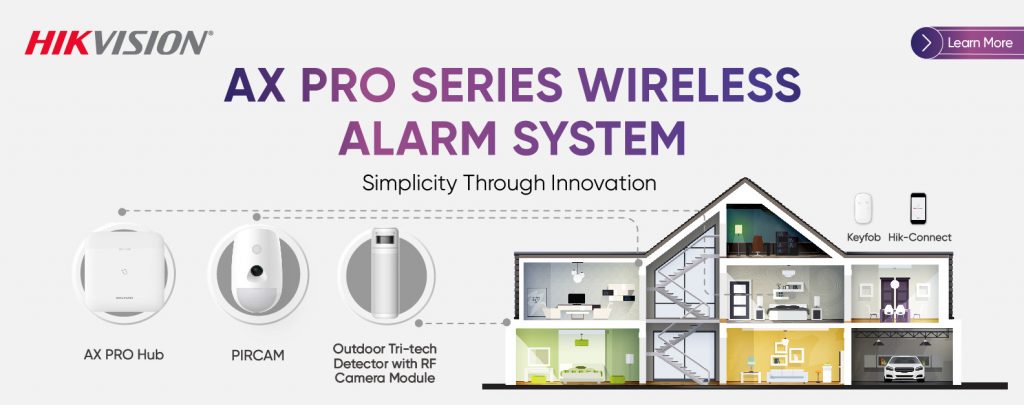
It also now explains where Hikvision AX Pro wireless alarms fit. On many sites, the smarter answer is not camera only. It is camera plus an AX Pro branch protecting the site office, tool container, compound gate or fuel cage after hours.
If you want the quickest construction site security answer in the hub, go next to Construction Site Security in Australia. That page is built for the buyer who wants a clean small-site versus larger-site answer without having to piece it together from several pages.
It is also now the best central guide in this hub for answering the real job: what to buy first, when solar is better than forced cabling, when to step into a recorder, and how to lay out and install the branch properly on an Australian construction site.
If you specifically want to see how these branches are usually laid out and installed when there is no power or cabling is too hard to justify, go next to Construction Site Solar CCTV Reference Layouts and Construction Site Solar CCTV Installer Checklist.
How This Environment Should Use the Main Camera Types
Construction sites usually need staged, purpose-driven coverage that starts with the most common theft and intrusion points.
| Camera Type | Where It Usually Fits | Why It Matters |
|---|---|---|
| Fixed lens | Main gates, storage containers, temporary offices, tool compounds | Stable entry and control-point views matter most for identifying people and vehicle movement. |
| Motorised lens | Long frontage, wide site entries, broader laydown or parking areas | Helps tune a changing construction scene where distance and width vary. |
| PTZ | Larger projects, broad compounds, wide after-hours external zones | Adds overview where the site is too large for one fixed scene alone, but should not replace control-point cameras. |
| Deterrence / solar | Remote fencing, material storage, temporary site sections, after-hours exposure | Useful where the site needs flexible temporary deployment and visible warning after hours. |
What This Site Usually Needs to Cover First
- Main entry gate and vehicle access lane
- Pedestrian entry and site office or sign-in point
- Tool containers, lock-up storage, and plant compounds
- Material laydown areas, whitegoods, cable, and target stock zones
- Scaffold-adjacent access or perimeter weak points
- After-hours frontage and side fencing where trespass is most likely
Decision points on this type of site
| Question | Stronger direction | Why it matters |
|---|---|---|
| Where should the first cameras go? | Start with the site gate, site office, tool container, and the after-hours fence line. | Those zones usually answer the highest-value access, movement, and after-hours questions. |
| Where does broader coverage become useful? | Add wider or adjustable views only after the control points are covered properly. | Broad coverage adds context, but it rarely replaces the scenes that need stable evidence. |
| What should shape the recorder and UPS path? | Retention expectations, outage tolerance, and how often management will need to review material theft. | A weak head-end path can undermine an otherwise sensible camera layout. |
Sample scenarios
Ben's construction site
Ben is trying to decide where to spend the first stage of the CCTV budget. The stronger answer is to start with the site gate, site office, tool container, and the after-hours fence line rather than buying broad overview coverage for the whole site. Those views are more likely to answer real questions around material theft, restricted access, and after-hours activity.
Talia's civil works site
Talia already knows the site wants better security but is unsure whether to spend more on broader cameras or on the recording path. In this case the better outcome comes from a balanced design: stable views on the control points, sensible coverage of plant laydown, and enough recorder and UPS headroom to hold the footage when temporary power loss or a later review request actually matters.
Product Areas That Normally Matter
Construction buyers often review a mix of fixed commercial cameras, temporary or solar edge coverage, and the recorder and cabinet layers that keep the site usable as it changes stage by stage.
- Hikvision CCTV cameras - A common starting point for fixed site-entry and after-hours coverage.
- HiLook CCTV cameras - A cost-effective Hikvision-backed option for reliable fixed-lens coverage where the site does not need motorised zoom cameras on every view.
- Dahua CCTV cameras - A practical commercial alternative for mixed entry and perimeter coverage.
- Hikvision solar cameras - Useful where temporary or remote site sections lack convenient power.
- PTZ cameras - Relevant where a larger construction site genuinely needs broad overview.
- NVRs - Important for retention, mobile review, and staged growth of the system.
- Hikvision AX Pro wireless alarms - Strong when the site also needs disturbance detection at the office, tool container, gate or inner compound.
- Security rack cabinets - Useful where the recorder and switch path need stronger physical protection.
Work Out Recording Time, Storage, UPS, and Layout Early
Construction recording time should be based on what the builder, developer, or site manager may need to review later: theft, trespass, after-hours vehicle access, delivery disputes, or internal incidents. Once camera count, image detail, and recording mode are clear enough, the CCTV Storage Calculator helps size storage properly instead of relying on a rough guess.
The Camera Planner is useful for marking gates, containers, compounds, laydown areas, and temporary offices on a site plan before the system is locked in. If the recorder path needs to survive short outages or builder-board power interruptions, the UPS Backup Time Calculator helps estimate whether the NVR, switch, modem, and key uplinks will actually stay up.
Signage, Compliance, and Operational Boundaries
Construction sites should use clear monitored-area notice, especially around gates, compounds, and temporary offices. They should also stay realistic about what CCTV is for: deterrence, evidence, and remote review, not a replacement for site fencing, key control, or safe heavy-vehicle management.
The CCTV Signage Generator helps prepare practical site notice, and the CCTV Compliance Checker is useful before go-live where the builder wants one more review step around signage, placement, and operating assumptions.
Practical Position
The best construction CCTV systems are staged around the theft targets and access points that actually change the project, not just the easiest places to mount a camera.
Explore This Guide Series
This topic now has supporting guides covering placement, camera selection, recording time, privacy, and the most important implementation details for construction sites.
- Construction Site CCTV Coverage Zones and Camera Placement - Plan camera placement for construction sites with practical guidance on the first zones to cover, common blind spots, and how to mark the layout before installation.
- Construction Site Security in Australia - Use this when you want the clearest site-security answer across VIGI, Hikvision solar PTZ, Dahua solar PTZ and AX Pro.
- Construction Site Alarms, AX Pro, and After-Hours Detection - Use this when the site needs real after-hours disturbance alerts on offices, containers, gates and compounds, not just camera footage after the fact.
- Construction Site CCTV Fixed, Motorised, PTZ, and Deterrence Cameras - Understand how fixed, motorised, PTZ, and deterrence cameras fit into construction sites CCTV designs, and where each camera type is useful.
- Construction Site CCTV Recording Time, Storage, UPS, and Network Planning - Work out recording time, storage, UPS backup, and network design for construction sites CCTV systems with practical planning guidance.
- Construction Site CCTV Signage, Privacy, and Compliance Considerations - Review signage, privacy, footage access, and practical compliance considerations for construction sites CCTV systems.
- Construction Site Temporary Power, Solar Cameras, and CCTV Staging - Plan staged CCTV for construction sites with practical advice on temporary power, solar cameras, wireless links, and moving site priorities.
- Construction Site Solar CCTV Reference Layouts - See practical gate, shed, compound and frontage examples for VIGI, Hikvision and solar PTZ deployment.
- Construction Site Solar CCTV Installer Checklist - Follow a cleaner install and handover order for poles, panels, SIM setup, app testing and final playback checks.
Australian Source References
Frequently Asked Questions
-
What should a construction-site CCTV system usually cover first?
Most sites start with the main gate, pedestrian entry, storage containers, tool or plant compounds, temporary offices, and exposed after-hours access points. Those areas usually carry the highest theft and trespass risk.
-
Are solar cameras useful on construction sites?
Often yes. Solar cameras can be very useful where temporary site power is awkward or where a remote fence line, compound, or staging area needs flexible coverage.
-
Do construction sites need PTZ cameras?
Some larger projects do, especially where one camera can add broad after-hours overview. But PTZs should support, not replace, fixed evidence cameras at gates and compounds.
-
Why does UPS planning matter on a construction site?
Because short outages and unstable temporary power can interrupt recording just when the site needs it most. If the recorder path matters, backup runtime should be estimated instead of assumed.
-
How long should footage usually be kept for this type of site?
That should be based on the real review window for this environment, not a random number. The right answer depends on how quickly incidents are usually discovered and how long the site may need to go back and review footage.
-
Should this type of CCTV system be staged or installed all at once?
Either can be right. Many sites start with the highest-risk zones first, then expand once the camera positions, storage assumptions, and operating procedures have been proven.