












Comparison
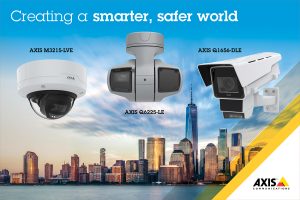
AXIS Dome vs Bullet vs PTZ vs Panoramic
Comparison Guide
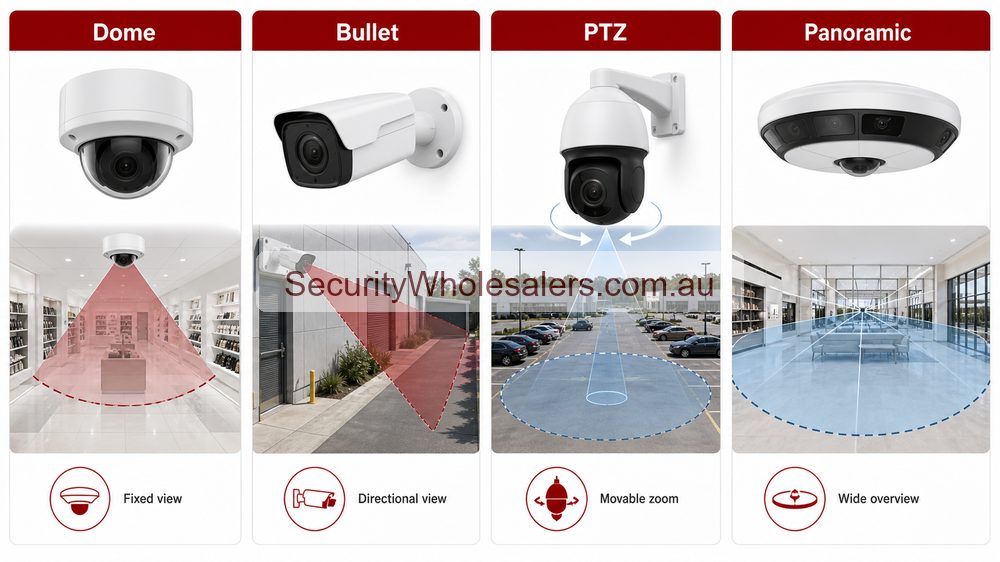
Main technical difference between the AXIS camera shapes
| Shape | Main role | Typical strengths | Common mistake |
|---|---|---|---|
| Dome | General fixed surveillance | Clean appearance, vandal resistance, strong all-round indoor or outdoor use | Expecting one dome to solve a long-range or wide-open yard problem |
| Bullet | Directional external coverage | Clear mounting direction, stronger perimeter feel, practical for fences and lanes | Using a bullet where the site really needed a discreet indoor dome or a broader multi-direction view |
| PTZ | Live overview and zoom | Operator control, presets, longer reach, following movement | Using PTZ instead of enough fixed evidence cameras |
| Panoramic | Wide context coverage | Several directions from one camera position, fewer mounts, strong open-area awareness | Expecting panoramic to replace tighter identification or plate views |
Where each AXIS shape usually fits best
| Environment | Usually better shape | Why |
|---|---|---|
| Clinic reception and hallway | Dome | The scenes are fixed, the ceilings are finished, and the main requirement is stable, unobtrusive evidence coverage. |
| Rear business lane or side gate | Bullet | The scene is directional, outdoors, and usually benefits from a clearly aimed external camera body. |
| Large car yard or logistics yard | PTZ plus fixed cameras | The operator may want live follow-up and zoom, but the site still needs fixed views on the gate, office, or key lanes. |
| Shopping-centre intersection or warehouse crossing | Panoramic | The site needs wide context across multiple directions from one mounting point. |
What usually works by job type
| Job type | What usually works | Why |
|---|---|---|
| Office reception and corridors | Mostly domes, with one bullet only if a rear lane or loading point matters | The key requirement is stable face and movement coverage in finished spaces, not dramatic long-range zoom. |
| Warehouse perimeter and truck yard | Bullets for the boundary, fixed domes at doors, then PTZ only if the yard is actively reviewed | This gives the site dependable evidence first, then operational zoom where it really helps. |
| Car parks and apartment entries | Domes or bullets on the vehicle paths, panoramic at intersections, PTZ only on larger open sites | The layout usually needs a mix of lane evidence and context rather than one camera trying to do everything. |
| Retail floor and entry | Domes for entry, counters, and aisles, sometimes panoramic for larger open floor context | Retail review is mostly about steady scenes and clear coverage of decision points rather than live pursuit. |
Quick recommendation ladder
Default commercial answer
Start with domes for most internal and polished external fixed-camera scenes where the job needs stable evidence coverage and a tidy building finish.
Best for directional exteriors
Use bullets where the site wants a clear lane, fence, rear door, or approach view and the camera body direction helps explain the coverage logic.
Best for real live overview
Use PTZ only when staff or security will genuinely use presets, zoom, or follow-up viewing across a broader scene.
Best for broad context
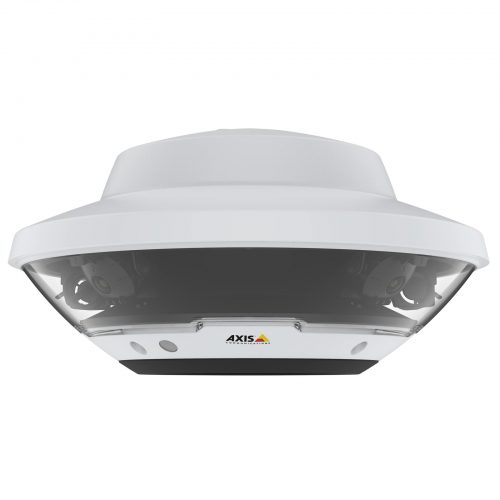
Use panoramic or multi-sensor cameras where the site wants wide situational awareness from a single mounting point, while still keeping tighter evidence cameras where they matter.
Rosa's jewellery showroom
Rosa's store needs stable counter, entry, and showroom coverage. A PTZ sounds attractive, but it is not the right starting point. The stronger design is fixed domes for the key evidence views and perhaps one selective bullet at a rear service entry if the back lane matters. The site is about stable reviewable scenes, not live pursuit across a large area.
Alan's car yard
Alan's site is different. Staff regularly review movements across a broad outdoor frontage, sales rows, and vehicle exit point. A PTZ can make sense there because the yard genuinely benefits from live zoom and preset touring. But the gate exit, office entry, and key handover area still need fixed evidence cameras. The PTZ is an extra layer, not the whole design.
North Plaza mall intersection
At a mall intersection where four directions meet, a panoramic AXIS camera can reduce the number of cameras needed for broad situational awareness. It works because the site needs context across several approach paths. That same panoramic view should not be expected to replace a tighter store-entry or cash-point view where identification still matters more than context.
Where PTZ sounds right but is the wrong first buy
A small body corporate wants one impressive PTZ over the driveway because committee members like the idea of zooming in after an event. In practice, the real blind spots are the pedestrian gate, foyer door, mail area, and basement lift lobby. A PTZ does not solve that well. The stronger AXIS design is fixed coverage at the actual event points, then a PTZ only if there is still a genuine need for broader live review afterwards.
Warehouse crossing where panoramic is the smarter buy
A warehouse manager keeps reaching for more domes because they are familiar, but the real problem is a four-way crossing with forklifts, staff, and pallets moving in several directions. A panoramic or multi-sensor AXIS camera can be the smarter answer there because the priority is context across the whole crossing, not just another narrow fixed view.
Mounting and installation considerations
- Dome - Usually easiest on finished ceilings, wall arms, or exterior soffits where the owner wants a cleaner presentation.
- Bullet - Often better on walls, parapets, rear laneways, fences, and external facades where directional coverage and mounting clarity matter.
- PTZ - Usually needs stronger structural mounting, cleaner sightlines, and more thought around presets, patrols, and cable routing.
- Panoramic - Needs careful positioning because it can cover a lot, but it only works well if the chosen mounting point actually sees the intersections or open space that matter.
Common shape-selection mistakes
- Buying a PTZ because it feels premium, even though the site really needed more fixed evidence views.
- Using a panoramic camera where the site still needed tighter face, plate, or transaction views.
- Choosing a bullet indoors where a cleaner dome would have suited the building and the scene better.
- Choosing a dome for a long external approach where a more directional bullet would have made the coverage logic clearer.
- Assuming camera shape alone solves the problem without checking lens, mounting height, and actual review purpose.
Relevant SecurityWholesalers Categories and Products
Form factor quote examples
| Camera type | Best fit | Avoid when |
|---|---|---|
| Dome | Indoor public areas, reception and cleaner commercial spaces. | The camera will face glare, dirt or difficult maintenance. |
| Bullet | Directional outdoor views, driveways, gates and visible deterrence. | The site wants a discreet appearance. |
| PTZ | Large areas where an operator or preset workflow will use zoom. | It is expected to replace fixed evidence cameras. |
| Panoramic | Wide situational awareness in open areas. | The buyer expects detailed identification across the whole scene. |
Frequently Asked Questions
- Are domes usually the default AXIS camera shape?
For many commercial jobs, yes. Domes are often the default fixed-camera starting point because they suit a wide range of indoor and outdoor scenes and usually present well on finished buildings.
- When is a bullet a better choice than a dome?
A bullet is often the better choice when the site needs a more directional external view, longer approach coverage, clearer mounting orientation, or a camera body that better suits fences, rear lanes, yards, and perimeter lines.
- When does PTZ actually make sense?
PTZ makes sense when the site genuinely benefits from live operator control, zooming, presets, or tracking. It is usually a support layer for a broader camera design, not a substitute for fixed evidence views.
- What is the point of AXIS panoramic cameras?
Panoramic cameras are for wide context coverage. They help when one camera should cover several directions or a broad open space, but they do not replace tighter evidence views where face or plate detail is required.
- Can one AXIS project mix all of these shapes?
Yes, and many better AXIS projects do. The usual pattern is fixed domes or bullets for evidence views, then PTZ or panoramic only where the site has a specific operational reason for broader coverage or live review.