

















Commercial
Best CCTV System for Jewellery Stores in Australia
Return to CCTV Systems for Jewellers hub
Commercial Buying Guide
Quick answer
A small jewellery shop may only need 6 to 8 cameras. A typical jeweller should usually plan around 8 to 12 cameras. A larger high-value store, workshop or stockroom-heavy site can move into 12 to 16 or more cameras, stronger storage planning, secure recorder location, UPS backup and tighter access control around footage and alarms.
At-a-Glance Recommendation Table
| Site type | Typical camera count | Recommended system | Notes |
|---|---|---|---|
| Small jewellery shop | 6 to 8 cameras | 8 channel NVR with strong entry and counter detail | Usually enough for the front door, counters, display approaches, rear door and one stockroom threshold. |
| Typical jeweller | 8 to 12 cameras | 16 channel NVR with high-resolution fixed cameras | Better once several counters, workshop access and back-of-house zones are treated properly. |
| Jeweller with workshop | 10 to 14 cameras | 16 channel NVR with stronger storage and access discipline | Needs clear separation between showroom, workshop and stockroom thresholds. |
| Larger high-value store | 12 to 16+ cameras | 16 channel or larger commercial path | Better for bigger frontages, consultation zones and stronger after-hours risk. |
6 vs 8 vs 16 Camera Jewellery Store CCTV Systems
6 camera store system
Suitable for: very small shops with one front door, one main counter and limited back-of-house exposure.
Not enough when: the store has several display zones, a workshop or a bigger after-hours brief.
8 camera store system
Suitable for: many jewellers where the front entry, service counter, showcase approaches and stockroom threshold all matter.
Not enough when: the store has several counters, a workshop or more complex back-of-house access.
16 camera store system
Suitable for: larger high-value stores or workshop-backed jewellers where evidence quality and layered access review matter.
Not enough when: the store is part of a larger precinct or corporate standard environment.
Coverage Zones
| Area | Recommended camera type | What to capture | Notes |
|---|---|---|---|
| Front entry | High-quality fixed camera | Head-height face capture and approach | One of the highest-value views in the store. |
| Display cabinets | High-resolution fixed camera | Hand movement and cabinet interaction | Broad overview is not enough here. |
| Sales counter | Fixed camera | Transaction detail and interaction context | Usually more important than wider showroom coverage. |
| Workshop threshold | Fixed threshold view | Who entered the restricted back-of-house area | Often stronger than a broad internal room shot. |
| Safe or stockroom entry | Fixed threshold view | Access to high-value back-of-house area | Very high-value camera in many stores. |
| Rear entry | Bullet or turret | After-hours and service access | Important for burglary review. |
Go deeper with Coverage Zones and Camera Placement and Counters, Showcases, Strongrooms and After-Hours Risk.
Camera Type Recommendations
Fixed high-resolution cameras are usually the backbone of a jeweller design. Varifocal cameras help where the frontage or showroom geometry needs tuning. PTZs are rarely the first priority. Deterrence cameras are usually an after-hours rear-entry or shutter tool rather than the main daytime answer.
NVR / Recorder Selection
| Camera count needed | Recommended recorder | Why |
|---|---|---|
| 1 to 8 cameras | 8 or 16 channel NVR | Good for smaller stores with some room to grow. |
| 9 to 16 cameras | 16 channel NVR | Common for larger jeweller layouts with stronger back-of-house needs. |
Storage and Retention
Jewellers often need better-than-average evidence quality and more deliberate retention planning because incidents can be higher value and may be reviewed with insurers, staff or police later.
PoE, Cabling and System Hardening
Wired PoE is normally preferred. Protect the recorder in a secure location, use surveillance-grade drives, consider UPS backup and treat alarms, duress and access control as part of the same security conversation where appropriate.
Recommended Buying Paths
Entry / small store
Best fit: HiLook or entry commercial paths where budget is tighter but fixed detail still matters.
Standard jeweller
Best fit: Hikvision, Dahua or Uniview on a 16 channel-capable recorder path.
High-value store
Best fit: Higher-resolution fixed cameras, stronger recorder security and better duress integration.
Recommended Packages and Product Paths
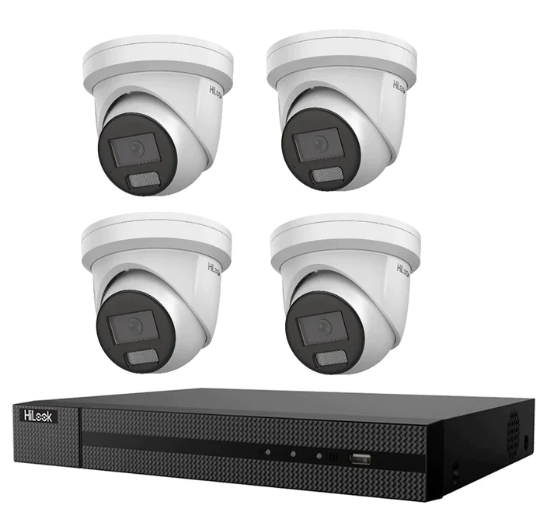
Small boutique starter
Main pick: HiLook 8MP 4 camera turret kit
Best for: a smaller jewellery shop that needs the front door, one main counter, display approach and rear threshold covered well.
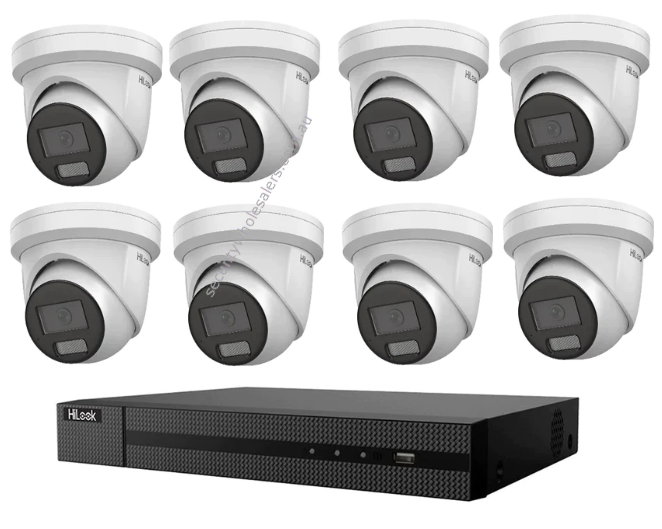
Stronger entry and counter detail
Main picks: HiLook 8MP 8 camera turret kit or Hikvision 8MP ColorVu 3.0 hybrid 8 camera kit
How to choose: the HiLook path suits value-led shops that still need sharp fixed views, while the Hikvision kit is stronger where the store wants a more premium after-hours warning profile.
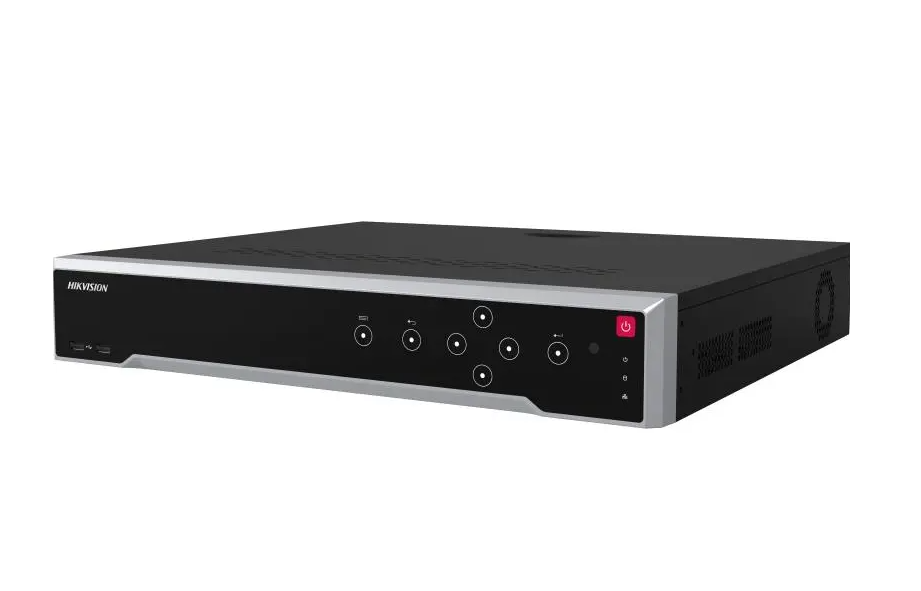
Workshop and stockroom build
Camera path: Hikvision ColorVu 3.0 smart hybrid turret cameras
Recorder path: Hikvision 16 channel Ultra Series NVR
Best for: jewellers that need a stronger evidence path at the entry, counters, workshop threshold and safe or stockroom boundary.
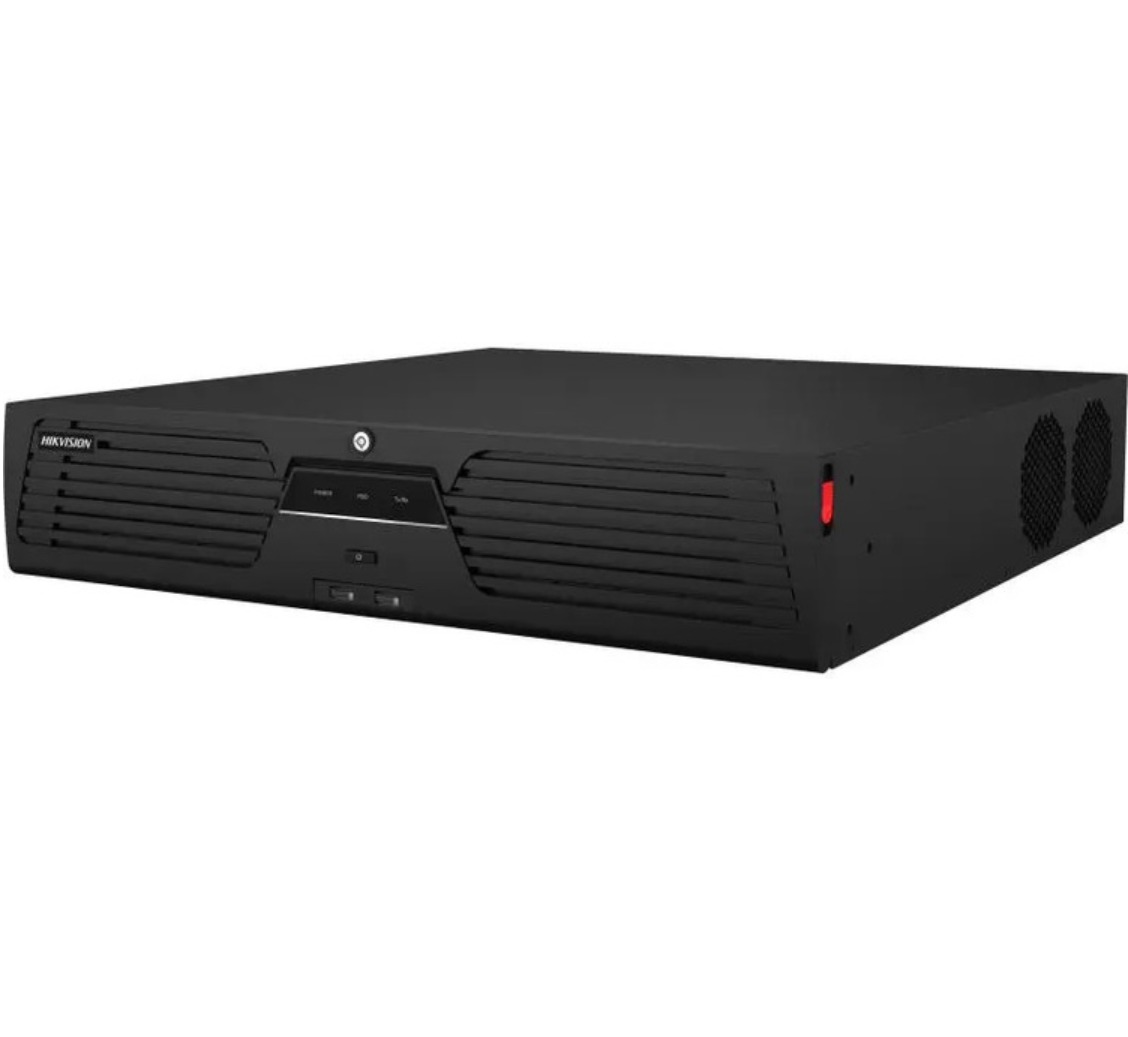
Premium high-value store path
Recorder path: Hikvision 32 channel M-Series NVR
Camera families: combine fixed high-resolution counters and display cameras with selected outdoor bullets or smart-hybrid turrets on rear access and after-hours approaches.
Best for: larger stores, stronger after-hours burglary exposure and sites that need tighter evidence discipline.
Typical Jewellery Store Layout Diagram
After You Buy: Useful Support Guides
IP Camera and NVR Installation Guide
Useful once the shop has chosen the recorder and camera path and needs a clean installation order without treating the NVR like an afterthought.
Why P2P Remote Viewing Stops Working
Useful for shop-owner handover, remote viewing and the account or router issues that can appear after the system is otherwise installed.
CCTV NVR Not Recording: Complete Checklist
Useful if the system is live but the recorder, schedules or storage are not actually keeping the evidence the store expects.
How to Download CCTV Footage for Police or Insurance
Useful for preserving counter or display evidence cleanly if a theft, dispute or insurance claim needs a proper export later.
Jeweller CCTV FAQs
What is the best CCTV system for a jewellery store?
For many jewellery stores, the best system is a high-quality wired IP CCTV system with disciplined entry, counter, showcase, workshop and stockroom-threshold views, supported by a properly sized NVR, surveillance drives and a secure recorder location.
How many cameras does a jeweller need?
A small shop may use 6 to 8 cameras. A typical jeweller often needs 8 to 12, while larger stores with stronger workshop, stockroom and after-hours requirements can move into 12 to 16 or more.
What cameras are best for display cabinets?
Fixed high-resolution cameras placed to give clean counter and display detail usually work better than broad overview views that miss hand movement and transaction detail.
Should a jeweller use 4K cameras?
Often yes on the right scenes, but camera placement, lens choice and lighting still matter more than megapixels alone. A badly placed 4K camera is still a poor evidence camera.