
















What Do Burglars Steal in Australia? 2026 Home Break-In Statistics & Security Guide Leave a comment
Home break-ins are about more than stolen property
A break-in is not only a financial loss. It can make people feel unsafe in their own home, even when the items stolen are replaceable.
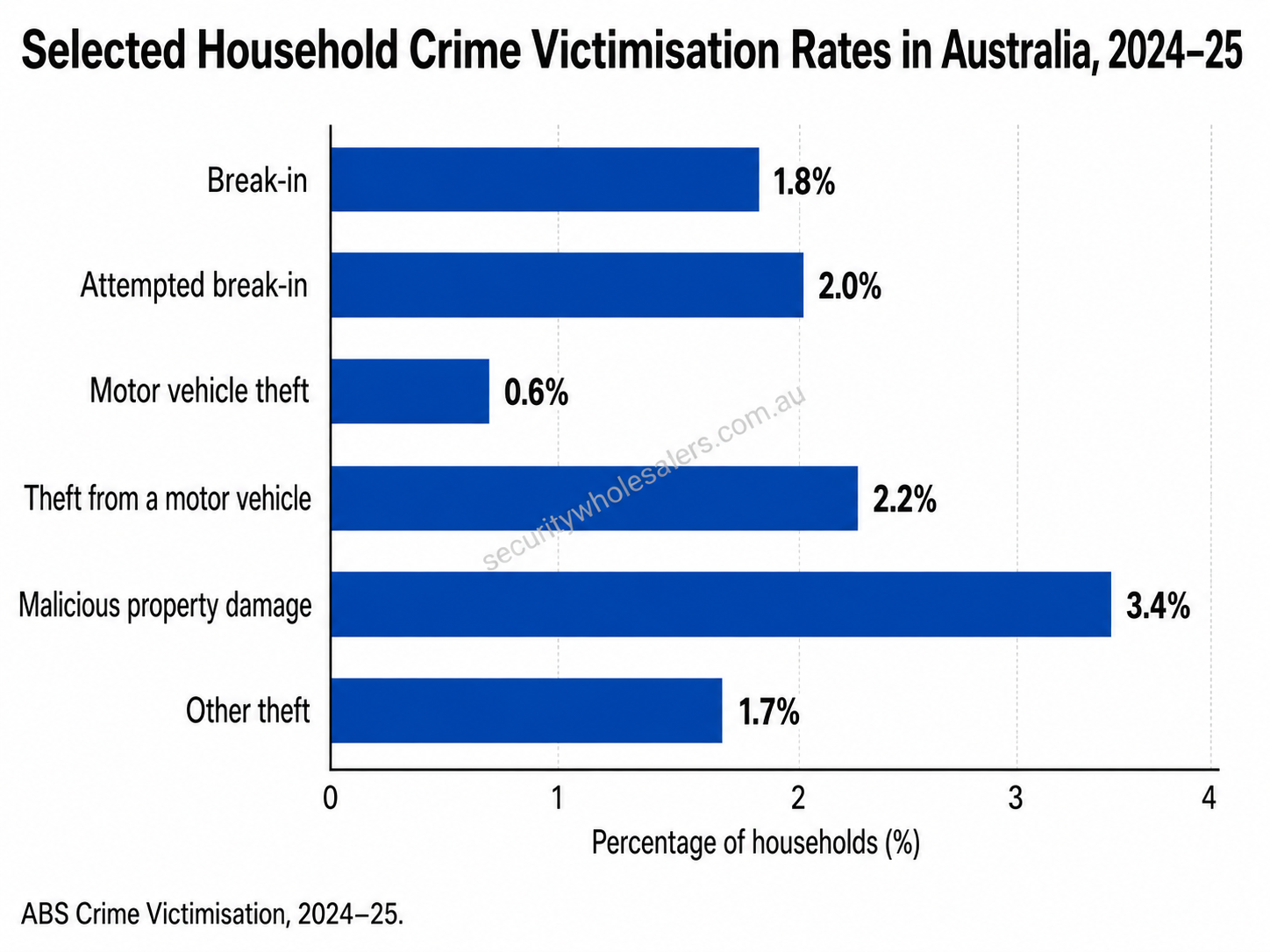
The latest ABS Crime Victimisation survey shows that in 2024–25, an estimated 1.8% of Australian households, or about 196,600 households, experienced a break-in. A further 2.0% of households, or about 217,500 households, experienced an attempted break-in.
The same ABS release estimated that 8.5% of households, or about 913,700 households, experienced one or more selected household crimes in 2024–25. These selected household crimes include break-in, attempted break-in, motor vehicle theft, theft from a motor vehicle, malicious property damage and other theft.
This article looks at what burglars commonly steal, what attempted break-ins tell us about weak points around the home and how homeowners can reduce risk with practical security measures.
Key Australian home break-in statistics
- In 2024–25, 1.8% of households, or about 196,600 households, experienced a break-in.
- 2.0% of households, or about 217,500 households, experienced an attempted break-in.
- 8.5% of households, or about 913,700 households, experienced one or more selected household crimes.
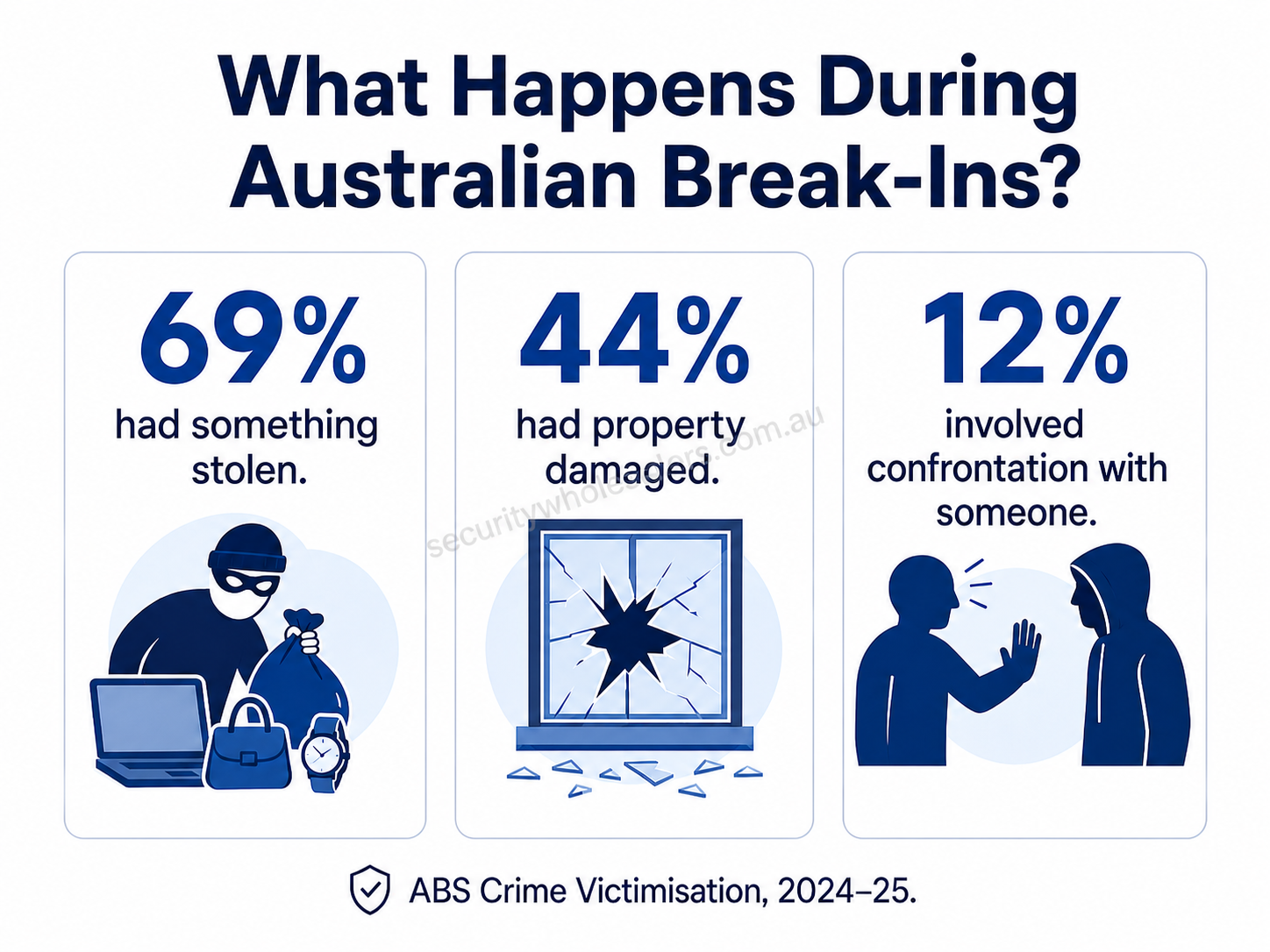
- For break-ins, 69% of households had something stolen in the most recent incident.
- In the most recent break-in, 44% of households had property damaged.
- In 12% of most recent break-in incidents, the perpetrator confronted someone.
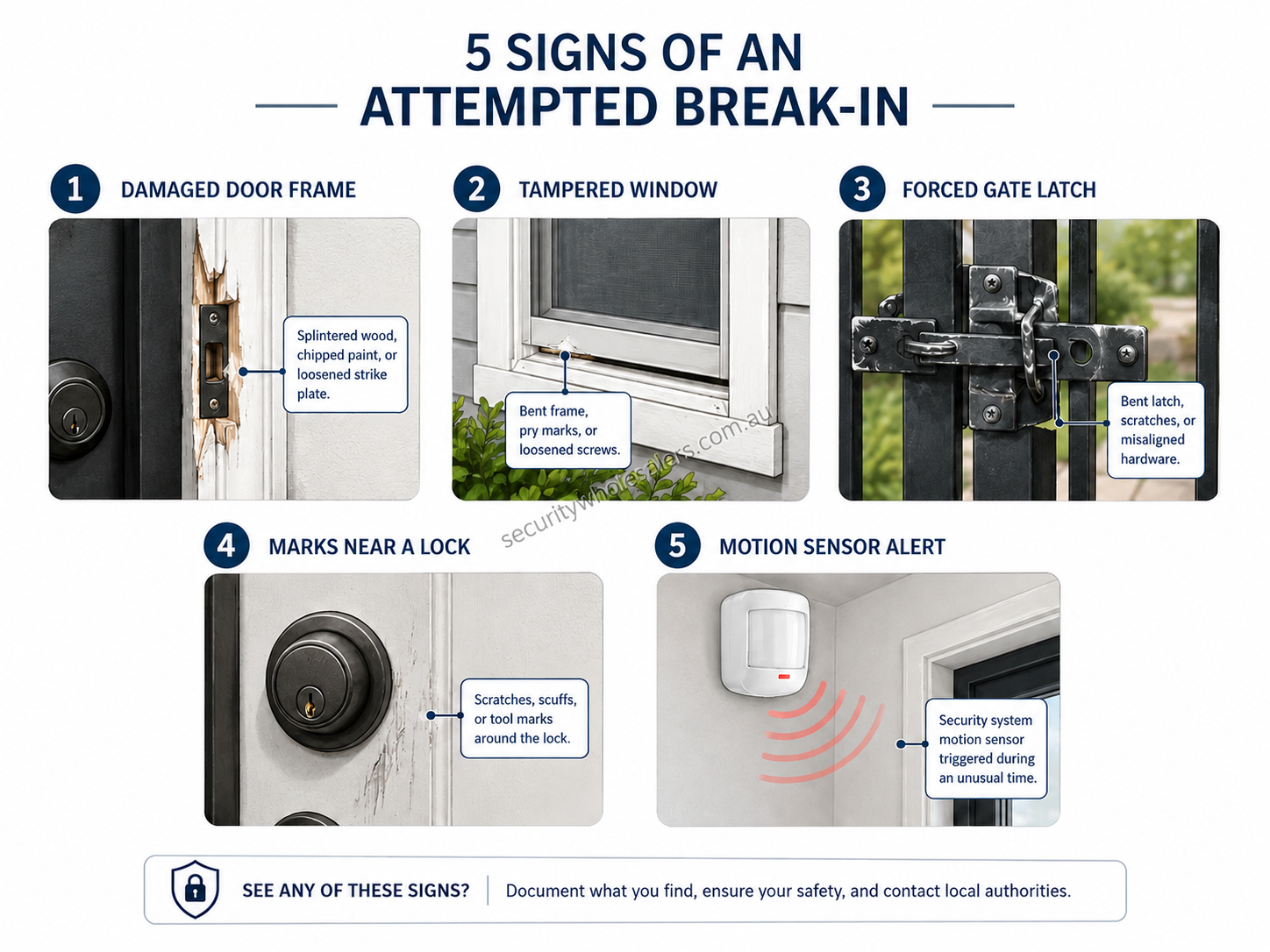
- For attempted break-ins, the most common evidence was a door or window being damaged or tampered with.
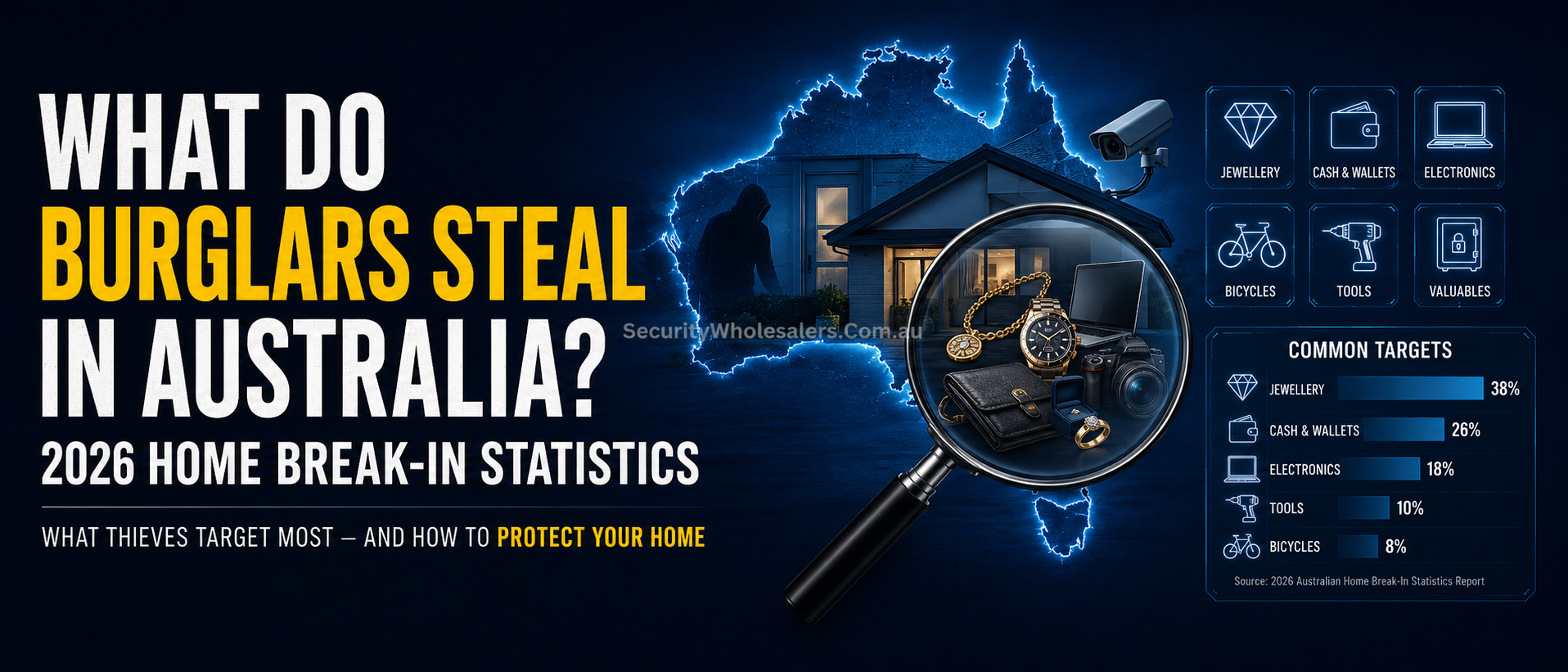
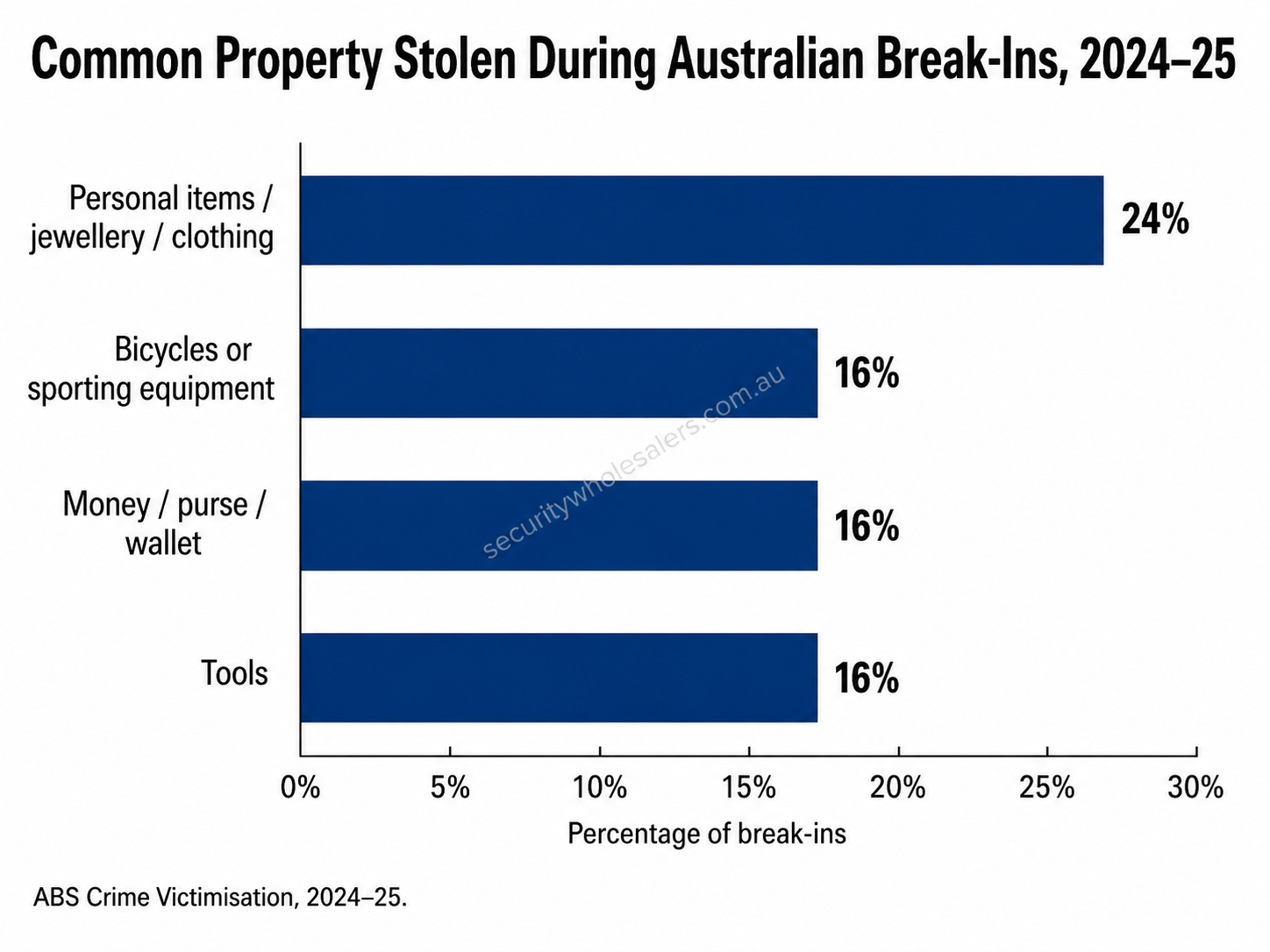
- Common items stolen in break-ins included personal items such as jewellery and clothing, bicycles or sporting equipment, money/purse/wallet and tools.
Break-in vs attempted break-in
A break-in occurs when someone unlawfully enters a home. An attempted break-in occurs when someone tries to gain entry but does not succeed.
Both matter from a security point of view.
An attempted break-in can reveal the weak points of a home before a successful burglary occurs. It may show that a door frame is vulnerable, a window can be reached from outside, a side gate is too easy to open or the backyard is poorly lit.
ABS data shows that in attempted break-ins, the most common evidence was:
- a door or window damaged or tampered with; and
- someone being seen or heard trying to break in.
This is important because doors, windows, side access points and visibility are all practical areas where homeowners can improve security.
What do burglars steal in Australia?
According to ABS Crime Victimisation data, in the most recent break-in incident, 69% of households had something stolen.
Common types of property stolen in break-ins included:
- personal items, such as jewellery and clothing;
- bicycles or sporting equipment;
- money, purse or wallet;
- tools.
This list is useful because it shows that burglars are not only looking for televisions or large electronics. Many commonly stolen items are small, portable and easy to remove quickly.
Why garages, sheds and side gates matter
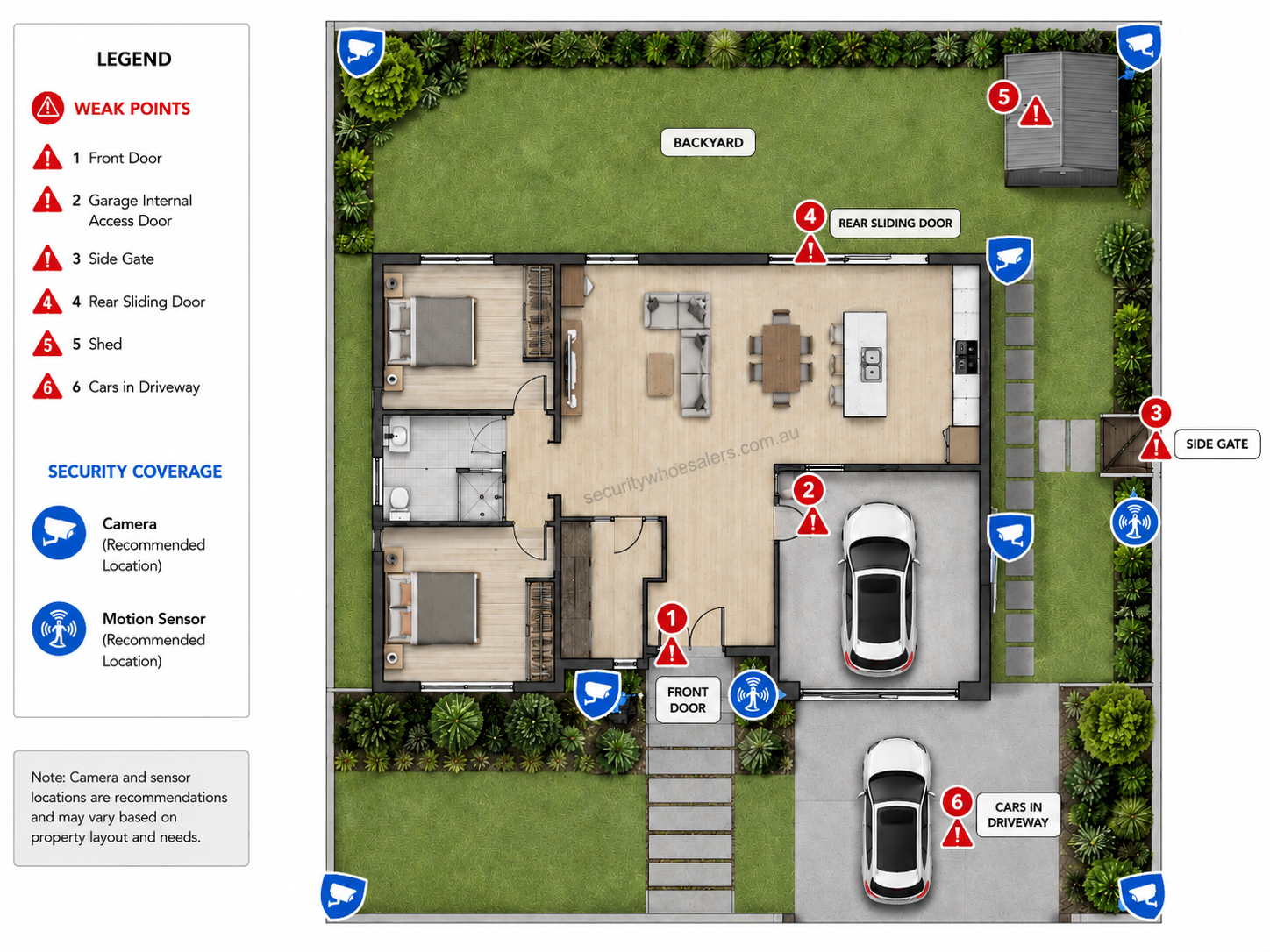
Many people focus on the front door when thinking about home security. The front door is important, but the most vulnerable parts of a home are often less obvious.
Garages, sheds, side gates, carports and backyard access points often contain items that are easy to steal and easy to resell. These areas can also give offenders a more private place to work, away from the street.
Commonly exposed areas include:
- unlocked sheds;
- garages with poor internal door security;
- side gates without locks;
- tools left in carports or utes;
- bicycles visible from the street;
- ladders that can be used to reach upper windows;
- rear sliding doors;
- dark side paths; and
- driveways without camera coverage.
The ABS break-in data also shows tools are among the commonly stolen items. This makes garage and shed security especially important for tradespeople, DIY homeowners and anyone storing valuable equipment at home.
Damage and confrontation are part of the risk
Break-ins are not only about stolen goods. The latest ABS Crime Victimisation data shows that in the most recent break-in incident:
- 44% of households had property damaged; and
- 12% had the perpetrator confront someone.
Property damage can include doors, windows, locks, gates, cabinets or other household items. Even when little is stolen, the cost and inconvenience of repairs can be significant.
The confrontation figure is also important. It is a reminder that home security planning should not encourage residents to physically confront intruders. The safer approach is to deter, detect, record and report.
Best camera positions for home break-in prevention
A home CCTV system should be designed around the actual access points of the property.
1. Front door camera
The front door is still a key location. A camera or video intercom can capture visitors, deliveries and anyone testing the entrance.
2. Driveway camera
The driveway is important because it often shows how people approach the home. It may also capture vehicles, number plates, clothing and direction of travel.
3. Side gate camera
Side gates are common blind spots. A camera or sensor covering the side path can help detect movement from the front of the property to the backyard.
4. Rear door or backyard camera
Rear sliding doors, laundry doors and alfresco areas can be vulnerable because they are less visible from the street.
5. Garage camera
If the garage contains tools, bikes, vehicles or access to the house, it should be treated as a priority area.
6. Shed or outdoor storage camera
Where valuable tools, bikes or sporting gear are stored outside the main home, a camera, lock and lighting combination may be appropriate.
Layered home security works best
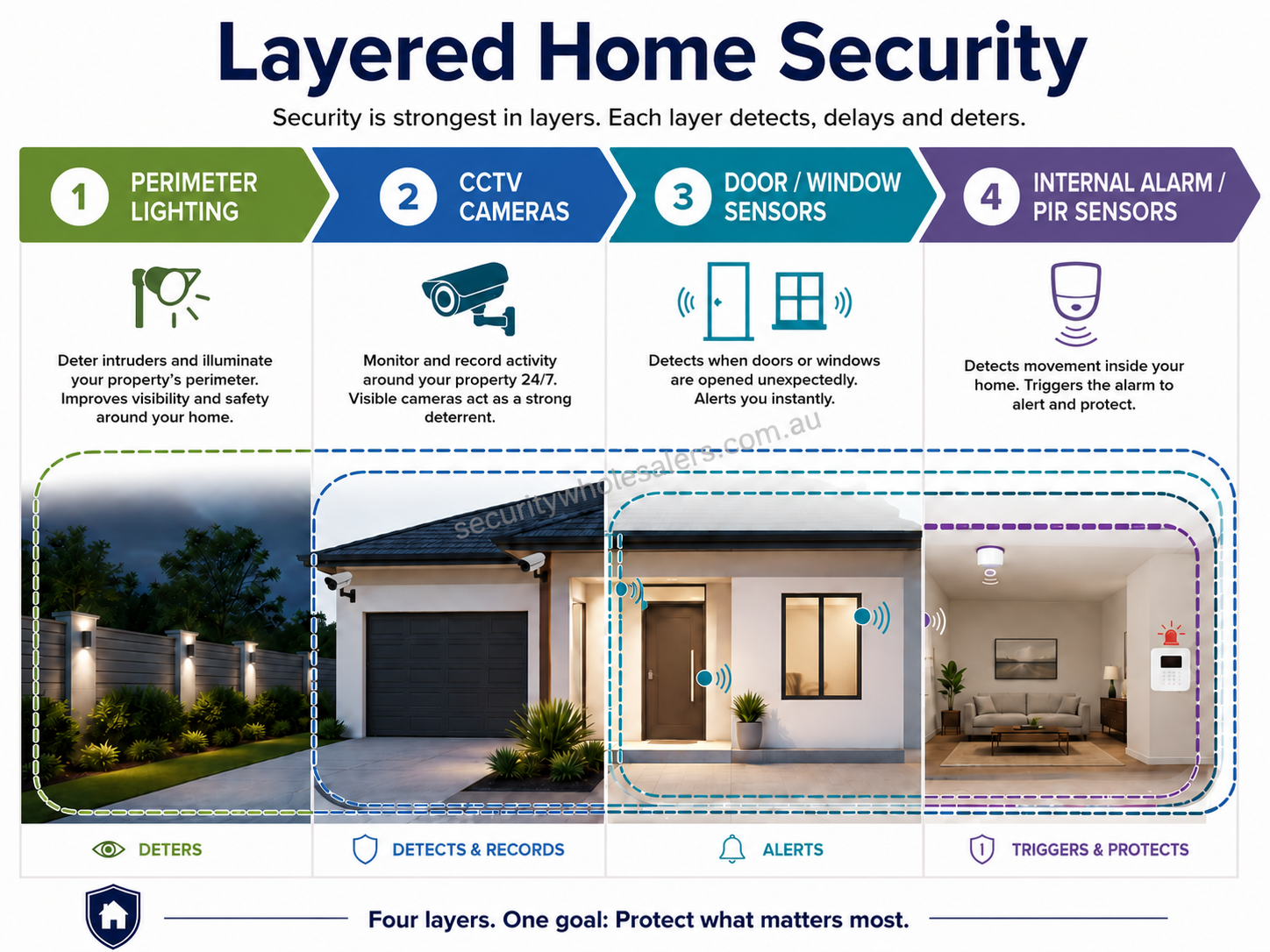
No single product can prevent every break-in. The strongest approach is layered security.
A layered home security plan may include:
- perimeter lighting to reduce dark approach areas;
- CCTV cameras to capture activity and evidence;
- door and window sensors to detect entry attempts;
- internal PIR sensors to detect movement inside;
- garage door sensors to protect vehicles and tools;
- locks and physical barriers to slow entry;
- alarm sirens to deter and alert;
- mobile app notifications for fast awareness; and
- monitoring where a response process is required.
The goal is to make the home less attractive, detect activity earlier and record useful evidence if an incident occurs.
Home security checklist
- Lock side gates, sheds and garages.
- Do not leave tools, bikes or ladders visible from the street.
- Keep car keys, wallets and garage remotes away from the front door.
- Install cameras at actual access points, not only scenic wide views.
- Use lighting around side paths, garages and rear entries.
- Check that camera footage is clear at night.
- Use door/window sensors on vulnerable entry points.
- Use a garage sensor if tools or vehicles are stored inside.
- Trim shrubs that create hiding places near doors or windows.
- Check that NVR/DVR time and date settings are correct.
- Export footage quickly after an incident.
- Report break-ins and attempted break-ins to police.
For renters and apartment residents
Renters and apartment residents may not be able to install a full hardwired CCTV system, but they can still reduce risk.
Practical options include:
- portable alarm sensors where permitted;
- doorbell cameras where allowed by property rules;
- better locks with landlord approval;
- not storing valuables in basement cages;
- securing bikes with high-quality locks;
- reporting poor lighting to strata or property management;
- keeping car park remotes secure; and
- encouraging strata to review common-area CCTV coverage.
Important limitations of the data
The ABS Crime Victimisation survey measures selected personal and household crimes experienced in the 12 months prior to interview. It is different from police-recorded crime data. Some incidents may be included in survey data even if they were not reported to police.
The survey does not represent every possible crime type. For household crimes, it covers break-in, attempted break-in, motor vehicle theft, theft from a motor vehicle, malicious property damage and other theft.
Because different data sources measure different things, crime statistics should be used carefully and with context.
Conclusion
Australian break-in data shows that burglars often target portable, practical and easy-to-remove items: jewellery, clothing, bikes, sporting equipment, wallets and tools.
The weak points are often the places homeowners overlook: garages, sheds, side gates, driveways and rear access points.
A good home security plan should not rely on one camera at the front door. It should combine useful camera placement, lighting, sensors, locks, alarms and simple habits that reduce opportunity.
The aim is not to make a home look like a fortress. The aim is to make it harder to enter, easier to detect suspicious activity and easier to provide useful evidence if something happens.
References
- Australian Bureau of Statistics – Crime Victimisation, 2024–25
- Australian Bureau of Statistics – Crime Victimisation Methodology, 2024–25
- Australian Bureau of Statistics – Recorded Crime: Victims, 2024
- Australian Institute of Criminology – Burglary research
- NSW BOCSAR – Crime and Policing Statistics Dashboard