

















Commercial
Storage Facility CCTV for Gates, Corridors, Access Control, and After-Hours Risk
Supporting Guide
If you are still deciding what the overall system should look like, start with Best Self Storage CCTV System in Australia for the camera-count and recorder path first, then come back to this page for the detail around gates and corridor control points.
The gate and office point usually create the first review trail
If the facility cannot show who approached the gate, who interacted with the office or intercom, and when the site was entered, later review becomes much harder.
Corridor intersections deserve more than leftover coverage
Long corridors and junctions often create the internal movement story in storage facilities, which is why they usually deserve more deliberate coverage than a generic wide overview.
Access control and CCTV work best when planned together
The site gets more value when the gate or corridor control logic lines up with the cameras that explain how that access point was used, rather than treating the two systems as unrelated.
Relevant SecurityWholesalers Product Areas
Storage-facility CCTV usually needs stable gate and corridor coverage, better access-control coordination, and dependable recorder and after-hours planning.
- Hikvision CCTV cameras - A practical starting point for gate, office, and corridor coverage.
- HiLook CCTV cameras - A cost-effective Hikvision-backed option for reliable fixed-lens coverage where the site does not need motorised zoom cameras on every view.
- Dahua CCTV cameras - A useful commercial alternative for mixed internal and external storage coverage.
- Access control - Often relevant where the facility wants stronger coordination between entry and CCTV.
- Intercom systems - Helpful where the gate or office point controls access.
- NVRs - Important for retention and secure incident review.
Australian Source References
Frequently Asked Questions
-
What area usually matters most on a storage-facility CCTV job?
In many facilities it is the gate or office-intercom sequence, because that is where the clearest access story begins.
-
Do corridors need dedicated cameras?
Often yes, especially at intersections and control points where internal movement is most likely to be reviewed later.
-
Should access control be considered with the CCTV plan?
Yes. The two systems usually make more sense when the cameras and entry controls are planned together.
-
Where do deterrence cameras fit?
Mostly after hours at gates, side entries, and other exposed external approaches where visible warning may discourage intrusion.
-
Should access or intercom events be paired with CCTV footage?
Usually yes. Event logs or call activity are far more useful when the site can also review what happened visually at the door, gate, or entry path.
-
How should lost tags, cards, or mobile credentials be handled?
The site should have a clear process for revoking them quickly, updating records cleanly, and checking whether any old access path is still active after the user changes.
Real quote scenarios
| Scenario | Typical quote shape | Why this design works |
|---|---|---|
| Small self-storage site | 8 to 12 cameras, gate view, office, key corridor intersections and after-hours entry review. | Focuses on access and movement rather than trying to watch every unit door equally. |
| Medium facility with keypad gate | 16 to 24 cameras, gate close-up and overview, corridor intersections, office, loading and access-control event alignment. | Footage becomes more useful when gate/access events line up with cameras. |
| Large multi-building facility | 32+ cameras, multiple PoE zones, gate/access integration, after-hours deterrence points and manager playback process. | At this size, recorder layout and review workflow matter as much as camera count. |
Authority upgrade: make the page quote-ready
For this topic to move from general advice to a strong buying guide, the buyer needs to know what to specify, what to avoid and how the installer should prove the result at handover. For Storage Facility CCTV for Gates, Corridors, Access Control, and After-Hours Risk, apply this specifically at vehicle gate and keypad approach; prove recording resilience during commissioning and record the responsible owner.
| Specify | Why it matters |
|---|---|
| Exact review event | Camera placement should answer a named incident question, not just show a broad area. |
| Camera type and lens expectation | Fixed, motorised, PTZ, deterrence and ANPR cameras solve different problems. |
| Lighting and after-hours conditions | Many systems look acceptable by day and fail when the real incident occurs at night. |
| Handover evidence | Test clips, user permissions and playback workflow prove the system is usable. |
Product paths to compare
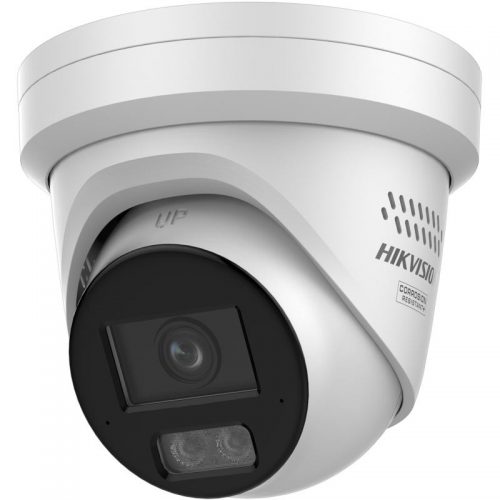
Hikvision fixed and specialist cameras
Use as a broad comparison path for fixed, low-light, deterrence, PTZ, ANPR and NVR-based systems.
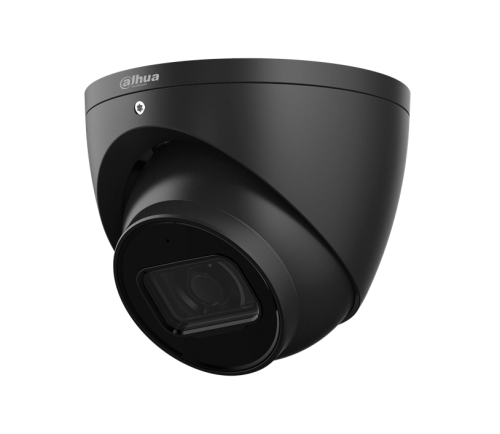
Dahua commercial CCTV
Compare when value, WizSense/WizColor, TiOC deterrence or Dahua recorder compatibility matter.
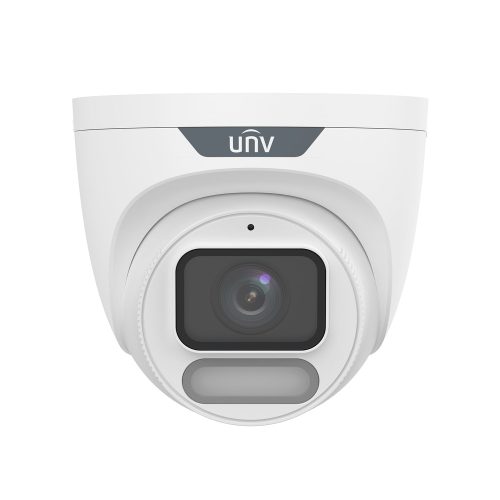
Uniview CCTV
Compare for practical commercial IP CCTV with OwlView, Tri-Guard and straightforward NVR paths.
Handover checklist
- Confirm the view answers the intended incident question.
- Test playback and export with the person who will use the system.
- Document user permissions, retention and known limitations.
- Review night footage or after-hours behaviour before sign-off.
Quote-ready design standard
A complete specification for Storage Facility CCTV for Gates, Corridors, Access Control, and After-Hours Risk
Storage Facility CCTV for Gates, Corridors, Access Control, and After-Hours Risk should produce a verifiable operating result, not merely a list of devices. For self-storage facility CCTV, the project team is the facility operator, access-control provider, installer and authorised incident reviewers. They should agree what must happen during a normal event, who acts when an alert or recording is available, and what the fallback is when power, internet, a mobile phone or the first responder is unavailable.
For Storage Facility CCTV for Gates, Corridors, Access Control, and After-Hours Risk, the central design priority is recording resilience. In practical terms, calculate retention from actual bitrate and activity, leave channel headroom, isolate the camera network and protect critical equipment with a UPS. This avoids the common purchasing error of selecting equipment first and discovering after installation that the important face, plate, doorway, button position, responder or recording period was never properly covered.
For Storage Facility CCTV for Gates, Corridors, Access Control, and After-Hours Risk, document constraints involving long corridors, repeated doors, tailgating, low staffing, gate-event correlation, night identification and tenant privacy. The installer can then check product compatibility, cable or radio performance, power and network capacity, mounting, accounts and commissioning. Product pages describe capabilities; the site design and witnessed tests prove whether those capabilities solve this particular requirement.
Zone-by-zone outcome schedule
| Priority zone or position | Required outcome | Acceptance evidence |
|---|---|---|
| Vehicle Gate And Keypad Approach | recognise the person, event or request | recording resilience |
| Office And Customer Entry | receive an actionable alert with the correct zone | day/night or real-user performance |
| Internal Corridor Intersection | retain usable context before and after the event | privacy and authorised access |
| Loading And Lift Area | operate without an unsafe reach or blind spot | communications and power resilience |
| Perimeter And After-Hours Approach | recover predictably after power or communications failure | documented response ownership |
For Storage Facility CCTV for Gates, Corridors, Access Control, and After-Hours Risk, mark these zones on a floor plan or photographs and number them consistently. The same names should appear in the quotation, device or camera labels, app, recorder or alarm zones, test sheet and incident procedure. Clear naming turns later references such as "check camera 4" or "button 2" into instructions an end user can actually follow.
Reference connection and response flow
For Storage Facility CCTV for Gates, Corridors, Access Control, and After-Hours Risk, this is a functional reference, not a universal terminal diagram. Confirm exact ports, cable type, PoE budget, alarm input behaviour, radio range, battery type, firmware and compatible accessories against the selected model documentation. Fixed data cabling should be specified and installed for the building conditions; mains, fire, egress and regulated work belong with appropriately licensed trades.
Cable, connector and resistor schedule
| Connection | What to specify or buy | Critical limit or check |
|---|---|---|
| IP camera data and PoE | Cat6 solid-copper U/UTP, normally 23 or 24 AWG, terminated to the applicable cabling standard. | Keep the complete Ethernet channel within 100 m. Do not buy copper-clad aluminium (CCA) cable. Confirm camera PoE class and the switch or NVR PoE budget. |
| Outdoor camera run | UV-stabilised outdoor Cat6 in a suitable pathway; use correctly rated glands, junction boxes and surge strategy. | Ordinary indoor cable is not an exposed-outdoor product. Conduit does not automatically make every cable suitable for water or underground conditions. |
| Between buildings or beyond copper distance | Fibre with suitable media equipment is the preferred backbone where distance, lightning potential or electrical separation makes copper unsuitable. | Do not bridge separate buildings with a long exposed copper data cable simply because a link light appears during installation. |
| Recorder to local screen | HDMI is the normal first choice; VGA can be used where both recorder and display provide it. Check resolution and practical cable length. | This display lead is separate from camera Cat6. A remote screen may need an approved extender rather than an extra-long passive lead. |
| Alarm input, speaker or local low-voltage power | Use the exact conductor size and type specified by the selected camera, interface or power-supply manual. | Do not call it only "security cable". Record conductor count, conductor area, polarity, maximum run and terminal purpose. |
The Storage Facility CCTV for Gates, Corridors, Access Control, and After-Hours Risk quotation should replace vague labels such as "data cable" or "security cable" with the exact cable construction, conductor count and size, environment rating, route, termination, maximum distance and endpoints. Label both ends to match the connection flow and as-installed plan.
What to put in the equipment and works schedule
| Schedule item | Information the buyer needs | Do not accept |
|---|---|---|
| Devices and accessories | Exact model, quantity, location, mounting accessory, environmental rating and compatible controller or recorder. | "Camera", "button" or "security cable" without a model, purpose and connection path. |
| Cabling and power | Cable standard and conductor count, route, maximum distance, PoE class or power supply, battery backup and who provides the outlet. | An unlabelled allowance that does not distinguish data, low-voltage power, alarm input and licensed mains work. |
| Network and accounts | Switch ports and PoE budget, internet requirement, local recording during outage, account owner, users, multifactor security and offboarding. | Installer-owned credentials or remote access that nobody in the household or organisation administers. |
| Recording or notification | Retention target or responder path, event labels, primary and backup contact, escalation timing and evidence export method. | Unmeasured claims such as "plenty of storage" or "alerts go to the app". |
| Commissioning and handover | Named acceptance tests, as-installed plan, settings backup, manuals, warranty details, maintenance interval and a user demonstration. | A live image or single button press treated as complete commissioning. |
Commissioning test an end user can witness
- Stand, sit or position the real user at each nominated zone and reproduce the normal action, arrival or incident question.
- Confirm the correct device name, alert, image or recording appears without relying on the installer to interpret an unclear label.
- Repeat the test in the most difficult expected condition: night lighting, closed doors, normal machinery, busy trade, limited reach or a responder phone on mobile data.
- Disconnect internet and then simulate the agreed power-failure test. Record what continues locally, what stops, who is notified and the available backup runtime.
- Have the primary responder unavailable and prove that the backup path works. Export one sample incident or complete one response drill.
- Record pass or fail, corrective work and retest date. Keep this sheet with the as-installed plan rather than relying on memory.
Incident walkthrough and failure fallback
For Storage Facility CCTV for Gates, Corridors, Access Control, and After-Hours Risk, use a plain-language rehearsal. An event begins at vehicle gate and keypad approach. The user or system creates an alert or recording, the controller or recorder identifies the correct zone, and the named responder checks the agreed information. If the first path is unavailable, the backup responder or local recording path takes over. The responder then follows the documented action - attend, call, deny entry, preserve footage or escalate - without asking a vulnerable person or staff member to improvise under pressure.
A failure affecting Storage Facility CCTV for Gates, Corridors, Access Control, and After-Hours Risk must also have an owner. Low battery, lost camera, storage warning, changed router, expired account, obstructed view or unanswered notification should create a maintenance action with a due date. A system that silently degrades cannot be considered complete simply because it worked on installation day.
SecurityWholesalers product paths to compare
- Hikvision CCTV - compare the current range against the written requirements on this page; confirm compatibility and availability before purchase.
- Dahua CCTV - compare the current range against the written requirements on this page; confirm compatibility and availability before purchase.
- Uniview CCTV - compare the current range against the written requirements on this page; confirm compatibility and availability before purchase.
- NVR and storage - compare the current range against the written requirements on this page; confirm compatibility and availability before purchase.
For Storage Facility CCTV for Gates, Corridors, Access Control, and After-Hours Risk, these links are comparison starting points, not a claim that every current model suits every site. Provide the schedule above when asking SecurityWholesalers to confirm the compatible panel, recorder, devices, storage, mounting and accessories. For model-specific terminals or integrations, use the current manufacturer manual and an experienced installer.
Australian safety, privacy and accessibility boundary
For Storage Facility CCTV for Gates, Corridors, Access Control, and After-Hours Risk, use CCTV for a defined security or operational purpose, limit collection and access, place signs where appropriate, and check current Australian, state or territory, workplace, tenancy, strata and sector obligations before installation.
When applying Storage Facility CCTV for Gates, Corridors, Access Control, and After-Hours Risk, do not point cameras into neighbouring private areas or use audio, biometric identification, covert recording or staff monitoring merely because a device supports it. Check the current rules and obtain site-specific advice where the use is sensitive. Never obstruct required egress or treat security equipment as a substitute for safety engineering.
Frequently asked buying questions
What should be decided before buying equipment for Storage Facility CCTV for Gates, Corridors, Access Control, and After-Hours Risk?
For Storage Facility CCTV for Gates, Corridors, Access Control, and After-Hours Risk, agree the required outcome, priority zones, users, privacy boundary, response owner and failure fallback. The decisive focus is recording resilience; equipment should follow that written brief.
How should Storage Facility CCTV for Gates, Corridors, Access Control, and After-Hours Risk be tested?
Test Storage Facility CCTV for Gates, Corridors, Access Control, and After-Hours Risk with a witnessed acceptance process: power-failure test, camera health check, time-sync check and playback from the oldest required day. Record the result, device or camera name, date and person responsible for correcting any failure.
What information should be sent with a quote request?
For Storage Facility CCTV for Gates, Corridors, Access Control, and After-Hours Risk, send a marked plan or photos, distances, construction type, internet and power details, the five priority zones, required retention or response time, and the people who need access. State any constraints involving long corridors, repeated doors, tailgating, low staffing, gate-event correlation, night identification and tenant privacy.
Can the system keep working during an outage?
For Storage Facility CCTV for Gates, Corridors, Access Control, and After-Hours Risk, only if the design includes the required backup. Confirm UPS runtime for controllers, recorder, switches and router; supervised batteries for alarm devices; local recording behaviour; and the action taken when communications fail.
Who should administer the system after handover?
For Storage Facility CCTV for Gates, Corridors, Access Control, and After-Hours Risk, name one accountable owner and at least one backup. The facility operator, access-control provider, installer and authorised incident reviewers should know who approves users, receives health alerts, tests the system, reviews incidents and removes access when circumstances change.