













Commercial
Solar CCTV Systems Australia
Central Guide
Most buyers do not need to overcomplicate it. They need to know whether the job really suits a simple solar 4G branch, whether it needs broader PTZ-style monitoring, or whether the site has already crossed into a better bridge-linked or fully powered design. This hub is built to answer that properly.
Quick answer
For most small Australian solar CCTV jobs, start with the TP-Link VIGI solar kit. If the site is less about simple deterrence and more about broader monitoring reach, step up to the Hikvision solar PTZ. If the site wants a more feature-packed deterrence PTZ path and can accept longer lead time, consider the Dahua 120W solar PTZ. If power and network are already easy, solar may not be the smartest answer at all.
Default solar recommendation ladder
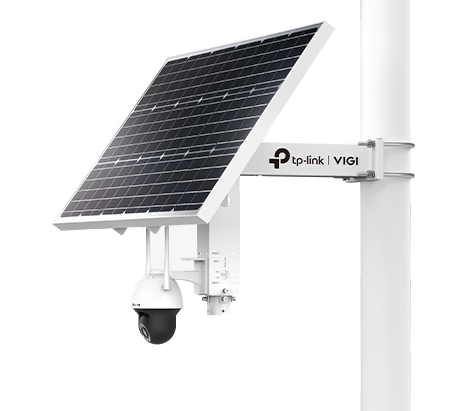
Most small jobs: VIGI solar kit
Best when the real job is one gate, one small compound, one detached asset, or one temporary site risk point. It is the cleanest first answer because it is easy to explain, easy to deploy and easy to relocate later.
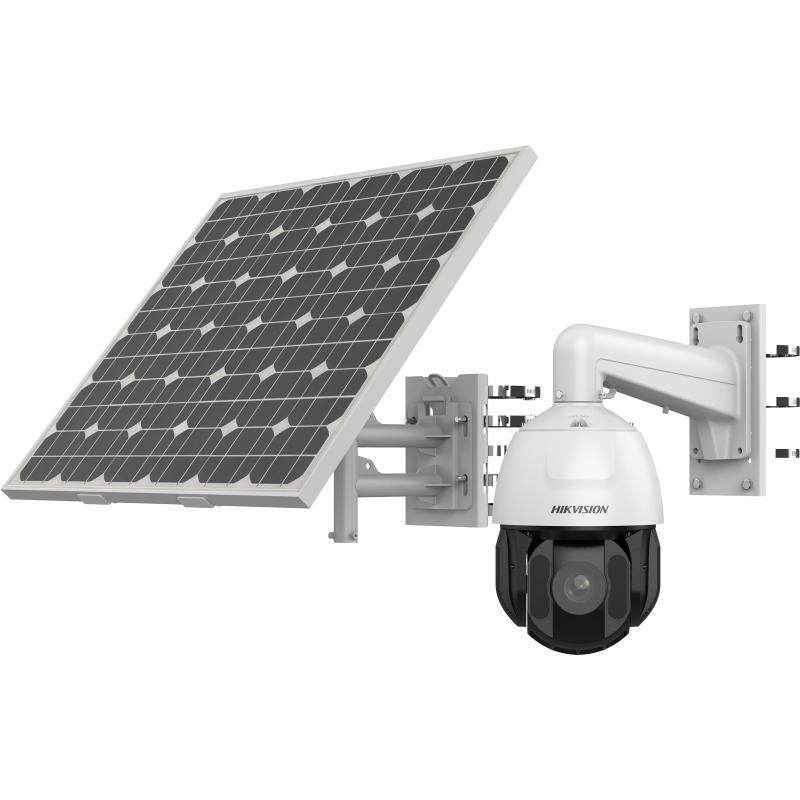
Broader monitoring: Hikvision solar PTZ
Best when one fixed small-branch camera is not enough and the site needs more live overview, more zoom reach, or more monitoring flexibility across a broader frontage, yard or remote branch.
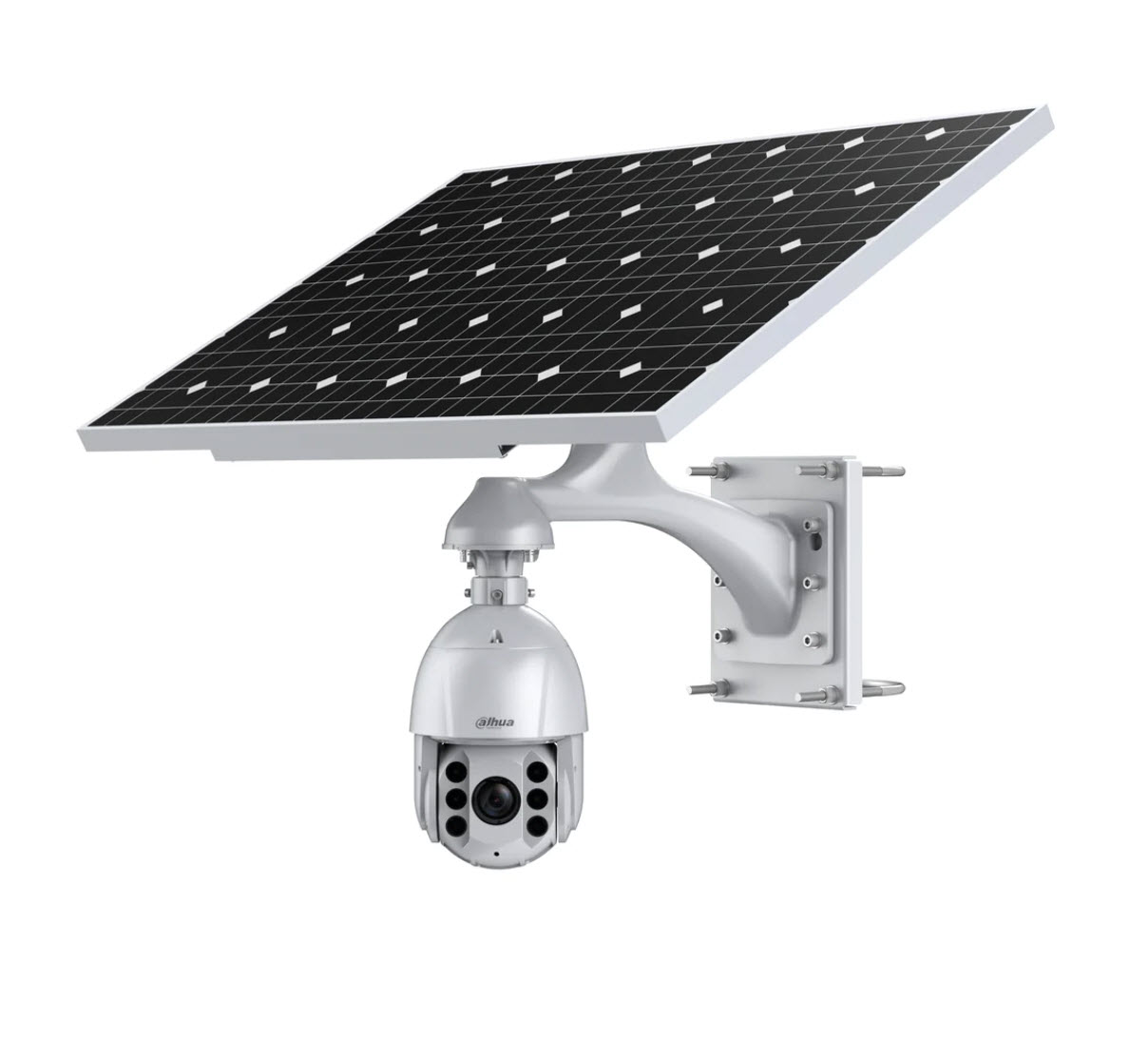
Richer deterrence path: Dahua solar PTZ
Best when the site wants a more feature-packed deterrence PTZ branch and accepts that this is usually a more planned project. As of 27 May 2026, the product listing notes longer lead times of around 7 to 10 weeks.
Where solar CCTV usually makes sense
| Use case | Usually best path | Why it works | Next guide |
|---|---|---|---|
| Construction site gate or compound | VIGI first, then Hikvision PTZ if the frontage grows | Fast deployment matters more than building a full NVR network on day one. | Solar CCTV for Construction Sites |
| Farm gate, detached shed or pump area | VIGI for single risk points, Hikvision PTZ for larger yard review | Solar avoids long trenching runs and suits isolated branches well. | Solar CCTV for Farms and Remote Sites |
| Driveway, gate or rural entry | VIGI for simple arrivals, Hikvision when the approach is much broader | These jobs often need an answer before power or cabling ever becomes practical. | Solar CCTV for Gates, Driveways, and Rural Entries |
| Remote branch with line of sight back to a building | Solar plus wireless bridge may beat 4G | Centralised review can be cleaner when a stable bridge path exists. | Solar 4G vs Wireless Bridge vs Powered CCTV |
| Site with easy power and network | Powered CCTV, not solar | Solar should solve a real installation problem, not just sound modern. | Solar 4G vs Wireless Bridge vs Powered CCTV |
How a normal solar CCTV install actually happens
1. Pick the real risk point
Do not start with the pole. Start with the risk: gate event, compound entry, shed door, fuel area, or broad review zone.
2. Choose the mount
That may be a new pole, a gate post, a container corner, a building edge or an existing structure that gives better sun and sightline.
3. Check sun and future shading
Solar jobs fail when the panel is planned around today instead of around the scaffold, shed, tree, truck or stockpile that appears later.
4. Test the network properly
4G or bridge performance should be checked at final height, not just at ground level beside the vehicle.
Solar is perfect when no power is available or cabling is too difficult
That is the heart of the buying decision. If the risk point is too far away, the trench is too expensive, the site is too temporary, or the branch may need to move later, solar is often the smarter and cleaner answer. If power and network are already easy, a normal powered CCTV design will often be simpler and better.
What usually goes wrong
- Choosing solar even though powered CCTV was easier
- Using one wide camera and expecting it to do gate, face and plate jobs at once
- Ignoring future shade from scaffolds, trees, stock or buildings
- Testing 4G at the wrong spot or wrong height
- Mounting the branch too low and making theft or tampering easy
- Skipping final playback and app handover checks
Explore This Guide Series
- Best Solar CCTV System in Australia - Main buying guide with the VIGI, Hikvision and Dahua recommendation ladder.
- Solar CCTV for Construction Sites - Best for temporary sites, compounds, gates and changing work fronts.
- Solar CCTV for Farms and Remote Sites - Best for pumps, sheds, paddocks, fuel and remote farm entries.
- Solar CCTV for Gates, Driveways, and Rural Entries - Best for long approaches, gate events and rural frontages.
- Solar CCTV Installation: Poles, Panels, and Batteries - Practical installer guidance for poles, panel direction, battery logic and handover.
- Solar 4G vs Wireless Bridge vs Powered CCTV - Use this when the real question is network path, not camera model.
Frequently asked questions
What is the best solar CCTV system in Australia?
For most small jobs, the VIGI solar kit is the cleanest first answer because it is quick to deploy and well suited to gates, compounds and detached assets. The right answer moves toward Hikvision or Dahua solar PTZ when the job is really about broader monitoring or heavier deterrence features.
When is solar CCTV better than a normal wired system?
Solar usually wins when there is no practical power, trenching is ugly or expensive, the site is temporary, or the risk point is too remote to justify a full powered build.
Should I choose solar 4G, a wireless bridge or powered CCTV?
Choose solar 4G when the branch needs to stand alone. Choose a bridge when line of sight back to the main site is good and you want more centralised review. Choose powered CCTV when power and network are already easy enough that solar is not solving a real problem.
Is solar CCTV easy to install?
It can be very straightforward when the site has a clear risk point, good sun and decent signal. Most trouble comes from poor panel position, weak network testing, or unrealistic expectations about what one camera can cover.