













Commercial
Best CCTV System for Car Yards in Australia
Return to CCTV Systems for Car Yards hub
Commercial Buying Guide
Quick answer
A small yard may only need 6 to 8 cameras. A typical used-car yard should usually plan around 8 to 16 cameras. Larger dealership or multi-zone sites can move into 16 to 32 or more cameras, especially once office entries, rear lots, gates and perimeter layers are treated properly. If the real issue is after-hours disturbance at the office, key area, workshop or side gate, a camera plus AX Pro path can be stronger than simply adding one more overview camera. If a gate is far from the building, a solar camera branch can also be a practical answer.
At-a-Glance Recommendation Table
| Site type | Typical camera count | Recommended system | Notes |
|---|---|---|---|
| Small yard | 6 to 8 cameras | 8 channel PoE NVR with office, driveway and frontage coverage | Usually enough for office entry, frontage row, gate line and key-control area. |
| Typical used-car yard | 8 to 12 cameras | 16 channel NVR with spare room for perimeter growth | Most yards outgrow a tight 8-channel plan once vehicle exits and rear lot edges are treated properly. |
| Yard with workshop or service area | 10 to 16 cameras | 16 channel NVR with stronger storage and permissions | Needs clearer separation between sales frontage, workshop access and after-hours stock risk. |
| Larger dealership | 16 to 32+ cameras | 32 channel or staged commercial design | Better for several buildings, gates, service areas and multi-lot exposure. |
8 vs 16 vs 32 Camera Car Yard CCTV Systems
8 camera system
Suitable for: smaller yards with one office, one vehicle exit and manageable after-hours exposure.
Not enough when: the yard has several rows, a service area or a vulnerable rear perimeter.
16 camera system
Suitable for: many operational car yards where stock rows, office entry, key room, driveway and perimeter all need separate treatment.
Not enough when: the site behaves more like a larger dealership campus.
32 camera system
Suitable for: larger dealerships, several lots or mixed sales and service environments.
Not enough when: the site needs a broader consultant-led or multi-building design path.
Coverage Zones
| Area | Recommended camera type | What to capture | Notes |
|---|---|---|---|
| Front display row | Bullet or varifocal | Vehicle approach and frontage movement | Context matters, but not at the expense of gate or office detail. |
| Vehicle entry or exit | Fixed or varifocal | Vehicle movement, face capture and plate context | One of the highest-value cameras on the site. |
| Office entry | Fixed turret or dome | Customer and staff entry evidence | Often more important than buyers first expect. |
| Key storage area | Fixed camera | Who approached or entered the key-control zone | Critical for theft and handover review. |
| Rear lot or perimeter | Bullet, varifocal or deterrence camera | After-hours stock movement and intrusion | Often higher risk than the frontage. |
For deeper placement logic, continue with Coverage Zones and Camera Placement and Key Control, Test Drives and Vehicle Handover.
Camera Type Recommendations
Turrets and domes usually suit office entries and customer-facing internal thresholds. Bullets often suit gates, frontage and perimeter lines. Varifocal cameras are useful on lot entries and longer rows where a standard wide lens may waste detail. PTZs can support larger yards, but should not replace fixed evidence views. Deterrence cameras make more sense after hours on isolated gates or exposed edges than on every daytime sales view.
NVR / Recorder Selection
| Camera count needed | Recommended recorder | Why |
|---|---|---|
| 1 to 8 cameras | 8 or 16 channel NVR | 16 channels usually give better growth headroom for yards. |
| 9 to 16 cameras | 16 channel NVR | Common for many operational car-yard layouts. |
| 17 to 32 cameras | 32 channel NVR | Better for larger dealerships or multi-zone sites. |
Storage and Retention
Car yards often need footage for vehicle movement, gate review, after-hours intrusion, key-control questions and customer or staff disputes. Busy external scenes can generate more data than buyers first expect, especially when the important cameras record continuously.
PoE, Cabling and Network Planning
Wired PoE is normally preferred because yards often have long outdoor runs, gates, poles and exposed perimeter edges. Plan secure cabinet space, UPS backup and protected outdoor cable paths early.
Remote entrance reality
If the entrance point is well away from the office, trenching may not be the best first move. A TP-Link VIGI solar branch can be a practical way to cover an isolated gate while the rest of the yard still runs as a wired core.
Camera only vs camera plus alarm
| Security problem | Better first answer | Why |
|---|---|---|
| Front office, key-control and handover review | Fixed cameras on a wired NVR path | The site needs dependable evidence views at the main control points all the time. |
| After-hours disturbance on office door, workshop edge or side gate | Camera plus AX Pro | An alarm event often helps more here than one more broad overview camera. |
| Rear entrance or overflow-lot gate far from the office building | Solar camera branch | The gate can be watched now without forcing a difficult cable path immediately. |
Recommended Buying Paths
Entry / small yard
Best fit: HiLook, Uniarch or TP-Link VIGI where the site is smaller and the brief is straightforward.
Standard / recommended yard
Best fit: Hikvision, Dahua or Uniview on a 16 channel NVR with proper key-control and gate coverage.
Larger dealership
Best fit: 16 to 32 camera commercial build with stronger storage, switching and perimeter planning.
Recommended Packages and Product Paths
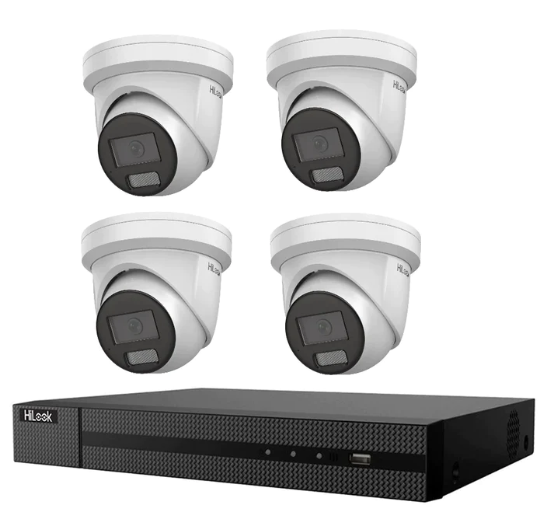
Small frontage starter
Main pick: HiLook 6MP 4 camera turret kit
Best for: a compact yard that mainly needs the office entry, one vehicle exit, frontage row and one after-hours edge watched first.
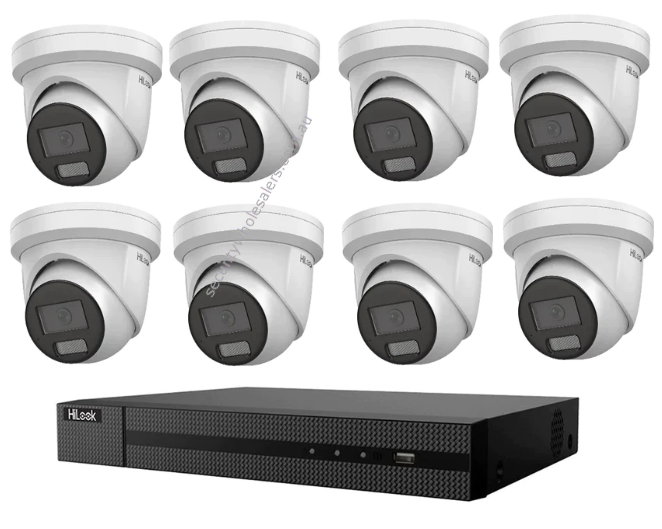
Typical used-car yard
Main picks: HiLook 8MP 8 camera turret kit or Hikvision 8MP ColorVu 3.0 hybrid 8 camera kit
How to choose: HiLook suits a value-led yard, while the Hikvision path is stronger where the gate, perimeter and after-hours warning layer matter more.
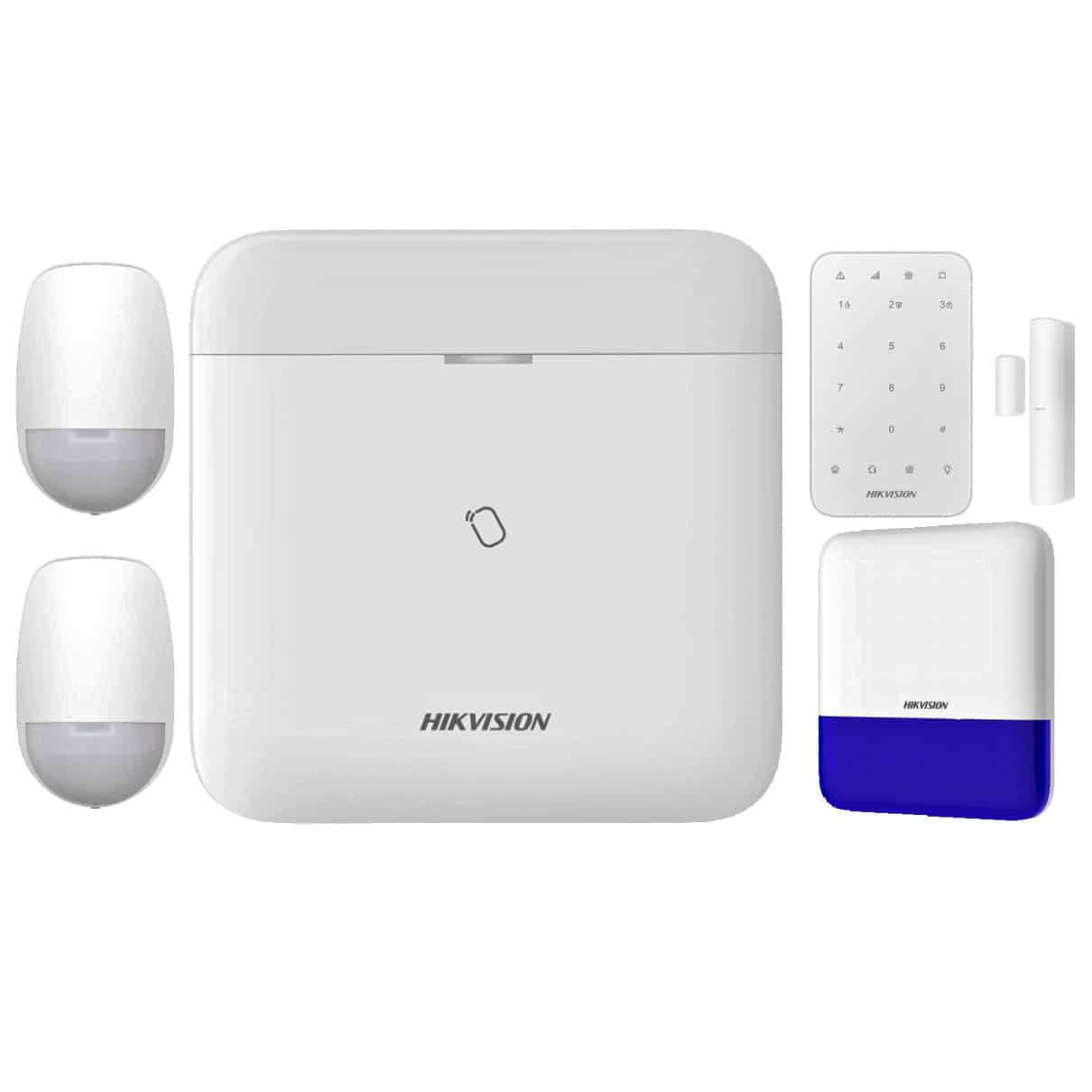
Office and key-control plus alarm
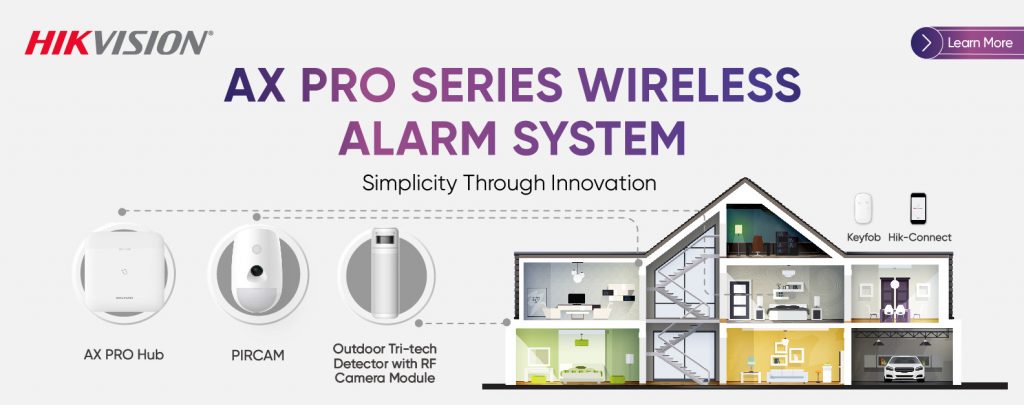
Main alarm path: Hikvision AX Pro complete alarm kit
Best for: yards where the office, key room, side gate or workshop edge needs a faster after-hours disturbance layer than cameras alone provide.
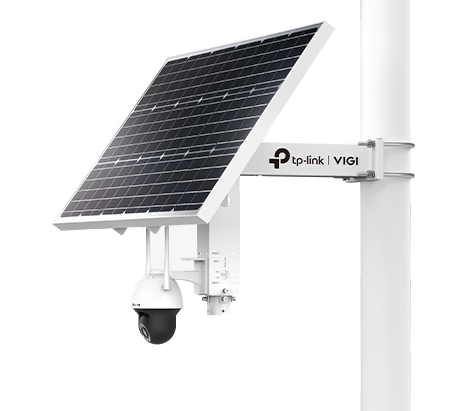
Remote entrance solar branch
Main pick: TP-Link VIGI Solar Kit SP9030
Best for: rear or side entrances that are further from the building and not worth forcing into a messy cable run on the first stage.
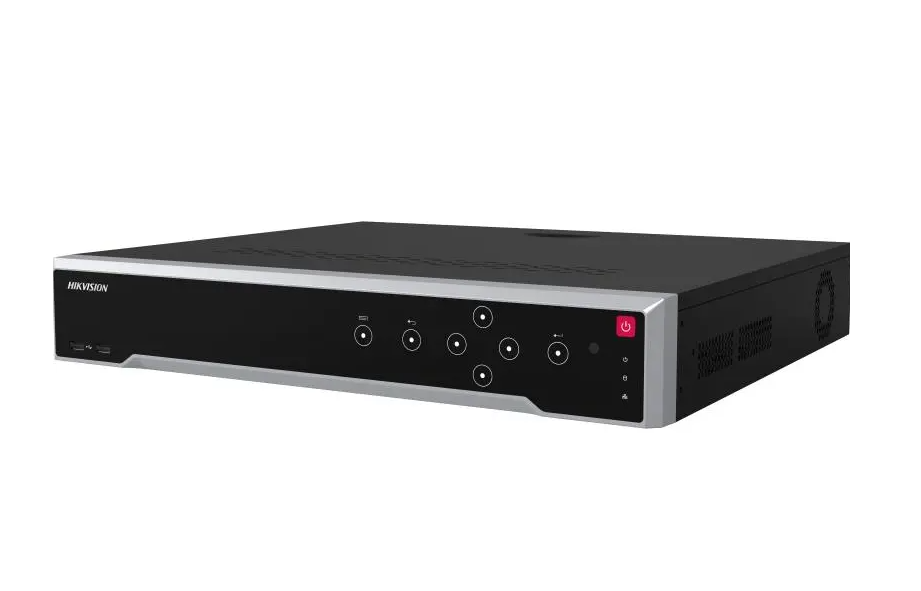
Gate and key-control build
Camera path: Hikvision ColorVu 3.0 smart hybrid turrets
Recorder path: Hikvision 16 channel Ultra Series NVR
Best for: yards that need a stronger office, key-storage, gate and rear-lot review path than a simple kit usually provides.
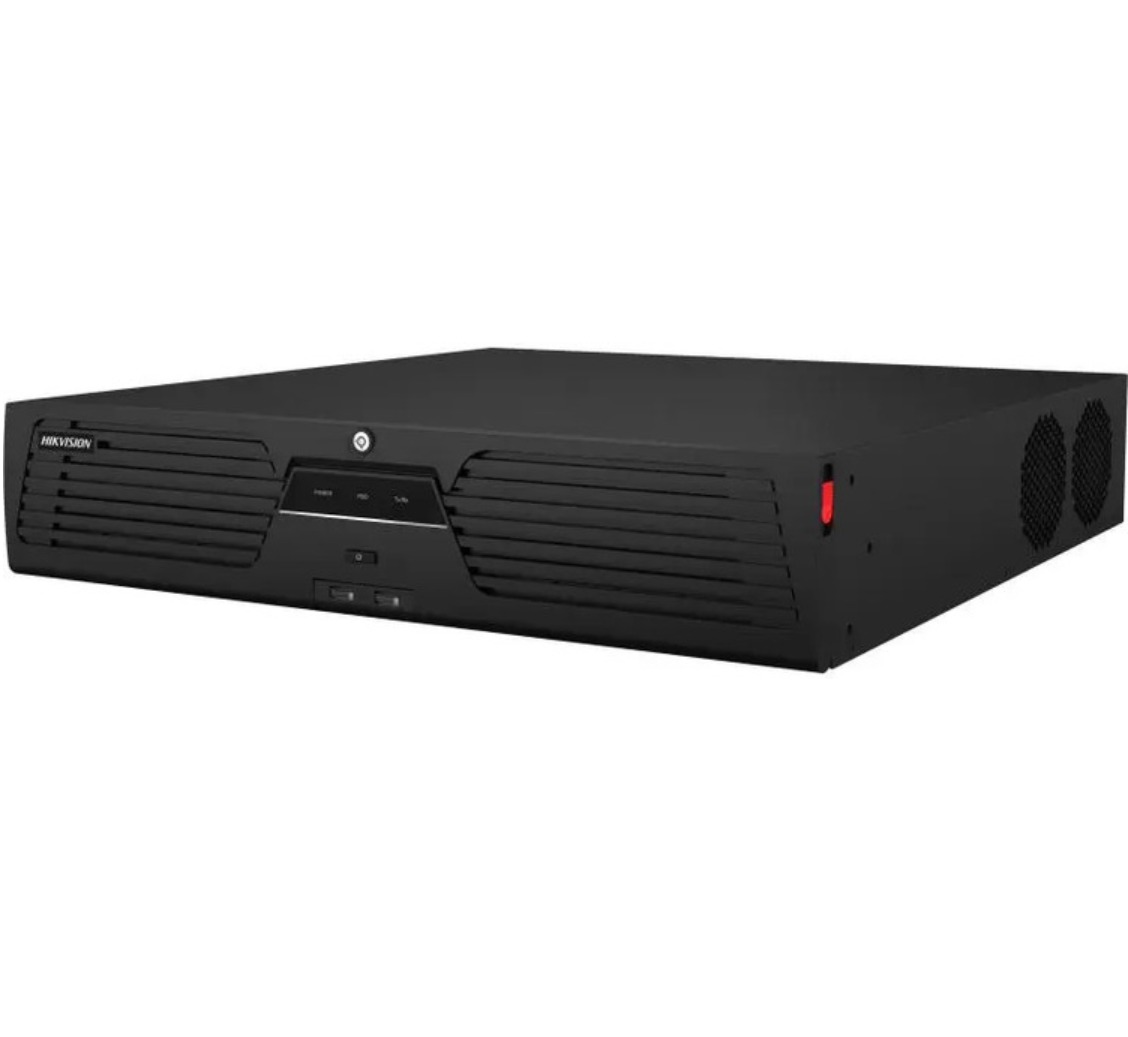
Larger dealership or multi-lot site
Recorder path: Hikvision 32 channel M-Series NVR or Hikvision 64 channel M-Series NVR
Best for: larger dealerships where several lots, gates, workshop zones and after-hours perimeter layers all need separate treatment.
For the broader after-hours security path, continue with Car Yard Security, AX Pro and Remote Entrances.
Typical Car Yard Layout Diagram
After You Buy: Useful Support Guides
IP Camera and NVR Installation Guide
Useful once the yard system has been chosen and the cabling, PoE and recorder path need to be staged properly.
Why P2P Remote Viewing Stops Working
Useful for owner handover, mobile viewing and those common remote-access faults that appear after modem or router changes.
CCTV NVR Not Recording: Complete Checklist
Useful if the system is online but recording schedules, events or storage are not behaving as expected.
How to Download CCTV Footage for Police or Insurance
Useful for dispute evidence, vehicle incidents and keeping an original export clean once footage is needed later.
Related Buying Categories
CCTV Kits
Useful for smaller yard starting points.
IP Cameras
Browse bullets, turrets, varifocals and commercial outdoor cameras.
NVRs
Choose recorder size around yard growth and retention.
Car Yard CCTV FAQs
What is the best CCTV system for a car yard?
For many car yards, the best system is a wired IP CCTV system with fixed cameras on the office entry, frontage, key-control area, driveway, gate and after-hours perimeter, supported by a correctly sized NVR and surveillance-grade hard drives.
How many cameras does a car yard need?
A small car yard may start with 6 to 8 cameras. A typical used-car yard often lands around 8 to 16, while larger dealership or multi-zone sites can move into 16 to 32 or more once stock rows, gates and after-hours perimeter layers are treated properly.
Should a car yard use PTZ cameras?
Some larger yards can justify a PTZ for broad lot overview, but PTZs should not replace fixed evidence cameras at entries, offices, key-control points and vehicle exits.
Do car yards need number plate cameras?
They can be useful at a dedicated vehicle gate or driveway where the angle, distance and speed are suitable. A standard overview camera is not automatically a reliable number-plate camera.