Product Overview
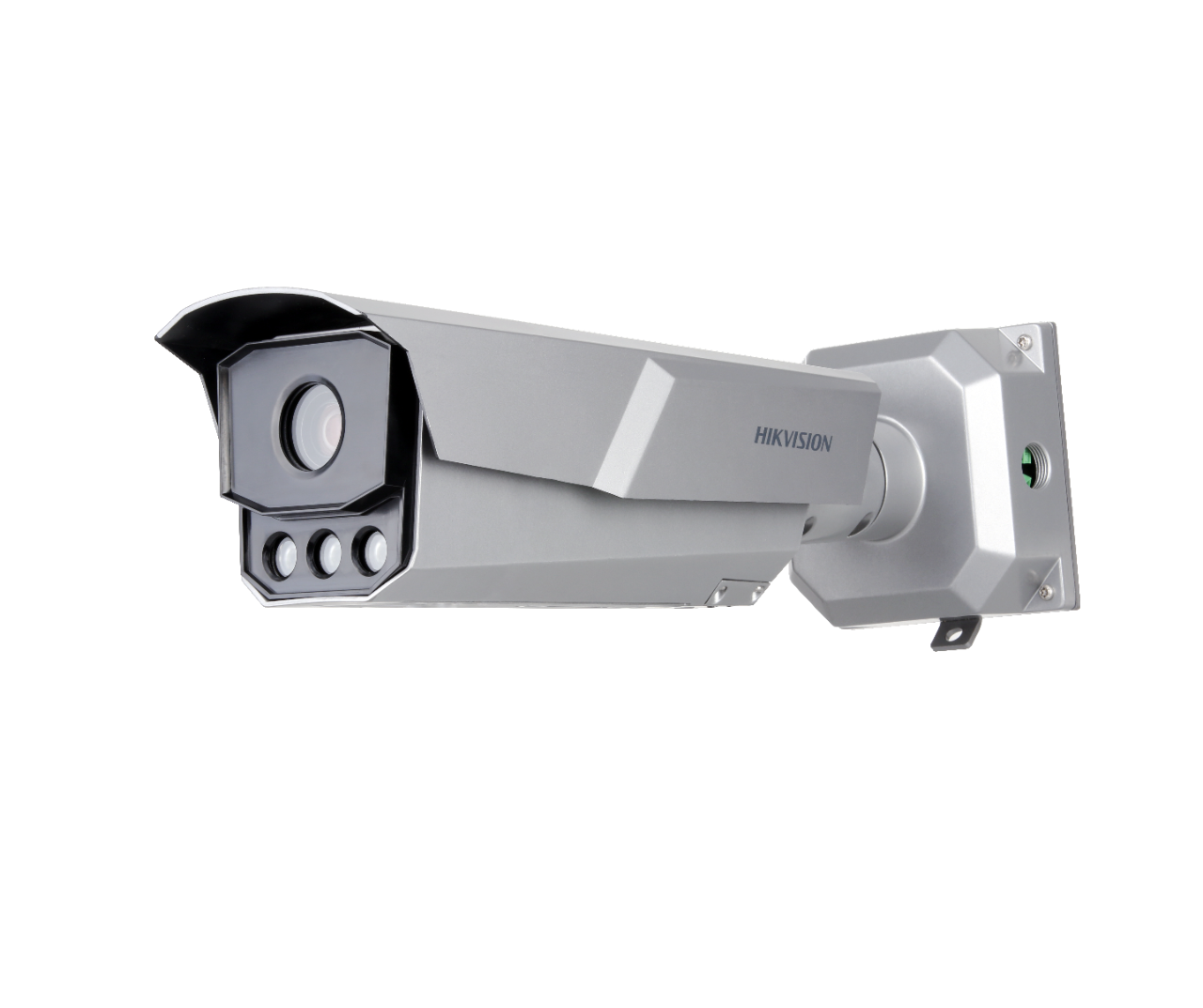
Built specifically for vehicle capture and number plate recognition, the iDS-TCM403-A and iDS-TCM403-B are 4MP ANPR bullet cameras with an on-board AI engine designed for entry and exit lane monitoring, car park access points, gated driveways, and road surveillance installations. Featuring a motorised varifocal lens in either 4-11mm or 8-32mm configuration, the unit can be precisely aimed and zoomed to frame a vehicle lane at the required distance without lens replacement. The 1/1.8″ CMOS sensor delivers 2688 x 1520 resolution with 140dB WDR, keeping plate detail readable even in direct headlight glare or high-contrast lighting. The built-in ANPR engine classifies vehicle type, identifies body colour across 9 colours, recognises 65 vehicle manufacturers, detects driving direction, captures no-plate vehicles, and supports motorcycle LPR. With IP67 and IK10 ratings, RS-485 and Wiegand interfaces, and PoE 802.3at support, this unit is suited to permanent outdoor installations integrated with access control or traffic management platforms. Note: this item carries a 5-6 week lead time.
Key Capabilities
On-Board ANPR Engine
The built-in AI algorithm processes licence plate recognition locally on the camera, with a confirmed capture rate above 99% and LPR accuracy above 98% under recommended installation and lighting conditions. This eliminates reliance on a separate ANPR server for basic recognition tasks.
Motorised Varifocal Lens – Two Variants
The A variant ships with a 4-11mm motorised zoom lens suited to shorter-range or wider-lane installations, while the B variant offers an 8-32mm lens for longer standoff distances or narrower lane framing. Motorised autofocus allows remote adjustment without physically accessing the camera housing.
140dB Wide Dynamic Range
Entry and exit lanes are among the most demanding WDR environments, with vehicle headlights, morning sun, and deep shadow occurring simultaneously. The 140dB WDR rating allows the sensor to retain plate detail in conditions that would overexpose or underexpose a standard camera.
Vehicle Classification and Colour Detection
Beyond plate reading, the ANPR engine classifies vehicles as car, van, bus, truck, or other, identifies body colour across 9 defined categories, and recognises 65 vehicle manufacturers. This data is logged alongside each capture event, supporting investigations and automated access rules.
No-Plate and Motorcycle Capture
The unit flags vehicles passing without a readable plate and supports motorcycle LPR separately, both critical for managed car parks, secured yards, or monitored access points where unregistered or two-wheeled vehicles need to be captured and logged rather than silently passed through.
Wiegand and RS-485 Interfaces
The integrated Wiegand output allows direct connection to access control panels, enabling the camera to trigger barrier gates or door controllers based on plate match events without a separate middleware device. The RS-485 interface supports additional peripheral control in traffic management configurations.
Best For
- Car Park Entry and Exit Lanes: The on-board ANPR engine, Wiegand output, and capture speed range of 5-120 km/h make this unit suitable for managed parking facilities where plates need to be read and barrier gates triggered automatically.
- Gated Driveways and Secured Perimeters: The bullet housing allows directional mounting above or beside a lane entry point, with the 8-32mm lens variant covering longer standoff distances typical of boom gate or roller door installations.
- Industrial Yard and Logistics Site Access: No-plate vehicle capture and driving direction detection help sites log all vehicle movements including trucks, vans, and unplated equipment that a standard camera would not process analytically.
- Road Traffic Monitoring Points: With confirmed support for Australian and New Zealand plate formats and a capture rate above 99%, this unit is suited to fixed road monitoring installations where sustained accuracy across varying speeds up to 120 km/h is required.
- Access Control Integration Projects: Installers building Wiegand-based access systems can connect the iDS-TCM403 directly to compatible panels, using plate recognition as the credential without additional ANPR middleware.
Why Choose the iDS-TCM403-A / B
The iDS-TCM403-A and iDS-TCM403-B carry the ANPR processing engine inside the camera body rather than offloading recognition to a server. This means each unit can deliver LPR output, vehicle classification, colour identification, and direction detection independently, reducing system complexity and cost for smaller or single-lane deployments. The 140dB WDR capability is particularly relevant for lane entry applications where headlight glare and backlit conditions are common failure points for plate capture. Choosing the correct lens variant at the time of order matters: the 4-11mm suits closer-range framing typical of undercover car parks or short-approach driveways, while the 8-32mm is suited to open-air boom gate setups or road monitoring where the camera must be mounted further from the lane. The Wiegand output allows direct integration with access control hardware without additional interface modules. Available through Security Wholesalers, this unit carries a 5-6 week lead time and should be ordered with the correct lens variant confirmed before purchase.
Buyer Decision Tips
Lens Variant Selection: The A and B in the SKU refer to the lens variant, not a feature difference. The 4-11mm (A) suits installations where the camera is mounted 3-8 metres from the lane, typical of undercover car parks and short-approach gates. The 8-32mm (B) suits open-air installations where the camera sits further back, such as a boom gate post 10-25 metres from the read point. Confirm your mounting position and lane width before ordering, as the lead time is 5-6 weeks and lens variants are not interchangeable after delivery.
Platform Compatibility: The iDS-TCM403 series is managed through iVMS-8600 or Hik-Central, both of which support ANPR event handling, plate list management, and barrier integration. If your site uses a third-party VMS, confirm ONVIF Profile S and ISAPI support with your VMS vendor before deployment, as full ANPR event data may not pass through generic ONVIF connections without SDK-level integration.
Key Features & Technical Specifications
| Image Sensor |
1/1.8″ progressive scan CMOS |
| Max. Resolution |
2688 x 1520 (4MP) |
| Frame Rate |
50 Hz: 25 fps / 60 Hz: 30 fps at max resolution |
| Lens (A Variant) |
4-11mm motorised varifocal, F1.38, auto-iris DC drive |
| Lens (B Variant) |
8-32mm motorised varifocal, F1.63-1.8, auto-iris DC drive |
| WDR |
140 dB |
| Min. Illumination |
Colour: 0.001 Lux @ F1.2, AGC ON |
| ANPR Engine |
Built-in AI; LPR accuracy >98%, capture rate >99%, driving direction recognition >98.5% |
| Capture Speed Range |
5 to 120 km/h |
| Smart Functions |
Vehicle type classification, colour identification (9 colours), no-plate vehicle capture, driving direction detection, motorcycle LPR, 65 manufacturer recognition |
| Image Enhancement |
BLC, HLC, 3D DNR |
| Video Compression |
H.265 / H.264 / MJPEG (main and sub streams) |
| On-Board Storage |
Built-in microSD/TF card, up to 128 GB |
| Interfaces |
1 x RJ45 Gigabit, 1 x RS-485, 1 x Wiegand, 1 x alarm input, 1 x alarm output, 2 relays |
| Power Supply |
12 VDC to 24 VDC ±20%, PoE 802.3at Class 4 |
| Max. Power Consumption |
12 W |
| Protection Rating |
IP67, IK10 |
| Operating Temperature |
-30 °C to +70 °C |
| Client Software |
iVMS-8600, Hik-Central |
| API |
ONVIF 2.1 (Profile S, Profile G), ISAPI, SDK |
Ideal Use Cases
Managed Car Park Entry and Exit
The Wiegand output and on-board ANPR engine allow the camera to trigger barrier gates directly on plate match, making it practical for permit-based car parks without a separate LPR server. The 4-11mm lens variant suits the shorter standoff distances typical of undercover or structured car parks.
Gated Industrial and Commercial Sites
The IP67 and IK10 ratings support permanent outdoor mounting in exposed industrial environments. Driving direction detection and no-plate vehicle capture help sites log all inbound and outbound movements, including heavy vehicles and unplated machinery that standard cameras would not analytically process.
Road and Traffic Monitoring
With a confirmed capture speed range of 5-120 km/h and LPR accuracy above 98% for Australian and New Zealand plates under recommended conditions, this unit suits fixed traffic monitoring installations on public or private roads where sustained throughput accuracy is required.
Logistics and Distribution Centre Access
Vehicle manufacturer and type classification data logged alongside each capture event supports delivery scheduling and access auditing at logistics facilities where knowing the vehicle type and identity on arrival is operationally useful beyond simple plate matching.
High-Contrast Lane Entry Environments
The 140dB WDR and minimum illumination of 0.001 Lux allow the sensor to read plates in early-morning backlit conditions, direct headlight situations, and mixed indoor/outdoor transitions, which are among the most common failure scenarios for ANPR cameras at entry and exit lanes.
Choosing the Right Model
- Choose the iDS-TCM403-A if: Your installation has a camera-to-lane distance of roughly 3-8 metres and requires a wider horizontal field of view to capture the full lane width, such as an undercover car park boom gate or a short-approach driveway entry.
- Choose the iDS-TCM403-B if: Your camera mounting position is further from the lane, typically 10 metres or beyond, and you need the 8-32mm zoom range to frame the plate zone tightly at that distance, such as an open-air boom gate post or a roadside monitoring point.
- Choose a different product type if: You need panoramic or multi-lane coverage simultaneously, as this unit is a single fixed-direction bullet camera optimised for one lane per unit. Multi-lane sites require one unit per lane or a dedicated multi-sensor ANPR solution.
- Choose a different product type if: Your VMS does not support iVMS-8600, Hik-Central, ISAPI, or SDK integration and you need full ANPR event data passed through to a third-party platform, as generic ONVIF connections may not carry complete LPR event metadata.
FAQs
- What is the difference between the iDS-TCM403-A and iDS-TCM403-B?
The A variant is fitted with a 4-11mm motorised varifocal lens, while the B variant uses an 8-32mm motorised varifocal lens. Both share the same 4MP sensor, ANPR engine, IP67/IK10 rating, and interface set. The lens variant determines the suitable camera-to-lane distance for your installation. These variants are not interchangeable after delivery, so confirm your mounting geometry before ordering.
- Does the camera need a separate ANPR server to perform licence plate recognition?
No. The ANPR engine runs on-board inside the camera. Plate reading, vehicle type classification, colour identification, driving direction detection, and no-plate vehicle capture are all processed locally. A management platform such as iVMS-8600 or Hik-Central is required to receive, search, and manage the ANPR event data, but recognition itself does not depend on a server.
- What vehicle speeds can the iDS-TCM403 reliably capture?
The confirmed capture speed range is 5 to 120 km/h. The capture rate under recommended installation and lighting conditions is stated at above 99%. For sites where vehicles approach at low speed such as a car park lane, the lower end of this range is relevant. For open-road monitoring, the upper range supports typical urban and arterial road speeds.
- Can this camera connect directly to an access control panel to open a barrier gate?
Yes. The camera includes a Wiegand output interface, which is the standard signalling protocol used by most access control panels and barrier gate controllers. This allows the iDS-TCM403 to trigger a barrier on a plate match event without a separate relay module or middleware device. The unit also includes 2 onboard relays and 1 alarm output for additional control wiring.
- Which country plate formats does the ANPR engine support?
The engine supports plates from a broad list of regions including Australia, New Zealand, the United States, the United Kingdom, Germany, France, South Africa, and many others across the Asia-Pacific, Middle East, Africa, Europe, and Americas. For Australian and New Zealand deployments the format is confirmed as supported in the product data.
- Is the camera suitable for outdoor installation in direct weather exposure?
Yes. The iDS-TCM403-A/B carries an IP67 weatherproofing rating, meaning it is dust-tight and protected against temporary immersion in water. The IK10 impact rating means the housing withstands mechanical impact up to 20 joules. The operating temperature range of -30 °C to +70 °C covers Australian outdoor conditions across all climate zones. Available through Security Wholesalers, this unit is intended for permanent outdoor mounting.
- What local storage does the camera support, and can it record independently without a network recorder?
The camera supports a built-in microSD or TF card up to 128 GB. This allows local buffering of captured images and video independently of a network recorder, which is useful during network interruptions or as a backup capture store. For full event logging and ANPR database management, connection to an NVR or Hik-Central is recommended.
Additional Information