Product Overview
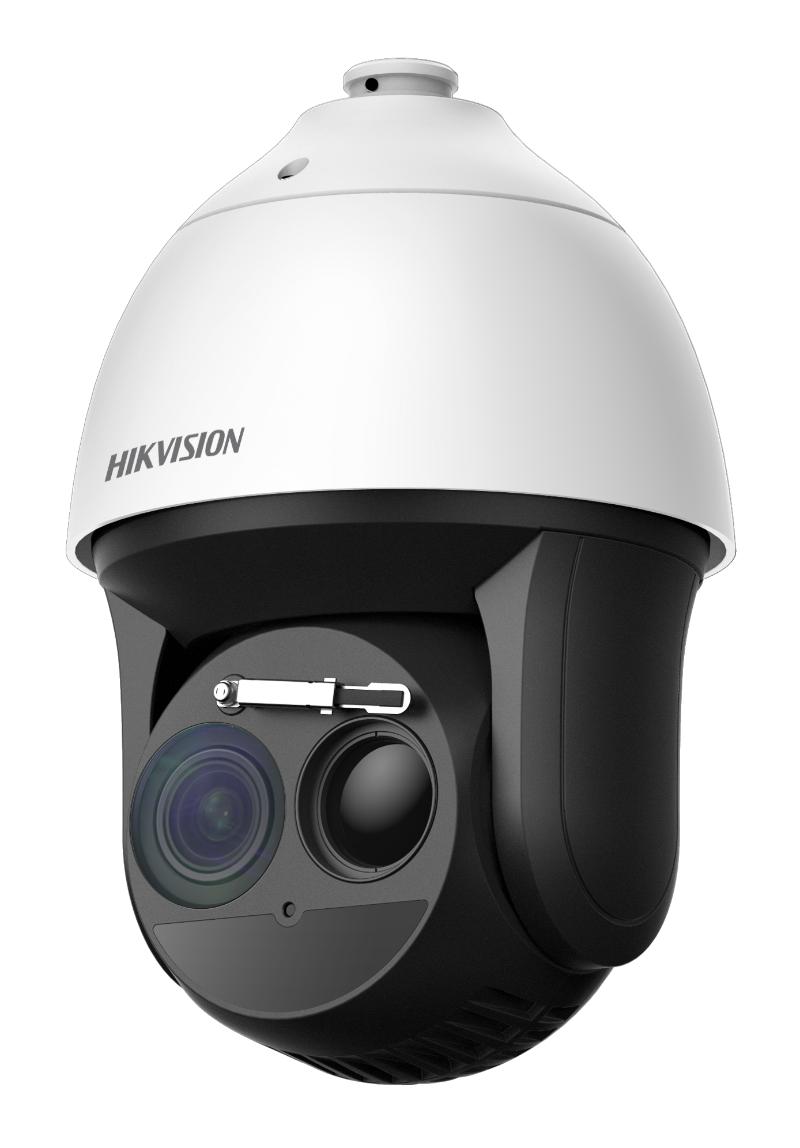
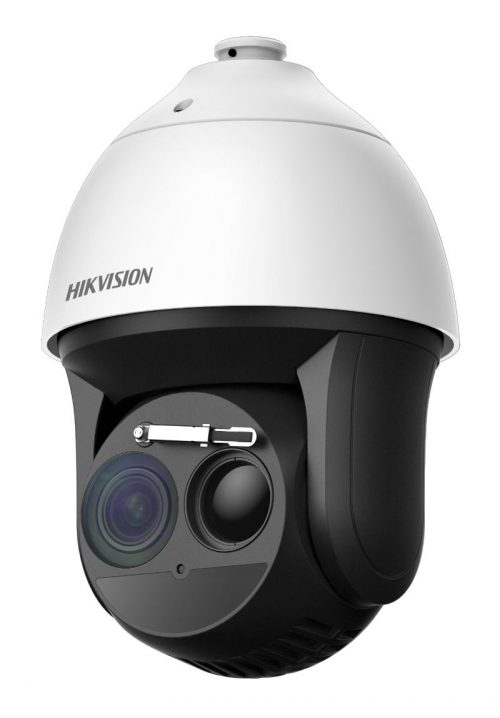
Wide-area thermal surveillance demands more than a standard optical camera, and the DS-2TD4137T-25W addresses this directly as a bi-spectrum thermographic and optical network speed dome. Combining a 384 x 288 VOx UFPA thermal detector with a 25mm thermal lens and a 2-megapixel optical channel, this speed dome delivers both heat-based detection and visible imaging from a single PTZ-mounted housing. Featuring deep learning-based perimeter protection functions including line crossing, intrusion, and region entrance and exit detection, it can trigger alerts on human or vehicle movement regardless of lighting conditions. Built with fire prevention in mind, it incorporates temperature exception alarming and a dedicated fire and smoke detection algorithm. Smart tracking modes cover panorama tracking, event tracking, and multi-scene patrol tracking, making it suited to facilities requiring continuous wide-area oversight. The thermal detector carries a 10-year guarantee, and the unit ships with a 7-8 week lead time.
Key Capabilities
Bi-Spectrum Thermal and Optical Imaging
The DS-2TD4137T-25W combines a 384 x 288 VOx UFPA thermal detector with an optical imaging channel in a single speed dome. This allows operators to correlate heat-based anomaly detection with visible video, providing context that a thermal-only camera cannot deliver.
Deep Learning Perimeter Protection
Perimeter rules include line crossing, intrusion, region entrance, and region exit, all processed through a deep learning algorithm. This allows the camera to distinguish meaningful activity across large outdoor zones and trigger alerts without requiring favourable lighting conditions.
Fire and Smoke Detection with Temperature Alarming
An onboard fire and smoke detection algorithm works alongside temperature exception alarming to flag potential fire conditions before they escalate. This is a core use case for industrial sites, recycling facilities, and fuel or chemical storage areas where early thermal anomaly detection is critical.
Smart Tracking Modes
Three tracking modes are available: panorama tracking for wide-area continuous coverage, event tracking for following detected activity, and multi-scene patrol tracking for scheduled monitoring across multiple preset positions. These reduce the need for constant manual operator control.
High-Sensitivity Thermal Detector
With a NETD of 35 mK or better at 25 degrees Celsius and F# = 1.1, the thermal detector registers very small temperature differences across a scene. The 17 μm pixel pitch and VOx UFPA sensor design support detection in challenging environmental conditions including smoke, haze, and total darkness.
Advanced Thermal Image Processing
Thermal AGC modes include linear, histogram, and self-adaptive processing, supplemented by DDE (digital detail enhancement) and 3D DNR. These settings allow installers to optimise thermal image clarity for different site conditions, from cluttered industrial environments to open perimeters.
Best For
- Industrial Perimeter Monitoring: The deep learning perimeter rules and thermal detection allow reliable activity alerts across large outdoor zones, fence lines, and access roads where lighting is inconsistent or absent.
- Fire Risk Sites: The dedicated fire and smoke detection algorithm and temperature exception alarm make this suitable for facilities such as waste processing plants, fuel storage depots, and chemical yards where thermal anomalies indicate early fire risk.
- Critical Infrastructure Protection: Power substations, water treatment facilities, and utility compounds that require continuous wide-area surveillance with automatic PTZ tracking benefit from the combined optical and thermal bi-spectrum design.
- Unmanned or Low-Staffing Environments: Smart tracking modes allow the camera to follow detected activity and patrol preset positions without constant operator input, reducing monitoring workload at sites with limited security staff.
- Smoke and Haze-Affected Environments: The thermal channel detects heat signatures through smoke and poor-visibility conditions where optical cameras lose effectiveness, making this appropriate for mining sites, agricultural facilities, and early bushfire detection zones.
Why Choose the DS-2TD4137T-25W
The DS-2TD4137T-25W is not a standard surveillance camera substitution. A conventional optical PTZ cannot detect temperature anomalies, see through smoke, or trigger fire-based alerts. This model integrates a calibrated 384 x 288 VOx UFPA thermal detector with a NETD of 35 mK alongside an optical channel, delivering both heat mapping and visual context from a single motorised speed dome unit. The deep learning perimeter protection engine processes line crossing, intrusion, and region entry and exit rules, reducing nuisance alerts compared to basic motion detection. The 10-year detector guarantee reflects the build quality expected for critical infrastructure applications. For organisations specifying thermal security systems in Australia, the DS-2TD4137T-25W is available through Security Wholesalers, with a confirmed 7-8 week lead time to factor into project scheduling.
Buyer Decision Tips
Thermal Channel EIS and Intelligent Function Conflict: The thermal channel supports electronic image stabilisation (EIS), which is useful for speed dome deployments exposed to vibration from wind, industrial machinery, or vehicle movement. However, EIS on the thermal channel is mutually exclusive with the intelligent functions (perimeter protection, fire detection, tracking). Before finalising the installation configuration, decide whether stabilisation or analytics takes priority for each scene. This is a firmware-level setting and cannot run simultaneously on the thermal channel.
Lead Time Planning for Project Scheduling: The DS-2TD4137T-25W carries a confirmed 7-8 week lead time from order placement. For new construction projects, staged rollouts, or tenders with fixed completion milestones, procurement should be initiated well ahead of installation dates. Thermal bi-spectrum speed domes at this specification level are not stocked as off-the-shelf units and are imported to order.
Key Features & Technical Specifications
| Model |
DS-2TD4137T-25W |
| Camera Type |
Bi-spectrum thermographic and optical network speed dome |
| Thermal Detector Type |
VOx UFPA |
| Thermal Resolution |
384 x 288 |
| Thermal Pixel Pitch |
17 μm |
| NETD |
35 mK (25°C, F# = 1.1) |
| Thermal Lens Focal Length |
25mm |
| Output Image Resolution |
1920 x 1080 |
| Optical Channel Resolution |
2 Megapixel |
| Thermal AGC Modes |
Linear, histogram, self-adaptive |
| Image Processing |
DDE, 3D DNR |
| Electronic Image Stabilisation (EIS) |
Supported on thermal channel (conflicted with intelligent functions) |
| Perimeter Protection Functions |
Line crossing, intrusion, region entrance, region exit (deep learning) |
| Fire and Smoke Detection |
Yes, onboard algorithm |
| Temperature Exception Alarm |
Yes |
| Smart Tracking Modes |
Panorama tracking, event tracking, multi-scene patrol tracking |
| Detector Warranty |
10 years |
| Lead Time |
7-8 weeks |
Ideal Use Cases
Industrial Facility Perimeters
Factories, refineries, and manufacturing yards with extended fence lines benefit from the deep learning line crossing and intrusion detection, which operates on thermal imaging and does not depend on lighting or weather conditions for reliable detection.
Waste and Recycling Facilities
Spontaneous combustion and smouldering fires in stockpiled waste material are a documented hazard. The temperature exception alarm and fire and smoke detection algorithm allow thermal anomalies to be flagged before visible flames appear.
Fuel and Chemical Storage Depots
Thermal monitoring of storage tanks and chemical handling areas requires the kind of heat-sensitivity the VOx UFPA detector with 35 mK NETD provides. The PTZ speed dome format allows a single unit to patrol multiple storage areas within one installation.
Power and Utility Infrastructure
Substations, transmission yards, and water treatment compounds require perimeter security that functions in total darkness and adverse weather. The thermal bi-spectrum design and deep learning rules deliver detection capability that optical cameras alone cannot provide in these conditions.
Remote or Unmanned Sites
Multi-scene patrol tracking and event-triggered smart tracking reduce the need for continuous manual operation. Remote mining operations, agricultural facilities, and unmanned substations can leverage automated PTZ behaviour tied to thermal detection events.
Early Bushfire Detection Zones
In environments where smoke obscures optical cameras early in a fire event, the thermal channel continues detecting heat sources. The fire and smoke detection algorithm and temperature exception alarming make this a viable tool for early detection at forestry interfaces or rural infrastructure.
Choosing the Right Model
- Choose this model if: Your site requires a PTZ speed dome with a confirmed thermal detector, fire and smoke detection, temperature exception alarming, and deep learning perimeter analytics from a single bi-spectrum unit with a 25mm thermal lens.
- Choose a different model if: Your application requires thermal detection at very long range beyond what a 25mm lens supports – a longer focal length thermal lens or higher-resolution thermal detector would be more appropriate for perimeters exceeding typical detection distances for this configuration.
- Choose a different model if: Your project cannot accommodate a 7-8 week lead time and requires a stocked thermal or optical PTZ unit available for immediate dispatch. A standard optical PTZ with AI perimeter rules could serve time-critical installations where thermal detection is not a firm requirement.
- Choose a different model if: The site requires simultaneous EIS and intelligent thermal analytics. These two functions are mutually exclusive on the thermal channel of this model, and a vibration-heavy installation requiring both would need a platform that supports them concurrently.
FAQs
- What does bi-spectrum mean on the DS-2TD4137T-25W?
Bi-spectrum refers to the camera having 2 independent imaging sensors in the one speed dome housing: a thermal infrared sensor and a standard optical sensor. The thermal channel detects heat differences in the scene while the optical channel captures visible video. Both streams can be used simultaneously, giving operators thermal detection data alongside standard visual footage for confirmation and identification.
- What thermal resolution does the DS-2TD4137T-25W produce?
The thermal detector operates at a native resolution of 384 x 288 pixels with a 17 μm pixel pitch using a VOx UFPA sensor. The output image is upscaled to 1920 x 1080 for display and recording. The NETD of 35 mK at 25 degrees Celsius and F# = 1.1 indicates the camera can resolve very small temperature differences within a scene.
- Can the DS-2TD4137T-25W detect fires automatically?
Yes. The camera includes a dedicated fire and smoke detection algorithm on the thermal channel, as well as a temperature exception alarm function. These are distinct from general perimeter analytics and are designed to flag heat anomalies consistent with ignition or combustion. They are intended as early warning tools and should be integrated into a broader fire safety response plan rather than used as a standalone fire suppression trigger.
- What smart tracking modes are available?
3 tracking modes are built into the unit: panorama tracking for broad scene coverage with automatic subject following, event tracking that locks onto and follows a target that has triggered a detection rule, and multi-scene patrol tracking that cycles the PTZ through a series of preset monitoring positions. These modes allow unmanned or low-staffing sites to maintain active surveillance without continuous operator control.
- Can EIS and intelligent thermal analytics run at the same time?
No. On the thermal channel of the DS-2TD4137T-25W, electronic image stabilisation and intelligent functions such as perimeter protection, fire detection, and smart tracking are mutually exclusive. Enabling EIS disables the analytics on the thermal channel. Installers should assess the installation environment before configuration – if the camera is mounted on a stable structure, analytics without EIS is typically the preferred setting.
- What perimeter detection rules does the deep learning engine support?
The deep learning perimeter protection engine supports 4 rule types: line crossing, intrusion, region entrance, and region exit. These rules operate on the thermal channel, meaning they function in total darkness, smoke, and haze where optical analytics would fail. The deep learning basis is intended to reduce false alerts caused by animals, environmental movement, or lighting changes compared to conventional motion-based detection.
- How long is the thermal detector warranty?
The VOx UFPA thermal detector in the DS-2TD4137T-25W carries a 10-year guarantee. This reflects the engineering expectation that the detector core has a longer service life than typical optical camera components, and it provides long-term assurance for critical infrastructure installations where replacement or upgrade costs are significant.
- Is the DS-2TD4137T-25W available from stock in Australia?
The DS-2TD4137T-25W is a specialised thermographic bi-spectrum speed dome and carries a confirmed 7-8 week lead time when ordered through Security Wholesalers. It is not held as stocked inventory and is procured to order. Project managers and security integrators should factor this lead time into procurement planning well before scheduled installation dates.
Product Video Samples
Additional Information