Product Overview
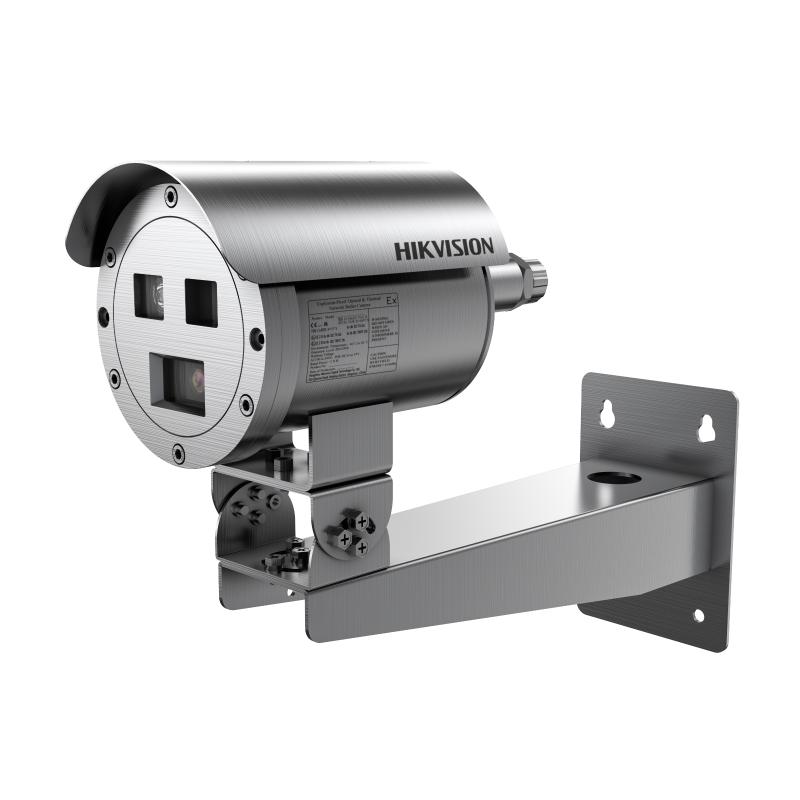
Built for hazardous industrial environments where standard cameras cannot operate safely, the DS-2TD2537T-10/Q is an explosion-proof thermographic bullet camera engineered for perimeter protection and thermal monitoring in certified dangerous zones. Featuring a 384 x 288 thermal sensor with a noise equivalent temperature difference of less than 35 mK (@25°C, F#=1.0), it delivers consistent thermal detection even in complete darkness, smoke, dust, or adverse weather conditions. Equipped with adaptive AGC, DDE, and 3D DNR image processing, along with 15 selectable colour palettes, operators can fine-tune the thermal image display to suit specific site requirements. It also integrates intelligent perimeter algorithms covering line crossing, intrusion, and region entrance and exit detection. The 316L stainless steel enclosure carries ATEX, IECEx, and NEMA 4X certifications, making it suitable for oil and gas facilities, chemical plants, and coastal industrial perimeters where corrosive atmospheres and explosive risks are present.
Key Capabilities
High-Sensitivity Thermal Sensor
The 384 x 288 thermal sensor with NETD below 35 mK (@25°C, F#=1.0) detects subtle temperature differences across a scene. This level of sensitivity enables detection of people and objects in total darkness, heavy fog, dust, and through smoke that would blind a standard optical camera.
Explosion-Proof 316L Stainless Steel Housing
The 316L stainless steel enclosure is purpose-built for hazardous industrial sites. It resists corrosion from chemicals, saltwater, and industrial process atmospheres, making it suited to refineries, LNG terminals, chemical plants, and offshore installations where a standard aluminium or plastic housing would degrade rapidly.
ATEX, IECEx, and NEMA 4X Certifications
ATEX and IECEx certifications confirm the camera is safe for operation in explosive and flammable atmospheres. The NEMA 4X rating adds verified resistance to corrosion, water ingress, and severe weather. Together these certifications satisfy the compliance requirements of regulated hazardous area installations globally.
Intelligent Perimeter Detection Algorithms
Onboard algorithms support line crossing detection, intrusion detection, and region entrance and exit monitoring. These analytics generate alerts based on thermal body signatures rather than visible light, reducing nuisance triggers caused by lighting changes, shadows, or headlight wash that commonly affect optical perimeter systems.
Advanced Thermal Image Processing
Adaptive AGC dynamically optimises gain to balance scene contrast, DDE sharpens edge and detail definition in the thermal image, and 3D DNR suppresses sensor noise for a cleaner output. The 15 selectable colour palettes let operators choose the display mode best suited to their monitoring task and environment.
10-Year Thermal Detector Warranty
The thermal detector is backed by a 10-year warranty, which is significantly longer than the standard warranty offered on most surveillance cameras. For critical infrastructure installations with high replacement costs and downtime implications, this extended coverage represents a meaningful operational and financial assurance.
Best For
- Hazardous Zone Perimeter Monitoring: ATEX and IECEx certifications allow safe deployment in Zone 1 and Zone 2 explosive atmospheres at oil and gas facilities, LNG terminals, and chemical processing plants.
- Corrosive Industrial Environments: The 316L stainless steel enclosure with NEMA 4X certification resists chemical exposure and saltwater corrosion at coastal industrial sites, offshore platforms, and water treatment facilities.
- All-Condition Thermal Perimeter Detection: The sub-35 mK NETD sensor maintains detection performance in complete darkness, fog, smoke, and dust where optical cameras lose visibility entirely.
- Critical Infrastructure Protection: Onboard line crossing, intrusion, and region entrance and exit detection algorithms suit power stations, ports, airports, and other regulated sites that require automated thermal perimeter alerting.
Why Choose the DS-2TD2537T-10/Q
The DS-2TD2537T-10/Q occupies a specialised position that general-purpose thermal cameras cannot fill. The combination of ATEX and IECEx explosion-proof certification with a 316L stainless steel enclosure means this camera can be legally and safely installed inside classified hazardous zones, not just on the periphery of them. The 384 x 288 sensor with NETD below 35 mK provides detection sensitivity that holds up in industrial conditions where heat sources, steam, smoke, and chemical vapour are present. Onboard perimeter intelligence adds automated alerting without relying on an external analytics server. The 10-year thermal detector warranty significantly reduces the long-term cost of ownership at sites where camera access for replacement or servicing is restricted or operationally costly. Available at Security Wholesalers, the DS-2TD2537T-10/Q is suited to security integrators and project managers specifying camera systems for regulated industrial and hazardous area sites where standard surveillance equipment does not meet compliance requirements.
Buyer Decision Tips
Confirm Your Hazardous Zone Classification First: ATEX and IECEx certifications cover specific zone categories. Before specifying the DS-2TD2537T-10/Q, confirm the zone classification of each installation point with your site’s hazardous area documentation or electrical engineer. The camera’s certified rating must match or exceed the zone classification at the mounting location to satisfy compliance and insurance requirements.
Thermal Detection Range and Field of View Planning: The DS-2TD2537T-10/Q has a confirmed horizontal field of view of 37.9° and a vertical field of view of 28.7°. For perimeter fence lines or long industrial approaches, calculate the detection range required against these angles before finalising camera spacing. Thermal cameras detect heat signatures rather than reflect light, so mounting height and angle relative to the expected target path significantly affects detection reliability.
Key Features & Technical Specifications
| Model |
DS-2TD2537T-10/Q |
| Camera Type |
Explosion-proof thermographic bullet camera |
| Thermal Sensor Resolution |
384 x 288 |
| NETD |
Less than 35 mK (@25°C, F#=1.0) |
| Field of View |
37.9° x 28.7° (H x V) |
| Image Processing |
Adaptive AGC, DDE, 3D DNR |
| Colour Palettes |
15 adjustable palettes |
| Perimeter Detection |
Line crossing detection, intrusion detection, region entrance detection, region exit detection |
| Enclosure Material |
316L stainless steel |
| Explosion-Proof Certifications |
ATEX, IECEx |
| Weather and Corrosion Rating |
NEMA 4X |
| Detector Warranty |
10 years |
| Camera Housing |
Bullet |
| Application |
Hazardous area monitoring, industrial perimeter security, corrosive environment surveillance |
Ideal Use Cases
Oil and Gas Facilities
ATEX and IECEx certifications allow the DS-2TD2537T-10/Q to be mounted within classified explosive atmosphere zones at refineries, LNG terminals, and wellhead facilities. The thermal sensor detects intruders and equipment anomalies without introducing an ignition risk.
Chemical Processing Plants
The 316L stainless steel enclosure resists corrosion from process chemicals and airborne industrial contaminants. Combined with NEMA 4X weather resistance, the camera maintains operational integrity in environments that would cause rapid degradation in standard aluminium-bodied cameras.
Coastal and Offshore Infrastructure
Salt-laden air and sea spray accelerate corrosion on standard camera enclosures. The 316L stainless steel body and NEMA 4X certification make the DS-2TD2537T-10/Q suited to offshore platforms, port facilities, and coastal industrial perimeters where long-term enclosure integrity is critical.
Power Generation and Utilities
Perimeter intrusion detection using line crossing and region entrance algorithms suits the large secured perimeters of power stations and substations. Thermal detection operates through darkness and adverse weather without requiring lighting infrastructure at the fence line.
Ports and Critical Transport Infrastructure
The 37.9° x 28.7° field of view and intelligent perimeter algorithms allow monitoring of controlled access zones, quayside areas, and restricted vehicle entry points. The thermal sensor maintains detection in smoke, dust, and low-light conditions common in working port environments.
Choosing the Right Model
- Choose this model if: Your installation site carries a formal hazardous zone classification requiring ATEX or IECEx certified equipment, or if the operating environment involves corrosive chemicals, saltwater exposure, or flammable atmospheres where a standard camera enclosure would pose a safety or compliance risk.
- Choose a different model if: Your site is a standard outdoor industrial or commercial perimeter without a certified hazardous zone classification. A non-explosion-proof thermal bullet camera would deliver equivalent thermal detection performance at a lower cost where the explosion-proof housing and certifications are not required by site compliance documentation.
- Choose a different model if: Your monitoring requirement is primarily visual identification rather than thermal detection. Thermal cameras detect heat signatures and are optimised for detection and perimeter alerting. If licence plate reading, facial detail, or colour-based identification is a primary requirement, an optical camera with appropriate resolution should be used alongside or instead of this unit.
FAQs
- What does the ATEX certification mean for the DS-2TD2537T-10/Q?
ATEX certification confirms the camera has been assessed and approved for safe use in environments where explosive gas or dust atmospheres may be present. For Australian installations, IECEx certification serves the same purpose under the international scheme. Both certifications are typically required by site safety and compliance documentation at facilities such as oil and gas plants, chemical processing sites, and grain handling facilities before explosion-protected equipment can be installed.
- Why is 316L stainless steel used instead of standard aluminium?
316L stainless steel offers significantly greater resistance to chloride corrosion, chemical attack, and pitting compared to standard aluminium alloys used in most camera housings. In environments with process chemicals, marine atmospheres, or regular washdown procedures using industrial cleaning agents, aluminium enclosures can corrode and fail within a few years. The 316L grade extends serviceable enclosure life considerably in these conditions.
- Can the DS-2TD2537T-10/Q see through smoke or complete darkness?
Yes. Because the camera detects thermal energy emitted by objects rather than reflected visible light, it operates effectively in total darkness with no illuminator required. Smoke, light fog, and airborne dust that block an optical camera’s view have less effect on thermal imaging, making this camera useful for monitoring industrial environments where these conditions occur regularly.
- What is the field of view of this camera?
The confirmed horizontal field of view is 37.9° and the vertical field of view is 28.7°. When planning camera placement along a perimeter fence or across an open industrial area, these angles should be used to calculate coverage gaps and ensure each camera’s detection zone overlaps sufficiently with adjacent units to avoid blind spots.
- How does the 10-year detector warranty affect total cost of ownership?
Thermal detectors are the most costly component in a thermographic camera and are not field-replaceable in the same way as a standard optical sensor. A 10-year warranty on the detector substantially reduces the financial risk of detector failure over the operational life of the installation. For sites where camera access requires scaffolding, shutdown procedures, or specialist contractor engagement, the cost avoidance from avoiding an out-of-warranty detector replacement is significant.
- What perimeter detection functions are built into the camera?
The DS-2TD2537T-10/Q includes onboard line crossing detection, intrusion detection, region entrance detection, and region exit detection. These analytics operate on the thermal image stream rather than a visible light feed, which means they continue generating alerts based on thermal signatures in conditions where optical analytics would fail due to insufficient lighting or obscured vision.
- Where can I obtain the product datasheet and technical documentation?
The official Hikvision datasheet for the DS-2TD2537T-10/Q is available via the Additional Information section on this product page. Technical documentation, certifications, and further specification detail are available through Security Wholesalers, who can also assist with project enquiries for installations requiring compliance documentation support.
Additional Information