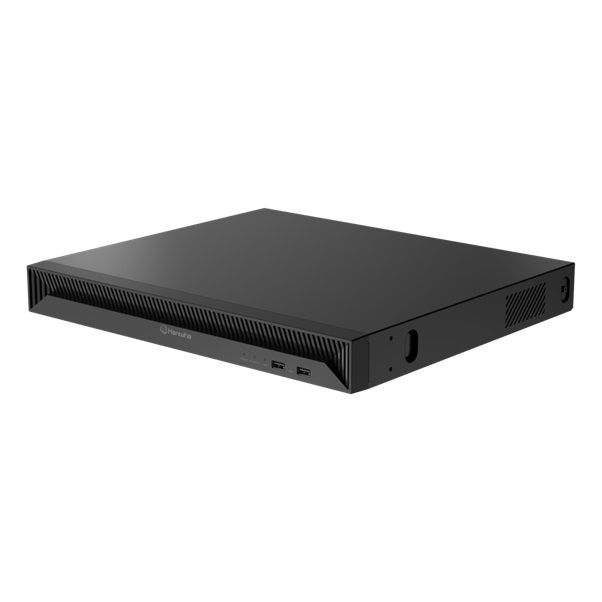
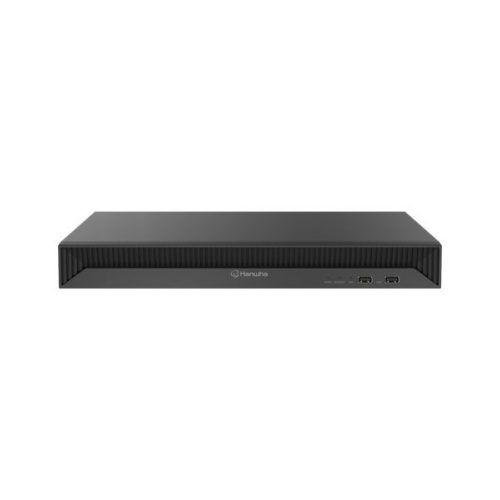
Product SKU: WRN-2010S
Product Overview
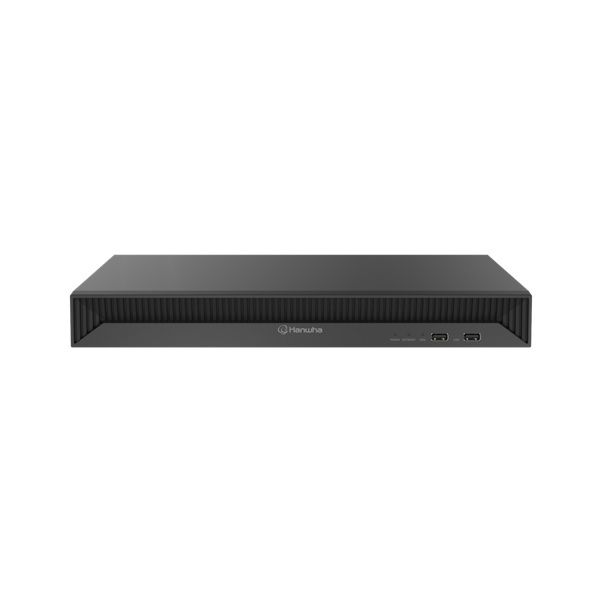
Designed around Hanwha Vision’s Wisenet WAVE platform, the WRN-2010S is a 16-channel Edge WAVE NVR built for small to medium commercial installations where a VMS-based recording experience is preferred over a conventional standalone NVR interface. Running Ubuntu Linux 22.04 LTS, it functions as a purpose-built WAVE appliance rather than a general-purpose server, simplifying deployment for integrators who want a supported, out-of-the-box WAVE recording node. The unit includes 8 built-in PoE/PoE+ camera ports with a 100W total PoE budget, allowing up to 8 cameras to be powered and connected directly without a separate switch. It supports up to 16 channels in total, with additional cameras brought in over the network. Featuring 150Mbps recording throughput, dual HDMI and DisplayPort monitor outputs, and up to 20TB of internal storage across 2 SATA HDD bays, the WRN-2010S suits retail stores, offices, warehouses, schools and professional suites that want WAVE recording without building a custom server. Please note: a 6 to 8 week lead time applies to this product.
Key Capabilities
Wisenet WAVE Edge NVR
Unlike a traditional plug-and-play NVR, the WRN-2010S is a dedicated WAVE appliance running Ubuntu Linux 22.04 LTS. This gives integrators a fully supported WAVE recording node that works with the WAVE Client, mobile app and Cloud Sync without requiring a separate server build.
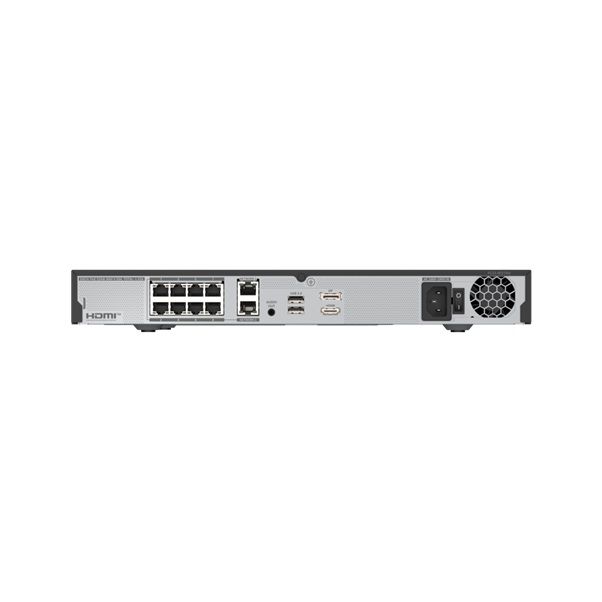
8 Built-In PoE/PoE+ Ports
The 8 onboard PoE/PoE+ ports allow direct camera connection with a 100W total power budget. On systems with 8 cameras or fewer, this removes the need for a separate PoE switch, keeping the install clean and reducing infrastructure costs at the comms cabinet level.
16-Channel Capacity
While 8 cameras can connect directly via PoE, the WRN-2010S supports up to 16 channels in total. The remaining channels are filled by adding cameras through the broader network via a separate PoE switch, subject to licensing, bandwidth and system design requirements.
Up to 20TB Local Storage
Two SATA HDD bays support up to 20TB of internal storage. This gives installers meaningful flexibility when configuring retention periods based on camera count, resolution, frame rate, compression format and whether recording is continuous or event-triggered.
AI Metadata Support
When paired with compatible Hanwha Vision AI cameras, the WRN-2010S passes AI metadata through to the WAVE environment. This allows supported object and event data to be used within WAVE-based workflows, depending on camera model and configuration.
Dual Monitor Outputs
Both HDMI and DisplayPort outputs are included for local setup and direct monitoring. This provides installation flexibility at sites where a monitor is connected to the NVR for configuration or ongoing local display, without relying solely on the WAVE Client for access.
Best For
- Wisenet WAVE Deployments: Sites that specifically require WAVE VMS recording benefit from a purpose-built WAVE appliance rather than a configured server, with pre-installed Ubuntu Linux 22.04 LTS and out-of-the-box WAVE compatibility.
- Small to Medium Commercial Installations: The 16-channel capacity and 8 PoE ports cover common retail, office, warehouse and professional suite camera counts without requiring extensive switching infrastructure.
- Integrators Reducing Infrastructure Complexity: The onboard PoE ports eliminate a separate PoE switch for systems of 8 cameras or fewer, simplifying cabinet layout and reducing component count.
- AI-Capable Camera Systems: Sites using compatible Hanwha Vision AI cameras can pass metadata through the WRN-2010S into the WAVE environment, making recorded footage more searchable and event-driven.
- Remote-Managed Sites: Cloud Sync, WAVE Client and mobile app support allow authorised users to access and manage the system remotely without complex VPN configuration, which suits multi-site operators and managed service providers.
Why Choose the WRN-2010S
The WRN-2010S occupies a specific and practical position in the Hanwha Vision recorder lineup: it is not a conventional standalone NVR, and it is not a full server build. It is a factory-configured Edge WAVE appliance that delivers 16-channel recording, 8 PoE/PoE+ ports, 150Mbps throughput and up to 20TB of local storage in a compact 1U-style chassis running Ubuntu Linux 22.04 LTS. For installers and integrators committed to the Wisenet WAVE platform, this removes the complexity of sourcing and configuring compatible server hardware while still delivering VMS-grade functionality. The dual monitor outputs (HDMI and DisplayPort), 2 Gigabit WAN ports, 8GB DDR4 RAM and AI metadata support mean it is equipped for real commercial deployments. Available through Security Wholesalers, the WRN-2010S suits projects where WAVE recording is specified and a supported, pre-built appliance is preferred over an ad hoc server approach. Note the 6 to 8 week lead time when planning procurement.
Buyer Decision Tips
PoE Port Planning: The WRN-2010S has 8 physical PoE/PoE+ ports with a combined 100W budget. Before finalising your camera selection, add up the power draw of all 8 cameras (check each camera’s PoE class) to confirm the total stays within 100W. For systems needing all 16 channels, a separate managed PoE switch will be required to bring in the additional cameras over the network. Design the network topology before installation, as the 8 onboard LAN ports are 10/100Mbps, while the 2 WAN/uplink ports are Gigabit.
WAVE Licensing and HDD Compatibility: This appliance runs Wisenet WAVE, not a traditional NVR interface. Buyers unfamiliar with WAVE should confirm licensing requirements for their channel count and intended features before purchase. Additionally, hard drives are not supplied with the unit: always verify HDD compatibility using Hanwha Vision’s approved drive list before ordering storage, as not all consumer or surveillance drives are supported. Lead time on this model is 6 to 8 weeks, so factor this into project schedules.
Key Features & Technical Specifications
| Model |
WRN-2010S / HV-WRN-2010S |
| Product Type |
Hanwha Vision Edge WAVE NVR |
| Camera Channels |
Up to 16 channels |
| PoE Ports |
8 x PoE/PoE+ RJ45 ports (10/100Mbps) |
| PoE Power Budget |
100W total |
| Recording Throughput |
Up to 150Mbps |
| Internal Storage |
Up to 20TB |
| HDD Bays |
2 x SATA data drive bays |
| OS Drive |
32GB eMMC |
| Operating System |
Ubuntu Linux 22.04 LTS |
| Processor |
Dual core |
| Memory |
8GB DDR4 |
| Network Interfaces |
8 x PoE RJ45 10/100Mbps LAN ports, 2 x RJ45 1Gbps WAN/network ports |
| Video Outputs |
1 x HDMI, 1 x DisplayPort |
| USB Ports |
2 x front USB 2.0, 2 x rear USB 3.0 |
| Audio |
Audio output port |
| Power Input |
100-240V AC |
| Power Consumption |
45W (excluding PoE load) |
| Operating Temperature |
0°C to 40°C |
| Operating Humidity |
20% to 85%, non-condensing |
| Dimensions |
370mm x 50.7mm x 320mm |
| Weight |
2.78kg |
| Construction |
Black metal and plastic housing |
| Accessories Included |
USB mouse, rack mount brackets |
Ideal Use Cases
Retail Stores
A retail fitout with up to 16 cameras across sales floor, stock room and entry points benefits from the WRN-2010S’s 8 onboard PoE ports for local cameras and 2 Gigabit uplink ports for network-connected cameras, all managed through the WAVE Client.
Commercial Offices
Office environments covering reception, corridors, car parks and entry points can consolidate recording onto the WRN-2010S with up to 20TB of local storage, keeping footage on-site while allowing authorised staff remote access via the WAVE mobile app or Cloud Sync.
Warehouses and Light Industrial
Warehouses deploying Hanwha Vision AI cameras for perimeter and loading dock coverage can pass AI metadata through the WRN-2010S into WAVE, improving footage usability for incident review and event-based recording on a 16-channel system.
Schools and Education Sites
A single WRN-2010S covers a small to medium school campus with 16 channels and local storage up to 20TB. The WAVE Client and Cloud Sync give facilities managers and off-site administrators access to footage without needing a dedicated on-site server room operator.
Medical and Professional Suites
Professional environments requiring discreet, manageable recording with local storage and remote oversight suit the WRN-2010S’s compact chassis and dual monitor outputs. The WAVE platform supports structured access control over who can view footage, appropriate for privacy-sensitive settings.
Choosing the Right Model
- Choose this model if: Your project specifies Wisenet WAVE as the VMS platform, you need up to 16 channels with a pre-configured WAVE appliance, and you want 8 built-in PoE/PoE+ ports to minimise switching infrastructure for smaller camera counts.
- Choose a different model if: You need a conventional plug-and-play NVR interface rather than a WAVE-based VMS environment. If your team is not familiar with WAVE administration, a traditional NVR with a built-in GUI may suit the installation better. If you need more than 16 channels, or require more than 8 direct PoE connections without a separate switch, a higher-channel WAVE appliance or a dedicated WAVE server configuration should be considered instead.
FAQs
- What is the difference between an Edge WAVE NVR and a standard NVR?
A standard NVR uses a proprietary graphical interface built into the hardware. The WRN-2010S is an Edge WAVE NVR, meaning it runs Hanwha Vision’s Wisenet WAVE VMS software on Ubuntu Linux 22.04 LTS. Users interact with it through the WAVE Client, mobile app or web browser rather than a traditional on-screen NVR menu. This suits integrators who want VMS-grade functionality without building a custom server.
- Can I connect all 16 cameras directly to the back of the WRN-2010S?
No. The WRN-2010S has 8 physical PoE/PoE+ ports, so up to 8 cameras can connect directly to the unit. The remaining channels (up to 16 total) must be brought in over the network, typically through a separate managed PoE switch connected to one of the 2 Gigabit WAN/network ports on the recorder.
- How do I calculate whether my cameras fit within the 100W PoE budget?
Check the PoE class of each camera you plan to connect. PoE Class 3 cameras draw up to 15.4W, PoE+ Class 4 cameras draw up to 30W. Add the maximum draw of all 8 cameras and confirm the total is within 100W. Cameras with active IR, heaters or high-resolution sensors may draw closer to their class maximum, so use confirmed spec sheet figures rather than estimates.
- Does the WRN-2010S come with hard drives installed?
No. The unit ships with 2 empty SATA HDD bays. Hard drives must be purchased separately. Before ordering, check Hanwha Vision’s HDD compatibility list to confirm the drives you plan to use are supported. The recorder’s OS runs from a 32GB eMMC drive, so the SATA bays are used exclusively for footage storage, up to 20TB total.
- What remote access options does the WRN-2010S support?
The recorder supports the Wisenet WAVE Client (desktop software), the WAVE mobile app for iOS and Android, and Cloud Sync for cloud-based connectivity. These allow authorised users to view live and recorded footage remotely, subject to correct network configuration. Cloud Sync can simplify remote access where direct network routing is not practical.
- Does AI metadata work automatically with any IP camera?
No. AI metadata support on the WRN-2010S requires compatible Hanwha Vision AI cameras that are configured to output metadata, along with the correct WAVE configuration. Not all Hanwha cameras output AI metadata, and not all metadata types will be available in every WAVE setup. Check camera compatibility and WAVE licensing before designing an AI-dependent workflow.
- Is there a lead time on the WRN-2010S and where is it available?
Yes. A lead time of 6 to 8 weeks applies to this product. It is part of the Security Wholesalers range and is suited to projects where procurement timelines can accommodate this delivery window. Factor the lead time into installation scheduling to avoid delays on commercial fitouts or staged rollouts.
Additional Information
No additional downloads available for this product.