Product SKU: SPE-1630
Product Overview
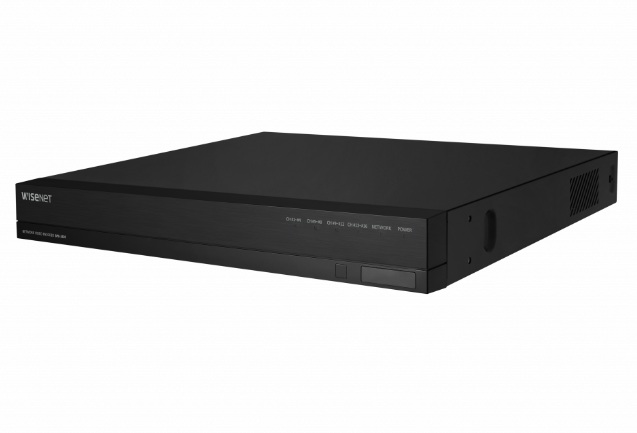
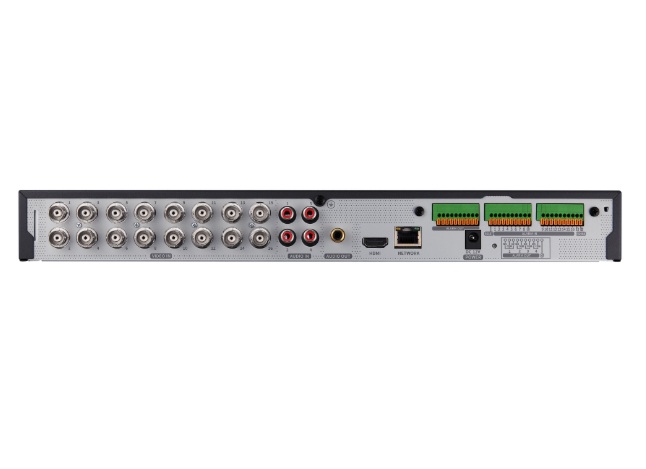
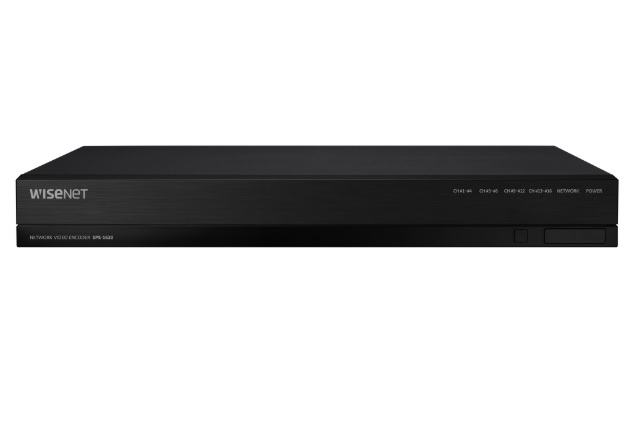
For sites carrying fully functional analogue cameras and cabling, the SPE-1630 from Hanwha Vision offers a 16-channel network video encoder path to IP-based management without the cost and disruption of a full infrastructure replacement. It accepts CVBS, AHD, CVI, and TVI analogue inputs with automatic detection, supporting camera resolutions up to 5MP, and encodes them using H.265, H.264, or MJPEG compression for efficient streaming across a network. Equipped with both RS-485 and coaxial PTZ control, the encoder also preserves the functionality of compatible analogue PTZ cameras already installed on site. A single HDMI output provides a 16-camera multiview display at 1920 x 1080 for local monitoring, while ONVIF Profile S support helps integrate the encoder with a wide range of VMS and recording platforms. Supplied with rack mount brackets, the SPE-1630 is built for structured equipment environments in commercial and institutional retrofit projects.
Key Capabilities
16-Channel Analogue-to-Network Conversion
The SPE-1630 encodes up to 16 analogue camera channels simultaneously, making it one of the higher-capacity single-unit encoder options for larger analogue retrofit and consolidation projects at commercial or institutional sites.
Multi-Standard Analogue Auto-Detection
Automatic detection of CVBS, AHD, CVI, and TVI input types removes the need to pre-configure each channel manually, simplifying deployment in mixed legacy environments where multiple analogue standards may coexist across the same installation.
Up to 5MP Camera Input Support
Compatibility with analogue cameras up to 5MP at 12fps means higher-resolution AHD and CVI cameras already installed on site can deliver noticeably better image detail than older standard-definition analogue systems allowed.
Dual PTZ Control Methods
Both RS-485 and coaxial PTZ control are supported, allowing compatible analogue PTZ cameras to remain fully operational within the upgraded network video environment without requiring replacement or additional control hardware.
HDMI Multiview Local Output
The HDMI output delivers a 16-camera grid view at 1920 x 1080, useful for local control room monitoring or on-site setup and verification without needing a separate PC or VMS workstation running during commissioning.
Extensive Alarm and Audio I/O
With 16 alarm inputs, 4 alarm outputs, 4 line audio inputs, and 1 line audio output, the SPE-1630 supports broader system integration including existing alarm panels, audio monitoring, and triggered response workflows already connected to the analogue camera infrastructure.
Best For
- Large-Scale Analogue Retrofit Projects: The 16-channel capacity suits commercial sites, schools, warehouses, and industrial facilities where a significant number of analogue cameras need to be brought into a network video management environment without full replacement.
- Mixed Analogue Standard Environments: Auto-detection of AHD, CVI, TVI, and CVBS makes the SPE-1630 a practical choice when the installed camera base includes cameras from multiple manufacturers or generations using different analogue formats.
- PTZ Camera Retention: Sites with existing analogue PTZ cameras can preserve full PTZ control through either RS-485 or coaxial interfaces, avoiding the cost of replacing functional pan-tilt-zoom hardware at the time of upgrade.
- Structured Equipment Rack Installations: Supplied rack mount brackets and a single-unit 16-channel design suit server rooms or AV equipment racks in commercial surveillance environments where consolidation and tidy infrastructure management matter.
Why Choose the SPE-1630
The SPE-1630 stands apart from lower-channel or standard-definition encoders through its combination of 16-channel capacity, up to 5MP input support, and the ability to handle mixed analogue standards on a single unit without manual channel configuration. While a basic 4-channel encoder might suit a small office partial upgrade, the SPE-1630 is built for environments where the full analogue camera footprint needs to be absorbed in one device. Dual PTZ control via both RS-485 and coaxial means PTZ cameras do not need to be decommissioned as part of the upgrade. Support for up to 3 streaming profiles per channel adds flexibility for recording, live view, and remote access workflows simultaneously. With ONVIF Profile S compliance and gigabit network connectivity, the unit integrates cleanly with supported VMS platforms. Available through Security Wholesalers, the SPE-1630 is a capable infrastructure choice for installers managing multi-camera analogue transitions at scale.
Buyer Decision Tips
Encoder vs Recorder: The SPE-1630 is a network video encoder, not a recorder. It converts and streams analogue camera video over a network but does not store footage internally. A separate NVR, DVR, or VMS server with storage is required to record video from this device. Confirm your recording solution supports ONVIF Profile S or the relevant streaming protocol before purchasing.
Frame Rate vs Resolution Trade-Off: The SPE-1630 supports 5MP inputs at 12fps, 4MP at 15fps, and 2MP at 30fps. For applications where smooth motion capture is critical, such as monitoring moving vehicles or active loading areas, plan camera resolution selection around the frame rate you actually need rather than defaulting to the highest supported resolution.
Key Features & Technical Specifications
| Device Type | 16-channel network video encoder |
| Video Inputs | 16 x BNC |
| Supported Analogue Standards | CVBS, AHD, CVI, TVI (auto-detection) |
| Maximum Input Resolution | Up to 5MP |
| Frame Rate by Resolution | 5MP @ 12fps / 4MP @ 15fps / 2MP @ 30fps |
| Video Compression | H.265, H.264, MJPEG |
| Streaming Profiles per Channel | Up to 3 |
| Video Output | 1 x HDMI, 16-camera multiview, 1920 x 1080 |
| PTZ Control | RS-485 (half-duplex) and coaxial PTZ control |
| Supported PTZ Protocols | SAMSUNG-T, PELCO-P, PELCO-D |
| Alarm Inputs / Outputs | 16 inputs / 4 outputs |
| Audio Inputs / Output | 4 x line audio in / 1 x line audio out |
| Network Interface | 1 x RJ-45 10/100/1000 Base-T |
| Interoperability | ONVIF Profile S |
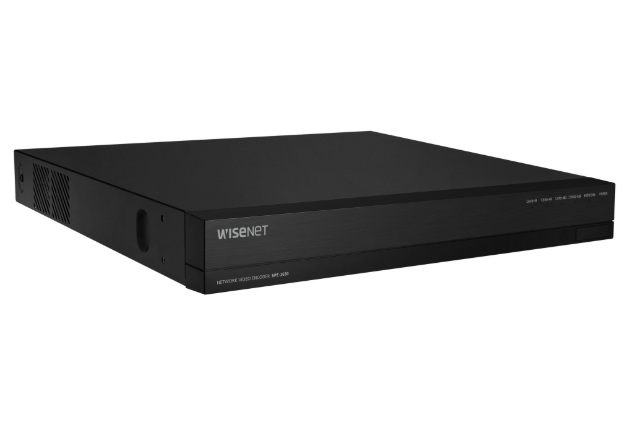
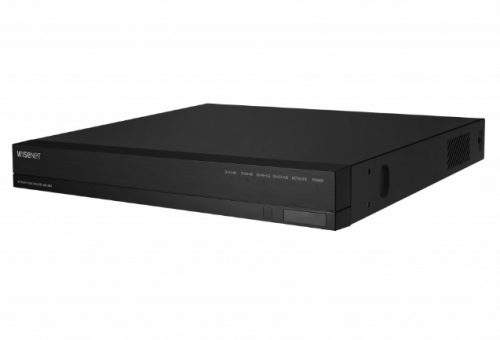
| Mounting | Rack mount (brackets supplied) |
Ideal Use Cases
Commercial Analogue System Transitions
Offices, retail chains, and shopping centres with existing analogue camera infrastructure can use the SPE-1630 to stream all 16 camera feeds across the network without pulling new coaxial cable or replacing working cameras.
Schools and Educational Facilities
Institutions with legacy analogue CCTV across multiple buildings can integrate all cameras into a centralised network video management system using the SPE-1630, benefiting from H.265 compression to keep storage and bandwidth demands manageable.
Warehouses and Industrial Sites
Large floor areas with analogue cameras already covering loading docks, production lines, or storage zones can be brought into a network recording environment, with the alarm I/O supporting integration with existing site alarm or access control systems.
PTZ Camera Retention Projects
Sites where expensive analogue PTZ cameras are still fully functional can retain complete pan-tilt-zoom control through the SPE-1630’s RS-485 or coaxial PTZ interfaces, avoiding unnecessary hardware expenditure during the upgrade process.
Control Room and Rack Infrastructure Environments
The rack-mountable form factor and included mounting brackets make the SPE-1630 well suited to security control rooms or IT equipment rooms where surveillance hardware is centralised and managed alongside other networked infrastructure.
Choosing the Right Model
- Choose this model if: You are managing a 16-camera analogue installation across AHD, CVI, TVI, or CVBS cameras and need a single encoder to bring all channels into a network video environment, particularly where PTZ cameras are already in service and need to be retained.
- Choose a different model if: You need on-device video storage, as the SPE-1630 is an encoder only and does not record footage internally. A network video recorder with built-in encoding support would be more appropriate if local storage is a requirement. Similarly, if you have fewer than 16 cameras to convert, a lower-channel encoder unit may offer a more cost-appropriate fit for the project.
FAQs
- What exactly does a network video encoder do, and how is it different from an NVR?
A network video encoder converts analogue camera signals into digital video streams that can be transmitted across an IP network and recorded by a separate VMS or NVR. Unlike an NVR, the SPE-1630 has no internal storage. It is the bridge between the analogue camera side and the network recording side of a hybrid or upgraded surveillance system. - What analogue camera formats does the SPE-1630 accept?
The SPE-1630 supports CVBS, AHD, CVI, and TVI analogue inputs with automatic format detection. This means cameras from different manufacturers using different analogue encoding standards can all connect to the same encoder without requiring manual channel format configuration. - What is the highest resolution the SPE-1630 can handle per channel?
The encoder supports analogue camera inputs up to 5MP resolution. At 5MP, the frame rate is 12fps per channel. Higher frame rates are available at lower resolutions, with 4MP inputs running at up to 15fps and 2MP inputs supporting up to 30fps. - Can I still control my existing analogue PTZ cameras after installing the SPE-1630?
Yes. The SPE-1630 includes both RS-485 half-duplex PTZ control and coaxial PTZ control. Supported protocols include SAMSUNG-T, PELCO-P, and PELCO-D, covering a broad range of compatible analogue PTZ cameras. PTZ functionality does not need to be sacrificed as part of an analogue-to-network upgrade using this encoder. - Does the SPE-1630 work with third-party VMS software?
The SPE-1630 supports ONVIF Profile S, which is a widely adopted standard for video management system interoperability. This allows it to integrate with many third-party VMS platforms that support ONVIF. Available through Security Wholesalers, it is worth confirming compatibility with your specific VMS platform before deployment, particularly for advanced feature support beyond basic live view and recording. - Can I view all 16 cameras on a local screen connected to the SPE-1630?
Yes. The SPE-1630 includes an HDMI output that supports a 16-camera multiview display at 1920 x 1080 resolution. This is useful for on-site monitoring at a control room display or for verifying camera feeds during commissioning without needing a separate computer running VMS software. - How many network ports does the SPE-1630 have, and does it support PoE output?
The SPE-1630 has a single RJ-45 10/100/1000 Base-T network interface. It does not provide PoE output to cameras. Analogue cameras connected to the encoder receive power through their existing coaxial or DC power supply arrangements, as the encoder handles signal conversion rather than camera powering.
Additional Information