Product SKU: DHI-ARM9A4-P-W2
Product Overview
Key Capabilities
16 Supervised Alarm Inputs
All 16 inputs support 0EOL, EOL, 2EOL and 3EOL zone configurations for compatible wired detectors. Inputs 1–6 also support pulse detection, helping the transmitter accommodate a broader range of alarm devices and circuit designs.
Four High-Capacity Relay Outputs
Four local relay outputs are rated up to 30V DC and 3A per channel. They can control compatible alarm devices or external circuits when the connected loads and separate power arrangements remain within the specified electrical limits.
Wireless or Ethernet Hub Connection
The transmitter connects to a compatible alarm hub through two-way 433MHz radio or Ethernet. Dahua lists wireless communication up to 1,200 metres in open space, together with AES128 encryption and frequency hopping.
Flexible Power and Battery Backup
Primary power can be supplied through PoE+ or 100–240V AC. An optional 12V 7Ah battery supports standby operation during a primary-power interruption, with a listed static standby duration of up to 30 hours.
Auxiliary Detector and Siren Power
Two built-in 14.5V auxiliary outputs can power compatible wired detectors and sirens. Their combined output is rated at 1A with PoE power or 2A when a non-PoE primary supply is used.
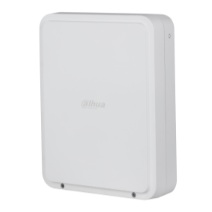
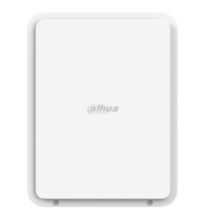
Supervised Indoor Enclosure
Tamper and low-battery detection help report enclosure interference and battery condition to the alarm system. The wall-mounted IP30 enclosure also includes a status indicator, switch button and reset button.
Best For
- Existing Wired Alarm Upgrades: Connects conventional wired detectors and outputs to a compatible Dahua wireless alarm architecture.
- Commercial Buildings: Supports multiple supervised zones, relay-controlled devices and backup power from one indoor enclosure.
- Warehouses and Workshops: Integrates wired perimeter sensors, door contacts, sirens and compatible alarm circuits.
- Hybrid Alarm Installations: Uses wireless radio where network cabling is unavailable or Ethernet where a wired hub connection is preferred.
- Expanded Alarm Outputs: Adds four relay channels and auxiliary device power to a supported alarm system.
Why Choose the DHI-ARM9A4-P-W2
The DHI-ARM9A4-P-W2 provides a practical bridge between established wired alarm devices and a compatible Dahua wireless alarm hub. Its 16 supervised inputs support multiple end-of-line configurations, while four 30V DC, 3A relay outputs and two auxiliary power outputs accommodate more complex detector, siren and control requirements than a basic wireless input module. Ethernet and encrypted 433MHz communication give installers flexibility when planning the hub connection, and PoE+ can simplify deployment where suitable network infrastructure already exists. Available through Security Wholesalers, this transmitter is best specified from a complete zone and load schedule. It is not a standalone alarm controller, and the hub, detectors, sirens, backup battery and connected relay loads must all be selected and configured separately.
Buyer Decision Tips
Power-Budget Tip: The two auxiliary outputs provide a combined 1A when the transmitter uses PoE and 2A with non-PoE power. Add the operating and startup current of every connected detector or siren before selecting the power method.
Installation Tip: The enclosure is rated IP30 for indoor use. Install it in a dry, controlled location and confirm the compatible alarm hub, zone wiring, relay loads, Ethernet path or wireless signal before completing the installation.
Key Features & Technical Specifications
| Product Type | Wireless and Ethernet multi-I/O alarm transmitter for compatible Dahua alarm systems. |
| Model | DHI-ARM9A4-P-W2. |
| Alarm Inputs | 16 local supervised alarm-input channels. |
| Zone Wiring Support | 0EOL, EOL, 2EOL and 3EOL across inputs 1–16. |
| Pulse Detection | Supported on alarm inputs 1–6. |
| Maximum Wired Zone Distance | Up to 500m under Dahua’s specified cable and interference conditions. |
| Relay Outputs | Four local channels rated up to 30V DC and 3A each. |
| Auxiliary Power Outputs | Two built-in 14.5V outputs for compatible wired detectors and sirens. |
| Auxiliary Output Capacity | 1A total with PoE power or 2A total with non-PoE power. |
| Network Connection | One 10/100Mbps RJ-45 Ethernet port. |
| PoE | IEEE 802.3at PoE+. |
| Wireless Frequency | 433MHz. |
| Wireless Communication | Two-way radio with frequency hopping and AES128 encryption. |
| Wireless Range | Up to 1,200m in open space. |
| Transmitter Power Limit | 10mW EIRP. |
| AC Power | 100–240V AC, 50/60Hz. |
| Backup Battery | Supports one optional 12V 7Ah battery; battery is not included. |
| Listed Standby Time | Up to 30 hours of static standby operation. |
| System Monitoring | Tamper detection and low-battery detection. |
| Local Controls | One switch button and one reset button. |
| Status Indicator | One built-in status indicator. |
| Firmware Updates | Cloud update supported. |
| Installation | Indoor wall mounting. |
| Protection Rating | IP30. |
| Casing and Colour | White PC and ABS enclosure. |
| Operating Conditions | -10°C to +50°C at 10%–90% relative humidity. |
| Storage Conditions | -10°C to +55°C at 10%–90% relative humidity. |
| Anti-Corrosion Level | Basic protection. |
| Certification | CE. |
| Dimensions | 304 × 235 × 90.8mm. |
| Weight | Net weight 1.22kg; gross weight 1.78kg. |
Ideal Use Cases
Wired Alarm Modernisation
Retain compatible wired detectors while adding them to a supported Dahua wireless alarm platform.
Commercial Buildings
Connect multiple door contacts, motion sensors, alarm circuits and relay-controlled devices.
Warehouses and Workshops
Integrate wired perimeter detectors, internal zones and compatible sirens from one supervised enclosure.
Remote Building Zones
Use the long-range wireless link where installing an Ethernet connection back to the alarm hub is impractical.
Networked Alarm Systems
Use Ethernet and PoE+ where structured cabling is already available at the transmitter location.
Choosing the Right Model
- Choose this model if: The system needs 16 wired inputs, four relay outputs and connection to a compatible Dahua wireless alarm hub.
- Choose a smaller input module if: Only a few wired detectors need to be added and no high-capacity relay outputs are required.
- Use PoE+ if: Suitable structured cabling is available and the connected auxiliary-device load remains within the 1A limit.
- Use AC power if: The system requires up to 2A of combined auxiliary output for compatible wired devices.
- Confirm the alarm hub first if: Wireless protocol, firmware, zone supervision and relay integration have not been verified.
FAQs
- What is the Dahua DHI-ARM9A4-P-W2 used for?
The DHI-ARM9A4-P-W2 is a multi-I/O transmitter that connects wired alarm detectors, sirens and other compatible devices to a Dahua wireless alarm system. It provides 16 supervised alarm inputs, four relay outputs and two auxiliary power outputs. Communication with the alarm hub can use the 433MHz wireless link or Ethernet, allowing existing wired alarm zones to be incorporated into a supported hybrid installation. - Can the ARM9A4-P-W2 connect to the alarm hub through both wireless and Ethernet?
Yes. The transmitter supports two-way 433MHz wireless communication and a 10/100Mbps Ethernet connection. Dahua lists a wireless range of up to 1,200 metres in open space, together with AES128 encryption and frequency hopping. Actual wireless performance depends on walls, metal structures, interference and installation position, while Ethernet requires a suitable network route to the compatible alarm hub. - What alarm-zone wiring does the transmitter support?
All 16 alarm inputs support 0EOL, EOL, 2EOL and 3EOL zone configurations, allowing compatible wired detector circuits to be supervised according to the chosen design. Inputs 1 to 6 also support pulse detection. Dahua lists a maximum wired connection distance of 500 metres using the specified cable conditions and where strong electrical interference is not present. - What can the four relay outputs control?
The unit provides four local relay-output channels rated up to 30V DC and 3A each. They can be used with compatible alarm devices or control circuits when the connected load remains within the relay rating and the complete wiring design is appropriate. The relays do not supply unlimited device power, so sirens, locks or other equipment may require separate power and suitable protection. - How can the DHI-ARM9A4-P-W2 be powered?
The transmitter supports 100–240V AC at 50/60Hz or PoE+ under IEEE 802.3at. It also accepts an optional 12V 7Ah storage battery for standby operation, with a listed static standby time of up to 30 hours. The battery is not included. Available standby time varies with battery condition, connected loads, auxiliary-output use and the selected primary power method. - How much auxiliary power is available for wired devices?
Two built-in auxiliary outputs provide 14.5V power for compatible wired detectors and sirens. Their combined available current is listed as 1A when the transmitter is powered through PoE and 2A when it uses non-PoE power. The total load from all connected devices must remain within the applicable limit, with allowance for startup current and battery-backed operating requirements. - Does the transmitter provide tamper and low-battery monitoring?
Yes. The DHI-ARM9A4-P-W2 supports tamper detection and low-battery detection, helping the alarm system identify enclosure interference or a weakening backup battery. It also includes a status indicator, a switch button and a reset button, and supports cloud-based firmware updates. These functions must be correctly configured and tested with the compatible alarm hub during commissioning. - Is the ARM9A4-P-W2 suitable for outdoor installation?
No. The transmitter is specified for indoor wall mounting and has an IP30 protection rating with basic anti-corrosion protection. It should be installed in a dry, controlled location within its -10°C to +50°C operating range. When planning through Security Wholesalers, provide the alarm-hub model, zone types, relay loads and power method so system compatibility and auxiliary-power capacity can be checked before installation.
Additional Information