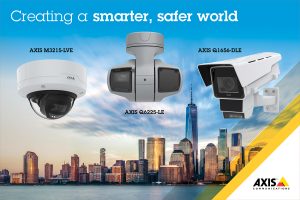
Product SKU: Q6225-LE
Product Overview
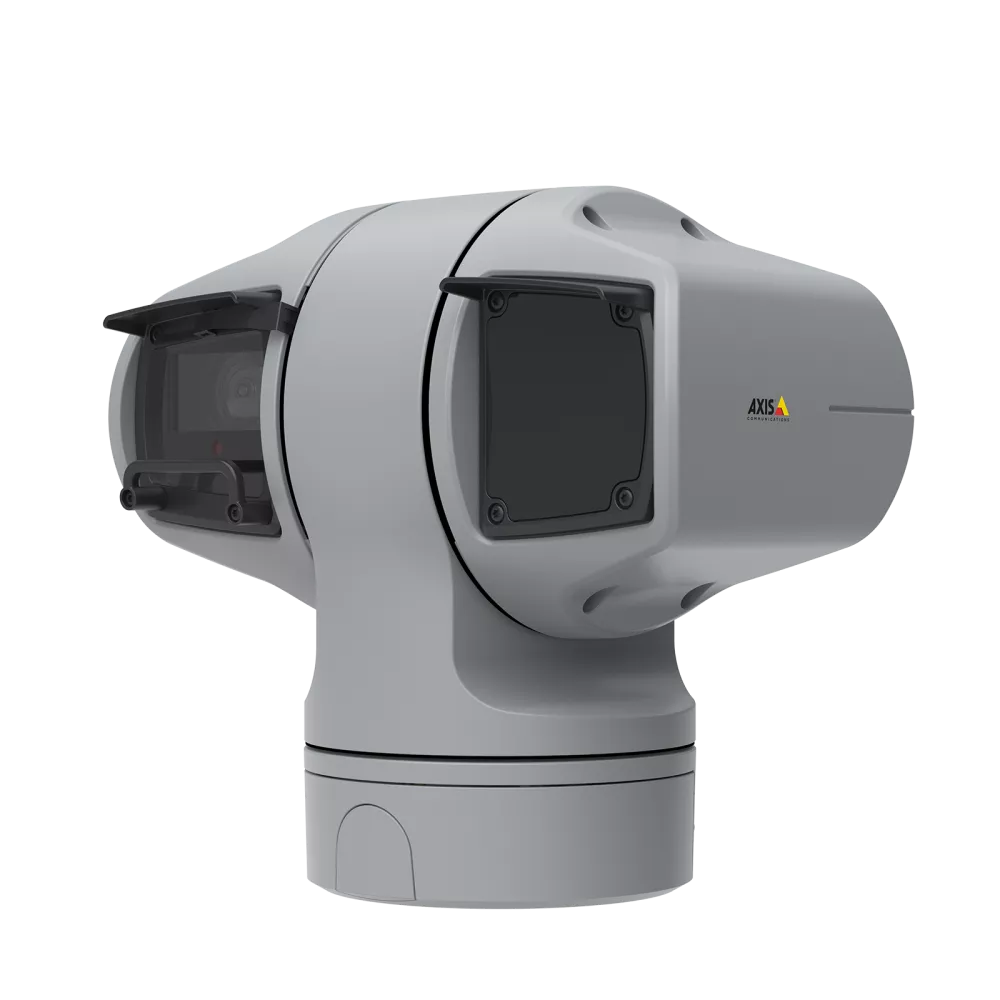
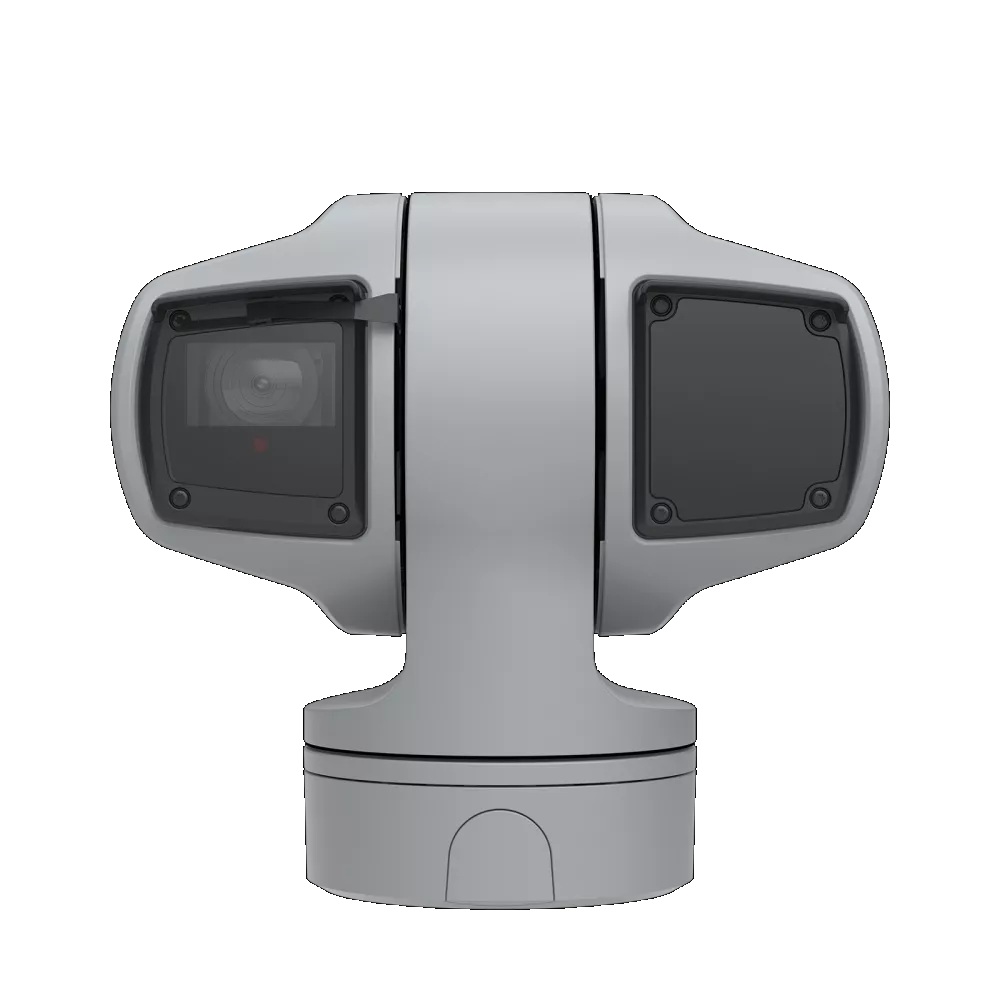
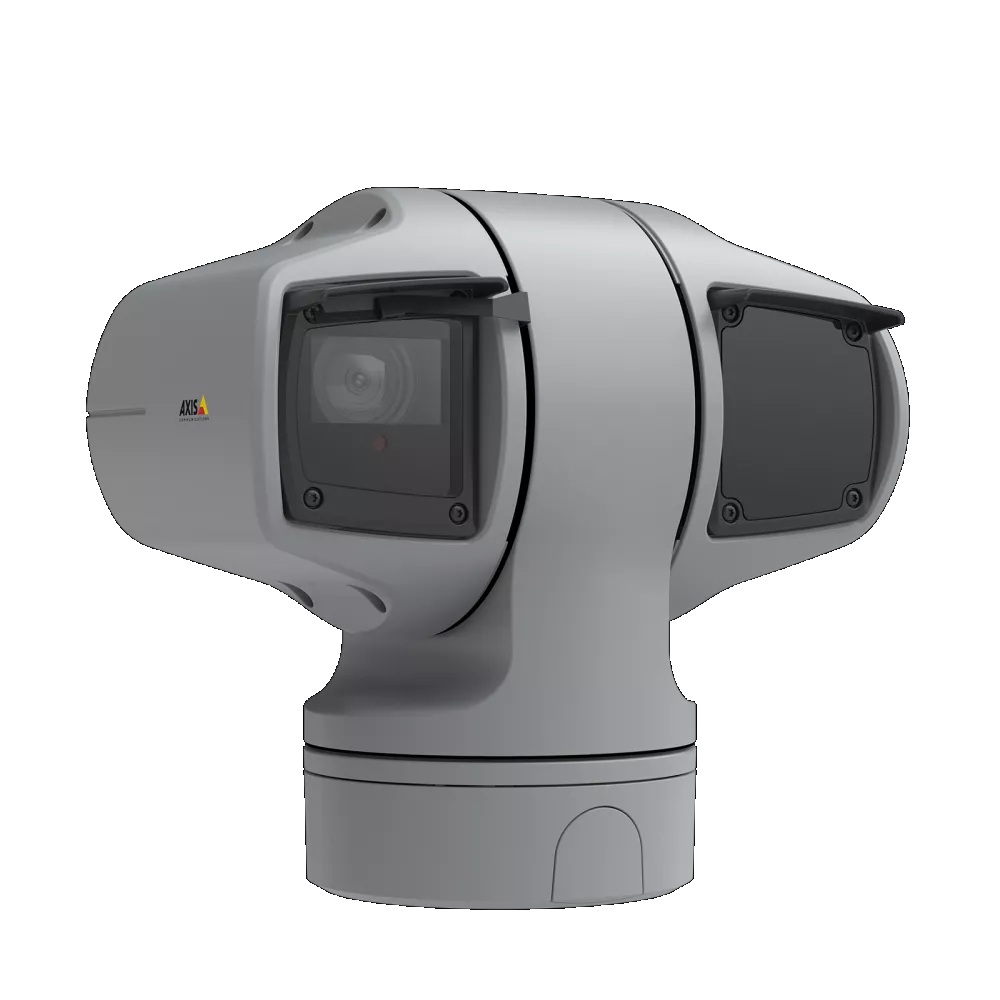
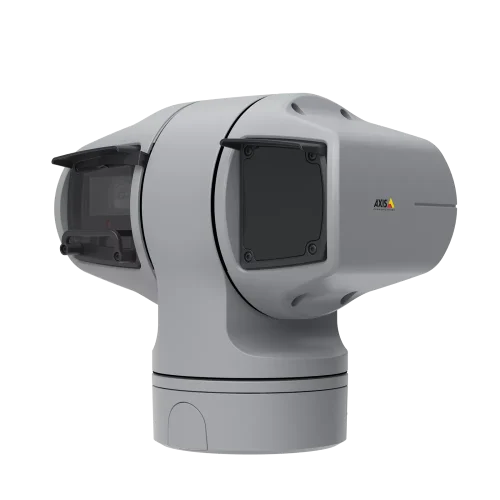
For installations where a single camera position must cover wide ground, identify subjects at distance, and operate unattended through extreme weather, the AXIS Q6225-LE is built to that specification without compromise. Featuring a 1/2″ progressive-scan CMOS sensor paired with a 31x optical zoom lens spanning 6.91 to 214.64 mm, the camera covers a horizontal field of view from 63.8 degrees at wide angle through to 2.2 degrees at full telephoto, all at HDTV 1080p and up to 60 fps. Equipped with Optimized IR illumination that scales both beam angle and intensity as the lens zooms, it maintains even frame exposure at ranges up to 400 metres rather than producing a bright centre hotspot at distance. Lightfinder 2.0 delivers colour imaging in near-darkness from approximately 0.05 lux, and Forensic WDR manages high-contrast scenes at up to 120 dB. AXIS Autotracking 2 follows moving targets without operator input, while AXIS Object Analytics and AXIS Guard Suite run person and vehicle classification entirely at the edge on the onboard ARTPEC-7 chipset. The housing is rated to IP66, IP68, IK10, NEMA 4X, NEMA TS-2, and MIL-STD-810G, with Arctic Temperature Control enabling cold-start operation at -50 degrees C and certified wind resistance to 245 km/h.
Key Capabilities
31x Optical Zoom Across a 63.8-Degree Survey Range
The motorised lens spans 6.91 to 214.64 mm, allowing a single mounted unit to shift from a broad situational view down to a 2.2-degree telephoto position for subject identification at distance. This range means one camera position can replace several fixed units across a large open area or long perimeter approach.
400-Metre Optimized IR with Dynamic Beam Scaling
Rather than projecting a fixed beam, the IR LEDs adjust both spread and power output continuously as the zoom level changes, keeping the full frame evenly lit at every focal length up to 400 metres. This is a practical distinction at sites where targets must be identified after dark at ranges where standard IR performance degrades to a centre hotspot.
AXIS Autotracking 2 for Unmanned Target Following
Once a person or vehicle is detected, Autotracking 2 locks onto the target and follows it across the scene without joystick input from an operator. This capability runs entirely on the camera, which makes it practical for sites where continuous manual monitoring of every PTZ position is not operationally realistic.
Edge-Based Analytics Without Server Dependency
The ARTPEC-7 chipset runs AXIS Object Analytics and AXIS Guard Suite directly on the camera, covering person and vehicle classification, fence guard, loitering guard, motion guard, and object removal detection. Processing at the edge removes reliance on a central server for alert logic and reduces false triggers caused by lighting changes, wind movement, or animals.
Military-Grade Housing Rated for Extreme Outdoor Conditions
IP66, IP68, IK10, NEMA 4X, NEMA TS-2, and MIL-STD-810G ratings, combined with Arctic Temperature Control for operation from -50 degrees C to +55 degrees C and 245 km/h certified wind resistance, place the Q6225-LE housing well beyond standard commercial weatherproofing. This is intended for genuinely exposed or hostile deployment environments, not sheltered commercial sites.
High-Speed Pan-Tilt with Guard Tour and Preset Support
Continuous 360-degree pan at up to 150 degrees per second and tilt across plus or minus 90 degrees allow rapid scene transitions, while Electronic Image Stabilisation maintains usable footage during wind loading or structural vibration. Up to 300 preset positions support fully automated patrol sequences across large sites without ongoing operator input.
Best For
- Critical Infrastructure Perimeters: Substations, water treatment facilities, and port installations requiring 400-metre IR coverage, automated target following via Autotracking 2, and MIL-STD-810G housing for sustained operation in exposed outdoor conditions.
- Airport and Logistics Yard Coverage: Sites where a single PTZ position must scan wide areas and close in for identification detail, supported by the 31x optical zoom and 150-degrees-per-second pan speed combined with edge-based person and vehicle classification.
- Highway and Transport Corridor Surveillance: Extended road approaches, intersections, and border crossings where vehicles must be identified at range under low ambient light, using Lightfinder 2.0 colour imaging alongside long-range Optimized IR illumination.
- Remote and Cold-Climate Industrial Deployments: Arctic Temperature Control and the -50 degrees C operational floor make the Q6225-LE a practical choice for mining operations, alpine infrastructure, and remote northern sites where cold-start failure is a genuine risk with standard PTZ cameras.
- Large Campus and Event Venue Patrol: Guard tours across up to 300 preset positions enable automated perimeter patrol sequences at universities, stadiums, and large commercial grounds, with onboard fence guard and loitering analytics generating alerts without requiring continuous operator presence.
Why Choose the AXIS Q6225-LE
The AXIS Q6225-LE brings together a specific set of capabilities that most PTZ cameras do not combine in a single unit: 400-metre Optimized IR with dynamic beam scaling, 31x optical zoom at HDTV 1080p and 60 fps, fully on-camera autotracking and edge analytics, and housing rated to MIL-STD-810G, IP68, and NEMA 4X. The Arctic Temperature Control system is a built-in factory feature, not an optional heating accessory, enabling cold-start at -50 degrees C without additional infrastructure at remote sites. Axis Zipstream with H.264 and H.265 compression reduces bandwidth and storage demand at sites where backhaul capacity or local storage is constrained. The cybersecurity framework includes secure boot, signed firmware, and a FIPS 140-2 Level 2 TPM, which meets the requirements of critical infrastructure operators and government-adjacent deployments. Buyers working with Security Wholesalers can specify the Q6225-LE for projects where site scale, environmental severity, or detection range requirements go beyond what a standard commercial PTZ camera is rated to handle.
Buyer Decision Tips
PoE+ Infrastructure Requirement: The Q6225-LE requires PoE+ (IEEE 802.3at), not standard PoE (IEEE 802.3af). Every switch port or PoE injector supplying this camera must be confirmed as PoE+ rated before cabling is planned. Adding the Q6225-LE to an existing fixed-camera PoE network that was sized to IEEE 802.3af is a common planning error that requires switch replacement or additional injectors on site.
Mounting Direction and Preset Configuration: The Q6225-LE supports both pendant (dome-down) and upright (dome-up) mounting orientations, with the included bracket accommodating top-mounted installations via sliders. Cable entry routing and how preset positions map to physical scene directions differ between the two orientations. Confirming the intended mounting direction during the design phase avoids preset reconfiguration work on site after installation is complete.
Key Features & Technical Specifications
| Resolution |
HDTV 1080p (Full HD) |
| Sensor |
1/2″ progressive-scan CMOS |
| Frame Rate |
Up to 60 fps |
| Optical Zoom |
31x |
| Focal Length |
6.91-214.64 mm |
| Horizontal Field of View |
63.8 degrees (wide) to 2.2 degrees (tele) |
| IR Illumination Range |
Up to 400 m (Optimized IR, beam angle and intensity auto-scaled with zoom level) |
| Minimum Illumination |
Approximately 0.05-0.08 lux colour (Lightfinder 2.0) |
| Wide Dynamic Range |
Forensic WDR, up to 120 dB |
| Video Compression |
H.265, H.264, Motion JPEG with Axis Zipstream |
| Pan Range and Speed |
Continuous 360 degrees, up to 150 degrees/s |
| Tilt Range |
Plus or minus 90 degrees |
| Preset Positions |
Up to 300 |
| Image Stabilisation |
Electronic Image Stabilisation (EIS) |
| Onboard Analytics |
AXIS Object Analytics, AXIS Guard Suite, AXIS Autotracking 2 |
| Chipset |
ARTPEC-7 |
| Weather and Impact Rating |
IP66/IP68, IK10, NEMA 4X, NEMA TS-2, MIL-STD-810G |
| Operating Temperature |
-50 degrees C to +55 degrees C (Arctic Temperature Control included) |
| Wind Resistance |
Up to 245 km/h (certified) |
| Power |
PoE+ (IEEE 802.3at) or DC |
| Local Storage |
Encrypted microSD card, remote NAS |
| Cybersecurity |
Secure boot, signed firmware, FIPS 140-2 Level 2 TPM |
| Protocols |
ONVIF Profiles G/S/T, ACAP, VAPIX API |
Ideal Use Cases
Port and Waterfront Facility Surveillance
The IP68 submersion rating, NEMA 4X enclosure, and 400-metre Optimized IR range make the Q6225-LE practical for waterfront installations where salt air, rain ingress, and extended-range monitoring of vessel movements and loading zones are ongoing operational requirements that standard commercial PTZ housings are not rated to handle.
Airport Perimeter and Airside Monitoring
Guard tours across up to 300 preset positions combined with AXIS Object Analytics person and vehicle classification support automated airside perimeter coverage. The camera can patrol a defined sequence and switch to tracking a detected intrusion via Autotracking 2, reducing the operator attention required across multiple camera positions.
Highway and Road Corridor Monitoring
The 31x optical zoom, 150-degrees-per-second pan speed, and Lightfinder 2.0 colour imaging allow the camera to track vehicles along extended road approaches under the low ambient light conditions common to rural and semi-rural highway environments, with Optimized IR providing fill illumination at the longer distances required.
Remote and Cold-Climate Industrial Sites
Arctic Temperature Control enables cold-start and sustained operation at -50 degrees C as a built-in factory feature, without supplementary heating infrastructure. This makes the Q6225-LE directly deployable at mining operations, alpine installations, and remote northern sites where standard PTZ cameras fail or require heated enclosures to function reliably.
Large Campus and Open Grounds Patrol
Automated guard tours combined with onboard fence guard and loitering detection from AXIS Guard Suite allow the camera to monitor after-hours boundaries across large campus environments and generate alerts without continuous operator engagement. Autotracking 2 then follows any detected subject until the operator takes manual control or the subject exits the scene.
Choosing the Right Model
- Choose this model if: The project requires IR coverage beyond 200 metres with dynamic beam scaling, 31x optical zoom for subject identification at range, onboard Autotracking 2 for unmanned target following, edge-based analytics without server dependency, and a housing rated to MIL-STD-810G and IP68 for hostile or extreme outdoor environments including cold-climate sites operating below -40 degrees C.
- Choose a different model if: The installation is an indoor or sheltered commercial space where MIL-STD-810G, IP68, and Arctic Temperature Control represent substantial overspecification for the actual conditions. If the site’s network infrastructure is standard PoE (IEEE 802.3af) and upgrading to PoE+ switches or injectors is outside budget, a different PTZ model with lower power draw would avoid that infrastructure cost. For compact or contained zones where a fixed motorised varifocal camera provides sufficient coverage without pan, tilt, and zoom capability, a fixed camera will be more cost-effective at that position.
FAQs
- What is the actual IR range of the Q6225-LE and how does the beam behave at full zoom?
The Optimized IR system reaches up to 400 metres, and the LEDs adjust both beam spread and output power as the lens zooms. At full telephoto (214.64 mm, 2.2 degrees horizontal), the beam narrows to concentrate on the reduced field of view rather than scattering light outside the frame. This produces an evenly exposed image at distance instead of the overexposed centre hotspot that occurs with standard fixed-beam IR illuminators on PTZ cameras.
- Does the Q6225-LE require PoE+ or will a standard PoE switch work?
PoE+ (IEEE 802.3at) is required. Standard PoE (IEEE 802.3af) does not supply enough power for this unit. Every switch port or midspan injector feeding the camera must be verified as PoE+ before cabling is run. This is a common planning gap when the Q6225-LE is added to an existing fixed-camera network that was originally specified to IEEE 802.3af, and it typically requires switch replacement rather than a field workaround.
- Which analytics run on the camera itself without requiring a VMS server?
The ARTPEC-7 chipset runs AXIS Object Analytics for person and vehicle classification, AXIS Guard Suite covering fence guard, loitering guard, motion guard, and object removal detection, and AXIS Autotracking 2 for active target following. All of these operate at the edge on the camera, so alert logic and tracking continue even if the connection to a central server is interrupted.
- How does Arctic Temperature Control work and what temperature range does it cover?
Arctic Temperature Control is a built-in heating system that brings the camera’s internal components, including the pan-tilt mechanism and lens, to a safe operating temperature before they engage after a cold start. It is a factory-included feature, not an optional accessory. The rated operational range is -50 degrees C to +55 degrees C, which covers the large majority of cold-climate deployment scenarios without requiring a supplementary heated enclosure.
- Can the camera maintain stable footage in high-wind outdoor locations?
Yes. Electronic Image Stabilisation compensates for vibration and movement caused by wind loading or structural flex at the mounting point, and the housing itself is certified to 245 km/h wind resistance. Together, these allow the camera to deliver usable footage during severe weather conditions without requiring additional physical dampening hardware at the mount or post-processing to reduce shake in recorded footage.
- What storage and compression options are available for remote sites with limited bandwidth?
The Q6225-LE supports encrypted microSD card storage for local edge recording and remote NAS as an alternative or complement. Axis Zipstream with H.264 and H.265 compression reduces both storage file sizes and network bandwidth demand without reducing the resolution or frame rate of recorded video. This is directly relevant at remote sites where backhaul capacity is constrained and cloud or NVR-based storage is not practical. The camera is available through Security Wholesalers and supports ONVIF Profiles G, S, and T for broad VMS compatibility across recording platforms.
- Does mounting orientation affect how the camera is configured?
Yes. The Q6225-LE supports both pendant (dome-down) and upright (dome-up) orientations, with the supplied bracket including sliders for top-mounted installation. Cable entry routing differs between the two configurations, and preset positions are referenced relative to the camera’s installed orientation. Determining the mounting direction during the design phase, rather than on site during installation, avoids the need to reconfigure preset positions and guard tours after the camera is physically secured.
Additional Information