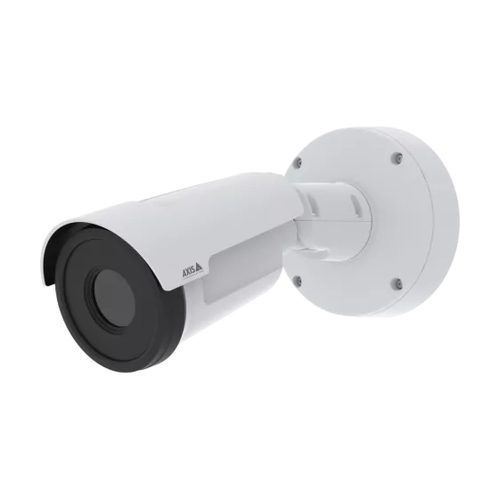
Product Overview
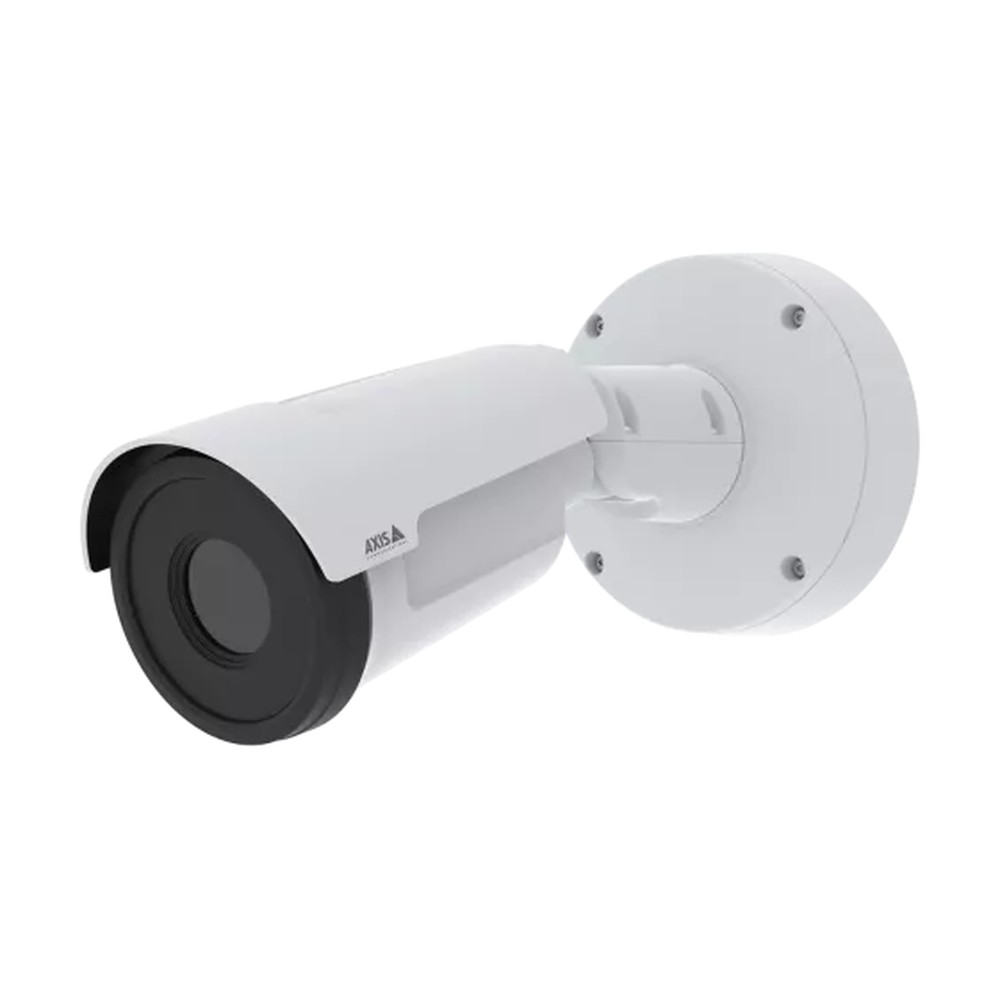
For perimeter security applications where visible light conditions are irrelevant, the Axis Q1972-E Thermal Network Bullet Camera delivers detection capability that conventional cameras simply cannot match. Built around a 640×480 uncooled microbolometer sensor with a 35 mm athermalized fixed lens, this outdoor bullet camera produces consistent thermal imagery across full darkness, dense smoke, light fog, and glare conditions that would render a standard camera useless. With a horizontal field of view of just 17 degrees, it is engineered for long-range, narrowly focused coverage of fence lines, perimeter boundaries, industrial approaches, and critical asset zones. Powered by the ARTPEC-8 SoC with an onboard deep learning processing unit, it supports Axis Perimeter Defender, AXIS Fence Guard, AXIS Loitering Guard, early warning fire detection, and a spot temperature metre. Rated IP66, IP67, IK10, and NEMA 4X, with an integrated heater and operating range of -40 degrees C to 60 degrees C, this camera is built for continuous outdoor deployment in demanding environments.
Key Capabilities
640×480 Thermal Sensor with NETD <20 mK
The uncooled microbolometer operates across the 8-14 µm spectral range and delivers a thermal sensitivity of NETD less than 20 mK at 25 degrees C, allowing detection of subtle heat differences between people, vehicles, and background environments even in total darkness or through light smoke.
35 mm Athermalized Fixed Lens
The 35 mm F1.2 athermalized lens maintains sharp focus across temperature extremes without manual adjustment, delivering a 17-degree horizontal field of view for long-range, narrowly directed thermal coverage. Near focus distance is 33 m, making this lens suited to distant boundary and perimeter detection.
DLPU and Axis Perimeter Defender
The onboard deep learning processing unit enables Axis Perimeter Defender to run directly on the camera edge, performing classification of people and vehicles without relying on a server. This reduces false trigger events caused by animals, moving foliage, or lighting changes at monitored boundaries.
Early Warning Fire Detection and Spot Temperature Metre
The built-in spot temperature metre continuously monitors thermal readings across defined areas, enabling early detection of heat anomalies that may indicate fire risk. This capability makes the Q1972-E suitable for critical infrastructure, waste facilities, and industrial environments where thermal runaway is a known hazard.
All-Weather Outdoor Rating with Integrated Heater
Rated IP66, IP67, IK10, NEMA 4X, and NEMA-TS 2, with an integrated heater and confirmed operating range of -40 degrees C to 60 degrees C, this camera maintains full function in extreme cold, rain, humidity, and dust conditions. It is designed for 24/7 unattended operation at exposed outdoor sites.
Axis Edge Vault Cybersecurity
Built-in Axis Edge Vault provides hardware-level cybersecurity including signed firmware, secure boot, signed video, memory card encryption, and a TPM 2.0 module. For critical infrastructure and government-adjacent deployments where data integrity and chain-of-custody verification are requirements, this provides a confirmed hardware security layer.
Best For
- Perimeter Fence Line Detection: The 17-degree HFOV and 35 mm lens focus coverage along a narrow corridor, making this suited to monitoring fence lines, boundary approaches, and controlled access perimeters where long-range detection of people or vehicles is required regardless of lighting.
- Industrial Fire Risk Monitoring: The spot temperature metre and early warning fire detection functions allow continuous thermal monitoring of storage yards, electrical switchyards, waste facilities, and industrial equipment where heat anomalies can be identified before a fire event develops.
- Critical Infrastructure Protection: Water treatment sites, substations, data centre yards, and logistics hubs where reliable detection must function through fog, glare, rain, and darkness without dependence on visible light conditions or supplementary illumination.
- Extreme Climate Deployments: With a confirmed operating range of -40 degrees C to 60 degrees C and an integrated heater, this camera suits remote sites, cold-storage facilities, and open industrial yards subject to temperature extremes that would affect standard outdoor cameras.
- Edge-Based Intrusion Detection: Axis Perimeter Defender runs on the camera’s onboard DLPU, enabling people and vehicle classification at the edge without requiring a dedicated server, which reduces infrastructure cost and processing latency at large monitored sites.
Why Choose the Axis Q1972-E
The Axis Q1972-E separates itself from standard outdoor bullet cameras by operating entirely in the thermal infrared spectrum, delivering detection that is unaffected by darkness, backlighting, headlight glare, or camouflage clothing. Where a conventional IP camera requires sufficient visible light or IR illumination to produce a usable image, this camera reads heat signatures directly, making it effective at the perimeter boundary regardless of time of day or ambient lighting. The 640×480 sensor resolution is the highest available in this Axis thermal series, and the NETD of less than 20 mK provides fine-grained thermal sensitivity. The 35 mm lens narrows detection to a precise 17-degree corridor, which is a deliberate design choice for long-range boundary coverage rather than wide-area observation. Edge AI via the DLPU and support for Axis Perimeter Defender mean classification runs onboard without additional server hardware. Available through Security Wholesalers, the Q1972-E is backed by Axis’s firmware ecosystem and cybersecurity platform for long-term operational reliability.
Buyer Tip 1 – Lens Field of View vs. Detection Range: The 35 mm lens on this model provides a 17-degree horizontal field of view with a near focus distance of 33 m. This is a narrow, long-range thermal lens intended for directed perimeter coverage rather than wide-area observation. If your site requires monitoring a broad open area, courtyard, or wide entry zone, a shorter focal length thermal lens with a wider field of view would provide better spatial coverage. This lens is correctly matched to fence-line monitoring, narrow corridor detection, and distant boundary approaches where the subject enters the frame from a distance.
Buyer Tip 2 – Thermal vs. Visible Light Camera for Perimeter Use: A thermal camera does not produce a colour or recognisable face image. It detects heat contrast between subjects and their surroundings, making it effective for triggering alerts and detecting presence. For evidentiary footage, number plate capture, or identity verification, a standard IP camera used alongside this thermal unit is the typical deployment approach. The Q1972-E is best positioned as a detection and alerting layer rather than a sole recording solution where identification is a legal or operational requirement.
Key Features & Technical Specifications
| Model |
Axis Q1972-E 35 mm 30 fps (03033-001) |
| Sensor Type |
Uncooled microbolometer |
| Sensor Resolution |
640×480 pixels (pixel size 17 µm); scalable up to 800×600 (SVGA) |
| Spectral Range |
8-14 µm (thermal infrared) |
| Thermal Sensitivity (NETD) |
<20 mK at 25°C, F1.0 |
| Lens |
35 mm athermalized fixed lens, F1.2 |
| Field of View |
17° horizontal, 13° vertical |
| Near Focus Distance |
33 m (108 ft) |
| Frame Rate |
Up to 30 fps |
| Video Compression |
H.264, H.265 (HEVC), Motion JPEG; up to 20 configurable streams |
| AI / Analytics |
AXIS Motion Guard, AXIS Fence Guard, AXIS Loitering Guard, AXIS Video Motion Detection, AXIS Speed Monitor, Axis Perimeter Defender (DLPU), early warning fire prevention, spot temperature metre |
| Processor |
ARTPEC-8 SoC; 2048 MB RAM; 8192 MB Flash |
| Power |
PoE IEEE 802.3af/802.3at Type 1 Class 3 (typical 5.0 W, max 12.95 W); 12-28 V DC (typical 4.8 W, max 12.95 W) |
| Weather / Vandal Rating |
IP66, IP67, IK10, NEMA 4X, NEMA-TS 2 |
| Operating Temperature |
-40°C to 60°C; integrated heater included |
| Edge Storage |
microSD/microSDHC/microSDXC card slot |
| Cybersecurity |
Axis Edge Vault; signed firmware; secure boot; signed video; memory card encryption; TPM 2.0 |
| Connectors |
Shielded RJ45 1000BASE-T PoE; DC input; terminal block (1 supervised alarm input, 1 output); 3.5 mm audio in; RS-485/RS-422 |
| Protocols |
ONVIF Profile G, M, S, T; VAPIX |
| Form Factor |
Outdoor bullet, fixed |
Ideal Use Cases
Perimeter Fence Line Monitoring
The 35 mm lens and 17-degree horizontal field of view direct thermal coverage along a precisely defined corridor, making this suited to fence line detection where the camera is positioned to cover a known approach path at distance, triggering AXIS Fence Guard analytics when a subject crosses the boundary.
Industrial Fire Risk Sites
Waste transfer stations, recycling yards, battery storage facilities, and electrical switchyards can use the spot temperature metre and early warning fire detection to continuously monitor heat anomalies at equipment or storage piles, providing an alert layer before a fire event develops into an emergency.
Critical Infrastructure Protection
Water treatment plants, gas and energy substations, telecommunications towers, and port facilities require detection that operates regardless of lighting or weather. The Q1972-E functions in complete darkness, rain, fog, and dust, with NEMA 4X and IP67 ratings confirming protection against the environmental conditions common at these sites.
Mining and Remote Site Access Control
The confirmed -40 degrees C to 60 degrees C operating range, integrated heater, and PoE power input make this camera suitable for remote mining access roads, plant entry points, and open-cut boundaries where infrastructure is limited and reliable detection across all weather conditions is non-negotiable.
Defence and Government Secure Facilities
The Axis Edge Vault hardware security platform, TPM 2.0 module, signed firmware, and signed video capabilities support deployment in environments where data integrity, chain-of-custody verification, and cybersecurity compliance are formal requirements rather than optional considerations.
Large Outdoor Car Parks and Logistics Yards
AXIS Loitering Guard and AXIS Speed Monitor analytics allow operators to detect and alert on suspicious loitering behaviour or unusual vehicle movement in unlit or poorly lit outdoor areas without requiring any supplementary lighting infrastructure, reducing both installation cost and ongoing power use.
Choosing the Right Model
- Choose this model if: Your application requires perimeter or boundary detection that must function in complete darkness, through fog, smoke, or glare, and where a 35 mm narrow field of view is matched to a known long-range approach corridor. Also appropriate if early fire detection, spot temperature monitoring, or Axis Perimeter Defender edge analytics are required at the camera level.
- Choose a different model if: You need colour or greyscale visible-light imagery for identification, number plate capture, or evidentiary recording. Thermal cameras produce heat-contrast images that are not suitable for identity or detail verification. A wider field of view is also needed if your coverage zone is a broad open area rather than a focused narrow corridor – a shorter focal length thermal lens would be more appropriate in that scenario.
FAQs
- What does the 640×480 sensor resolution mean for a thermal camera?
At 640×480 pixels with a 17 µm pixel pitch, the Q1972-E delivers the detail density required to reliably distinguish people from animals or vehicles at perimeter distances. Higher pixel count in a thermal sensor translates directly to better spatial resolution across the frame, which is critical when AXIS Perimeter Defender or Fence Guard needs to classify objects at range rather than simply detect movement.
- What is an athermalized lens and why does it matter for outdoor use?
An athermalized lens is designed to maintain its focal point across a wide temperature range without manual or motorised refocusing. In outdoor environments where temperatures can swing from extreme cold to high heat across a single day, a standard lens would shift focus and produce degraded thermal images. The 35 mm athermalized lens on the Q1972-E maintains optical performance across the camera’s confirmed -40 degrees C to 60 degrees C operating range.
- Can this camera detect people in total darkness?
Yes. The Q1972-E operates entirely in the thermal infrared spectrum (8-14 µm) and does not require any visible light or supplementary IR illumination. It detects heat emitted by people, vehicles, and objects, meaning total darkness, cloud cover, or the absence of artificial lighting has no effect on its detection capability. The NETD of less than 20 mK provides fine sensitivity to small thermal differences between subjects and backgrounds.
- What is the minimum detection distance given the near focus distance of 33 m?
The confirmed near focus distance for this lens is 33 m (108 ft). Objects closer than 33 m from the camera may appear out of focus in the thermal image. When planning mounting positions for fence line or perimeter coverage, the camera should be sited so that the zone of interest begins at or beyond 33 m from the mounting point to ensure sharp thermal detail is captured by the DLPU analytics.
- How does the early warning fire detection feature work?
The Q1972-E includes a spot temperature metre that continuously monitors defined areas of the thermal image for heat levels above a configured threshold. When temperatures in a monitored zone exceed the set value – indicating a potential heat buildup, smouldering fire, or thermal runaway event – the camera triggers an alert. This is a monitoring and alerting function rather than a certified fire suppression system, and threshold configuration should be matched to site-specific thermal conditions.
- Does the camera produce a colour image or a recognisable face image?
No. As a pure thermal camera, the Q1972-E produces images based on heat contrast rather than visible light. The output shows thermal intensity differences represented through colour palettes including isothermal palette options, but it does not capture colour, detail, or facial features that would be usable for identity verification. For sites requiring evidentiary identification footage, a standard IP camera deployed alongside this thermal unit is the typical solution.
- What cybersecurity features does the Q1972-E include?
The camera is equipped with Axis Edge Vault, which provides hardware-based cybersecurity including a TPM 2.0 module, signed firmware, secure boot, signed video for footage integrity verification, and memory card encryption. These features are relevant for deployments at government facilities, critical infrastructure, and enterprise environments where chain-of-custody, firmware authenticity, and data encryption are formal security requirements.
- Where can I purchase the Axis Q1972-E in Australia?
The Axis Q1972-E Thermal Network Bullet Camera (03033-001) is available through Security Wholesalers, supplied with manufacturer warranty and backed by Axis Communications’ firmware and support ecosystem. It is a specialist thermal camera intended for integrator and professional installer deployment rather than consumer self-installation, given the site planning and analytics configuration involved in a correctly functioning perimeter detection system.
Additional Information
AXIS 03033-001 Datasheet