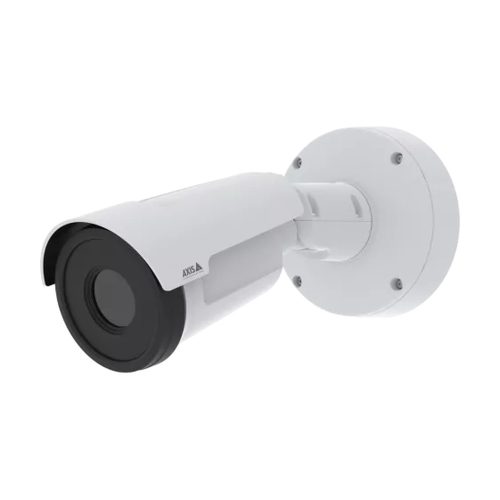
Product Overview
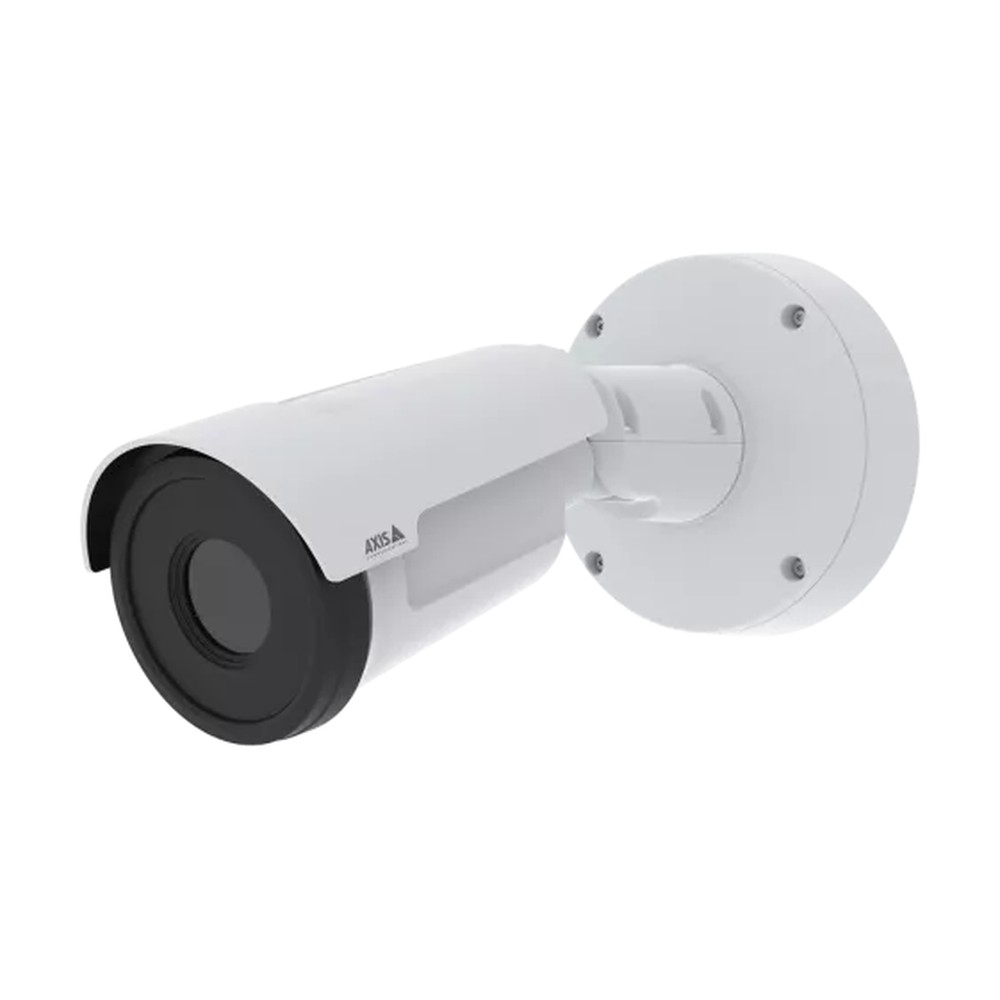
For perimeter security applications where visible light cameras simply cannot perform, the Axis Q1972-E delivers long-range thermal detection across fence lines, industrial yards, outer building walls, and open approaches regardless of lighting conditions, smoke, or dust. This outdoor fixed thermal camera is built around a 640×480 uncooled microbolometer sensor paired with an athermalized 35 mm F1.2 lens, producing a 17-degree horizontal field of view suited to monitoring distant, narrow corridors of a perimeter. Powered by an ARTPEC-8 processor with a built-in Deep Learning Processing Unit, it runs AXIS Motion Guard, AXIS Fence Guard, and AXIS Loitering Guard natively, enabling proactive detection without cloud dependency. Axis Zipstream reduces bandwidth and storage load while maintaining forensic detail. It is housed in an IP66, IP67, NEMA 4X, and IK10-rated enclosure with a germanium window, making it well suited to demanding outdoor installations across critical infrastructure, industrial sites, and large commercial properties.
Key Capabilities
640×480 Thermal Sensor
The uncooled LWIR microbolometer operates across the 8-14 μm spectral range and delivers high-resolution thermal imaging with NETD below 20 mK at 25°C. This sensitivity allows the camera to detect subtle heat differences across a perimeter, making it effective in complete darkness, heavy fog, or dusty industrial environments where optical cameras fail.
35 mm Athermalized Lens
The 35 mm F1.2 lens provides a narrow 17-degree horizontal field of view with a near focus distance of 33 m, making it purpose-built for detecting objects along long fence lines, outer walls, or access roads from a fixed mounting point. The athermalized design maintains focus accuracy across wide temperature swings without mechanical adjustment.
ARTPEC-8 with Deep Learning Processing
The onboard ARTPEC-8 SoC includes a dedicated Deep Learning Processing Unit that runs AXIS Fence Guard, AXIS Motion Guard, and AXIS Loitering Guard directly on the camera. This eliminates the need for a separate analytics server and allows the camera to generate precise alarm events with reduced false triggers from animals or environmental movement.
Axis Zipstream in H.264 and H.265
Axis Zipstream dynamically reduces bitrate during low-activity periods while preserving full frame detail during events. Combined with H.265 compression, this significantly lowers storage and bandwidth demands across a thermal deployment where cameras may run continuously for extended periods.
IP66/IP67, NEMA 4X, and IK10 Housing
The aluminum and polycarbonate enclosure with a germanium thermal window is rated for full dust and water ingress protection, impact resistance to IK10, and NEMA 4X compliance for corrosive environments. This makes the Q1972-E suitable for coastal industrial sites, chemical facilities, and outdoor perimeters exposed to harsh weather year-round.
Axis Edge Vault and TPM 2.0 Cybersecurity
Axis Edge Vault provides hardware-based protection for device credentials, signed firmware, and cryptographic identity, while TPM 2.0 adds a dedicated security chip for secure key storage. For critical infrastructure deployments where network security is a compliance requirement, this built-in protection provides a layer of assurance that budget thermal cameras do not offer.
Best For
- Perimeter Fence Line Detection: The 17-degree FoV and 35 mm lens concentrate coverage along narrow linear approaches, making the Q1972-E well matched to monitoring fence lines, boundary walls, and outer entry corridors from a single fixed position.
- 24/7 Lighting-Independent Surveillance: As a thermal camera, it generates usable detection imagery in complete darkness, through light smoke, and in heavy fog without any illuminator, making it suited to sites where visible light is unavailable or restricted.
- Critical Infrastructure and Industrial Sites: The NEMA 4X rating, IK10 housing, and Axis Edge Vault cybersecurity make it appropriate for power stations, water treatment facilities, mining sites, and industrial yards where environmental harshness and network security are both concerns.
- Analytics-Driven Alarm Generation: Sites needing rule-based perimeter alerts without a separate analytics server benefit from the onboard DLPU running Fence Guard and Loitering Guard directly on the camera, reducing system complexity and latency.
Why Choose the Axis Q1972-E
The Axis Q1972-E with the 35 mm lens and 8.3 fps frame rate occupies a specific niche that standard optical cameras cannot fill: long-range perimeter detection in lighting conditions where visible-spectrum imaging is unreliable. The 640×480 resolution is high for an uncooled LWIR microbolometer, and the NETD rating below 20 mK gives it genuine sensitivity to small thermal differences at distance. Unlike basic thermal cameras that simply output a video stream, this model runs edge-based analytics including Fence Guard and Loitering Guard through the ARTPEC-8 DLPU, generating actionable alarms without requiring server-side processing. The combination of Axis Edge Vault, TPM 2.0, and signed firmware positions it for deployments where cybersecurity compliance is mandatory. The IP66, IP67, NEMA 4X, and IK10 ratings mean it handles coastal, industrial, and extreme-climate installations without compromise. Available through Security Wholesalers, the Q1972-E suits system integrators and specifiers who need a thermal camera that delivers both detection accuracy and operational security at an enterprise grade.
Buyer Decision Tips
Near Focus Distance: The 35 mm lens on this model has a near focus distance of 33 m. Objects or intrusion events occurring closer than 33 m from the camera will not be in proper thermal focus. If your detection zone starts closer to the mounting position, the 35 mm variant is not the right choice for that application. Plan camera placement so that the zone of interest begins at or beyond the 33 m minimum working distance.
Frame Rate at 8.3 fps: This SKU (03034-001) is configured for 8.3 fps, which satisfies most perimeter detection and intrusion analytics use cases but is not intended for smooth motion video or forensic playback of fast-moving events. If your application requires higher frame rates, verify that the correct regional variant of the Q1972-E is selected before ordering. The 8.3 fps rate is a fixed characteristic of this product, not a configurable setting.
Key Features & Technical Specifications
| Model |
Axis Q1972-E 35 mm 8.3 fps |
| SKU / Part Number |
03034-001 |
| Sensor Type |
Uncooled microbolometer (LWIR), 640×480, 17 μm pixel size |
| Spectral Range |
8-14 μm (longwave infrared thermal) |
| Thermal Sensitivity (NETD) |
Less than 20 mK at 25°C, F1.0 |
| Lens |
Athermalized 35 mm, F1.2 |
| Field of View |
Horizontal 17°, Vertical 13° |
| Near Focus Distance |
33 m (108 ft) |
| Frame Rate |
8.3 fps |
| Video Compression |
H.264 (Baseline, High, Main), H.265, Motion JPEG; Axis Zipstream |
| Processor |
ARTPEC-8 with Deep Learning Processing Unit (DLPU) |
| Analytics |
AXIS Motion Guard, AXIS Fence Guard, AXIS Loitering Guard; audio detection; active tampering detection; video motion detection; electronic image stabilization (EIS); thermal palettes |
| Cybersecurity |
Axis Edge Vault, TPM 2.0, signed firmware |
| Audio |
1x 3.5 mm line/mic input; audio detection supported; one-way |
| I/O |
1x alarm input, 1x alarm output; 1x RJ45 Gigabit Ethernet; 1x SD/SDHC/SDXC card slot |
| Power |
PoE Class 3; 12-28 V DC; typical 5 W, maximum 12.95 W |
| Weather and Impact Rating |
IP66, IP67, NEMA 4X, IK10 |
| Casing |
Aluminum and polycarbonate with germanium thermal window |
| Memory |
2048 MB RAM, 8192 MB Flash |
| Country of Origin |
Poland |
Ideal Use Cases
Industrial Perimeter Fence Lines
The 35 mm lens concentrates the 17-degree FoV along linear fence runs, while the LWIR thermal sensor detects human presence regardless of ambient light. AXIS Fence Guard generates alarms when a defined virtual fence line is crossed, reducing operator workload at unstaffed sites.
Critical Infrastructure Protection
Power stations, water treatment plants, and substations require both environmental durability and network security. The NEMA 4X housing handles corrosive or washdown environments, while Axis Edge Vault and TPM 2.0 meet cybersecurity requirements common to infrastructure compliance frameworks.
Mining and Resources Sites
Dust, variable lighting, and wide outdoor perimeters are routine challenges on mining sites. The thermal sensor operates through airborne dust and in complete darkness without an illuminator, and the IP66/IP67 and IK10 ratings suit the physical demands of a heavy industrial environment.
Port and Logistics Yards
Ports and container yards operate around the clock across large open spaces with varying fog and salt air conditions. The 8-14 μm LWIR sensor maintains detection through coastal fog, and AXIS Loitering Guard flags unauthorised individuals dwelling in restricted zones after hours.
Outer Boundary Walls and Entry Approaches
Where a site has a long single-direction approach road or outer boundary wall, the narrow 17-degree FoV of the 35 mm lens maximises coverage depth along that corridor. AXIS Motion Guard can be tuned to trigger on human-sized thermal signatures entering the monitored zone.
Choosing the Right Model
- Choose this model if: Your detection zone begins at least 33 m from the camera mounting position, you need 24/7 perimeter detection independent of lighting, and your site demands enterprise cybersecurity features such as TPM 2.0 and Axis Edge Vault alongside environmental ratings for harsh outdoor conditions.
- Choose a different model if: You need to detect and monitor objects or people closer than 33 m to the camera, require a wider field of view to cover a broader area from a single mounting point, or if your application calls for colour video identification rather than thermal heat-signature detection. A shorter focal length thermal variant or a visible-spectrum camera would be more appropriate in those scenarios.
- Consider frame rate requirements: If your application involves fast-moving vehicles or requires smooth motion video for forensic review, the 8.3 fps frame rate of this SKU is a fixed constraint. Confirm that 8.3 fps satisfies your detection and evidence requirements before specifying this model.
FAQs
- What does the 35 mm lens on the Q1972-E mean for where I should mount it?
The 35 mm athermalized lens produces a 17-degree horizontal field of view and has a near focus distance of 33 m. This means the camera is designed to look down a long narrow corridor of a perimeter and will not produce a sharp thermal image of objects closer than 33 m. Mount it at a height and position where the target detection zone begins at or beyond that minimum distance. It is not suited to monitoring a courtyard or short-range area from directly overhead.
- How does the Q1972-E detect intrusions if it has no visible light sensor or IR illuminator?
The camera uses an uncooled LWIR microbolometer that detects heat energy in the 8-14 μm spectral range, not visible or near-infrared light. Any object warmer than its background, such as a person or vehicle, produces a thermal signature that the sensor captures. This means the camera generates usable imagery in complete darkness, through light smoke, and in dusty conditions without requiring any illuminator at all.
- What analytics are included and do they require an external server to run?
AXIS Motion Guard, AXIS Fence Guard, and AXIS Loitering Guard are all included and run directly on the camera via the onboard ARTPEC-8 processor with its Deep Learning Processing Unit. No external analytics server is required. These applications can be configured to generate alarm events, trigger outputs, or send notifications when defined rules are met, making the camera self-sufficient for rule-based perimeter monitoring.
- Is 8.3 fps sufficient for perimeter security monitoring?
For detecting intrusion events such as a person crossing a fence line or loitering in a restricted zone, 8.3 fps is generally adequate, as thermal analytics are based on heat signature presence and position rather than motion smoothness. However, 8.3 fps is not suitable for capturing fast-moving vehicle events where frame-by-frame detail is required, or for applications demanding smooth recorded video. This frame rate is a fixed characteristic of SKU 03034-001 and cannot be changed in firmware settings.
- What does the NEMA 4X rating add beyond IP66 and IP67?
IP66 and IP67 cover dust ingress protection and water resistance under defined conditions. NEMA 4X adds protection specifically against corrosion, making it appropriate for environments with salt air, chemical vapour, or regular washdown procedures. Coastal industrial sites, chemical processing facilities, and food production perimeters are examples where NEMA 4X is a meaningful additional specification rather than a marketing label.
- What cybersecurity features does the Q1972-E include and why do they matter for a thermal camera?
The camera includes Axis Edge Vault for hardware-based protection of device identity and credentials, TPM 2.0 as a dedicated security chip for cryptographic key storage, and signed firmware to prevent unauthorised firmware installation. For deployments at critical infrastructure sites where cameras are part of a network that may be subject to cyberattack or regulatory compliance audits, these features provide a hardware root of trust that is not present in standard or budget thermal cameras. Security Wholesalers supplies this model for exactly these kinds of enterprise-grade and compliance-driven projects.
- Can the Q1972-E store footage locally without a network recorder?
Yes. The camera includes a single SD/SDHC/SDXC card slot for local edge recording. Combined with Axis Zipstream compression in H.264 or H.265, local storage capacity is used efficiently, with bitrate automatically reduced during low-activity periods. This is useful for remote or standalone deployment scenarios where a central NVR is not part of the initial installation, or as a redundant recording layer alongside network storage.
Additional Information
AXIS 03034-001 Datasheet