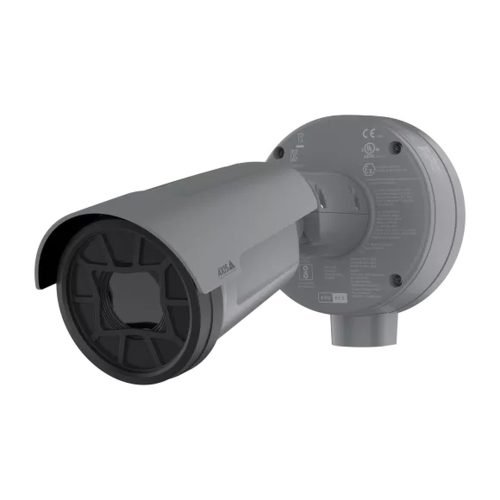
Product Overview
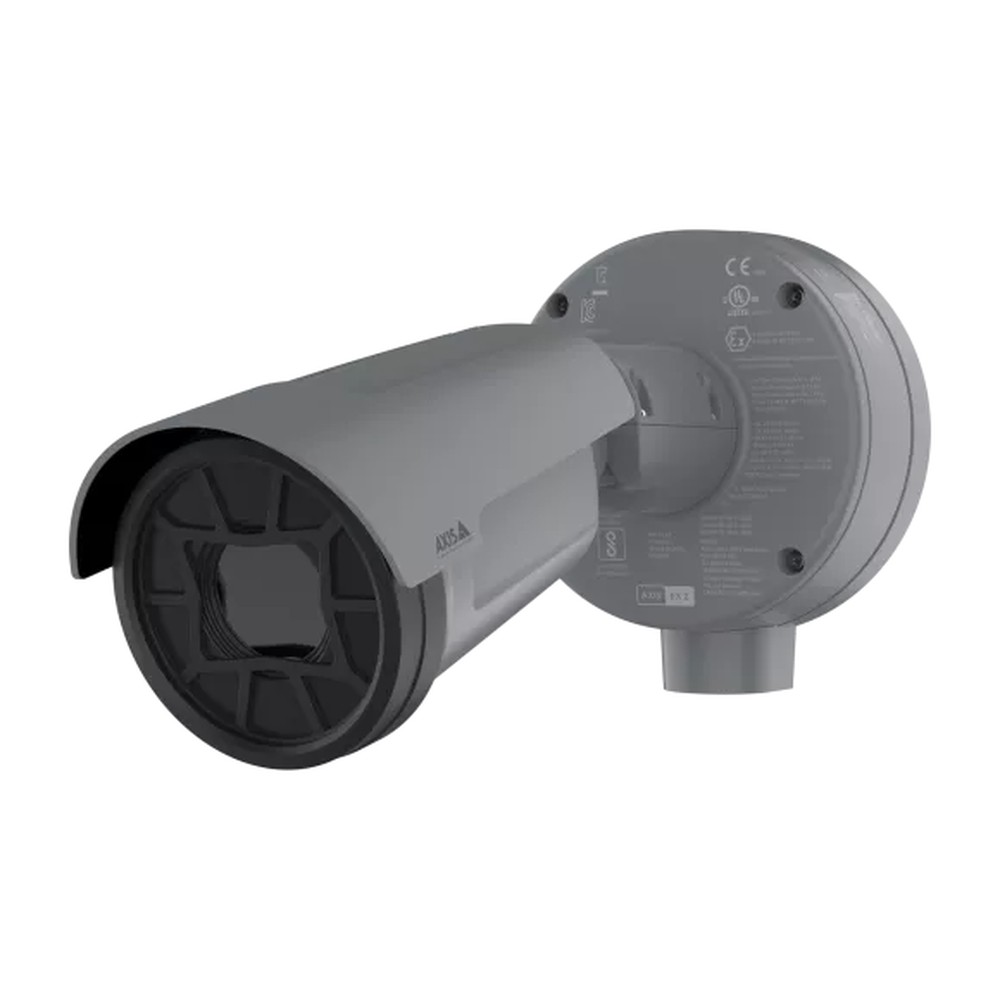
For facilities operating in Zone 2 explosion-prone environments, the Axis Q1961-XTE delivers certified explosion-protected thermal imaging in a compact and lightweight housing built for the harshest industrial conditions. Carrying ATEX, IECEx, and cULus Class I/II/III Division 2 certifications, this camera is purpose-engineered for deployment in oil and gas plants, chemical refineries, offshore platforms, and similar hazardous-area sites where standard surveillance equipment cannot be safely installed. Featuring a 384×288 uncooled microbolometer with a 7 mm athermalized lens and 55-degree horizontal field of view, it captures thermal imagery across a spectral range of 8-14 micrometres at frame rates up to 30 fps. Equipped with an ARTPEC-8 processor with built-in Deep Learning Processing Unit, it supports active thermometry across up to 10 configurable detection areas, measuring object temperatures from -40 degrees C to 350 degrees C. It is well suited to perimeter monitoring, process heat detection, and intrusion detection in environments where visibility and explosive-atmosphere safety compliance are both critical operational requirements.
Key Capabilities
Explosion-Protected Certification
Certified to ATEX, IECEx, and cULus Class I/II/III Division 2 standards, the Q1961-XTE is cleared for Zone 2 and Zone 21 explosive atmosphere areas. This makes it one of the few thermal cameras deployable in regulated hazardous-area installations without requiring a separate protective enclosure.
Uncooled Thermal Microbolometer
The 384×288 pixel sensor captures longwave infrared energy across an 8-14 micrometre spectral range, detecting heat signatures from people, vehicles, and process equipment regardless of lighting conditions or smoke, dust, or fog. Thermal sensitivity (NETD) is rated at 40 mK at 25 degrees C.
Active Thermometry with Temperature Alarms
Spot temperature measurement and up to 10 configurable polygonal detection areas allow operators to monitor specific zones for heat anomalies. Object temperature measurement spans -40 degrees C to 350 degrees C, with accuracy within plus or minus 5 degrees C below 120 degrees C, supporting process safety and early fire-risk detection workflows.
ARTPEC-8 with Deep Learning Processing
The onboard ARTPEC-8 SoC includes a dedicated Deep Learning Processing Unit with 2,048 MB RAM and 8,192 MB flash storage. This enables edge-based analytics and supports Axis Zipstream compression, reducing storage and bandwidth requirements without degrading forensic image quality.
IP66/IP67 and IK10 Ratings
Dual ingress protection ratings and IK10 vandal resistance confirm this camera is built to withstand industrial wash-down environments, heavy rain, and physical impact. The housing uses a polycarbonate blend, aluminium construction, and a germanium optical window rated for sustained outdoor and industrial use.
PoE Power and Flexible I/O
Powered via PoE IEEE 802.3af/at over a shielded RJ45 connection, the camera draws a typical 4.3 W, simplifying installation in infrastructure-poor industrial sites. It also accepts 10-28 V DC. A supervised alarm input and a digital output terminal block allow direct integration with external alarm and process control systems.
Best For
- Hazardous-Area Perimeter Security: ATEX/IECEx Zone 2 and cULus Class I/II/III Division 2 certifications make this camera legally deployable in explosive-atmosphere zones where uncertified cameras pose an ignition risk.
- Process Heat and Fire-Risk Monitoring: Thermometry across up to 10 configurable polygonal zones with temperature measurement up to 350 degrees C supports early detection of heat anomalies in industrial plant environments.
- Low-Visibility and Adverse-Condition Detection: Thermal imaging across the 8-14 micrometre spectral range detects people, vehicles, and equipment in complete darkness, dense smoke, dust, and heavy fog where conventional cameras cannot function reliably.
- Critical Infrastructure and Offshore Sites: Lightweight construction at 1.5 kg, an operating temperature range of -30 to 60 degrees C, and 10-100% RH condensing tolerance suit offshore platforms, refineries, and remote industrial facilities with minimal maintenance access.
Why Choose the Axis Q1961-XTE
The Axis Q1961-XTE occupies a narrow but critical product category: explosion-protected thermal cameras with certified compliance for Zone 2 hazardous areas. Unlike a standard outdoor thermal camera, this model carries ATEX, IECEx, and cULus Class I/II/III Division 2 certifications, meaning it can be installed directly into regulated hazardous zones without an additional explosion-proof enclosure. The 384×288 uncooled microbolometer with 40 mK NETD provides sensitive heat detection, while the ARTPEC-8 processor with DLPU enables onboard analytics and efficient Zipstream compression. Thermometry across 10 configurable polygonal areas adds a process monitoring capability that goes beyond simple intrusion detection. The supervised alarm input and digital output terminal support direct integration into site alarm and control infrastructure. Available through Security Wholesalers, the Q1961-XTE is backed by Axis’s global support network and long-term platform commitment, which matters significantly for multi-year compliance-driven industrial deployments.
Buyer Decision Tips
Thermal Only – No Visible Light Image: The Q1961-XTE produces thermal imagery only. It does not capture a conventional colour or monochrome video stream. If your site requires identification-quality footage for evidentiary or access control purposes alongside thermal detection, a companion visible-light camera on a separate channel will be required. Confirm with your compliance team whether this arrangement satisfies your site’s security specification before purchase.
Confirm Your Hazardous Area Classification Before Specifying: ATEX and IECEx certifications cover Zone 2 and Zone 21 (secondary-release gas and dust atmospheres). If your site is classified Zone 0 or Zone 1 (primary or continuous release), this model is not rated for those zones. Provide your site’s area classification document to your project engineer before finalising the camera specification to avoid compliance issues post-installation.
Key Features & Technical Specifications
| Model |
Axis Q1961-XTE |
| Sensor Type |
Uncooled microbolometer |
| Resolution |
384×288 pixels (pixel size 17 µm); scalable to 768×576 |
| Spectral Range |
8-14 µm (longwave infrared) |
| Thermal Sensitivity (NETD) |
40 mK at 25°C, F1.0 |
| Frame Rate |
Up to 30 fps |
| Lens |
7 mm athermalized, F1.18, horizontal FOV 55°, minimum focus distance 1.3 m |
| Thermometry Range |
-40°C to 350°C (-40°F to 662°F) |
| Temperature Accuracy |
±5°C below 120°C; ±15% above 120°C |
| Detection Areas |
Up to 10 configurable polygonal temperature detection areas |
| Processor |
ARTPEC-8 with DLPU; 2,048 MB RAM; 8,192 MB flash |
| Video Compression |
H.265 (HEVC) Main Profile; H.264 Baseline/Main/High Profile; Motion JPEG; Axis Zipstream |
| Network Connector |
Shielded RJ45 10BASE-T/100BASE-TX/1000BASE-T PoE |
| Power |
PoE IEEE 802.3af/802.3at Type 1 Class 3 (typical 4.3 W, max 12.95 W); 10-28 V DC (typical 4.1 W) |
| I/O |
1x supervised alarm input; 1x digital output (12 V DC, max 50 mA) |
| Audio |
3.5 mm microphone/line input; audio detection supported |
| Operating Temperature |
-30°C to 60°C; storage -40°C to 65°C; humidity 10-100% RH (condensing) |
| IP / IK Rating |
IP66/IP67; IK10 |
| Explosion Certifications |
ATEX; IECEx; cULus Class I/II/III Division 2; Zone 2/21; INMETRO; OSHA (TW); IA; UL; TAA Compliant |
| Housing / Weight |
Polycarbonate blend and aluminium with germanium window; 1.5 kg (3.3 lb) |
| Protocols / Standards |
ONVIF G/M/S/T; RTSP; MQTT v3.1.1; SSH; SRTP; IGMPv1/v2/v3; DHCPv4/v6; ZeroConf; Syslog; CDP; LLDP |
Ideal Use Cases
Oil and Gas Facility Perimeters
ATEX and IECEx Zone 2 certifications allow direct deployment around wellheads, compressor stations, and storage yards where flammable gas atmospheres may occur. The 55-degree field of view and thermal sensitivity support fence-line intrusion detection regardless of time of day.
Chemical Plant Process Monitoring
Thermometry across up to 10 configurable polygonal zones allows operators to monitor heat-generating process equipment for anomalies. Temperature measurement up to 350 degrees C with accuracy within plus or minus 5 degrees C below 120 degrees C supports early-warning detection before process temperatures reach critical thresholds.
Offshore Platform Surveillance
IP66/IP67 ingress protection and an operating range of -30 to 60 degrees C with 10-100% RH condensing tolerance make the Q1961-XTE suited to the salt air, moisture, and temperature extremes of offshore oil and gas platforms, where camera servicing intervals are long and reliability is non-negotiable.
Mining and Hazardous Material Sites
cULus Class I/II/III Division 2 certification covers dust-ignition-protected applications as well as gas-hazard environments, making this camera viable at mining operations, grain handling facilities, and hazardous material storage sites classified under North American Division 2 standards.
Critical Infrastructure in Smoke or Dust Environments
Thermal imaging across the 8-14 micrometre spectral range is unaffected by smoke, dust, steam, or complete darkness. This makes the Q1961-XTE an effective detection tool for power generation facilities, waste processing plants, and industrial sites where visible-light cameras lose effectiveness in adverse atmospheric conditions.
Choosing the Right Model
- Choose this model if: Your installation site is classified Zone 2, Zone 21, or Class I/II/III Division 2, and your application requires certified thermal detection, thermometry, or heat-anomaly monitoring in an explosive-atmosphere environment. The Q1961-XTE’s combination of ATEX/IECEx/cULus certifications and ARTPEC-8 analytics makes it one of the few single-unit solutions meeting both regulatory and operational requirements simultaneously.
- Choose a different model if: Your site does not carry a hazardous area classification and you need thermal detection only – a standard (non-explosion-protected) thermal camera will typically be more cost-effective and offer a broader choice of lens options. If your primary requirement is identification-quality video rather than heat detection, a high-resolution visible-light camera with a wide dynamic range sensor will better serve that purpose.
- Choose a different model if: Your hazardous area classification is Zone 0 or Zone 1 (continuous or primary explosive-atmosphere release) – the Q1961-XTE is not rated for those zones and a higher-category explosion-protected device would be required. Consult your site’s area classification documentation before specifying any camera for primary-release zones.
FAQs
- What explosion-protection certifications does the Q1961-XTE carry?
The Q1961-XTE is certified to ATEX, IECEx, and cULus Class I, Division 2 and Class II/III, Division 2 standards. It is also rated for Zone 2 and Zone 21 under IEC zone classification. Additional certifications include INMETRO, OSHA (TW), IA, UL, and TAA compliance. These certifications allow it to be installed directly in secondary-release explosive-atmosphere environments without a separate explosion-proof enclosure.
- Does the Q1961-XTE capture colour or night-vision video footage?
No. This is a pure thermal camera. It captures heat radiation across the 8-14 micrometre longwave infrared spectral range and produces thermal imagery only. It does not generate a visible-light colour or monochrome image stream. If identification-quality footage is also required at the same location, a separate visible-light camera on an adjacent channel would need to be specified alongside it.
- What is the thermometry accuracy, and how many monitoring zones can be configured?
The Q1961-XTE measures object temperatures from -40 degrees C to 350 degrees C. Temperature accuracy is within plus or minus 5 degrees C for readings below 120 degrees C, and within plus or minus 15% for readings above 120 degrees C. Up to 10 configurable polygonal detection areas can be set, each capable of triggering alarms based on temperature thresholds defined by the operator.
- Can the Q1961-XTE be powered by PoE, and does it require a specialised switch?
Yes, it supports PoE to IEEE 802.3af/802.3at Type 1 Class 3, drawing a typical 4.3 W. A standard PoE switch or injector supporting Class 3 devices is sufficient. It also accepts 10-28 V DC for sites where PoE infrastructure is unavailable. The shielded RJ45 connector supports 10BASE-T, 100BASE-TX, and 1000BASE-T connections.
- How does Axis Zipstream reduce storage and bandwidth demands from a thermal camera?
Zipstream dynamically adjusts the compression level in real time, applying higher compression to areas of a thermal frame with low information value while preserving detail where motion or temperature change is detected. For thermal cameras monitoring large static scenes, this can significantly reduce average bitrate and NVR storage consumption compared to standard H.265 encoding at a fixed quality level.
- Is the Q1961-XTE suitable for outdoor installation at a coastal or offshore site?
Yes. IP66 and IP67 dual ingress ratings confirm complete protection against dust ingress and sustained water immersion. The housing uses aluminium and a germanium infrared window designed for sustained environmental exposure. The camera operates across -30 degrees C to 60 degrees C with humidity tolerance from 10 to 100% RH condensing, covering the temperature and moisture extremes common at coastal and offshore industrial sites.
- What integration options does the Q1961-XTE support for existing site alarm systems?
The camera includes 1 supervised alarm input and 1 digital output terminal block rated at 12 V DC, up to 50 mA, allowing direct wiring to external alarm panels or process control systems. It supports ONVIF G, M, S, and T profiles and MQTT v3.1.1, enabling integration with VMS platforms, SCADA systems, and IoT monitoring infrastructure. Available through Security Wholesalers, the Q1961-XTE is compatible with Axis’s own AXIS Camera Station platform as well as a wide range of third-party VMS solutions.
Additional Information
AXIS 02535-001 Datasheet