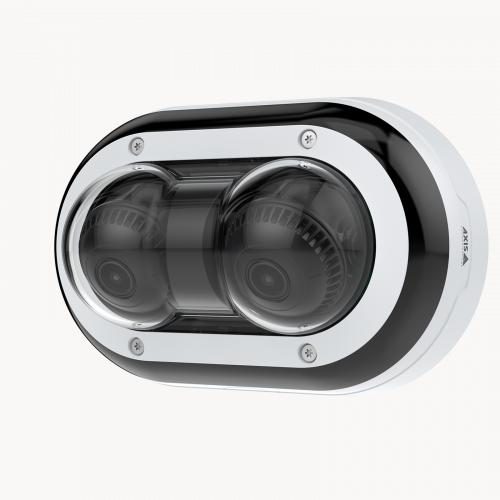
Product SKU: P4707-PLVE
Product Overview
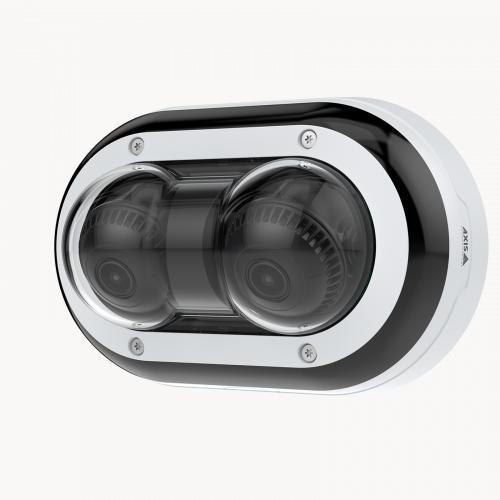
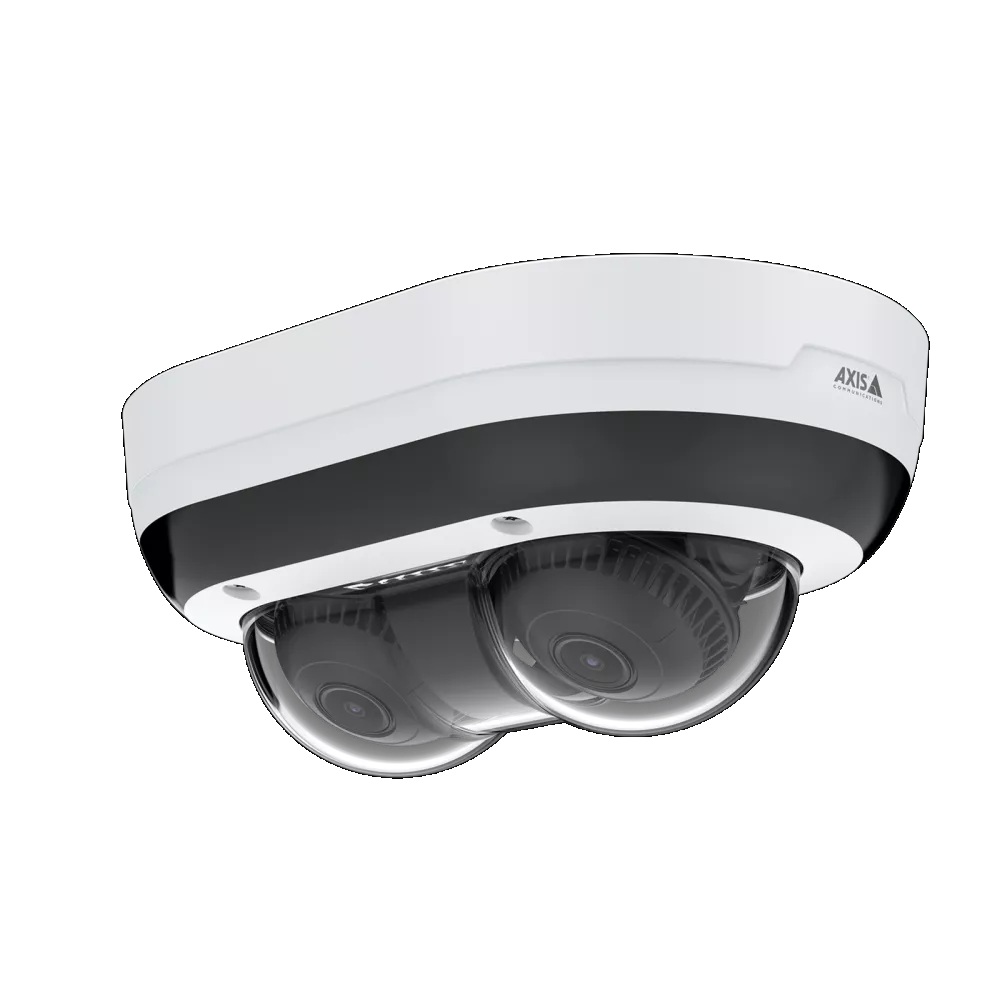
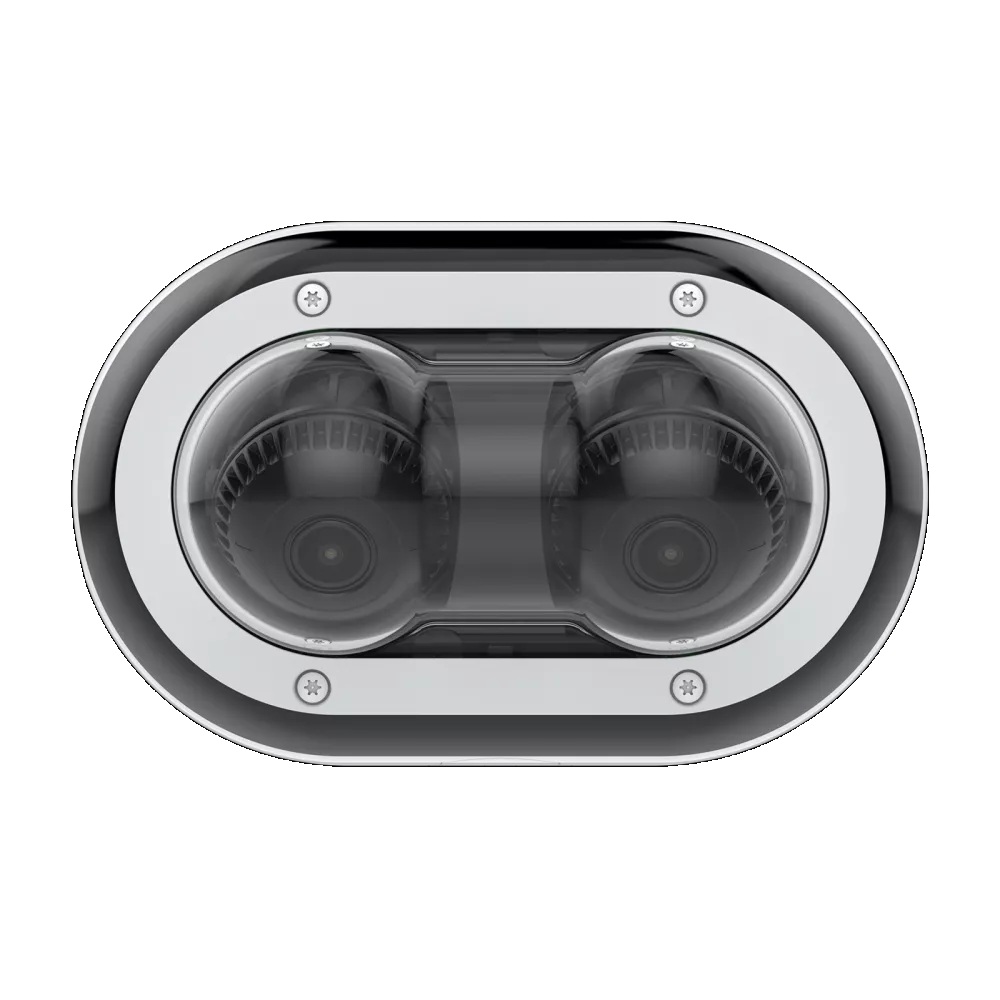
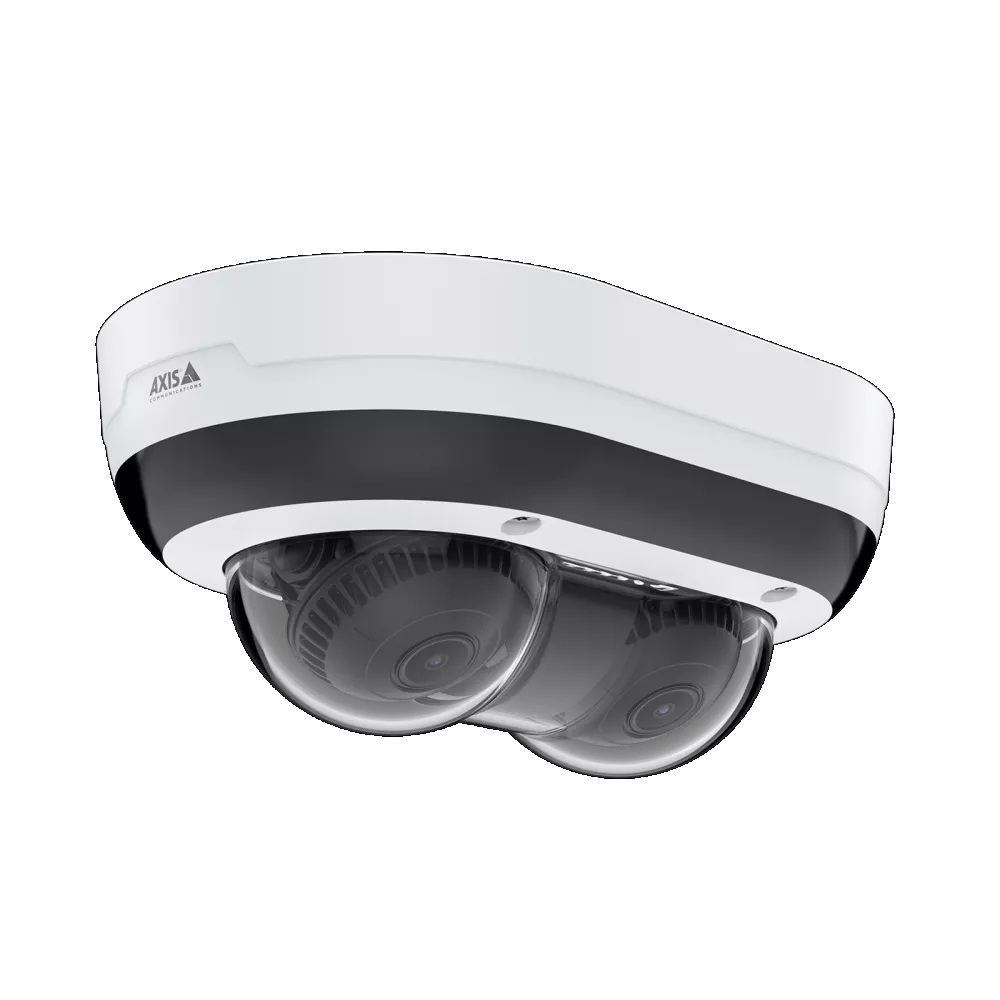
Monitoring two independent directions from a single ceiling or corner mount, the AXIS P4707-PLVE is a dual-sensor multidirectional panoramic camera designed to reduce device count, cabling runs, and switch port usage at building corners, corridor intersections, car park entries, loading dock crossings, and outdoor perimeter access points. Equipped with 2 x 5MP channels operating through one IP address, each sensor head features an independently adjustable 3.26-8.12mm varifocal lens with 2.5x optical zoom and remote zoom and focus, giving installers precise framing control per channel without requiring physical access after mounting. Incorporating 360° IR illumination with individually controllable LEDs, Axis Lightfinder, and Forensic WDR, the P4707-PLVE maintains usable image detail across daylight, low light, and complete darkness in both viewing directions. It also runs AXIS Object Analytics and scene metadata generation on both sensors simultaneously through the onboard ARTPEC-8 deep learning processor, bringing edge-based object classification to dual-direction coverage without server-side analytics dependencies. Built with H.264/H.265 Axis Zipstream compression, IP66/IP67 weather protection, IK10 vandal resistance, PoE, and edge storage support, it is a purpose-built solution for sites where consolidating two views into one device is both an infrastructure and an operational requirement.
Key Capabilities
Dual 5MP Sensors on One IP Address
Both sensor channels share a single IP address and a single network connection. At corners, T-junctions, and split-direction access points this eliminates the need for a second camera, a second PoE port, a second mounting bracket, and a second cable run, while still delivering two separately framed 5MP video streams.
Independent Varifocal Adjustment Per Channel
Each sensor head adjusts independently across a 3.26-8.12mm focal range with 2.5x optical zoom and supports remote zoom and focus via the network. One head can be framed wide for situational coverage while the other is zoomed toward a specific access point, gate, counter, or vehicle lane, all from one physical device.
360° IR with Individually Controllable LEDs
IR LEDs arranged across the full 360° arc of the camera body are individually controllable, delivering consistent night-vision illumination to both sensor directions regardless of where each head is aimed. This supports around-the-clock monitoring at exposed corners, walkways, and perimeter approaches without supplementary lighting infrastructure.
Edge Deep Learning on Both Sensors via ARTPEC-8
The ARTPEC-8 processor runs AXIS Object Analytics and scene metadata generation on both sensor channels simultaneously, directly on the device. Accurate edge-based object classification across two views reduces dependence on central analytics servers and keeps detection and forensic search responsive in large commercial, campus, and industrial deployments.
Lightfinder and Forensic WDR Across Both Channels
Axis Lightfinder preserves colour information in dim environments, while Forensic WDR manages high-contrast scenes where bright and dark regions appear together in the same frame. Both technologies are applied per sensor channel, supporting evidentially useful footage at backlit entries, vehicle approaches, and mixed indoor-outdoor transitions across both views.
Zipstream Compression Across Dual Streams
Axis Zipstream dynamically reduces bitrate in static areas of each frame while retaining full detail where motion and objects are detected. Applied across two simultaneous 5MP streams, this keeps combined bandwidth and storage demands practical without sacrificing image quality in the regions most relevant to detection and incident review.
Best For
- Building Corners and External Perimeters: The two independently adjustable 5MP sensor heads cover both faces of a building corner from one mounting bracket, with 360° IR and IP66/IP67 weather protection supporting all-weather overnight coverage of external approaches without a second camera mount on the adjacent wall.
- Corridor Intersections and T-Junctions: A single P4707-PLVE positioned at a ceiling intersection covers two corridor directions simultaneously, reducing device count and ceiling penetrations in schools, hospitals, offices, and managed building environments where dual-direction overhead coverage is a layout requirement.
- Car Parks, Loading Docks, and Vehicle Entry Points: Forensic WDR handles the contrast challenges of headlights against dark surroundings. One varifocal head can cover an inbound vehicle lane while the other monitors a pedestrian path or ticketing station, with IK10 vandal resistance adding durability in exposed traffic areas.
- Retail and Commercial Campuses Requiring Edge Analytics: AXIS Object Analytics running on both sensors supports accurate object detection across entrances, service zones, and split-level retail floors from a single compact overhead device, keeping event classification at the edge and reducing the VMS processing load across multi-camera deployments.
Why Choose the AXIS P4707-PLVE
The AXIS P4707-PLVE addresses a specific infrastructure challenge: delivering monitored coverage of two directions from one location without doubling the device count, network connections, mounting hardware, or potential VMS licensing overhead. A standard single-sensor camera cannot frame two directions simultaneously, and a two-camera alternative at the same position adds cabling complexity, extra switch ports, and additional managed endpoints on the network. The P4707-PLVE consolidates both views into one device operating on one IP address, with both 5MP sensors benefiting from 360° IR coverage, Forensic WDR, Lightfinder, and ARTPEC-8 deep learning analytics running simultaneously at the edge. The independently adjustable 3.26-8.12mm varifocal heads with 2.5x zoom per channel give installers full framing control over each view at commissioning, supported by remote zoom and focus for fine adjustment after mounting. IP66/IP67 and IK10 ratings extend the camera’s suitability to exposed outdoor locations and physically demanding environments. Available through Security Wholesalers, the P4707-PLVE is engineered for sites where reducing device count while maintaining dual-direction intelligence at the edge is a defined project requirement.
Buyer Decision Tips
Determine Each Sensor’s Framing Before the Cable Run is Finalised: Each varifocal head adjusts independently within the 3.26-8.12mm range, but the physical orientation of each head relative to the mounting point determines which directions can actually be covered. At an external building corner, the rotation arc of each head must be confirmed to reach both wall faces before the bracket position and cable entry point are locked in. Remote zoom and focus allows optical adjustment after mounting, but physical head orientation cannot be changed without repositioning the camera body.
Verify Channel Licensing with Your VMS or NVR Platform: The P4707-PLVE registers as one device on the network but generates two independent video streams. Many VMS platforms licence per stream rather than per device. On a site deploying multiple dual-sensor units, the difference between per-device and per-stream licensing can have a meaningful effect on total software cost. Confirm the licensing model with your platform vendor before specifying the P4707-PLVE across a multi-unit installation.
Key Features & Technical Specifications
| Model |
AXIS P4707-PLVE |
| Product Type |
Dual-Sensor Multidirectional Panoramic Network Camera |
| Sensor Configuration |
2 x 5MP camera channels |
| Network Addressing |
Single IP address for both sensors |
| Lens |
3.26-8.12mm varifocal per sensor head, remote zoom and focus |
| Optical Zoom |
2.5x per sensor head |
| Maximum Frame Rate |
Up to 30 fps |
| IR Illumination |
360° with individually controllable IR LEDs |
| Low-Light Technology |
Axis Lightfinder |
| Wide Dynamic Range |
Forensic WDR |
| Processing Platform |
ARTPEC-8 with deep learning processing support |
| Analytics |
AXIS Object Analytics, scene metadata, deep learning on both sensors |
| Compression |
H.264, H.265, Axis Zipstream |
| Audio |
Audio support included |
| Edge Storage |
Supported |
| Weather Rating |
IP66/IP67 |
| Vandal Rating |
IK10 |
| Power |
Power over Ethernet (PoE) |
| Cybersecurity |
Axis cybersecurity platform support |
Ideal Use Cases
External Building Corners
Two independently adjustable varifocal heads can be aimed along each face of a building corner from one bracket, eliminating a second mounting point on the adjacent wall. IP66/IP67 weather protection and 360° IR illumination support overnight and all-weather coverage of exposed corner approaches without supplementary lighting.
Corridor Intersections and T-Junctions
A single P4707-PLVE overhead at a corridor crossing delivers 2 separately framed 5MP views where a fixed single-sensor camera leaves one branch unmonitored. This reduces total device count, ceiling penetrations, and cabling in schools, hospitals, office corridors, and managed public buildings with multiple branching pathways.
Car Parks and Vehicle Entry Lanes
Forensic WDR handles the simultaneous presence of vehicle headlights and dark surroundings in the same frame. One sensor head can cover the inbound lane while the other monitors a pedestrian crossing, payment station, or neighbouring aisle, with IK10 resistance adding durability in open, traffic-exposed parking environments.
Retail Entrances and Split-Zone Floor Coverage
AXIS Object Analytics running at the edge on both sensors supports accurate object detection across retail entrances and service areas without server processing overhead. One head frames the entry while the other covers a counter, aisle end, or stockroom access point. Zipstream manages bandwidth across both 5MP streams simultaneously.
Warehouses and Loading Dock Crossings
IK10 vandal resistance and IP66/IP67 ratings extend the P4707-PLVE to the physical demands of industrial interiors. At dock intersections and stock movement corridors where both directions carry operational and security significance, dual 5MP coverage from one ceiling or wall mount reduces the number of devices, ports, and cable runs needed to monitor the crossing.
Choosing the Right Model
- Choose this model if: Your site has corners, intersections, or split-direction access points where 2 independently framed 5MP views are needed from one mounting location and reducing cabling, switch ports, and device count is a project requirement. The ARTPEC-8 deep learning processor running AXIS Object Analytics on both sensors simultaneously adds edge intelligence that justifies the unit in commercial, campus, and industrial deployments where server-side analytics resources are limited.
- Choose a different model if: Your site requires coverage of more than 2 independent directions from a single device. A 4-sensor multidirectional camera or a fisheye panoramic camera provides broader situational awareness across all four quadrants and may be better suited where full 360° situational coverage is the priority rather than targeted dual-direction framing. If only a single direction needs to be covered, a standard fixed or varifocal dome or turret will deliver a more cost-effective solution per installation point.
FAQs
- How does the AXIS P4707-PLVE physically cover two directions at once?
The P4707-PLVE houses 2 separate sensor heads, each with its own independently adjustable varifocal lens. During installation each head is physically oriented toward a different direction and optically adjusted within the 3.26-8.12mm range to frame the required field of view. Both heads stream video independently while sharing a single IP address and network connection, so the device registers as one unit on the network.
- Can the IR illumination reach both sensor directions at the same time?
Yes. The IR LEDs are distributed across the full 360° arc of the camera housing and are individually controllable. Because the LED array covers all directions rather than projecting from a fixed forward arc, both sensor channels receive night-vision illumination regardless of the specific directions each head is aimed toward. This makes the P4707-PLVE practical for overnight monitoring across two directions without any supplementary IR lighting.
- What does Forensic WDR do differently from standard WDR on this camera?
Forensic WDR processes each sensor channel independently and is designed to retain evidentially useful detail in both highlighted and shadowed areas of a scene simultaneously. At a car park entry or building corner, one sensor may face a brightly lit road while the other looks toward a shaded area. Forensic WDR applies dynamic range correction across each channel separately, maintaining usable detail in both the bright and dark regions of each view without manual per-channel exposure adjustment.
- Is AXIS Object Analytics running on both sensors at the same time?
Yes. The ARTPEC-8 deep learning processor on the P4707-PLVE runs AXIS Object Analytics and scene metadata generation on both sensor channels simultaneously, entirely at the edge. Object classification, event triggering, and metadata output are active across both video streams without requiring server-side processing, which is a practical advantage on large multi-camera sites where central analytics server capacity is a constraint.
- Is the P4707-PLVE suitable for permanent outdoor installation in Australian conditions?
Yes. The P4707-PLVE carries IP66 and IP67 ingress protection ratings confirming full dust sealing and protection against water immersion and sustained heavy rain. The IK10 impact resistance rating confirms the housing withstands physical impact equivalent to the IK10 standard. These ratings make it appropriate for exposed external building corners, outdoor car parks, loading dock entries, and open walkways where weather and physical contact are ongoing conditions.
- Does each video stream from the P4707-PLVE count as a separate VMS or NVR channel?
The P4707-PLVE presents as one device on one IP address but produces 2 independent video streams. Whether each stream is counted as a separately licensed channel depends on the VMS or NVR platform in use. Some platforms licence per stream rather than per device. On sites with multiple dual-sensor units deployed, this distinction can have a significant effect on total software cost. Security Wholesalers can assist with configuration planning, and confirming the licensing model with your software vendor before deployment is strongly recommended.
- Can one varifocal head be set wide and the other zoomed in at the same time?
Yes. Each head adjusts independently within the 3.26-8.12mm focal range with 2.5x optical zoom and supports remote zoom and focus adjustment over the network. One head can be set to a wide situational frame covering a broad area while the other is zoomed toward a specific point such as a gate, doorway, vehicle entry lane, or service counter. This independent optical control per channel is one of the primary practical advantages of the dual-sensor design for locations with mixed coverage requirements from a single mounting point.
Additional Information