Product Overview
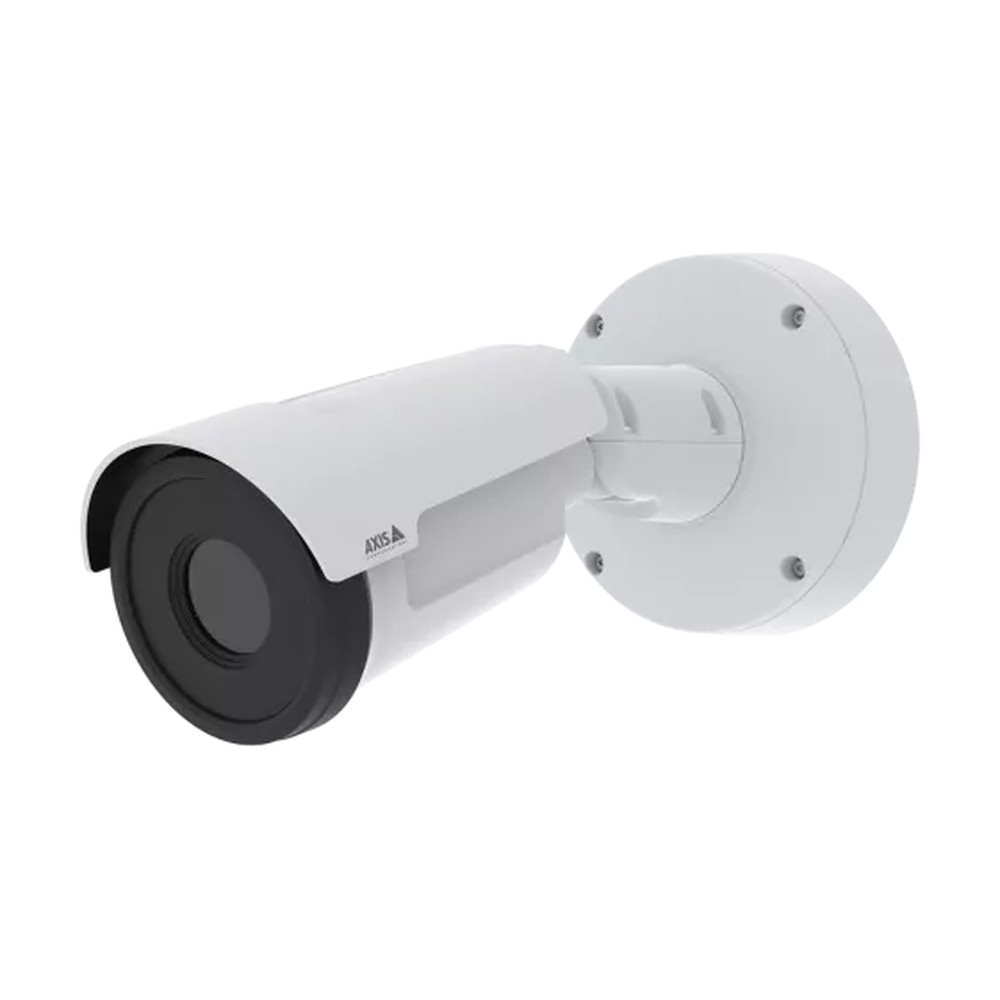
Thermal imaging coverage across a perimeter fence line, critical infrastructure boundary, or industrial yard requires a sensor that operates entirely independently of visible light, and the AXIS Q1972-E is built precisely for that role. This outdoor bullet-form thermal network camera uses an uncooled microbolometer sensor at 640×480 pixel resolution with a 25 mm athermalized fixed lens, delivering a 24-degree horizontal field of view suited to long-range detection corridors. Powered by the ARTPEC-8 SoC with an integrated deep-learning processing unit, the Q1972-E runs Axis Perimeter Defender and on-camera analytics including Fence Guard, Loitering Guard, and Motion Guard directly at the edge. Featuring IP66, IP67, and IK10-rated aluminium and polycarbonate housing alongside an integrated heater, it operates reliably from -40 degrees C to 60 degrees C. It also supports Axis Zipstream in both H.264 and H.265 to reduce bandwidth and storage demands across challenging network environments. This makes it well suited to sites where consistent after-dark detection and adverse-weather performance are non-negotiable requirements.
Key Capabilities
640×480 Uncooled Thermal Sensor
The 640×480 microbolometer sensor with 17 µm pixel size and thermal sensitivity below 20 mK at 25 degrees C provides fine temperature differentiation. This level of sensitivity distinguishes people, vehicles, and animals at distance even in complete darkness, smoke, or fog where visible-light sensors fail.
25 mm Athermalized Fixed Lens
The 25 mm F1.0 athermalized lens maintains focus across the full operating temperature range without manual refocusing. With a horizontal field of view of 24 degrees and a near focus distance of 18.5 m, it is calibrated for detection along extended outdoor approaches and perimeter corridors rather than wide-angle short-range coverage.
ARTPEC-8 with Deep-Learning Processing
The ARTPEC-8 SoC includes a dedicated deep-learning processing unit that runs Axis Perimeter Defender, Fence Guard, Loitering Guard, and Motion Guard on-camera. Processing analytics at the edge reduces reliance on server-side compute and enables faster alarm responses at remote or bandwidth-constrained sites.
FIPS 140-2 Level 2 and Axis Edge Vault
Axis Edge Vault and FIPS 140-2 Level 2 certification provide hardware-level cryptographic protection for device credentials, firmware, and video streams. This meets the security requirements of government, defence, utilities, and other critical infrastructure projects where data integrity at the camera level is mandatory.
All-Weather Hardened Housing
The aluminium and polycarbonate bullet housing carries IP66, IP67, and IK10 ratings, with an integrated heater enabling reliable operation from -40 degrees C to 60 degrees C. This combination of pressure-wash resistance, impact resistance, and extreme-temperature tolerance makes it appropriate for exposed wall or pole mounting on demanding outdoor perimeters.
Axis Zipstream in H.264 and H.265
Zipstream dynamically lowers bitrate during low-activity periods while preserving full detail during events. Combined with H.265 HEVC compression, this significantly reduces storage and bandwidth costs across multi-camera perimeter deployments without compromising recorded detail when motion or intrusion events occur.
Best For
- Perimeter Intrusion Detection: The 25 mm lens, 24-degree HFOV, and Axis Perimeter Defender support make this suited to monitoring extended fence lines or boundary corridors where long-range human and vehicle detection is the primary objective.
- Critical Infrastructure and High-Security Sites: FIPS 140-2 Level 2 certification and Axis Edge Vault satisfy the cybersecurity and data integrity requirements common to utilities, water treatment, government, and defence installations.
- Adverse-Weather and Low-Light Environments: Operating across the 8-14 µm spectral range, the thermal sensor detects heat signatures regardless of fog, rain, smoke, or complete darkness, covering scenarios where visible-light cameras with IR illuminators are insufficient.
- Privacy-Sensitive Outdoor Monitoring: Because thermal imaging captures heat signatures rather than recognisable facial or body detail, this camera is used in locations where visible-light recording raises privacy objections but perimeter detection is still required.
Why Choose the AXIS Q1972-E
The AXIS Q1972-E stands apart from entry-level thermal cameras through the combination of a high-resolution 640×480 sensor, the ARTPEC-8 SoC with an on-board deep-learning processing unit, and hardware-grade cybersecurity via Axis Edge Vault and FIPS 140-2 Level 2 certification. A basic thermal camera can detect heat, but the Q1972-E processes that data with on-camera AI analytics, runs Axis Perimeter Defender for classified intrusion detection, and delivers those results without routing unencrypted streams to a remote server. The athermalized 25 mm lens removes the need for manual focus adjustment as temperatures swing across the full -40 to 60 degree operating range, which matters on sites where camera access is difficult or infrequent. The integrated heater and IK10-rated bullet housing add physical durability that cameras in lighter enclosures cannot match. Available through Security Wholesalers, the AXIS Q1972-E is a credible choice for integrators specifying perimeter protection on critical or high-value sites.
Buyer Decision Tips
Buyer Tip – Frame Rate and Detection Role: The Q1972-E operates at a maximum of 8.3 fps. This is intentional for a thermal detection camera: the sensor is optimised for identifying and classifying heat signatures across a monitored zone, not for capturing smooth video of fast-moving subjects. If your application requires fluid video footage for evidential playback or tracking fast vehicles, pair this camera with a visible-light camera covering the same zone. Use the Q1972-E as the primary detection trigger and the visible-light camera for follow-up recording.
Buyer Tip – Near Focus Distance and Lens Choice: The 25 mm lens on the Q1972-E has a near focus distance of 18.5 m. Objects closer than 18.5 m will not be in sharp thermal focus. If your monitored zone starts at the camera location rather than at a fence line or boundary some distance away, a wider-angle lens variant in the Q19 series would be more appropriate. Confirm the minimum detection distance on your site plan before specifying this focal length.
Key Features & Technical Specifications
| Model |
AXIS Q1972-E 25 mm 8.3 fps |
| SKU |
03032-001 |
| Sensor Type |
Uncooled microbolometer, 640×480 pixels, 17 µm pixel size |
| Spectral Range |
8-14 µm (longwave infrared / thermal) |
| Thermal Sensitivity (NETD) |
<20 mK at 25 degrees C, F1.0 |
| Lens |
25 mm, F1.0, athermalized fixed lens |
| Field of View |
Horizontal 24 degrees, Vertical 18.5 degrees |
| Near Focus Distance |
18.5 m (61 ft) |
| Maximum Frame Rate |
8.3 fps |
| Video Compression |
H.264 (Baseline, Main, High), H.265 HEVC Main Profile, Motion JPEG; Axis Zipstream in H.264 and H.265 |
| Processor (SoC) |
ARTPEC-8 with deep-learning processing unit (DLPU) |
| Memory |
2048 MB RAM, 8192 MB Flash |
| Analytics |
Axis Video Motion Detection, Motion Guard, Fence Guard, Loitering Guard, audio detection, active tampering alarm; supports Axis Perimeter Defender and third-party ACAP applications |
| Cybersecurity |
Axis Edge Vault, Trusted Platform Module (TPM), FIPS 140-2 Level 2 certified |
| Power |
PoE IEEE 802.3af/802.3at Type 1 Class 3 (typical 5.0 W, max 12.95 W); 12-28 V DC (typical 4.8 W) |
| Connectors |
Shielded RJ45 10/100/1000BASE-T PoE; DC input terminal block; I/O terminal block (1 supervised alarm input, 1 output 12 V DC max 50 mA); 3.5 mm mic/line in; microSD/microSDHC/microSDXC slot |
| Weather and Vandal Rating |
IP66, IP67, IK10 |
| Operating Temperature |
-40 degrees C to 60 degrees C (integrated heater included) |
| Housing |
Aluminium and Polycarbonate; Black or White; halogen-free construction |
| ONVIF Compliance |
Profiles G, M, S and T |
Ideal Use Cases
Industrial Perimeter Fencing
The 25 mm lens and Axis Fence Guard analytic allow the Q1972-E to monitor a defined perimeter line and trigger alarms when that virtual boundary is crossed. The thermal sensor operates without any external lighting, making it effective on unlit industrial boundaries at any hour.
Utility and Infrastructure Protection
FIPS 140-2 Level 2 certification and Axis Edge Vault satisfy cybersecurity frameworks applied to water treatment, power generation, and telecommunications sites. The camera’s on-board analytics reduce dependence on centralised servers that may represent a single point of failure on these sites.
Port, Rail, and Transport Yards
Large outdoor transport and logistics yards involve vehicle movements, uneven lighting, and wide monitored zones. The Q1972-E detects heat signatures from vehicles and personnel at distance through the 24-degree HFOV corridor without being affected by headlight glare or shadow areas that degrade visible-light cameras in these environments.
Mining and Remote Site Monitoring
The -40 to 60 degree C operating range, integrated heater, and IP67-rated housing handle the environmental extremes common to remote Australian mining and resource sites. Edge storage via microSD and on-camera analytics allow the camera to function and record even when network connectivity is intermittent.
Privacy-Regulated Outdoor Zones
In locations where privacy legislation or organisational policy restricts the collection of identifiable facial or body imagery outdoors, thermal imaging captures heat signatures rather than recognisable detail. This allows perimeter monitoring and loitering detection to continue while reducing the privacy exposure associated with visible-light cameras.
Choosing the Right Model
- Choose this model if: Your site requires 24-hour perimeter intrusion detection independent of ambient lighting, operates across extreme temperatures, demands FIPS 140-2 Level 2 cybersecurity compliance, and has detection zones beginning at least 18.5 m from the camera mounting point.
- Choose a different model if: You need footage suitable for identifying individuals or reading licence plates, as thermal imaging is a detection technology rather than an identification one. A visible-light camera with appropriate resolution and IR illumination, used alongside this thermal camera, would address that requirement. Similarly, if your monitored zone begins very close to the camera, a wider-angle thermal lens variant would be more appropriate than the 25 mm option.
- Choose a different model if: Your application requires standard 25 fps video at full resolution. The Q1972-E captures at a maximum of 8.3 fps, which is suited to detection analytics but not to applications where smooth motion representation is a recording requirement.
FAQs
- Can the AXIS Q1972-E see in complete darkness?
Yes. The thermal sensor operates across the 8-14 µm spectral range, detecting heat emitted by people, animals, and vehicles regardless of ambient light levels. It does not require any IR illuminators or external lighting to function at night, making it fundamentally different from a standard IP camera with night vision.
- What does the 25 mm lens mean for detection range on this camera?
The 25 mm athermalized lens delivers a 24-degree horizontal field of view and a near focus distance of 18.5 m. This configuration is designed for monitoring a defined corridor or approach at distance rather than providing wide-angle coverage. For practical perimeter deployments, this lens is well suited to fence line segments, gateway approaches, or long outdoor paths where the target zone starts well beyond the camera’s mounting position.
- What analytics can run directly on the camera without a server?
Powered by the ARTPEC-8 SoC with an on-board deep-learning processing unit, the Q1972-E runs Axis Video Motion Detection, Motion Guard, Fence Guard, Loitering Guard, audio detection, and active tampering alarm at the edge. Axis Perimeter Defender and compatible third-party ACAP applications can also be installed on the camera, enabling classified human and vehicle detection without routing data to an external analytics server.
- What does FIPS 140-2 Level 2 certification mean for this camera?
FIPS 140-2 Level 2 is a US federal cryptographic security standard that specifies hardware and software requirements for protecting sensitive data. Combined with Axis Edge Vault and a Trusted Platform Module, this certification means the Q1972-E has hardware-enforced protection for device identity, firmware integrity, and stored credentials. It is a requirement for many government, defence, and critical infrastructure procurement specifications in Australia and internationally.
- How does Axis Zipstream reduce storage on a thermal camera?
Axis Zipstream dynamically adjusts the bitrate of H.264 and H.265 video streams, lowering data output during periods of low activity in the thermal scene while preserving full detail when a heat signature triggers an event. On a perimeter camera that may record hours of empty footage overnight, Zipstream can substantially reduce NVR storage consumption and network bandwidth without affecting recorded event quality.
- Can the Q1972-E operate in Australian outback conditions or cold-climate environments?
The camera operates from -40 degrees C to 60 degrees C. An integrated heater maintains the internal electronics within safe operating range at the lower end of this scale. The IP66 and IP67 ratings provide protection against dust ingress and water pressure, making it suitable for the temperature extremes of both remote inland Australian sites and cold alpine or southern environments.
- Is the Q1972-E compatible with third-party VMS platforms?
The Q1972-E supports ONVIF Profiles G, M, S, and T, which covers live streaming, event handling, metadata, and recording compatibility with the majority of modern video management systems. It also integrates natively with Axis Camera Station. For site-specific VMS compatibility queries, Security Wholesalers can assist in confirming integration options before purchase.
Additional Information
AXIS 03032-001 Datasheet