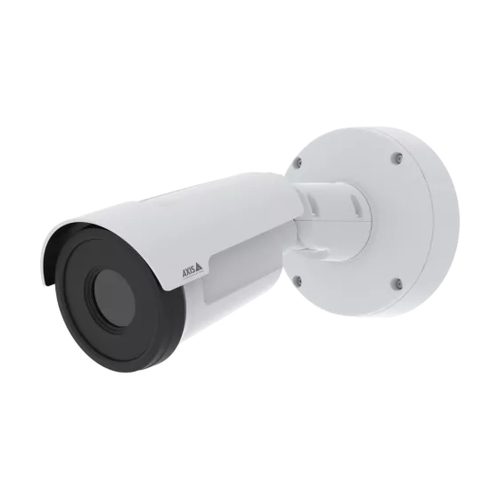
Product Overview
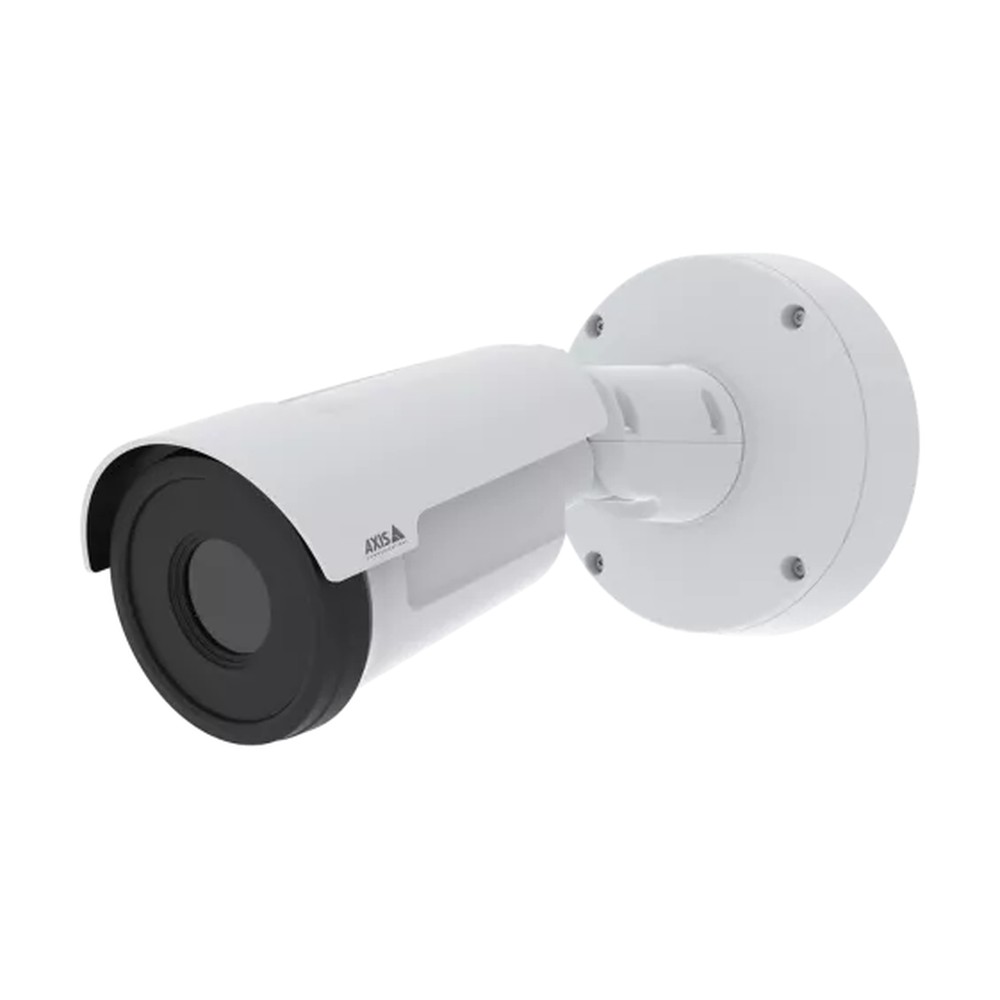
Perimeter monitoring in complete darkness, through smoke, or across fog-prone boundaries is where visible-light cameras consistently fall short. The Axis Q1972-E is an outdoor thermal network bullet camera built to detect human and vehicle presence regardless of ambient lighting conditions, using an uncooled microbolometer sensor operating across the 8-14 μm spectral range. Equipped with a 25 mm, F/1.0 athermalized fixed focal lens, it covers a 24-degree horizontal field of view at a thermal sensitivity of less than 20 mK, making it suited to long fence lines, critical infrastructure boundaries, industrial yards, and open perimeters where early detection matters. Featuring an ARTPEC-8 processor with an onboard Deep Learning Processing Unit, the Q1972-E runs Axis Perimeter Defender alongside Fence Guard, Loitering Guard, and Motion Guard directly at the edge. It also integrates Zipstream compression and Electronic Image Stabilization, and carries IP66, IP67, IK10, and NEMA 4X ratings alongside an operating temperature range of -40°C to 60°C for year-round deployment in demanding outdoor environments.
Key Capabilities
640×480 Thermal Imaging
The uncooled microbolometer sensor captures 640×480 thermal resolution, scalable to 800×600, with a sensitivity of less than 20 mK. This level of thermal resolution supports reliable detection of people and vehicles across extended outdoor ranges where visible-light cameras produce nothing usable.
25 mm Narrow-Field Lens for Long-Range Coverage
The 25 mm, F/1.0 athermalized lens delivers a 24-degree horizontal field of view, concentrating detection capability along a defined corridor. It is designed for long fence lines, boundary approaches, and straight perimeter runs where covering distance matters more than covering width.
ARTPEC-8 with Deep Learning Processing Unit
Onboard DLPU processing enables Axis Perimeter Defender, Fence Guard, Loitering Guard, and Motion Guard to run at the edge without dependence on server-side analytics. This reduces latency between detection and alarm trigger, which is critical for perimeter response workflows.
Zipstream and Electronic Image Stabilization
Zipstream reduces bandwidth and storage requirements without sacrificing detail in forensically relevant frames. Electronic Image Stabilization counteracts vibration from wind or structure movement, keeping the thermal image steady on outdoor mounts exposed to the elements.
IP66, IP67, IK10, NEMA 4X and -40°C Operating Range
Dual ingress protection ratings combined with IK10 impact resistance and NEMA 4X certification mean this camera is rated for the harshest outdoor conditions. The -40°C to 60°C operating temperature range makes it deployable across extreme climates without supplemental housing.
FIPS 140-2 Level 2 Trusted Platform Module
An onboard TPM certified to FIPS 140-2 Level 2 provides hardware-level cryptographic security for edge credentials and boot integrity. This is a confirmed requirement for many government, critical infrastructure, and defence-adjacent deployments where device trust chain verification is mandated.
Best For
- Perimeter Fence Lines: The 25 mm lens and 24-degree field of view concentrate thermal detection along extended boundary runs where early intrusion detection is the priority.
- Critical Infrastructure and Industrial Sites: ARTPEC-8 edge analytics with Axis Perimeter Defender support, combined with FIPS 140-2 Level 2 TPM, suits sites where both detection reliability and device security certification are non-negotiable.
- Environments with Poor or No Visible Light: Thermal imaging detects heat signatures in total darkness, heavy fog, light smoke, and against visually cluttered backgrounds where standard cameras lose contrast entirely.
- Extreme Climate Deployments: An operating range of -40°C to 60°C combined with IP66, IP67, and NEMA 4X ratings makes this suitable for cold-climate, coastal, and high-humidity industrial locations without supplemental enclosures.
Why Choose the Axis Q1972-E
The Q1972-E occupies a specific role in perimeter security that visible-light cameras cannot fill. Its 640×480 uncooled microbolometer sensor with less than 20 mK thermal sensitivity detects human and vehicle heat signatures in conditions that render standard cameras blind, including total darkness, dense fog, and backlit scenes. The 25 mm athermalized lens maintains optical performance across the full -40°C to 60°C operating range without manual recalibration. Running Axis Perimeter Defender and the full suite of Axis edge analytics on an ARTPEC-8 processor with DLPU, the camera triggers alarms based on defined intrusion logic rather than general motion. The hardware-level TPM certified to FIPS 140-2 Level 2 is a confirmed spec that simpler perimeter cameras do not carry. For integrators planning critical infrastructure or government-adjacent perimeter systems, the Q1972-E is available through Security Wholesalers as part of the Axis thermal camera range.
Buyer Decision Tips
Buyer Tip 1 – Field of View Planning: The 25 mm lens produces a 24-degree horizontal field of view with a near focus distance of 18.5 m. This is a narrow, long-range configuration suited to covering straight perimeter runs, access roads, or defined corridors. If your site requires broader angular coverage of a wide open area rather than a directed corridor approach, a shorter focal length thermal lens would better fit that scenario. Plan your camera positions with this FOV in mind before specifying quantity.
Buyer Tip 2 – Thermal vs. Identification: Thermal imaging detects presence and heat signatures, it does not produce colour images for facial or licence plate identification. The Q1972-E is designed to trigger alerts when intrusion occurs, not to serve as a forensic identification camera. In a complete perimeter system, it typically works alongside visible-light cameras that capture detail once an alert is generated. Factor this into your camera mix when designing the overall system layout.
Key Features & Technical Specifications
| Brand |
Axis Communications |
| Part Number |
03031-001 |
| Camera Type |
Outdoor thermal network bullet camera |
| Sensor |
Uncooled microbolometer |
| Resolution |
640×480 (VGA), scalable to 800×600 (SVGA) |
| Spectral Range |
8-14 μm |
| Thermal Sensitivity (NETD) |
Less than 20 mK at 25°C, F1.0 |
| Lens |
25 mm, F/1.0, athermalized fixed focal |
| Horizontal Field of View |
24° |
| Vertical Field of View |
18.5° |
| Near Focus Distance |
18.5 m |
| Processor |
ARTPEC-8 with Deep Learning Processing Unit (DLPU) |
| Frame Rate |
Up to 30 fps (8.3 fps mode also available) |
| Video Compression |
H.264 (Baseline/Main/High Profile), H.265 Main Profile, Motion JPEG |
| Memory |
2048 MB RAM, 8192 MB Flash |
| Local Storage |
MicroSD/SDHC/SDXC card slot |
| Analytics |
Axis Video Motion Detection, Motion Guard, Fence Guard, Loitering Guard, audio detection, active tampering alarm; supports Axis Perimeter Defender and third-party apps |
| Audio |
Line input; edge-to-edge pairing with Axis network speakers (sold separately) |
| Power |
DC 12-28 V / PoE Class 3; 5 W |
| Operating Temperature |
-40°C to 60°C |
| Weatherproofing |
IP66, IP67, NEMA 4X, IK10 |
| Cybersecurity |
Trusted Platform Module (TPM), FIPS 140-2 Level 2 certified |
| Additional Features |
Zipstream, Electronic Image Stabilization (EIS) |
| Weight |
1,650 g |
| Country of Origin |
Poland |
Ideal Use Cases
Industrial Perimeter Fencing
The 25 mm lens and 24-degree field of view make the Q1972-E well suited to covering long, straight fence runs at industrial yards, power stations, and water treatment facilities. Axis Fence Guard analytics trigger alarms when a defined virtual fence line is crossed, reducing nuisance events tied to general environmental movement.
Critical Infrastructure Protection
FIPS 140-2 Level 2 TPM certification and ARTPEC-8 edge processing with Axis Perimeter Defender support position this camera for use at substations, communication towers, government buildings, and other sites where both intrusion detection accuracy and device security certification are formal requirements.
Ports, Rail Yards, and Logistics Facilities
Large outdoor logistics environments involve vehicle movements, low ambient light at night, and wide gaps between lit zones. Thermal detection finds people and vehicles by heat signature rather than reflected light, keeping detection consistent across unlit areas that visible cameras cannot adequately cover.
Coastal and Extreme-Climate Installations
IP66, IP67, and NEMA 4X ratings alongside IK10 impact resistance and a confirmed -40°C to 60°C operating range mean this camera does not require supplemental weatherproof enclosures for coastal, alpine, or high-humidity deployments where standard outdoor cameras degrade prematurely.
Mining and Construction Site Boundaries
Active construction and mining sites generate dust, smoke, and variable lighting that obscure visible-light cameras. Thermal imaging penetrates light smoke and dust haze to detect body heat at the site boundary. Axis Loitering Guard analytics flag personnel remaining in restricted zones beyond a defined dwell time.
Choosing the Right Model
- Choose this model if: your site requires reliable perimeter detection in complete darkness or degraded visibility conditions, the 25 mm lens suits a long narrow coverage corridor, and you need onboard Axis Perimeter Defender analytics with FIPS 140-2 Level 2 hardware security certification.
- Choose a different model if: you need to visually identify individuals or read licence plates, as thermal imaging detects heat signatures rather than producing identifiable visible-light imagery. A higher-resolution visible-light bullet or varifocal camera used alongside a thermal camera is a more appropriate combination for sites where both detection and identification are required.
- Choose a different model if: your coverage area is wide and angular rather than a defined corridor, as the 24-degree horizontal field of view is a narrow configuration. A shorter focal length thermal option would suit broad open-area coverage where angular sweep matters more than depth of detection range.
FAQs
- How far can the Q1972-E detect a person at night?
Detection range depends on the target size, ambient temperature differential, and analytics thresholds configured for your site. The camera’s thermal sensitivity of less than 20 mK and 25 mm lens allow detection at distances well beyond the range of standard visible-light cameras with IR illumination. For specific detection, recognition, and identification range figures, refer to the Axis thermal range calculator using the confirmed 640×480 sensor and 25 mm focal length.
- Does the Q1972-E work in complete darkness?
Yes. Thermal imaging does not rely on visible light or IR illumination. The uncooled microbolometer sensor detects differences in heat radiation emitted by objects within the 8-14 μm spectral range. People, vehicles, and other warm objects produce detectable contrast against cooler backgrounds in complete darkness, making lighting conditions irrelevant to detection performance.
- What analytics run on this camera without an external server?
The ARTPEC-8 processor with onboard DLPU runs Axis Video Motion Detection, Motion Guard, Fence Guard, Loitering Guard, audio detection, and active tampering alarm directly at the edge. Axis Perimeter Defender is also supported and can be deployed on the camera itself, enabling classification-based perimeter alerts without dependence on a separate analytics server.
- Can the Q1972-E produce colour video footage?
No. This is a thermal imaging camera and produces greyscale or false-colour thermal imagery, not standard colour video. It is designed for detection, not visual identification. If colour footage for identification purposes is required at the same location, a separate visible-light camera should be incorporated into the system design alongside the Q1972-E.
- What does the FIPS 140-2 Level 2 certification mean for this camera?
The onboard Trusted Platform Module (TPM) is independently certified to FIPS 140-2 Level 2, a US federal cryptographic security standard. This provides hardware-enforced protection for device credentials and boot integrity. It is a formal requirement in many government, defence-adjacent, and critical infrastructure procurement specifications where device trust chain verification must be demonstrable.
- Does this camera support edge storage?
Yes. The Q1972-E includes a microSD/SDHC/SDXC card slot for local edge recording. This allows continuous or event-triggered recording directly on the camera, providing a recording buffer if network connectivity is interrupted, or reducing bandwidth load on the central NVR during normal operation.
- Where can I purchase the Axis Q1972-E in Australia?
The Axis Q1972-E (part number 03031-001) is available through Security Wholesalers as part of the Axis thermal network camera range. It is confirmed for the Australian market. Contact Security Wholesalers directly for current pricing, stock availability, and volume enquiries for multi-camera perimeter deployments.
Additional Information
AXIS 03031-001 Datasheet