Product Overview
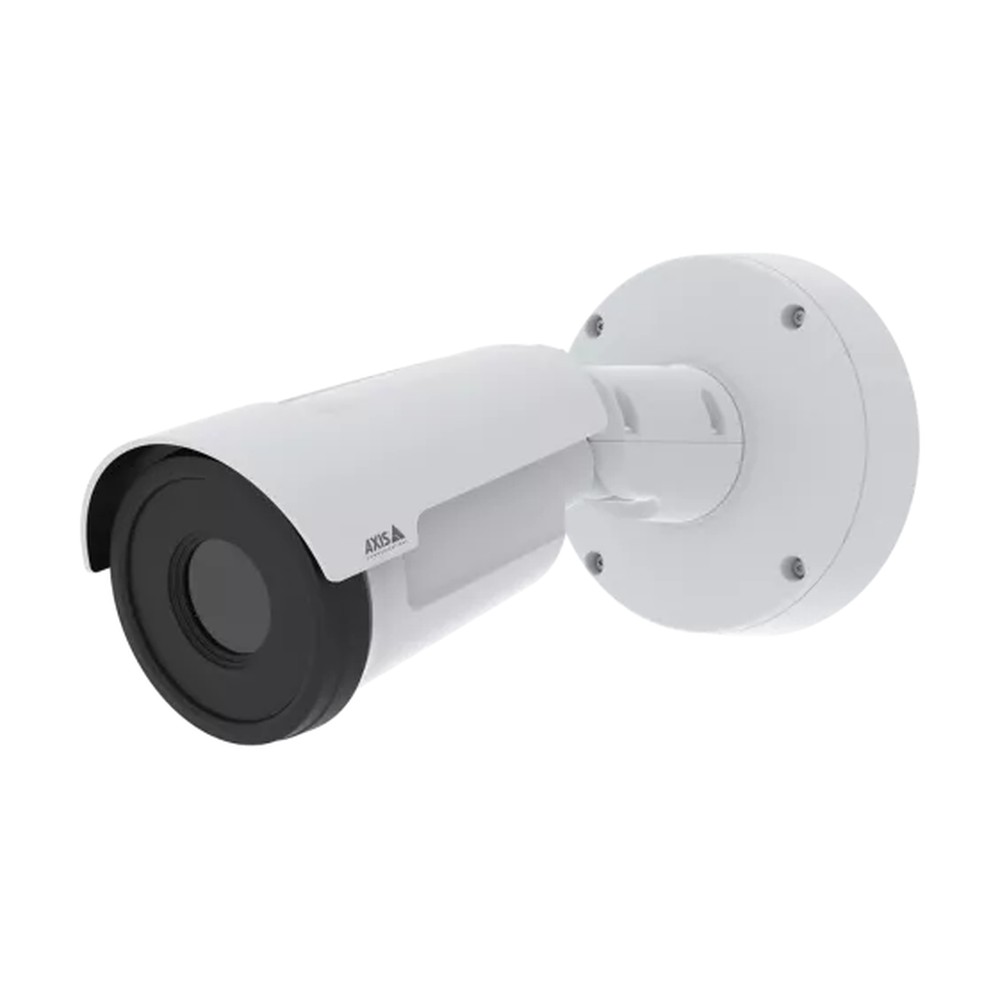
Where lighting conditions are unpredictable, smoke or dust obscures visible-light cameras, or perimeter detection needs to function equally at noon and midnight, the AXIS Q1972-E delivers consistent thermal imaging around the clock. Built as an outdoor bullet camera for demanding perimeter and industrial environments, this model uses an uncooled microbolometer sensor at 640×480 resolution with a 17 μm pixel pitch, paired with a 19 mm athermalized lens covering a 31° horizontal field of view. The ARTPEC-8 processor with an integrated Deep Learning Processing Unit enables preinstalled analytics including AXIS Motion Guard, AXIS Fence Guard, and AXIS Loitering Guard directly on the camera. Rated IP66, IP67, IK10, NEMA 4X, and NEMA TS2, it withstands harsh weather, water ingress, and physical impact. With an operating range of -40 to 60°C and PoE-powered connectivity, the Q1972-E is suited to critical infrastructure boundaries, secure facility perimeters, and industrial yards where standard cameras fall short.
Key Capabilities
640×480 Thermal Sensor
The uncooled microbolometer sensor operates across the 8-14 μm spectral range with a thermal sensitivity below 20 mK, detecting temperature differences invisible to standard cameras. Performance is unaffected by darkness, glare, smoke, dust, or fog, making perimeter detection reliable in conditions that defeat conventional imaging.
ARTPEC-8 with Deep Learning Processing Unit
The onboard ARTPEC-8 SoC includes a dedicated DLPU, enabling complex analytics to run entirely at the camera edge. This reduces server load, lowers bandwidth requirements, and allows the Q1972-E to process detection events locally without dependence on a central server for real-time analysis.
Preinstalled Perimeter Analytics
AXIS Motion Guard, AXIS Fence Guard, and AXIS Loitering Guard come preinstalled and ready to configure. These analytics allow operators to define zones, detect boundary crossings, and trigger alerts on loitering behaviour without additional software licensing, directly supporting proactive perimeter surveillance workflows.
IP66/67, IK10, and NEMA-Rated Housing
The bullet housing carries IP66 and IP67 water and dust ingress ratings alongside IK10 impact resistance and NEMA 4X and NEMA TS2 classifications. This combination makes the camera suitable for industrial yards, exposed outdoor walls, and high-risk perimeter installations where the housing may face physical interference or extreme environmental conditions.
Axis Edge Vault Cybersecurity
The Q1972-E incorporates Axis Edge Vault with FIPS 140-2 Level 2 certification, providing hardware-based protection for cryptographic keys, device identity, and secure boot processes. This level of cybersecurity is relevant for critical infrastructure, government facilities, and any installation where network device integrity is a compliance requirement.
Zipstream Compression in H.264 and H.265
Axis Zipstream technology dynamically reduces bitrate in low-activity areas of the frame while preserving detail in relevant zones. Combined with configurable frame rates across up to 20 simultaneous streams, this helps manage storage and bandwidth consumption across multi-camera thermal deployments without sacrificing detection data.
Best For
- Perimeter fence line monitoring: The 19 mm lens delivers a focused 31° horizontal field of view suited to covering defined boundary segments, while AXIS Fence Guard detects crossings and generates alerts in real time.
- Industrial yards and manufacturing facilities: The -40 to 60°C operating range and NEMA 4X rating allow reliable deployment in environments with temperature extremes, chemical exposure, or high-pressure washdown areas.
- Critical infrastructure and secure facility boundaries: Edge Vault with FIPS 140-2 Level 2 certification and onboard deep learning analytics support compliance-driven surveillance at utilities, data centres, and government sites.
- All-weather outdoor detection: Thermal imaging through the 8-14 μm spectral range means detection performance is not degraded by rain, fog, smoke, dust, or complete darkness, unlike conventional visible-light cameras.
Why Choose the AXIS Q1972-E
The AXIS Q1972-E (03030-001) is not a camera upgrade for general surveillance – it is a purpose-built thermal detection tool for environments where visible-light cameras reach their limits. The 640×480 uncooled microbolometer with sub-20 mK thermal sensitivity detects human and vehicle presence through conditions no standard sensor can resolve. The 19 mm athermalized lens maintains focus accuracy across extreme temperature swings, which matters in outdoor industrial settings where a standard lens would drift with thermal expansion. Having AXIS Motion Guard, Fence Guard, and Loitering Guard preinstalled and running on the ARTPEC-8 DLPU means detection is active from commissioning without additional server infrastructure. FIPS 140-2 Level 2 cybersecurity certification satisfies procurement requirements at sites where device integrity is audited. For installers and end users sourcing this model, it is available at Security Wholesalers as part of the Axis thermal camera range.
Buyer Decision Tips
Lens and coverage planning: The 19 mm lens on this variant produces a 31° horizontal field of view, which is relatively narrow by design. This suits focused perimeter segments, fence line runs, and defined approach corridors rather than wide-area open space monitoring. Before specifying quantity, map your site in linear metres along the boundary and calculate how many cameras are needed to cover the perimeter without gaps, accounting for the 8.5 m near focus distance where objects closer than this will not resolve clearly.
Thermal imaging trade-offs: This camera produces thermal heat signatures, not colour video. It will not capture faces, number plates, clothing colour, or visible identification detail. If your security operation requires both thermal-based detection and visible identification of incidents, plan for a paired deployment with visible-light cameras covering the same zones. The Q1972-E excels at detection and alerting; identification requires a separate imaging layer.
Key Features & Technical Specifications
| Model |
AXIS Q1972-E (19 mm 8.3 fps) |
| Part Number |
03030-001 |
| Sensor Type |
Uncooled microbolometer |
| Resolution |
640×480 pixels (pixel size: 17 μm); scalable to 800×600 (SVGA) |
| Spectral Range |
8-14 μm |
| Thermal Sensitivity (NETD) |
<20 mK @ 25°C, F1.0 |
| Lens |
19 mm, F1.0, athermalized |
| Horizontal Field of View |
31° |
| Vertical Field of View |
24° |
| Near Focus Distance |
8.5 m |
| Frame Rate |
8.3 fps |
| Processor |
ARTPEC-8 with Deep Learning Processing Unit (DLPU) |
| Memory |
2048 MB RAM, 8192 MB Flash |
| Video Compression |
H.265 and H.264 with Axis Zipstream; up to 20 configurable streams |
| Preinstalled Analytics |
AXIS Motion Guard, AXIS Fence Guard, AXIS Loitering Guard, AXIS Video Motion Detection, audio detection, active tampering alarm |
| Supported Analytics |
Axis Perimeter Defender, third-party ACAP applications |
| Audio |
3.5 mm mic/line input; configurable half/full duplex; 24-bit LPCM, AAC-LC, G.711 PCM, G.726 ADPCM, Opus encoding |
| I/O Ports |
2 configurable I/O ports for external devices |
| Local Storage |
microSD/SDHC/SDXC card slot |
| Network |
Shielded RJ45 10BASE-T/100BASE-TX/1000BASE-T PoE |
| Power |
PoE IEEE 802.3af/802.3at Type 1 Class 3 |
| Operating Temperature |
-40 to 60°C |
| Environmental Ratings |
IP66, IP67, IK10, NEMA TS2, NEMA 4X |
| Cybersecurity |
Axis Edge Vault, FIPS 140-2 Level 2 certified |
Ideal Use Cases
Secure Facility Perimeters
The 19 mm lens focuses detection along defined perimeter segments, while preinstalled AXIS Fence Guard alerts operators to boundary crossings in real time. FIPS 140-2 Level 2 certification supports procurement requirements at secure or government facilities.
Industrial Yards and Warehousing
The -40 to 60°C operating range and NEMA 4X rating allow the Q1972-E to operate in industrial environments with temperature extremes, dust, chemical vapour, or high-pressure washdown conditions that would degrade unrated hardware.
Critical Infrastructure Protection
Utilities, data centres, and transport hubs require detection that cannot be defeated by darkness or environmental conditions. Thermal imaging across the 8-14 μm spectral range operates entirely independently of ambient light, with onboard DLPU analytics reducing the infrastructure burden on central servers.
Construction Sites and Remote Compounds
AXIS Loitering Guard detects after-hours presence across unlit sites. Local microSD storage allows footage retention even when network connectivity is interrupted, and PoE simplifies deployment without requiring a separate power run to the camera location.
Smoke, Fog, and Dust-Prone Environments
Thermal imaging detects heat signatures regardless of airborne particulates. Sites where visible-light cameras lose scene visibility during dust events, smoke from nearby operations, or coastal fog can rely on the Q1972-E for consistent detection performance throughout those conditions.
Choosing the Right Model
- Choose this model if: Your site requires 24/7 detection performance unaffected by lighting, smoke, dust, or fog. The 19 mm lens suits defined corridor or fence line coverage, the ARTPEC-8 DLPU enables onboard perimeter analytics without server dependency, and the FIPS 140-2 Level 2 certification meets compliance requirements at secure or infrastructure sites.
- Choose a different model if: You need visible colour identification alongside detection. This is a pure thermal camera and will not capture facial features, licence plates, or colour detail. A paired visible-light camera covering the same zone is typically required when incident identification, not just detection, is part of the operational requirement. If your budget or application does not warrant thermal imaging, a standard outdoor bullet with long-range IR will serve general perimeter deterrence at a significantly lower cost.
FAQs
- What does the AXIS Q1972-E actually see, and what does it not capture?
The Q1972-E detects thermal heat signatures emitted by people, vehicles, and objects. It does not produce colour video, and it cannot capture facial features, licence plates, or clothing detail. The image shows temperature contrast rather than visual detail. It is designed for detection and alert triggering, not for visual identification of individuals. If identification is required, pair this camera with a visible-light camera covering the same area.
- How does the 19 mm lens affect where I can install this camera on a perimeter?
The 19 mm lens produces a 31° horizontal field of view, which is a relatively narrow, focused angle suited to directed perimeter segments such as fence lines, entry corridors, or defined approach paths. It is not suited to wide-area open space monitoring from a single camera position. Plan coverage in linear segments along the boundary, noting the 8.5 m minimum near focus distance, which means objects closer than 8.5 m will not resolve clearly in the thermal image.
- What analytics come included, and do I need additional software licences?
AXIS Motion Guard, AXIS Fence Guard, and AXIS Loitering Guard are preinstalled on the Q1972-E at no additional licence cost. These run directly on the ARTPEC-8 DLPU onboard the camera. Additional analytics including Axis Perimeter Defender and third-party ACAP applications are also supported, but these may require separate licences depending on the application chosen.
- Does the 8.3 fps frame rate affect detection reliability?
At 8.3 fps, the camera captures approximately 8 frames per second. For thermal perimeter detection use cases – detecting people crossing a fence line or loitering in a zone – this frame rate is generally adequate. However, it is not suited to applications requiring smooth video playback or capture of fast-moving objects. If your application demands higher frame rate thermal imaging, confirm before purchasing whether a higher fps variant fits the operational need.
- What does the FIPS 140-2 Level 2 certification mean, and when does it matter?
FIPS 140-2 Level 2 is a US federal standard for cryptographic module security. It confirms that the hardware security module within the camera meets defined standards for tamper evidence and cryptographic integrity. It is relevant when procuring cameras for government, defence, utilities, or critical infrastructure sites that mandate validated cybersecurity credentials. Axis Edge Vault provides the hardware platform that holds this certification on the Q1972-E.
- Can this camera operate in extreme temperatures such as cold storage facilities or outdoor summer conditions?
Yes. The Q1972-E is rated to operate across -40 to 60°C, covering the range from arctic outdoor conditions through to hot industrial environments. The lens is athermalized, meaning its optical properties are engineered to remain stable across temperature variations, which is important in outdoor deployments where temperatures fluctuate significantly between day and night or across seasons.
- Where can I purchase the AXIS Q1972-E in Australia, and is technical support available?
The AXIS Q1972-E (03030-001) is part of the Security Wholesalers range. When specifying this camera for a project, confirm the specific lens variant and frame rate required, as multiple Q1972-E configurations exist. Technical documentation including the official datasheet is linked below for reference during system design and installation planning.
Additional Information
AXIS 03030-001 Datasheet